

Both work, and the best one is whichever you'll stick with. Calorie counting gives precision and flexibility if you log consistently. Portion-based approaches, plate methods, hand guides and lower energy-density foods, can deliver similar results with less daily friction. In a 261-person trial, both cut waist size. Many people do best with a hybrid: 2 to 4 weeks of counting to calibrate, then portions.
Counting every calorie sounds exact. Eyeballing a plate sounds easy. Most people assume one of them is the real method and the other is a shortcut. The research says something more useful: both work, they fail in different ways, and the thing that predicts results in both is how consistently you do it.
Below, we compare the two head to head, size what the studies actually found, and give you a plan for this week plus fixes for when progress stalls.
Portion control vs calorie counting verdict
Both work. Consistency wins.
We judged portion control vs calorie counting on what decides a real week: weight and waist results in trials, hunger, the effort each one takes, how accurate it is, and how it survives a restaurant.
Calorie counting takes accuracy and flexibility. Portion control takes effort and fullness. Results come out even, and consistency beats both.
Calorie counting means tracking the total energy from everything you eat, usually in an app or a food journal. You get precise numbers, you can adjust your target as you go, and it works with any cuisine or eating style.
Portion control uses visual templates instead of numbers: a plate method, hand-size guides (a palm of protein, a fist of carbs, a thumb of fat), measured servings, and a focus on foods with lower energy density. Those are foods with more water and fiber, so you get fewer calories per bite. Usually no logging is required.
So, which works better? Neither, on average. They're different tools for the same job: eating a bit less than you burn without feeling deprived. Pick the one whose weak spot bothers you least.
Calorie counting & portion control at a glance
Two methods, one grid
This table settles calorie counting vs portion control on the rows that decide whether a method lasts. Each row is explained, with its study, in the breakdown below.
A check means the method has the edge on that row. Where neither does, the row is a draw.
| Calorie counting | Portion control | |
|---|---|---|
| Waist and weight in trials | Both cut waist size | Both cut waist size |
| Hunger | Reduced hunger in one trial | More fullness from low energy-density food |
| Daily effort | Log everything, every day | Look at the plate ✓ |
| Precision | To the calorie, if labels are right ✓ | Approximate |
| Eating out | Pre-select from menus | Hand-size portions |
| Plateaus | Easy to find the gap ✓ | Hard to see drift |
| Burnout risk | High, most people stop by week 10 | Low ✓ |
| Best for | Data lovers, short phases | Long-term maintenance, families |
Read the table as a trade. Calorie counting buys accuracy with time and attention. Portion control buys ease with some precision. Neither is a watered-down version of the other.
- Results in randomized trials: weight, waist and blood pressure
- Hunger and fullness, measured or reported
- Effort, burnout and how long people keep it up
- Accuracy, from labels to restaurant meals
Calorie counting vs portion control side by side
What the research shows
Both approaches have real science behind them. Here's each category, the study behind it, and how big the effect actually was.
Calorie counting takes two categories, portion control takes two, and the most important one is a draw.
Weight & waist results
Result: Even matchA randomized trial in Annals of Family Medicine put the two federal approaches head to head. 261 adults with overweight, mostly low-income Latina women, got six months of coaching in either calorie counting or MyPlate-style guidance. Both groups shrank their waists. The MyPlate group also had lower systolic blood pressure at six months, though not at 12.
The fuller PCORI report on the same trial adds the part the headline skips: neither group lost a significant amount of weight, and many participants missed five or more sessions. So the honest reading is that plate guidance matched counting, at a modest level. That's still the point. Portion control is a legitimate alternative to counting, not a lesser one.
Hunger & fullness
Winner: Portion controlYear-long studies on energy density point the same way. In a 2007 trial in the American Journal of Clinical Nutrition, 97 women with obesity were coached to cut fat, or to cut fat and eat more water-rich foods, mostly fruit and vegetables, with no calorie goals at all. After a year, completers in both groups lost weight, 6.4 kg and 7.9 kg, and the fruit and vegetable group reported less hunger while eating a greater weight of food.
A 2005 trial in Obesity Research added two servings a day of low energy-density soup to a reduced-calorie diet. After a year, the two-soup group had lost 7.2 kg against 4.8 kg for a group given the same calories as snack foods. A third group that got no special food lost 8.1 kg, so soup didn't beat the plan itself. And everyone was on a calorie-restricted meal plan, so this shows what energy density does inside a plan, not weight loss without one.
One wrinkle: in the MyPlate trial, only the calorie counting group reported less hunger. Fullness comes from what's on the plate, protein, fiber and water-rich food, more than from the method you use to measure it.
Plates & portion tools
Winner: Portion controlPortion-control plates have shown promise. In a 2007 trial in Archives of Internal Medicine, 130 adults with type 2 diabetes and obesity used a portion-control plate daily for six months or got usual dietary teaching. The plate group lost 1.8% of body weight against 0.1%, and more of them were able to cut back diabetes medication.
Smaller dishes alone are a different story. A 2014 meta-analysis in Obesity Reviews of nine experiments found most showed no significant difference in how much people ate from smaller vs larger plates, and the pooled effect was small and inconsistent. The tool works when it's part of a strategy, not as a trick.
Accuracy & labels
Winner: Calorie countingCalorie counting is the more precise method, but it's less precise than it looks. Food labels are good guides, not lab results. Under FDA labeling rules, calories, fat, saturated fat, sugars and sodium count as compliant if the real amount is no more than 20% above the label. A snack labeled 200 calories can legally hold up to 240.
Serving sizes trip people up more than tolerances. The FDA's guide to the Nutrition Facts label points out that every number on the label is per serving, and a package often holds several. USDA's Food Safety and Inspection Service publishes its own nutrition labeling overview for meat and poultry labels. Read the serving line first, and weigh foods for the first few weeks if you count.
Effort & consistency
Result: Consistency decides itHere's the finding that matters most across the research: how consistently you self-monitor tracks closely with results. In the SMART trial, 210 adults tracked on paper or a handheld device, and adherence to self-monitoring explained the effect of daily feedback on weight loss.
Analysis of two app-based trials found the best predictor of six-month weight loss was the number of days people logged at least two eating occasions, and fewer than half were still tracking after week 10. A study of 90 adults using a calorie app found more frequent and consistent logging went with more weight lost over eight weeks. None of these compared diets against each other, but they all point the same way: the method you keep doing is the method that works.
Pros & cons of each approach
What each one costs you
Calorie counting gives you precision and flexibility. It's great when you want to hit a specific deficit, say 300 to 500 calories below maintenance, or when you're eating out and need to fit something indulgent into the day. The downside is time and attention. Labels aren't perfect, and many people burn out on logging within a few months. It works best for data-driven people, short calibration phases, or a plateau that needs tightening up.
Portion control and energy density approaches are simpler day to day. They support fullness, take less mental bandwidth, and work well for families and busy schedules. The risk is drift: without an occasional check-in, portions creep up over time. You also have to pay attention to food quality. This isn't a just-eat-less plan. These methods shine for long-term maintenance and for anyone who finds logging tedious.
For a deeper look at which foods make either method easier, see our complete guide to the best foods for weight loss.
Who should choose portion control or calorie counting
Pick by your week
Key takeaways
- In a 261-person trial, plate guidance and calorie counting both cut waist size, and neither produced big weight loss.
- Low energy-density eating, more fruit, vegetables and soup, lost weight over a year with less hunger.
- A portion-control plate beat usual care in type 2 diabetes, 1.8% vs 0.1% of body weight in six months.
- Logging consistency predicts results, and most people stop logging within about 10 weeks.
- Labels can legally run 20% over on calories, so counting is precise, not exact.
The hybrid that actually sticks: use 2 to 4 weeks of calorie counting to learn what your real portions look like, then shift to portion templates and lower energy-density choices for daily life. If progress stalls, bring counting back for a week to recalibrate. You get the education counting provides without the burnout of doing it forever.
There's no wrong answer here, only a better fit for your temperament and your schedule. Go with the list that sounds more like you.
Choose calorie counting if
- You like data and will log most days for a few weeks
- You've hit a plateau and need to find the gap
- You eat out often and want to fit meals into a budget
Choose portion control if
- Logging feels tedious or stressful
- You cook for a family and need one method for everyone
- You're maintaining a loss and want something you can keep
How to start portion control or calorie counting this week
Six moves for this week
- Choose your primary mode. Counting, portions or the hybrid. There's no wrong answer, so pick one and give it at least two weeks.
- Set a realistic deficit. Most adults do well trimming 300 to 500 calories a day if counting, which works out to about 0.6 to 1 pound a week, or shrinking portions one notch while adding vegetables if using portions. Our calorie goal guide helps you set the number.
- Build volume into your meals. Fill half your plate with non-starchy vegetables, a quarter with lean protein and a quarter with quality carbs, and add a thumb or two of healthy fat. That's the classic plate method, and it lowers the energy density of the whole meal.
- Anchor with protein. Aim for about 1.2 to 1.6 grams per kilogram of body weight a day, the range the 2025 to 2030 Dietary Guidelines now recommend, to protect muscle while you lose fat. Our complete meal prep guide shows how to batch the protein so it's there when you need it.
- Make adherence easier. Pre-log or pre-portion your meals and snacks. This is where calorie-controlled meal plans help, because the portioning and the macro math are already done. Every meal's calories, protein, carbs and fat are on our nutrition page.
- Watch weekends and eating out. These are where most plans fall apart. Use hand-size portions when you can't weigh food, put lean protein and vegetables first, and if you're counting, look at the menu ahead of time and pick your order.
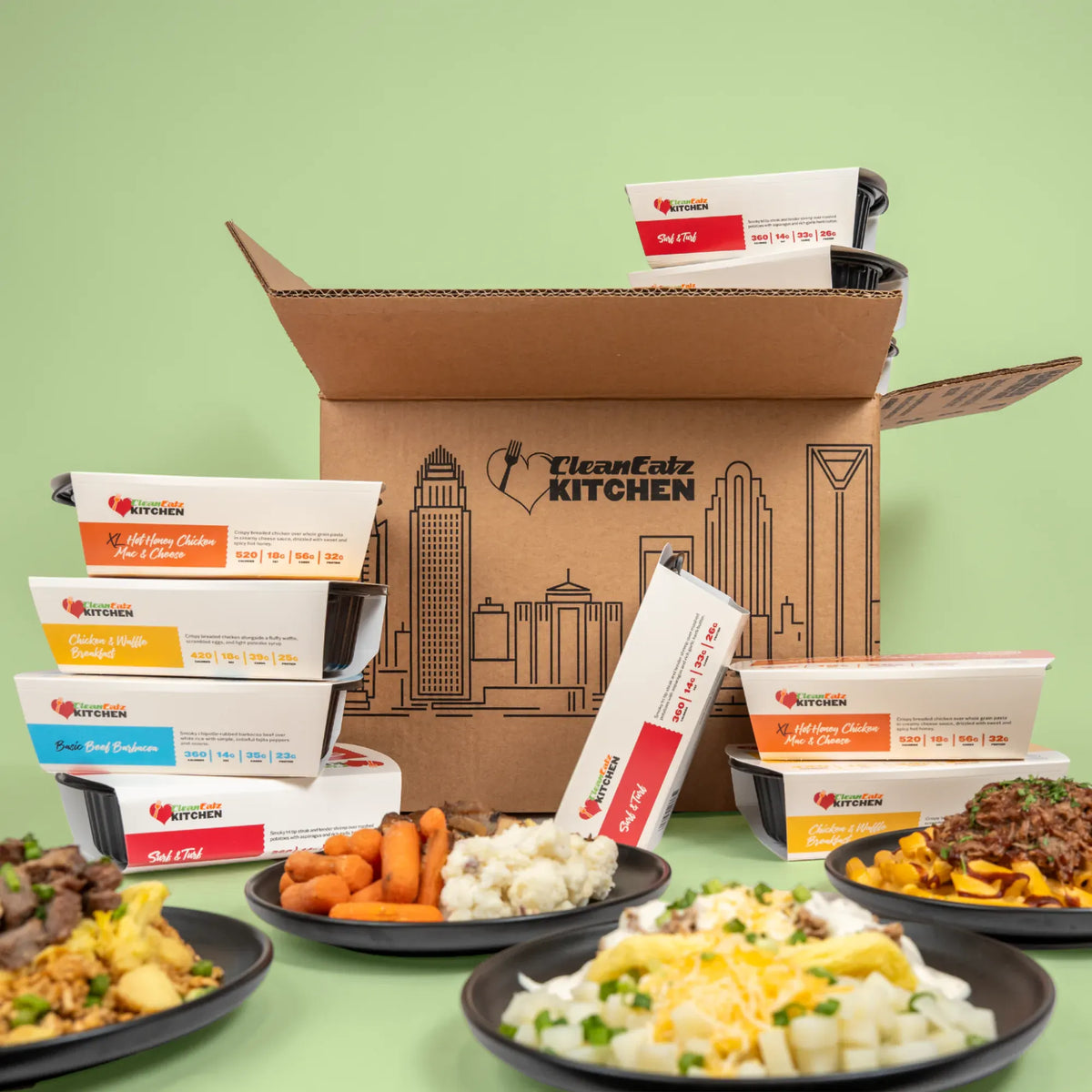
Pre-portioned meals work with both methods. If you count, the label is your log entry. If you don't, the container is your portion. Our Weight Loss Meal Plan meals are portion-controlled and calorie-controlled, from $89.95 for 10, and Build A Meal Plan lets you filter the menu by protein. It's a one-time order, not a subscription. Want to add movement? See our guide to how much exercise you actually need per day.
Troubleshooting when weight loss stalls
Change one lever at a time
If your results slow down, don't assume the method stopped working. Most stalls come from a few predictable friction points. Here are the common ones and a fix for each you can try this week.
- Weekends undo the deficit. What happens: meals out, drinks and snacks turn into a two or three day surplus. Try this: use bookends, protein and vegetables at your first and last meal, and keep indulgences to one planned item, dessert or drinks, not both.
- Portions drift upward, even with healthy foods. What happens: nuts, oils, cheese, granola and healthy snacks quietly add up. Try this: pre-portion your calorie-dense foods for seven days and keep them in single servings you can see.
- Protein is too low, so hunger stays high. What happens: you're eating less but you're not satisfied. Try this: anchor each main meal with a palm-sized protein portion at minimum. Add protein first, then adjust carbs and fat.
- Liquid calories sneak in. What happens: coffee add-ins, juice, smoothies and alcohol can cancel a deficit fast. Try this: keep your favorite and simplify the rest, for example one latte a day and black coffee or unsweetened drinks otherwise.
- Good all day, then snacking all night. What happens: under-eating early leads to rebound eating late. Try this: add a planned afternoon mini-meal with protein and fiber, like Greek yogurt and berries, hummus and vegetables, or turkey and fruit.
- Eating out feels impossible. What happens: portions are large and hunger cues get drowned out. Try this: half now, half later. Ask for a box when the meal arrives, and lean on grilled or roasted protein and vegetables.
- The scale isn't moving, but you're doing a lot right. What happens: water retention, your cycle, stress, sodium, new training or constipation can hide fat loss. Try this: track trends, a weekly average weight plus a waist measurement, and give it two full weeks before you change the plan.
- Tracking burnout or too much mental load. What happens: you quit because the method takes over your life. Try this: a minimum effective dose for 14 days. Track just two meals a day, or one check-in day a week, and use portion templates for everything else.
Don't change everything. Change one lever, test it for 7 to 14 days, then reassess.
Portion control vs calorie counting bottom line
The method you keep wins
Portion control and calorie counting both work, and neither is the serious option with the other as a shortcut. Counting is precise and flexible, and most people get tired of it. Portions are easy and filling, and they drift. The studies agree on one thing more than any other: consistency predicts results.
Count for a few weeks to calibrate your eye, switch to portions for everyday life, and bring the app back when the scale stalls. If the hard part is execution rather than knowledge, let something else do the portioning for a while.
Portion control & calorie counting FAQ
Your questions
Short answers to the questions we hear most about counting, portions and labels.
Which is better for fat loss: portion control or calorie counting?
Neither is better across the board. Adherence wins. If you'll reliably log your food, calorie counting gives you precision. If you hate logging, portion control and lower energy-density eating are backed by randomized trials and are often easier to keep up. In one 261-person trial, both cut waist size by similar amounts.
Do I have to count calories to lose weight?
No. In a year-long trial, women who were coached to eat more water-rich foods and less fat, with no calorie goals, lost about 7.9 kg and reported less hunger. Lowering energy density and controlling portions can create a deficit without daily counting. Many people find portion-based approaches easier to keep up.
Are calorie labels perfectly accurate?
No. Labels are good guides, not lab results. FDA rules allow calories, fat, sugars and sodium to run up to 20% above the label before a product is out of compliance, and normal manufacturing varies too. Your real intake can differ a little from the label, so watch your trend over weeks rather than any single number.
What if I keep slipping on weekends?
Try a hybrid: count Monday through Thursday, then use portion guidance Friday through Sunday. Plan one indulgence rather than three, pre-portion snacks, and choose lower energy-density options when you eat out, like salads, broth-based soups and grilled protein. Then judge the week by its average, not by Saturday.
How long should I count calories before switching to portions?
Two to four weeks is enough for most people. That's long enough to learn what a real portion of your usual foods looks like, and short enough to finish before logging fatigue sets in. In app studies, fewer than half of people were still tracking after week 10. Come back to counting for a week when progress stalls.
More portion control & calorie guides
Keep reading



Sources
- McCarthy et al., Randomized comparative effectiveness trial of 2 federally recommended strategies to reduce excess body fat: MyPlate.gov vs calorie counting, Ann Fam Med 2023
- McCarthy et al., Comparing calorie counting versus MyPlate recommendations for weight loss, PCORI final research report 2019
- Ello-Martin et al., Dietary energy density in the treatment of obesity: a year-long trial comparing 2 weight-loss diets, Am J Clin Nutr 2007
- Rolls et al., Provision of foods differing in energy density affects long-term weight loss, Obes Res 2005
- Rolls, Dietary energy density: applying behavioural science to weight management, Nutr Bull 2017
- Turk et al., Self-monitoring as a mediator of weight loss in the SMART randomized clinical trial, Int J Behav Med 2013
- Pedersen et al., Portion control plate for weight loss in obese patients with type 2 diabetes mellitus, Arch Intern Med 2007
- Robinson et al., Will smaller plates lead to smaller waists? A systematic review and meta-analysis, Obes Rev 2014
- Turner-McGrievy et al., Tracking at least two eating occasions per day is best marker of adherence, J Acad Nutr Diet 2019
- Payne et al., Adherence to mobile-app-based dietary self-monitoring: impact on weight loss in adults, Obes Sci Pract 2021
- How to understand and use the Nutrition Facts label, FDA
- Guidance for industry: guide for developing and using data bases for nutrition labeling, FDA
- Nutrition labeling overview, USDA Food Safety and Inspection Service
- Dietary Guidelines for Americans, 2025 to 2030, HHS and USDA (January 2026)