
Portion control containers
Portion control containers: How they work & best ways to use
Portion control containers turn serving sizes into colors you fill, with no app or scale. What the research says they do, the color system, the daily counts and when a container set is the wrong tool.
- Free Shipping on Every Meal PlanFree Shipping
- Up to 20% Off 30-Meal PlansUp to 20% Off
- Chef Cooked, Dietitian BuiltDietitian Built
- Heat & Eat in MinutesHeat & Eat

Portion control containers are pre-measured, usually color-coded containers that set your serving sizes without calorie counting. They help, modestly: a 2021 meta-analysis of 28 studies found portion tools trimmed how much people ate, though smaller plates alone did nothing. They work best as training wheels for your eye, used every day for a few months.
If you've ever finished a meal and realized you ate far more than you meant to, you're not alone. Most of us misjudge how much we've served, especially when portions are large or we're eating on autopilot. That's not a willpower problem. It's the portion size effect: give people bigger portions and they eat more.
Portion control containers answer that with a simple idea. Instead of eyeballing how much pasta or chicken goes on the plate, you fill a container of a known size and stop there. Most sets use colors for food groups, so building a balanced meal is a matter of matching colors, not logging every bite.
Here's what the research says they can and can't do, how the color system works and how to tell whether they're the right tool for you.
What are portion control containers
A measuring cup with a color code
The portion size effect is well documented. A 2023 meta-analysis in the British Journal of Nutrition pooled 14 studies that changed the portion sizes people were served for at least a day. Smaller portions cut daily intake by about 235 calories, and bigger cuts to portion size led to bigger drops.
Portion control containers use that effect on purpose. Each container holds a set volume for one food group: vegetables, protein, carbs, fruit, fats. Fill it level, eat what's in it and you've served yourself a consistent amount, whether you're hungry, tired or distracted.
The appeal is obvious: no food scale, no app, no macro math. For people who find calorie counting tedious or hard to keep up, this visual approach can be a practical way to retrain the eye for realistic portions.
And the eye needs retraining. In a Dutch study of 40 adults, people described how much they had just eaten for lunch. Even with the better of two estimation methods, they landed within 10% of the true amount only 31% of the time. With food photos, it was 13%. Your eye is a poor measuring cup, and a container replaces it with a real one.
Your eye is a poor measuring cup, and a container replaces it with a real one.
Ellie Lopez, LDN, MS
Do portion control containers work
A modest effect, if you keep using them
The research on portion control tools is encouraging, with nuance. A 2021 systematic review in Nutrients analyzed 36 publications on portion tools. A meta-analysis of 28 of them found a small but significant effect on how much people ate.
The details matter more than the headline. The biggest effects came from combinations like smaller bowls with smaller spoons. Reduced-size plates on their own showed no effect at all. Across 9 comparisons, the tools produced a small amount of weight loss, mostly with calibrated tableware, the kind marked with how much of each food to serve.
A 2023 crossover trial tested one of those calibrated plates in 65 women. They served themselves about 296 grams of food on it, versus 317 grams on a regular plate, and ate about 287 grams versus 309, roughly 7% less. Some of the women made up for it over the next 8 hours, which suggests the benefit depends on using the tool consistently, not once.
The pattern across the studies is clear enough. It's the act of measuring and paying attention that seems to do the work, not simply eating from smaller dishes. The tools that helped most were the ones that made people take part in portioning.
What the research can't fully capture is real life over months and years. Most of these studies ran from a single meal to a few months. Long-term success depends on whether portion awareness becomes second nature or stays an effort that eventually gets dropped. For many people, containers work as training wheels: useful for recalibrating what a normal portion looks like, then less necessary as the habit sets in.
Types of portion control containers
Color sets, divided boxes & materials
The most popular approach uses color-coded sets, with each color standing for a food group and a fixed volume. The 21 Day Fix system made this method popular, and many similar sets followed. Its sizes, as described by Healthline:
| Color | Food group | Size |
|---|---|---|
| Green | Vegetables | 1 cup |
| Purple | Fruit | 1 cup |
| Red | Protein | 3/4 cup |
| Yellow | Carbs | 1/2 cup |
| Blue | Healthy fats | 1/3 cup |
| Orange | Seeds & dressings | 2 tablespoons |
21 Day Fix container colors and sizes
The color system means you don't have to remember which size goes with which food. You just match color to category.
Multi-section containers take a different approach. Instead of a separate container for each food group, they divide one container into compartments. They're popular for meal prep because a full lunch or dinner fits in one package, and the dividers give built-in visual cues for how much of each food to include.
Materials matter too. Plastic is light and inexpensive but can stain and hold odors over time. Glass with snap-lock lids lasts longer and doesn't absorb smells, but it's heavier and costs more. Stainless steel keeps food at temperature but hides what's inside. The best choice depends on how you'll use them: meal prepping at home calls for different features than packing lunch for the office.
How to use portion control containers
Four habits that make them work
Getting started is simple, and a few habits make the system work better.
Set your daily container count
Start by working out how many of each container you get per day. Most systems use a chart that turns a calorie target into a count for each color. In the 21 Day Fix, the lowest bracket, Plan A, covers 1,200 to 1,499 calories and allows 3 green, 2 purple, 4 red, 2 yellow, 1 blue and 1 orange container, plus 2 teaspoons of oils or nut butters. Higher brackets add containers across the board.
Pair containers with meal prep
Meal prepping multiplies the benefit. When you batch-cook proteins and grains at the start of the week, portioning becomes almost automatic. You're not making decisions while hungry and tired. You're grabbing a pre-portioned container and heating it up. For more on making meal prep fit your week, our Complete Meal Prep Guide covers the strategies that actually stick.
Fill containers level, not heaped
The most common beginner mistake is overfilling, especially with proteins and dense carbs. Food should fill the container without being pressed down or mounded over the top. A level fill gives you the portion the system was designed around. It helps to check with a food scale at first: weigh a few portions to see what the right fill looks like, then trust your eyes.
Adjust containers for your eating style
Different eating styles need small adjustments. Lower-carb approaches use fewer yellow containers and often add an extra green. Higher-protein plans add red containers. Vegetarians fill red containers with plant proteins like tofu, tempeh or edamame, or with eggs and Greek yogurt if they eat them. Once you understand the logic, the color system is flexible.
When portion control containers make sense
Great for some people, wrong for others
Portion containers work best for people who want structure without obsession. They suit people who find calorie counting tedious, eat fairly consistent meals and do at least some cooking at home. They're excellent for learning what a reasonable portion looks like. Many people use them for a few months, absorb the visual cues, then move to a more intuitive approach with occasional check-ins.
They're a poorer fit if you eat out often, keep a very unpredictable schedule or find any kind of food measuring stressful or triggering. If the containers feel like one more diet rule instead of a helpful tool, they may not be right for you. The goal is to make eating well easier, not to add stress.
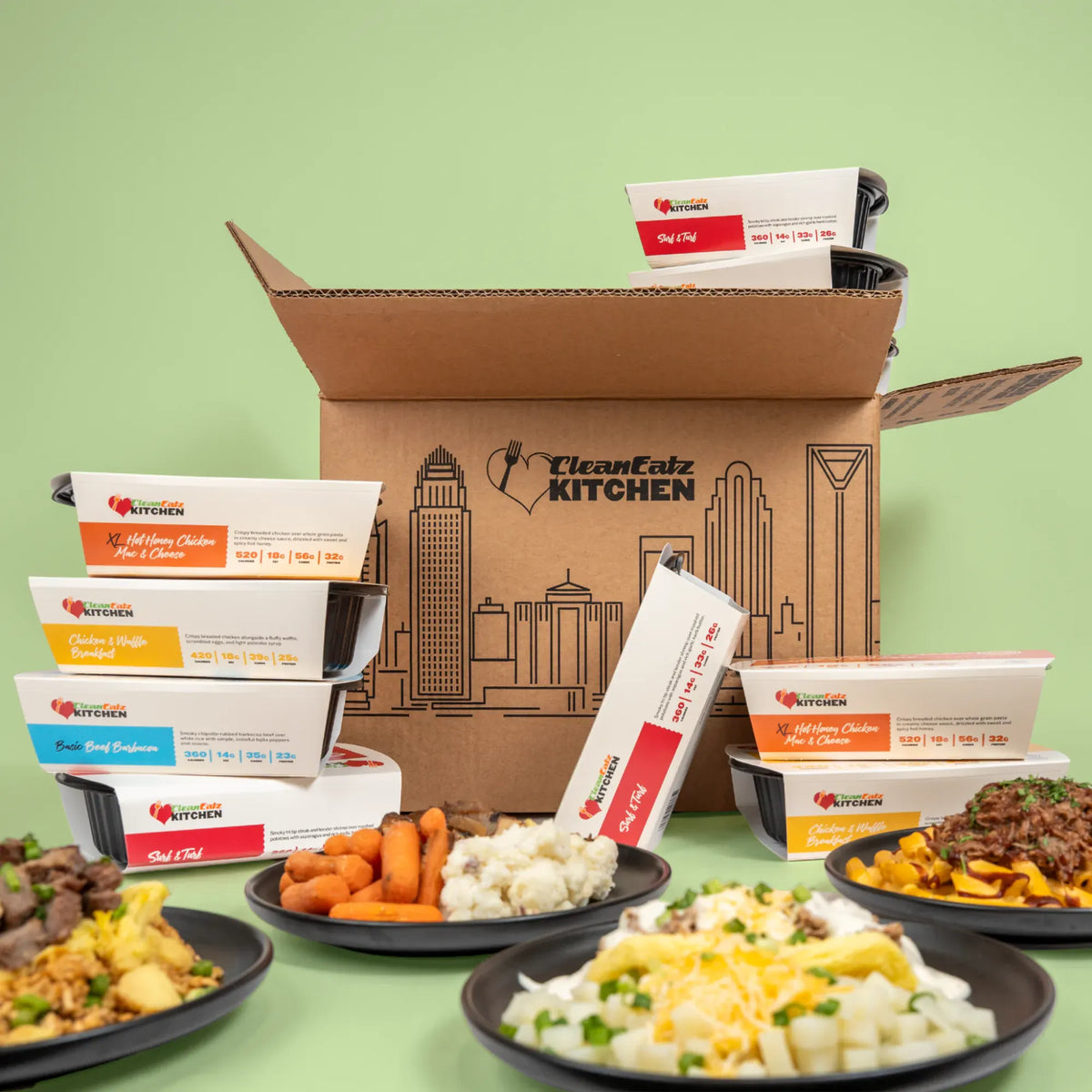
If you want portion control without the container system, pre-portioned meals are another route. Clean Eatz Kitchen meals arrive already portioned, and our current menu (October 2026) runs from 250 to 630 calories a meal, with a median of 410. Each meal's calories and macros are listed on our Nutrition Info page. Our Weight Loss Meal Plan builds those portions into calorie-controlled, ready-to-heat meals, from $89.95 for 10.
Portion control & bigger health goals
Portions are one piece of the plate
Portion control is one piece of long-term weight management. What you put in the containers matters as much as how much. Filling them with lean proteins, vegetables, whole grains and healthy fats leads somewhere very different than filling them with processed foods that happen to fit the volume.
For guidance on which foods to prioritize, our Best Foods for Weight Loss Complete Guide breaks down the science of what makes some foods better for weight loss. Thoughtful food choices plus sensible portions make a foundation you can keep.
Sleep, stress and exercise all shape how well portion control works. A sleep-deprived brain makes different food decisions than a rested one, and stress can override even well-planned portions. The importance of sleep for health extends directly to eating habits and weight management.
Portion control containers bottom line
The bottom line
Portion control containers sit between strict calorie tracking and no structure at all. They work by making a reasonable portion visible and repeatable, and the research suggests that can modestly reduce how much you eat. The most important factor isn't which set you buy. It's whether you'll actually use it every day.
For some people, a color-coded set and a few months of commitment give them the structure they need. For others, measuring cups or hand-size comparisons do the same job. And if you'd rather skip the measuring entirely, pre-portioned meals from Clean Eatz Kitchen give you the portion control with none of the prep.
Whatever you choose, the goal is the same: a more accurate sense of how much food your body actually needs. Containers are one tool among many, and they work best alongside good food choices, regular meal times and the other habits that support long-term health.
The dietitian's take
Use containers as a teacher, not a rulebook. Fill them level for a few weeks, notice what a real portion of rice or pasta looks like on your plate, then start eyeballing and check yourself once a week. If measuring starts to feel stressful, stop and try a simpler method.
Ellie Lopez, LDN, MS · Functional Dietitian
 Make it easy withWeight Loss Meal PlanFrom $89.95View plan
Portion control containers FAQ
Quick answers
Do portion control containers actually work for weight loss?
They can help, modestly. A 2021 review of 36 publications, with a meta-analysis of 28, found portion control tools had a small but significant effect on food intake, mostly from smaller bowls and spoons used together, and a small effect on weight. Smaller plates alone did not help. Consistent daily use matters most.
What do the different colors mean in portion control containers?
In the 21 Day Fix system, green is vegetables (1 cup), purple is fruit (1 cup), red is protein (3/4 cup), yellow is carbs (1/2 cup), blue is healthy fats (1/3 cup) and orange is seeds and dressings (2 tablespoons). Other brands use similar colors, so check your set's guide.
How many portion containers should I use per day?
It depends on your calorie target. Most systems use a chart that converts calories into a daily count. In the 21 Day Fix, the 1,200 to 1,499 calorie bracket allows 3 green, 2 purple, 4 red, 2 yellow, 1 blue and 1 orange container, plus 2 teaspoons of oils. Higher calorie needs add containers.
Are portion control containers better than calorie counting?
Neither is better for everyone. What matters most is the method you'll stick with. Containers remove the weighing and logging, which some people find easier to keep up. Others prefer the precision of counting. Many people use containers to learn portions, then switch to a looser, more intuitive approach.
Can I use regular containers instead of buying a portion control set?
Yes. Any container with a known volume works. A standard measuring cup, a small bowl or even your hand can serve as a portion guide. The advantage of a dedicated set is the color system, which makes tracking food groups easier, but the principle works with any consistent way of measuring.
More portion control guides
Keep reading


Sources
- Vargas-Alvarez MA et al. Impact of portion control tools on portion size awareness, choice and intake: systematic review and meta-analysis. Nutrients 2021
- Robinson E et al. Downsizing food: a systematic review and meta-analysis examining the effect of reducing served food portion sizes on daily energy intake and body weight. Br J Nutr 2023
- Lucassen DA et al. The accuracy of portion size estimation using food images and textual descriptions of portion sizes. J Hum Nutr Diet 2021
- Vargas-Alvarez MA et al. Portion control tableware differentially impacts eating behaviour in women with and without overweight. Appetite 2023
- Healthline: The 21 Day Fix review (container colors, sizes and plan brackets)
On this page