Quick Summary: Building healthy habits is less about willpower and more about strategy. Research suggests that habits often take around two months to become more automatic, not just 21 days. Progress tends to be more sustainable when you start small, shape your environment, and return to the habit after setbacks. The goal is to make healthy choices easier to repeat.
Last reviewed & updated: April 6, 2026
You’ve probably started a health kick before. Maybe it was a new workout routine, a cleaner way of eating, or a commitment to better sleep. And if you’re like many people, that early enthusiasm may have faded somewhere around week three.
Here’s the thing: that doesn’t mean you failed, and it doesn’t mean you lacked discipline. The popular belief that habits form in 21 days is more myth than science. A 2024 systematic review and meta-analysis found that health habits often take longer than expected to become more automatic, with median estimates of about 59 to 66 days and wide variation between individuals and across behaviors.
In other words, if a new routine still feels effortful after a few weeks, that does not mean it is not working. In many cases, it simply means the process is still unfolding.
Understanding how habits gradually become more automatic can help you stop fighting against yourself and start working with your natural patterns instead.
The Science Behind Habit Formation
Many habits follow a pattern often described as a cue, a behavior, and a rewarding outcome. A cue can be something in your environment or routine that prompts the behavior. With repetition, especially in a stable context, that cue becomes more strongly linked to the action, and the behavior can start to feel more automatic over time.
This is why you usually do not have to think much about brushing your teeth in the morning. The cue (waking up), the behavior (brushing), and the outcome (a clean-feeling mouth) have been repeated so often that the routine requires much less deliberate effort. The goal with a new healthy habit is not perfection. It is to repeat the behavior often enough that it begins to feel more natural and consistent.
Encouragingly, some factors seem to support habit formation. Behaviors repeated in stable, predictable contexts tend to become automatic more easily. Some research also suggests that habits practiced earlier in the day may be easier to maintain, likely because there are fewer competing demands. Habits that feel personally meaningful or rewarding may also be easier to repeat. And linking a new behavior to an existing routine, often called habit stacking, can help by giving the new habit a reliable cue.
Why Starting Small Actually Works
One common mistake in behavior change is trying to do too much at once. Overhauling your entire diet overnight or committing to long daily workouts may feel motivating at first, but it can be hard to sustain when stress, fatigue, or a busy schedule show up.
Research on habit formation points to a more practical approach: start with a behavior that is small enough to repeat consistently. Instead of aiming to “eat healthier,” you might begin by adding one vegetable to dinner. Instead of committing to a full workout every day, you might start with a five-minute walk after lunch. Small actions are easier to repeat consistently, and that repetition is what helps a behavior become more automatic over time.
This matters because consistency tends to come before intensity. When a habit feels manageable from the beginning, it is easier to keep going through real life, not just on highly motivated days. Once that behavior starts to feel more natural, you can gradually build on it. In many cases, lasting habits grow from actions that seem almost too simple at first.
Design Your Environment for Success
Relying on motivation alone to make healthy choices every day can be exhausting. A more practical approach is to shape your environment so that healthy choices are easier, more visible, and more convenient.
If you want to eat better, keep nutritious options within easy reach and make less nutritious choices less visible or less convenient. If you want to exercise in the morning, lay out your workout clothes the night before. If you want to drink more water, keep a bottle on your desk or nearby during the day. Small environmental cues like these can make healthy behaviors easier to maintain consistently.
The reverse can help too: adding a little friction to habits you want to do less often may reduce how automatic they feel. For example, keeping the TV remote farther away or removing social media apps from your phone can create just enough pause to make a different choice.
For healthy eating, meal prep can be a useful part of that environment. When balanced meals or snacks are already prepared, there is less last-minute decision-making and less reliance on energy or motivation at the end of the day. Meal planning has been associated with better diet quality, and having ready-to-eat options on hand may make healthy eating easier to maintain in real life.
Building Accountability That Actually Helps
Support from other people can make healthy habits easier to maintain, especially when motivation dips or life gets busy. Whether that support comes from a friend, family member, workout partner, or community, having someone who checks in can help keep your goals visible and make it easier to return to the habit after setbacks.
The most helpful accountability is supportive, realistic, and consistent. Ideally, it comes from someone who encourages you without expecting perfection and who understands that setbacks are part of the process. A workout partner, a regular check-in with a friend, or even a shared goal with a family member can make healthy behaviors feel less isolating and easier to sustain.
For some habits, professional support may also help. Working with a registered dietitian or qualified health coach can provide both structure and guidance, especially when goals feel overwhelming or highly individualized.
For healthy eating, practical systems can also play a role. Meal planning, prepared ingredients, or pre-portioned meals may reduce effort at the end of the day and make balanced choices easier to stick with.
Handling Setbacks Without Derailing
Setbacks are a normal part of behavior change. Life interrupts routines, stress affects decision-making, and even well-established habits can become harder to follow during demanding periods. What matters most is not avoiding every lapse, but getting back to the behavior without turning one interruption into a longer break.
Habit formation does not depend on perfection. Missing a workout, skipping meal prep, or having an off day does not erase the progress you have already made. In most cases, the more helpful response is to restart at the next realistic opportunity rather than waiting for the “perfect” moment to begin again.
Self-compassion may matter here too. Emerging research suggests that people who respond to setbacks with less self-criticism may find it easier to re-engage with their goals, especially in areas like eating behavior. Instead of treating a lapse as proof that you have failed, it can help to see it as part of the learning process and return to your routine as calmly and practically as possible.
Planning for predictable challenges can help too. If stress tends to trigger less balanced eating, keeping easy, satisfying snacks on hand may help. If travel disrupts your exercise routine, having a short bodyweight routine ready can make restarting easier. And if busy weeks interfere with meal prep, a backup option such as simple prepared meals can reduce friction and make healthy choices easier to return to.
Why Meal Delivery Services May Help Support Healthy Habits
Healthy eating can be difficult to maintain because it often involves multiple steps: planning meals, shopping for ingredients, preparing food, cooking, and thinking ahead about portions and timing. When life feels busy or stressful, each of those steps can become a point where good intentions break down.
This is one reason prepared meal options may be helpful for some people. By reducing some of the planning and cooking effort, they can make balanced eating feel more convenient and easier to maintain, especially during busy weeks. In that sense, they may support one of the core ideas behind habit formation: making the desired behavior easier to do consistently.
For people who are trying to build more structure around eating, having pre-portioned meals available may reduce last-minute decision fatigue and make it easier to choose a balanced option instead of defaulting to something less supportive. Meal planning has been associated with better diet quality, and convenient ready-to-eat options may help some people stay more consistent while new routines are still taking shape.
Putting It All Together
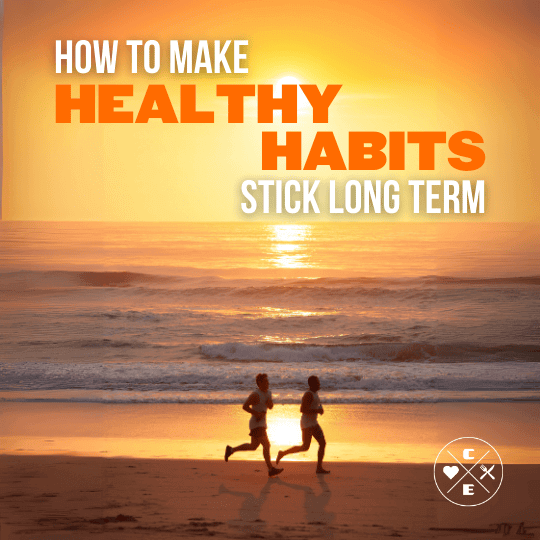
Building healthy habits that last does not have to be complicated, but it does require a long-term mindset. Start with one small behavior you can repeat consistently. Shape your environment to make that behavior easier. Build in support where it helps. And when you inevitably stumble, return to the habit at the next realistic opportunity.
The research does not suggest that habits form overnight. For many people, automaticity begins to build over weeks to months, often around the two-month mark, although the timeline varies widely depending on the person and the behavior. What matters most is not speed, but steady repetition over time.
The habits that meaningfully support health are usually the ones you can maintain for months and years, not just for a few highly motivated weeks at the start. Be patient with the process, notice small wins, and remember that each repetition helps the behavior feel more familiar and easier to return to.
If you're looking for more practical strategies, our guide to healthy lifestyle hacks covers simple tactics you can start using this week. And because rest supports decision-making, energy, and consistency, understanding how sleep affects health can make healthy routines easier to maintain.
The bottom line: healthy habits tend to stick better when you make them easier to repeat. Start small, shape your environment, stay as consistent as you can, and respond to setbacks with a practical reset instead of self-criticism. A few weeks of effort may not feel like much, but over time, those repeated actions can add up to meaningful change.
FAQs
How long does it actually take to form a healthy habit?
A 2024 systematic review and meta-analysis found that health habits often take longer than the popular “21 days” claim. Reported median estimates were around 59 to 66 days, although the timeline varied widely across studies, individuals, and behaviors, ranging from as little as 4 days to as long as 335 days. In practice, habits usually become more automatic gradually rather than all at once.
Why do healthy habits fail even when I’m motivated?
Motivation naturally changes from day to day, which is one reason it may not be enough on its own. Habit research suggests that repetition in a stable context, clear cues, and making the behavior easier to repeat are all important for building automaticity over time. In other words, consistency and environment often matter as much as motivation.
What’s the best time of day to build new habits?
There is no single best time for everyone. Some research suggests that behaviors practiced in stable contexts, sometimes earlier in the day, may be easier to repeat consistently. But the most practical answer is usually the time you can protect and repeat most reliably in your real life.
Can meal delivery services help build healthy eating habits?
They may help some people, especially when planning, shopping, cooking, or portioning feel like barriers. Convenient prepared meals can reduce some of the effort involved in eating well and may make balanced choices easier to repeat. That said, they are best seen as a practical support tool, not a guaranteed habit-forming solution on their own. Meal planning has been associated with better diet quality, but that does not prove that any one meal service will build habits for everyone.
Disclaimer: This content is for educational purposes only and does not replace personalized professional advice.
References
- Singh B, et al. Time to Form a Habit: A Systematic Review and Meta-Analysis of Health Behaviour Habit Formation and Its Determinants. Healthcare (Basel). 2024 Dec 9;12(23):2488.
- Stojanovic M, Grund A, Fries S. Context Stability in Habit Building Increases Automaticity and Goal Attainment. Front Psychol. 2022 Jun 10;13:883795.
- Gardner B, et al. Developing habit-based health behaviour change interventions: twenty-one questions to guide future research. Psychology & Health. 2023. 38(4), 518–540.
- Thøgersen-Ntoumani C, et al. Does self-compassion help to deal with dietary lapses among overweight and obese adults who pursue weight-loss goals? Br J Health Psychol. 2021 Sep;26(3):767-788.
- Drageset J. Social Support. In: Haugan G, Eriksson M, editors. Health Promotion in Health Care – Vital Theories and Research. Springer; 2021.
- Fraser K, et al. Mapping the behaviour change potential of meal kits to positively influence parental food literacy. Public Health Nutr. 2023 Dec 1;27(1):e16.