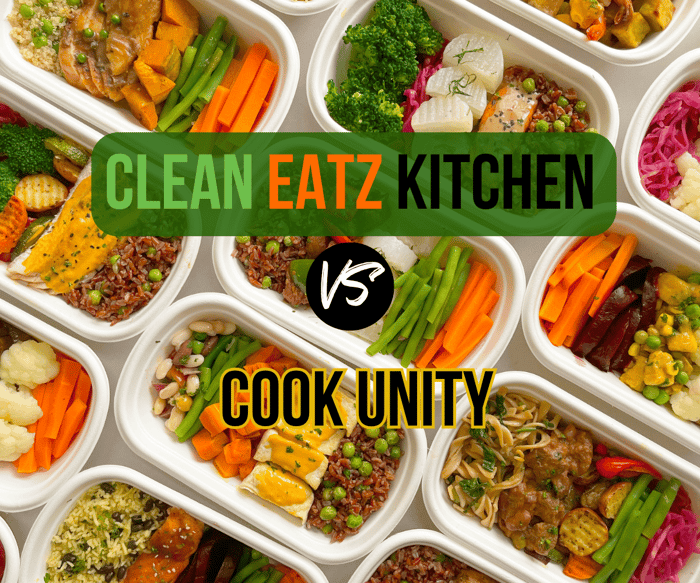
Quick Summary: CookUnity costs $10.39-$12.69 per meal plus $9.99-$11.99 shipping, with chef-driven menus where calories range from 360 to over 1,200 per meal. Clean Eatz Kitchen costs $8.99+ per meal with free shipping on every order, dietitian-input meals with consistent macros, and zero subscription commitment. For 12 meals per week, that's roughly $200-$330 in monthly savings — plus 12-month frozen shelf life instead of CookUnity's 7-day fresh window.
Table of Contents
Why People Search for CookUnity Alternatives
Quick Comparison: CookUnity vs. Clean Eatz Kitchen
Pricing: The Real Monthly Cost
Subscription vs. No Commitment
Fresh 7 Days vs. Frozen 12 Months
Chef Variety vs. Nutritional Consistency
The Calorie and Protein Wildcard
What CookUnity Does Better
What Clean Eatz Kitchen Does Better
Who Should Choose Each Service
How to Cancel CookUnity and Switch
Frequently Asked Questions
Why People Search for CookUnity Alternatives
If you've landed here, there's a good chance one of three things is happening. You're researching prepared meal delivery and CookUnity's chef marketing has caught your eye but the price is making you hesitate. You're a current CookUnity customer who loves the variety but is exhausted by the weekly subscription rhythm. Or you're realizing the math on $11-13 meals plus shipping plus the occasional missed-skip charge isn't sustainable as an everyday eating solution.
CookUnity has built a strong reputation for restaurant-quality meals from award-winning chefs — including James Beard winners, Michelin-starred talent, and Food Network alumni. The variety is genuinely impressive, with 300+ rotating dishes weekly. But the model has trade-offs that don't show up in the marketing copy: chef-driven nutrition that varies wildly meal to meal, a 4-7 day fresh shelf life that punishes flexible schedules, and a subscription structure that charges you whether you're actively choosing meals or not.
For people who eat meal delivery as a lifestyle choice rather than a once-a-week novelty, those friction points add up. The most common frustrations follow predictable patterns. Calories on a single CookUnity meal can range from 360 to over 1,200, which makes hitting weight loss or muscle-building targets a guessing game. The fresh-only format means a busy week of travel or unexpected dinners out turns expensive meals into trash. And the subscription cutoff — like every other service in this space — assumes you'll remember to skip every week you don't want food.
If any of that sounds familiar, Clean Eatz Kitchen exists as a fundamentally different answer to the same problem. For a broader view of how the market compares, our Best Prepared Meal Delivery Services Compared guide ranks all the major players side by side.
Quick Comparison: CookUnity vs. Clean Eatz Kitchen
Before going deep on each factor, here's the at-a-glance view:
| Feature | CookUnity | Clean Eatz Kitchen | Winner |
|---|---|---|---|
| Price per meal | $10.39-$12.69 | $8.99-$10.99 | 🏆 Clean Eatz |
| Shipping | $9.99-$11.99 per delivery | FREE on every order | 🏆 Clean Eatz |
| Monthly cost (12 meals/week) | $620-$760 | $431 | 🏆 Clean Eatz |
| Subscription required | Yes, weekly auto-ship | None — never | 🏆 Clean Eatz |
| Shelf life | 4-7 days (fresh) | Up to 12 months (frozen) | Depends on preference |
| Menu size | 300+ rotating chef dishes | 30+ meals on monthly rotation | 🏆 CookUnity |
| Designed by | 100+ independent chefs | Chefs with registered dietitian input | Depends on goal |
| Calorie consistency | 360-1,200+ per meal | 300-600 per meal | 🏆 Clean Eatz |
| Protein consistency | 15g-50g+ per meal | 20-47g per meal | 🏆 Clean Eatz |
| Goal-based meal plans | Filters on shared menu | Dedicated plans (Weight Loss, High Protein, GLP-1) | 🏆 Clean Eatz |
| Cuisine variety | Global, restaurant-style | American comfort + healthy | 🏆 CookUnity |
The pattern shows up clearly. CookUnity wins on culinary breadth and chef pedigree. Clean Eatz Kitchen wins on price, flexibility, shelf life, and nutritional consistency. The right choice depends on whether you're choosing a meal delivery service primarily for the food experience or primarily for measurable health outcomes.
Pricing: The Real Monthly Cost
The advertised per-meal price never tells the whole story with prepared meal delivery. Shipping fees, subscription charges you forgot to skip, and the food waste from unused fresh meals all stack on top of the headline number. Here's what each service actually costs at typical usage.
CookUnity Pricing (2026)
| Plan Size | Price Per Meal | Weekly Subtotal | Shipping | Weekly Total | Monthly Total |
|---|---|---|---|---|---|
| 4 meals | $12.69 | $50.76 | $9.99 | $60.75 | $243.00 |
| 6 meals | $11.99 | $71.94 | $9.99 | $81.93 | $327.72 |
| 8 meals | $11.49 | $91.92 | $9.99 | $101.91 | $407.64 |
| 12 meals | $10.79 | $129.48 | $9.99 | $139.47 | $557.88 |
| 16 meals | $10.39 | $166.24 | $9.99 | $176.23 | $704.92 |
CookUnity also offers UnityPass, a $23.99/month membership that waives the shipping fee. It saves about $16/month if you order weekly — but it's another subscription on top of the meal subscription, which is exactly the friction many customers are trying to escape.
Clean Eatz Kitchen Pricing (2026)
| Plan | Price Per Meal | 12 Meals | Shipping | 12-Meal Total |
|---|---|---|---|---|
| Build-a-Meal Plan | $8.99 | $107.88 | $0 | $107.88 |
| Weight Loss Meal Plan | $9.49 | $113.88 | $0 | $113.88 |
| Hall of Fame Meal Plan | $9.99 | $119.88 | $0 | $119.88 |
| High Protein Meal Plan | $10.99 | $131.88 | $0 | $131.88 |
What This Means for Your Budget
Compare the same scenario at 12 meals per week for one month. CookUnity at $10.79 per meal works out to $129.48 weekly, plus $9.99 shipping each delivery, totaling roughly $557.88 per month. Clean Eatz Kitchen Build-a-Meal at $8.99 per meal is $107.88 weekly with free shipping, totaling $431.52 per month.
That's $126 saved every month, or about $1,500 per year. And the gap widens at higher meal volumes or when CookUnity customers miss a weekly skip and pay for meals they didn't actively want. For a deeper look at the math on prepared meal delivery costs, our breakdown on the real cost of Clean Eatz Kitchen meals walks through every component.
Subscription vs. No Commitment
This single difference changes everything about how you experience meal delivery — how you order, when you're charged, how much food you waste, and how much mental overhead the service adds to your week.
How CookUnity's Subscription Works
CookUnity operates a standard weekly subscription. You pick a plan size — 4, 6, 8, 12, or 16 meals per week — and select your specific meals from the rotating menu, with selections due before your weekly cutoff. Miss the cutoff, and CookUnity automatically picks meals for you and charges your card. The default behavior is "we'll keep sending you food unless you actively stop us."
For someone with a steady weekly routine who genuinely eats 12 meals every week without exception, this works fine. For everyone else, the friction is constant. Travel weeks, busy weeks, sick weeks, or weeks where you just want to eat something different all require active management. CookUnity's flexibility tools — skip, pause, cancel — work well, but only if you remember to use them. The structure rewards inertia, which is the entire point of any subscription business model.
How Clean Eatz Kitchen's No-Subscription Model Works
Clean Eatz Kitchen flips the default. You browse the menu when you want food, add meals to your cart with no minimum, check out, and meals arrive in 2-3 business days. There is no recurring charge, no skip deadline, no cancellation process. Order again whenever you need more — or don't.
For people with unpredictable schedules, frequent travel, or just a preference for paying only when they're actually buying food, this model removes the entire category of "subscription stress." The only thing you have to remember is to reorder when you're getting low, which most customers handle by ordering 20-30 meals at a time and keeping them in the freezer.
Fresh 7 Days vs. Frozen 12 Months
This is where CookUnity's chef-driven model creates the most real-world friction.
The 7-Day Pressure
CookUnity meals arrive refrigerated in compostable trays using modified atmosphere packaging, which preserves freshness for 4-7 days. They cannot be frozen without compromising texture. If you order 12 meals on Tuesday, you've got until the following Tuesday to eat all of them.
In practice, that means roughly 1.7 meals per day, every day, with no flexibility. A dinner invitation Wednesday? You're behind. Working late Thursday and grabbing something quick? Meals are still ticking. Stomach bug Friday? Now you're throwing food away. The fresh-meal pitch sounds appealing in marketing copy, but for most people's actual lives, it converts into either forced eating or wasted food.
The 12-Month Freezer Advantage
Clean Eatz Kitchen meals arrive flash-frozen on dry ice and last up to 12 months in your freezer at 0°F. You eat them when you're hungry — not when the calendar tells you to. Order 30 meals at once, use them across an entire month, and order again whenever you're running low.
This works particularly well for travelers, people with variable schedules, and anyone who wants to stock up during promotions or simply prefers monthly ordering to weekly. Many Clean Eatz customers run a "freezer pantry" approach: 20-30 meals in rotation at any given time, with reorders triggered by inventory rather than calendar. Our Complete Meal Prep Guide covers this approach in detail.
The food waste reality: Independent reviews and customer feedback consistently report that fresh-only meal delivery customers waste 1-3 meals per week to expiration — that's $11-$38 per week for CookUnity, or $570-$1,975 per year heading directly into the trash. Frozen storage eliminates this category of loss entirely.
Chef Variety vs. Nutritional Consistency
This is the philosophical fork in the road between these two services.
CookUnity's Chef-to-Consumer Marketplace
CookUnity's structural advantage is its 100+ independent chefs and 300+ rotating dishes weekly. The platform functions like a delivery-based restaurant collective: each chef brings their own culinary style, their own recipes, and their own approach to flavor. You can eat Thai red curry on Monday, Korean BBQ on Tuesday, Mediterranean salmon on Wednesday, and Peruvian lomo saltado on Thursday — every dish from a different chef with a distinct point of view.
For foodies, frequent diners-out, and people who get bored quickly, this is genuinely unmatched in the prepared meal delivery space. Nothing else offers this much variety with this level of culinary credibility. The cuisines span global traditions, the chef pedigrees are real, and the food quality at the high end is restaurant-comparable.
Clean Eatz Kitchen's Goal-Oriented Plans
Clean Eatz Kitchen takes a fundamentally different approach. Rather than a single shared menu with filters applied, the brand offers dedicated meal plans matched to specific outcomes:
Build-a-Meal Plan: Complete customization across the full menu of 30+ meals.
Weight Loss Meal Plan: Portion-controlled meals under 500 calories with 20g+ protein.
High Protein Meal Plan: Extra 2 oz protein per serving, delivering 35-47g protein per meal.
GLP-1 Meal Plan: Designed for the reduced appetite and protein needs of GLP-1 medication users.
Gluten-Free Meal Plan: Dedicated gluten-free menu, not a filter on shared kitchens.
Hall of Fame Meal Plan: Customer-favorite proven best-sellers.
The cuisine here skews American comfort food and balanced healthy meals — chicken bowls, pasta dishes, breakfast sandwiches, balanced plates. Less culinary adventure than CookUnity, but every meal is designed to fit a specific nutritional profile rather than each chef's individual philosophy.
The Calorie and Protein Wildcard
This is the issue that doesn't get enough attention in CookUnity reviews. Because each chef designs their own meals to their own standards, nutritional content varies dramatically across the menu.
A single CookUnity meal can range from 360 calories to over 1,200 calories. Protein can range from 15 grams to 50+ grams. The platform offers dietary filters — keto, paleo, low-carb, GLP-1 Balanced, vegan, Mediterranean — but these filter for ingredient categories, not nutritional consistency. Two meals in the "GLP-1 Balanced" category can still have substantially different calorie and protein numbers, because the filter is curating what kind of food it is, not how much of it you're eating.
For someone whose primary goal is enjoying restaurant-quality variety, this is fine. The calorie counts are published, you can read them, and you can choose accordingly. But for anyone trying to manage a calorie deficit, build muscle, preserve lean mass on a GLP-1 medication, or hit specific protein targets, this variability turns meal selection into a constant nutritional audit.
Clean Eatz Kitchen meals fall in a tighter band: 300-600 calories and 20-47 grams of protein per meal across the standard menu. Each meal plan is engineered around its target outcome, so you don't have to read every label to make sure today's lunch isn't accidentally a 1,100-calorie dinner. For people on GLP-1 medications specifically, our Ultimate Guide to the GLP-1 Diet explains why this kind of consistency matters for muscle preservation during rapid weight loss.
What CookUnity Does Better
To be fair to CookUnity, there are several areas where the service genuinely outperforms — and where the premium pricing earns its keep for the right customer.
Culinary breadth and quality: 300+ rotating dishes from 100+ chefs is unmatched in this category. If variety, global cuisines, and restaurant-style food matter most to you, no frozen meal service can compete with this depth.
Chef pedigree: CookUnity's chef roster includes James Beard Award winners, Michelin alumni, and Food Network names. The marketing isn't just promotional — these are real chefs producing real food.
Sustainable packaging: CookUnity's compostable, recyclable, and reusable packaging program is more developed than most competitors. For environmentally conscious customers, this is a meaningful differentiator.
Two-week menu visibility: CookUnity posts menus two weeks ahead, which makes planning easier for customers who want to know exactly what they're getting before each delivery.
Generous portions on many meals: Meals running 700-1,200 calories aren't right for everyone, but they're well-suited to active eaters and bigger appetites who feel underfed by portion-controlled services.
What Clean Eatz Kitchen Does Better
The advantages on the Clean Eatz Kitchen side cluster around accessibility, predictability, and goal-oriented eating.
Significantly lower cost: 25-40% cheaper per meal before factoring in shipping or missed-skip charges, with annual savings around $1,500 at typical usage.
Zero subscription friction: No auto-charges, no skip deadlines, no cancellation process. You order when you need food. Nothing happens when you don't.
12-month freezer life: Eliminates expiration pressure entirely. Order monthly, travel without worry, eat on your schedule.
Free shipping on every order: No $9.99-$11.99 charge per delivery, no minimum threshold to clear, no UnityPass-style add-on subscription to reduce shipping costs.
Consistent macros for goal-oriented eating: Predictable calorie and protein ranges across meals, with dedicated plans for specific outcomes (weight loss, high protein, GLP-1 support, gluten-free).
500+ retail locations nationwide: Clean Eatz Kitchen meals are available in physical Clean Eatz cafés and retail partners — you can try the food in person before committing to delivery, which no other major prepared meal service offers.
10,000+ five-star reviews: A track record built on customers who keep coming back without subscription pressure to do so.
Who Should Choose Each Service
Choose CookUnity If You:
CookUnity is the right answer for you if culinary variety is your top priority and you'll genuinely use it — meaning you'll explore the full menu rather than reordering the same five meals. It also makes sense if you have a flexible food budget of $500+ per month for one person, you eat all your meals within 7 days as a matter of routine, you don't have specific nutritional targets you're trying to hit consistently, and you enjoy the experience of trying new chefs and cuisines as part of your meal delivery value.
Choose Clean Eatz Kitchen If You:
Clean Eatz Kitchen makes more sense if any of the following apply: you want to eat meal delivery as a sustainable everyday solution rather than a premium occasional treat, you're managing a specific health goal like weight loss or muscle gain, you're on a GLP-1 medication and need consistent high-protein meals, you travel frequently or have an unpredictable schedule, you'd rather order monthly than weekly, you've grown tired of subscription deadlines, or you'd like to keep $1,500/year in your pocket without giving up the convenience of prepared meals.
How to Cancel CookUnity and Switch
If you're a current CookUnity customer ready to make the change, here's the process.
Canceling Your CookUnity Subscription
CookUnity allows online cancellation through your account settings. Log in, navigate to Plan Settings, and click Cancel Subscription. Cancellation takes effect immediately, and you won't be charged for future weeks. You can also pause your account if you want to keep the option open without active deliveries.
Important timing note: Cancel before your weekly cutoff to avoid being charged for next week's delivery. CookUnity's cutoff varies by region, so check your account dashboard for your specific deadline.
Making the Switch to Clean Eatz Kitchen
Step 1: Clear freezer space. Clean Eatz meals arrive frozen, so make room. A standard home freezer accommodates 15-30 meals comfortably with some reorganization.
Step 2: Pick the plan that matches your goal. If you want full flexibility, the Build-a-Meal Plan at $8.99/meal lets you choose any 12+ meals from the menu. For weight management, the Weight Loss Meal Plan at $9.49/meal delivers portion-controlled meals under 500 calories. For protein-focused eating, the High Protein Meal Plan at $10.99/meal includes an extra 2 oz of protein per serving.
Step 3: Place your order. Add meals to cart, check out, done. No subscription enrollment, no minimums, no commitment.
Step 4: Adjust to monthly rhythm. Most former subscription customers find that ordering 20-30 meals monthly works better than the weekly cycle. Set a phone reminder for every 3-4 weeks and you're set.
Frequently Asked Questions
Is Clean Eatz Kitchen cheaper than CookUnity?
Yes, significantly. CookUnity costs $10.39-$12.69 per meal plus $9.99-$11.99 shipping per delivery, with subscription required. Clean Eatz Kitchen starts at $8.99 per meal with free shipping and no subscription. For 12 meals per week, CookUnity runs roughly $620-$760 monthly while Clean Eatz Kitchen runs $431, saving you about $200-$330 per month.
Can I order Clean Eatz Kitchen without a subscription?
Yes. Clean Eatz Kitchen has zero subscription requirement. You order when you want, receive your meals, and nothing else happens until you place your next order. There is no auto-renewal, no skip deadlines, and no cancellation process because there is nothing recurring to cancel.
What is the difference between CookUnity and Clean Eatz Kitchen?
CookUnity is a chef-to-consumer marketplace where 100+ independent chefs design their own meals, prioritizing culinary variety and restaurant-quality experience. Clean Eatz Kitchen is a dietitian-input meal delivery service that prioritizes consistent macros, transparent nutrition, and accessible pricing. CookUnity ships fresh meals with a 4-7 day shelf life and requires a weekly subscription. Clean Eatz Kitchen ships flash-frozen meals that last up to 12 months and operates with zero subscription commitment.
Are CookUnity meals dietitian-designed?
No. CookUnity meals are designed by individual chefs, not by registered dietitians. Each chef creates their own recipes with their own approach to nutrition, which is why calorie counts can range from 360 to over 1,200 per meal and protein from 15g to 50g+. If you have specific health goals like weight loss, muscle building, or GLP-1 medication support, this nutritional inconsistency makes meal planning significantly harder.
How long do CookUnity meals last?
CookUnity meals are delivered fresh, never frozen, and last 4-7 days in the refrigerator. They cannot be frozen without affecting texture and quality. Clean Eatz Kitchen meals, by contrast, arrive flash-frozen and last up to 12 months in the freezer, eliminating expiration pressure entirely.
Which is better for weight loss, CookUnity or Clean Eatz Kitchen?
Clean Eatz Kitchen is generally better for weight loss because it offers a dedicated Weight Loss Meal Plan with portion-controlled meals under 500 calories and 20g+ protein per serving. CookUnity's chef-driven menu has wildly variable calorie counts (360-1,200+) which makes consistent calorie deficits harder to maintain. CookUnity is the better choice if culinary variety is your priority, but if measurable weight loss results matter most, Clean Eatz Kitchen's structured plans are designed for that outcome. For more on what works, see our complete guide to the best foods for weight loss.
Can I cancel CookUnity anytime?
Yes, CookUnity allows cancellation, pause, or skip anytime through your account settings. However, you must skip before each weekly cutoff or your card will be charged automatically. Clean Eatz Kitchen avoids this entire dynamic by not requiring a subscription in the first place.
Does CookUnity have GLP-1 friendly meals?
CookUnity offers a GLP-1 Balanced filter, but because meals are designed by individual chefs without a centralized nutritional standard, portion sizes and protein content vary even within the GLP-1 category. For people on Ozempic, Wegovy, or Mounjaro who need consistent high-protein, lower-calorie meals to prevent muscle loss, Clean Eatz Kitchen's GLP-1 Meal Plan and High Protein Meal Plan are designed specifically for this use case with predictable macros.
Is CookUnity worth the price?
CookUnity is worth the premium price if you value restaurant-quality variety above all else, eat all your meals within 7 days, have a flexible $500+ monthly meal budget, and do not need consistent macros for a specific health goal. For everyone else, Clean Eatz Kitchen delivers comparable convenience at 30-40% lower cost with the added benefit of frozen storage flexibility.
The Bottom Line
There's no objectively "better" service between these two — only the better fit for what you're actually trying to accomplish.
CookUnity is genuinely excellent at what it sets out to be: a chef-to-consumer marketplace that delivers restaurant-quality variety from acclaimed culinary talent. If you're choosing meal delivery primarily for the food experience and you have the budget and weekly routine to make it work, CookUnity earns its premium positioning.
Clean Eatz Kitchen is built for a different goal: making prepared meal delivery accessible, predictable, and aligned with specific health outcomes. The pricing is 30-40% lower, the macros are consistent enough to actually support a weight loss or muscle-building plan, the frozen format eliminates food waste, and the no-subscription model removes the deadline anxiety that's the most common complaint about every other service in this category.
The honest question to ask yourself: Are you getting $200+ per month of value from CookUnity's chef variety and fresh-meal experience that you couldn't get from a more affordable, more flexible service?
If yes, CookUnity is the right call. If you're hesitating, the answer is probably to try something else.
Ready to Make the Switch?
If CookUnity's premium pricing, weekly subscription rhythm, or 7-day fresh-meal pressure isn't working for you, Clean Eatz Kitchen offers a fundamentally different approach: zero subscription, lower per-meal cost, free shipping, and 12-month freezer flexibility.
Want maximum customization? Try the Build-a-Meal Plan at $8.99/meal — pick any 12 meals from the full menu, no commitment.
Focused on weight loss? The Weight Loss Meal Plan delivers portion-controlled meals under 500 calories with 20g+ protein at $9.49/meal.
Building muscle or on a GLP-1? The High Protein Meal Plan includes an extra 2 oz of protein per serving, delivering 35-47g protein per meal at $10.99/meal.
Want proven customer favorites? The Hall of Fame Meal Plan features the most-loved meals from over 10,000 five-star reviews.
For a broader look at how Clean Eatz Kitchen stacks up against the full meal delivery landscape, check our 2026 Best Prepared Meal Delivery comparison.
This comparison reflects 2026 pricing, policies, and meal plans for both CookUnity and Clean Eatz Kitchen. Meal delivery services occasionally update their offerings — verify specific details on each company's website before purchasing. Pricing and menu subject to change.