
Choosing a low-calorie meal delivery service often leads to one big question: fresh meals or frozen? Advances in food science and modern packaging have significantly changed how both formats perform in terms of nutrition, taste, shelf life, and convenience. For anyone trying to manage calories, control portions, and reduce the daily burden of meal planning, understanding the differences between these two delivery styles is essential. Here are the pros and cons of each, and how to make the choice that will work best for you.
What "Fresh" and "Frozen" Actually Mean in Meal Delivery
Before comparing nutrition labels, it helps to understand what these terms mean:
- Fresh meal delivery typically means fully cooked meals that are refrigerated (not frozen) and shipped in insulated boxes with ice packs. They arrive cold, ready to heat, and carry a consume-by date that usually falls three to five days after delivery. Some services stretch this to seven days using modified atmosphere packaging, which replaces oxygen inside the sealed container with gases like nitrogen and carbon dioxide to slow bacterial growth.
- Frozen meal delivery means meals are cooked, then rapidly frozen, often through flash freezing or blast freezing, before shipping. They arrive solid, stored at or below 0°F, and can sit in your freezer for weeks or even months before you eat them.
The distinction matters because each method differs slightly with regard to convenience, versatility, and time.
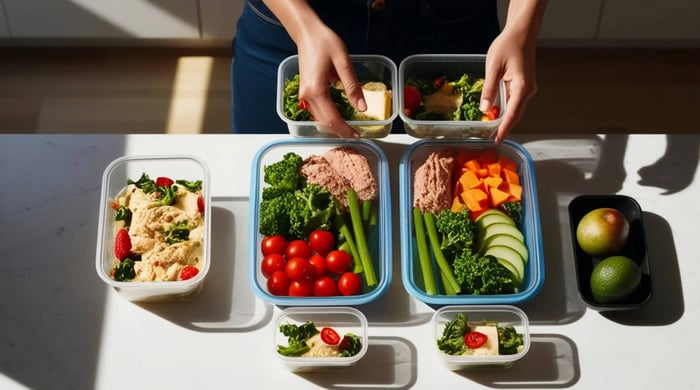
Meal prep doesn't have to be complicated.
Get our free guide — shortcuts, meal ideas, and a system that makes eating well the easy option.
The Role of Flash Freezing
Not all freezing is equal. Commercial flash freezing drops food temperatures to well below 0°F in under 90 minutes, forming tiny ice crystals that preserve cell structure. This is a completely different process from tossing leftovers into your home freezer, where slow freezing creates large ice crystals that rupture cell walls and degrade texture. This rapid crystallization is what allows commercially frozen foods to maintain quality far better than home-frozen equivalents.
The Nutrition Question: Does Freezing Destroy Nutrients?
This is the claim that drives much of the "never frozen" marketing, the implication that freezing somehow strips away the vitamins and minerals you're paying for. The science tells a different story. The freezing process itself does not destroy nutrients.
Flash-frozen fruits and vegetables can actually retain more nutrients than their fresh counterparts. The reason is timing. Fresh produce begins to slowly decay the moment it's harvested. By the time it travels from the farm to the distribution center to the grocery store to your refrigerator, days or weeks have passed. Frozen produce, on the other hand, is typically processed within hours of harvest.
There are specific scenarios where nutritional value takes a hit. Freeze-thaw cycles are the biggest culprit. Every time food thaws and refreezes, ice crystals reform and grow larger, damaging more cells and releasing water-soluble vitamins. This is why frozen meals that experience temperature fluctuations during shipping may arrive with lower quality than meals that stay consistently frozen.
- High-fat foods are moderately more vulnerable to freezer degradation. Long exposure to freezing temperatures can oxidize fats, subtly altering both flavor and nutritional composition over extended storage periods.
- Blanching before freezing can cause modest losses of heat-sensitive vitamins like vitamin C. But this trade-off is well understood, as blanching inactivates enzymes that would otherwise cause far greater nutrient breakdown during storage.
The macronutrient profile of your meal remains virtually unchanged by freezing. The marginal differences in micronutrient retention between a fresh and a frozen meal are small enough that they're unlikely to matter in the context of an overall balanced diet.
Taste and Texture: The Perception Gap vs. the Reality
Where Fresh Meals Have a Genuine Edge
Dishes with crisp vegetables, delicate herbs, or textural contrasts may taste better when they've never been frozen. Water-rich ingredients like lettuce, cucumber, and tomatoes lose their structure when frozen and thawed because ice crystal expansion ruptures their cell walls. If your low-calorie meal plan revolves around salads, fresh salsas, or dishes where raw produce is the star, fresh delivery has a legitimate textural advantage.
Where Frozen Meals Have Closed the Gap
For cooked dishes, grilled proteins, roasted vegetables, stews, curries, and grain-and-protein bowls, the quality gap between fresh and frozen has narrowed significantly. Modern flash-freezing preserves the moisture and structure of cooked foods far better than conventional freezing methods. The tiny ice crystals formed during rapid freezing don't puncture cell walls the way larger, slower-forming crystals do.
Clean Eatz Kitchen ships flash-frozen meals designed to reheat with minimal texture loss. Their heating instructions account for the specific challenges of frozen-to-table preparation, guiding customers to add small amounts of water when needed and to heat at intervals that prevent the rubbery texture people associate with old-school frozen dinners. If you're eating primarily cooked, protein-forward, low-calorie meals, a well-made frozen meal reheated properly is difficult to distinguish from a fresh one that's kept in your fridge.
Shelf Life and Food Safety: The Practical Divide
The Fresh Meal Window
Consume refrigerated prepared meals within three to four days. Some meal delivery services claim seven-day windows, often through modified atmosphere packaging or specific preservative strategies. But the biological reality doesn't change: bacteria multiply rapidly in the 40°F to 140°F danger zone, and even properly refrigerated meals experience gradual bacterial growth. This means fresh meal delivery comes with built-in pressure. You receive a box of five or six meals, and every day that passes narrows your safe-eating window. Miss a couple of dinners because plans changed? You're now staring at meals on day five or six, wondering whether they're still safe. Perishable food that's been left at room temperature for more than two hours should be discarded entirely.
The Frozen Meal Runway
Frozen meals, stored at 0°F or below, remain safe indefinitely from a food safety standpoint. Quality does decline over time, as flavors can dull and textures can degrade after several months, but the safety risk doesn't increase the way it does with refrigerated food. Most frozen meal delivery services recommend consuming meals within two to three months for optimal quality, but the margin for error is enormous compared to fresh meals. You can receive a delivery on Monday, eat two meals that week and three the next, and save the rest for the following month without any safety concerns. This flexibility is especially relevant for low-calorie dieters. When you're managing portions carefully, you don't want to feel pressured to eat a meal just because it's about to expire.
Food Waste: The Hidden Cost of "Eat It or Lose It"
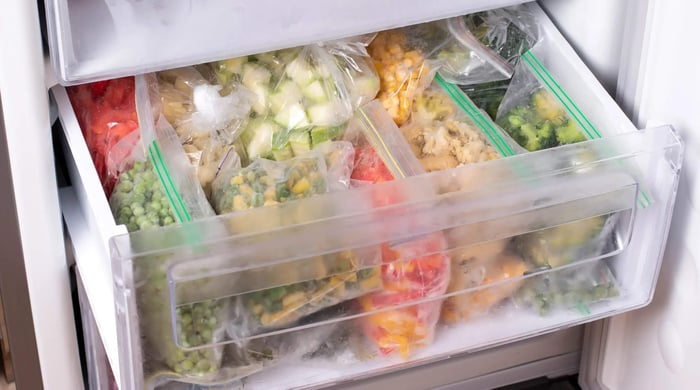
Almost 40 percent of all the food in the United States is uneaten or wasted, and the meal delivery format you choose could be part of the problem. Frozen foods generate 47 percent less household food waste compared to refrigerated and ambient foods. When food lasts longer, less of it ends up in the trash.
Fresh meal delivery, by its nature, creates urgency. If life gets in the way and those carefully portioned, calorie-counted meals go to waste. You've paid for the nutrition, the preparation, and the shipping, and none of it reaches your body. Frozen meal delivery eliminates most of this waste risk. For budget-conscious consumers counting both calories and dollars, the waste reduction alone can offset any perceived premium in pricing.
Reheating Done Right: Getting the Best Out of Frozen Meals
Microwave Best Practices
Most frozen low-calorie meals are designed for microwave reheating, but technique matters. Reheat all prepared meals to an internal temperature of 165°F. Beyond safety, a few adjustments dramatically improve quality. Thawing in the refrigerator for 12 to 24 hours before reheating produces noticeably more even heating and better texture. If you're heating from frozen, reduce microwave power to 70 percent and increase the time, as this prevents the edges from overcooking while the center stays cold. Stirring or rotating the meal halfway through also helps distribute heat evenly. Adding a tablespoon of water before microwaving prevents the drying effect that gives frozen meals a bad reputation. The steam generated keeps proteins moist and grains tender without adding calories.
Oven and Skillet Alternatives
For anyone willing to spend an extra five to ten minutes, oven reheating at 350°F yields results nearly indistinguishable from freshly cooked. This works particularly well for protein-heavy meals where you want a slight exterior sear rather than the uniform softness that microwaving creates. Skillet reheating gives you the most control over texture and can revive a frozen meal to restaurant quality. It's not always practical for a quick weeknight dinner, but it's worth knowing for meals you want to enjoy more slowly.
Who Should Choose Fresh and Who Should Choose Frozen
There's no universally correct answer. The right choice depends on your eating patterns, schedule, and what you're optimizing for.
Fresh meal delivery fits best if you:
- Eat on a consistent, predictable schedule (same meals, same days, every week)
- Prioritize raw or lightly cooked ingredients like salads, fresh herbs, and crisp vegetables
- Live in a climate and housing situation where deliveries are retrieved quickly
- Prefer not to think about reheating technique and want grab-and-heat simplicity
- Order only what you'll realistically eat within four to five days
Frozen low-calorie meal delivery fits best if you:
- Have an unpredictable schedule with travel, late nights, or shifting plans
- Want to stock up and maintain a rotating inventory of calorie-controlled meals
- Prioritize zero food waste and maximum value from every dollar spent
- Eat primarily cooked, protein-forward meals where frozen-to-heated quality is high
- Need the flexibility to skip days without losing meals or money
Clean Eatz Kitchen has built its model around this second profile, offering flash-frozen, macro-balanced meals that arrive ready for the freezer and stay there until you need them. For anyone managing a low-calorie eating plan alongside a busy or unpredictable life, this format removes the time pressure that makes fresh delivery stressful rather than convenient.
The fresh-versus-frozen debate in meal delivery is driven more by marketing narratives than by nutritional science. The evidence is clear: flash freezing preserves the calorie counts, macronutrient ratios, and the vast majority of micronutrient content that matter for a controlled eating plan.
Where fresh meals hold a genuine advantage, raw-ingredient dishes, peak-day texture, that advantage is narrow and applies to specific meal types rather than to meal delivery as a category. What frozen delivery offers in return is substantial: weeks of shelf life instead of days, dramatically less food waste, more flexible eating schedules, and a cost-per-usable-meal that often beats fresh when you factor in realistic consumption patterns. For low-calorie dieters especially, the ability to have a 400-calorie meal waiting in the freezer on a chaotic Wednesday night, rather than discovering that Tuesday's fresh delivery is no longer safe to eat, is a practical advantage that compounds over weeks and months.
The smartest approach is to stop treating "fresh" and "frozen" as quality tiers and start treating them as delivery formats, each suited to different lifestyles. If your life runs on a clock and you eat like clockwork, fresh can work beautifully. If your life is anything less than perfectly predictable, frozen low-calorie meal delivery is the more strategic choice.
Sources:
- Grover and Negi. Recent developments in freezing of fruits and vegetables: Striving for controlled ice nucleation and crystallization with enhanced freezing rates – Journal of Food Science (2023)
- Zhu et al. Effects of Freezing, Frozen Storage and Thawing on the Water Status, Quality, Nutrition and Digestibility of Meat: A Review – Food Science & Nutrition (2025)
- Williams. Mayo Clinic Minute: Benefits of flash-frozen produce – Mayo Clinic (2019)
- Leftovers and Food Safety – USDA (2020)
- New Research Reveals Frozen Food's Role in Reducing Food Waste – American Frozen Food Institute (2023)
- Mugo et al. Effect of blanching time-temperature on potassium and vitamin retention/loss in kale and spinach – Food Science & Nutrition (2024)
- Martindale. The potential of food preservation to reduce food waste – Proceedings of the Nutrition Society (2017)