Starting a low-calorie meal delivery plan seems simple on the surface: meals arrive, you heat them up, and the structure supposedly does the rest. But the real experience of living on pre-portioned meals for 30 days is more nuanced. Beyond convenience, a meal delivery plan quietly changes how you make decisions about food and how much mental energy eating actually requires. Over the course of a month, the experience moves through distinct phases.
The First Week: Relief Disguised as Excitement
The opening days of any low-calorie meal delivery service feel almost euphoric, and the reason isn't the food. It's the absence of decisions. Food choices are among the most frequent decision-making situations in daily life, and decision fatigue from those choices can lead to impulsive, less health-conscious eating. Some estimates put the number of food-related decisions the average person makes at over 200 per day. Removing those decisions feels like setting down a weight you didn't realize you were carrying.
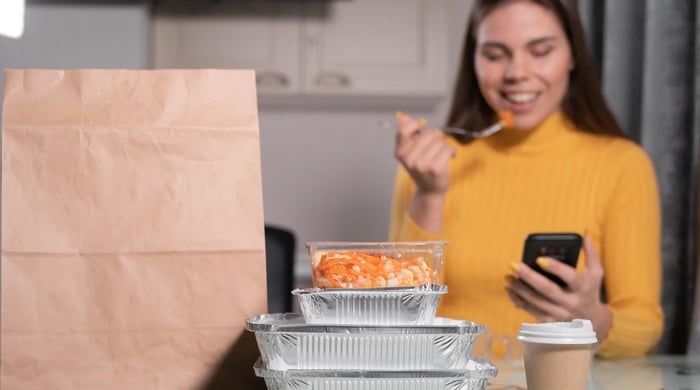
During the first week, there's a specific rhythm that forms quickly. Meals arrive frozen or fresh, pre-portioned and labeled with macros. You open the fridge, grab a container, heat it, and eat. No grocery lists. No standing in the produce aisle debating between chicken thighs and salmon. No last-minute pizza orders because you forgot to thaw something.
The portions look small at first, as most low-calorie plans deliver meals in the 350 to 600 calorie range, with 20 to 35 grams of protein per serving. If you've been eating restaurant-sized portions or cooking without measuring, the visual adjustment is real. A 450-calorie plate of grilled chicken with roasted vegetables and brown rice looks modest next to the 900-calorie burrito bowl you were building at home.

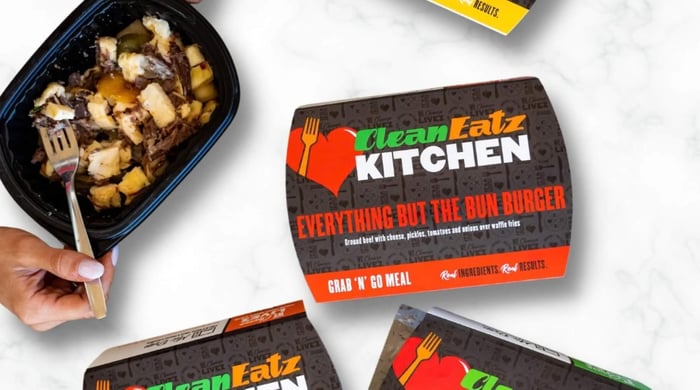
But here's what the first week teaches you: you're not as hungry as you expected. Structured meals with adequate protein create a satiety pattern that unstructured eating doesn't. The meals aren't large, but they're nutritionally dense enough that the gap between meals feels manageable rather than agonizing. Clean Eatz Kitchen build their weight loss plans around this exact principle, by keeping each meal under 500 calories with at least 20 grams of protein and moderate fat and carbs, designed to fill you up without overshooting your daily target. That kind of macro architecture is hard to replicate consistently when you're cooking on your own, particularly on a busy Tuesday night.
Meal prep doesn't have to be complicated.
Get our free guide — shortcuts, meal ideas, and a system that makes eating well the easy option.
The Decision Fatigue Dividend Nobody Talks About
There are significant relationships between time spent on meal preparation and both mental health outcomes and stress levels. When meal preparation is handled for you, the ripple effect extends beyond nutrition into overall psychological well-being. This cognitive relief persists as long as the meals feel satisfying enough that you don't spend mental energy thinking about what you wish you were eating instead. Which brings us to what happens in week two.
Week Two: When the Menu Starts Feeling Smaller Than It Is
Around day eight to ten, something predictable happens. The same rotating menu that felt liberating a week ago starts feeling repetitive. It's a well-documented psychological phenomenon called sensory-specific satiety, which is the decrease in pleasure you derive from a food as you eat more of it. A limited variety of foods can reduce overall intake because the novelty-driven appetite that makes you eat past fullness never gets triggered. The flip side is that it feels boring, and boredom is one of the top reasons people abandon structured diets.
Services with rotating weekly menus and diverse protein and cuisine options handle this phase better than those offering static selections. The ones that cycle through 30 or more meal options per month, spanning different proteins and flavor profiles, give your palate enough variety to stay engaged without the risk of overconsumption that unlimited restaurant-style variety introduces. Lean into the monotony, and accept that not every meal needs to be a culinary event. The purpose of these meals has shifted from "exciting new thing" to "reliable infrastructure for the rest of your day." That reframing makes the sameness tolerable.
The Portion Recalibration That Rewires Your Eating Habits
By the middle of week two and into week three, something quietly remarkable happens. Your sense of what constitutes "enough food" begins to shift. This is the portion recalibration phase, and it's arguably the most valuable long-term outcome of a 30-day stretch on a calorie-controlled service. The portion size effect is one of the most well-established findings in nutrition science. Serving larger portions increases energy intake. People eat more simply because more food is in front of them, not because they're hungrier. After two weeks of eating pre-measured 400 to 500-calorie meals, your internal portion gauge resets.
The Week Three Plateau — And Why It's Not What You Think
If you're weighing yourself, week three often delivers a frustrating surprise: the scale stalls. The steady downward trend from weeks one and two flattens, and the instinct is to assume the plan has stopped working. What you're experiencing is a combination of normal physiological processes, and understanding them is the difference between pushing through and quitting.
First, there's water weight redistribution. The rapid initial loss on any calorie-restricted plan includes significant water weight, and as your body establishes a new equilibrium, water retention normalizes. Second, there's metabolic adaptation, a well-studied phenomenon where your body becomes more efficient at using energy in response to calorie restriction. Energy expenditure declines during calorie restriction beyond what would be predicted by the loss of body mass alone, driven by changes in thyroid hormones, leptin levels, and mitochondrial efficiency. The practical response is to stay the course. The calorie deficit is still operating, even when the scale doesn't reflect it daily. This is precisely the phase where most people abandon structured diets.

What Actually Changes in Your Daily Life by Week Four
By the final week, the most surprising changes have nothing to do with calories or weight. There are structural shifts in how your day operates.
- Your relationship with cooking changes. After a month of not cooking nightly meals, you don't return to the kitchen with dread. You return with intention. Cooking becomes something you choose to do for enjoyment on a weekend, not a chore you endure every evening under the pressure of making something "healthy enough." Several people who document month-long trials with prepared meal services report that the break from cooking actually rekindled their interest in it.
- Your grocery spending becomes visible. One of the hidden costs of unstructured eating is its invisibility. A coffee here, a lunch out there, a grocery run where half the produce rots in the crisper drawer. A month on a fixed meal delivery plan forces a comparison. Many people discover they were spending more on their unstructured food habits than the delivery plan costs.
- Your evening routine expands. This sounds trivial, but it's not. The average home-cooked dinner takes 45 minutes to an hour, including planning, prep, cooking, and cleanup. Over 30 days, that's roughly 22 to 30 hours of reclaimed time. Time spent on meal preparation directly correlates with stress, meaning those recovered hours don't just add free time. They remove a stress-generating activity.
- Your snacking pattern reveals itself. Without the background noise of meal planning and cooking, you can see your snacking habits clearly for the first time. The mid-afternoon handful of crackers, the post-dinner bowl of cereal, become visible as discrete choices rather than seamless parts of an unexamined routine. That visibility alone changes behavior, even without rules about what you can or can't snack on.
By week four, the most meaningful change isn’t the meals themselves but the clarity you gain about time, spending, and everyday eating habits.
The Honest Downsides Nobody Puts in a Headline
A 30-day experiment with low-calorie meal delivery is not without genuine friction, and pretending otherwise would undermine everything this piece is trying to do.
- Social eating becomes awkward. When friends suggest dinner out, you face a choice: skip the meal plan for the night (and deal with the guilt or recalculation), bring your own food (and deal with the social weirdness), or decline the invitation entirely. There's no elegant solution. Most services don't account for the social dimension of eating, and the calorie-conscious mindset can make restaurant menus feel like minefields.
- Taste fatigue is real and personal. Even with rotating menus and diverse options, everyone has a threshold. Some people thrive on structured repetition. Others find that by day 20, the sight of another container of chicken and vegetables triggers genuine resistance. The research on sensory-specific satiety confirms this is basic neurology. Your pleasure response to repeated flavors diminishes with exposure.
- You learn that calorie restriction has a psychological cost. Even moderate restriction, eating at a 15 to 20 percent deficit from maintenance, carries a cognitive load. Adherence is highest in the first three months and declines meaningfully over time. Some participants report anxiety around food tracking and a compliance burden that can paradoxically trigger overeating when the structured plan ends. Awareness of this pattern is protection against it.
The most valuable output of 30 days on a low-calorie meal delivery service is the behavioral data you collect about yourself. You learn your hunger patterns when you're genuinely hungry versus when you're eating out of habit or boredom. You learn which meals satisfy you at 450 calories and which leave you reaching for snacks an hour later. You learn whether you're someone who needs variety to stay engaged or someone who finds comfort in repetition. You also walk away with a recalibrated sense of portion size that persists well beyond the plan itself. The visual education of eating pre-portioned meals for 30 consecutive days rewires your defaults in a way that reading a nutrition label never accomplishes.
The prepared meal delivery market is projected to reach over $27 billion by 2032, growing at around 12 percent annually. That growth is driven by people who want nutritional structure without the time investment of building it themselves, and who've recognized that consistency is what actually moves the needle on long-term dietary change.
Whether you're considering a 30-day trial or you're already mid-month and wondering if the plateau phase will pass, the trajectory is the same. The first week sells you on convenience. The second week tests your tolerance for routine. The third week challenges your patience with the scale. And the fourth week leaves you with something quieter but more durable than a number, a different understanding of how much food you actually need, and how much mental energy you were spending on the question.
Sources:
- The Effect of Decision Fatigue on Food Choices: A Narrative Review — Nutrients (PMC)
- New Dietary Trends — Meal Kit Delivery Services as a Source of Nutrients: A Scoping Review — Nutrients (PMC)
- An Exploration of How Meal Preparation Activities Relate to Self-Rated Time Pressure, Stress, and Health in Canada — BMC Public Health (PMC)
- Impact of Calorie Restriction on Energy Metabolism in Humans — Experimental Gerontology (PMC)
- Metabolic Adaptation Delays Time to Reach Weight Loss Goals — Obesity (PMC)
- Calorie Restriction with or without Time-Restricted Eating in Weight Loss — New England Journal of Medicine
- Diet Composition, Adherence to Calorie Restriction, and Cardiometabolic Disease Risk Modification — Aging Cell
- Optimal Diet Strategies for Weight Loss and Weight Loss Maintenance — Journal of Obesity & Metabolic Syndrome (PMC)
- Sensory-Specific Satiety, the Variety Effect and Physical Context — Appetite (PubMed)
- The Psychology of Food Intake and Portion Control — Institute of Food Science and Technology
- Exploring Consumer Value in Meal Kit Delivery: A Mixed-Method Approach — Journal of Consumer Behaviour
- Prepared Meal Delivery Market Size and Growth — Coherent Market Insights
- Clean Eatz Kitchen — Healthy Meal Prep & Delivery Services