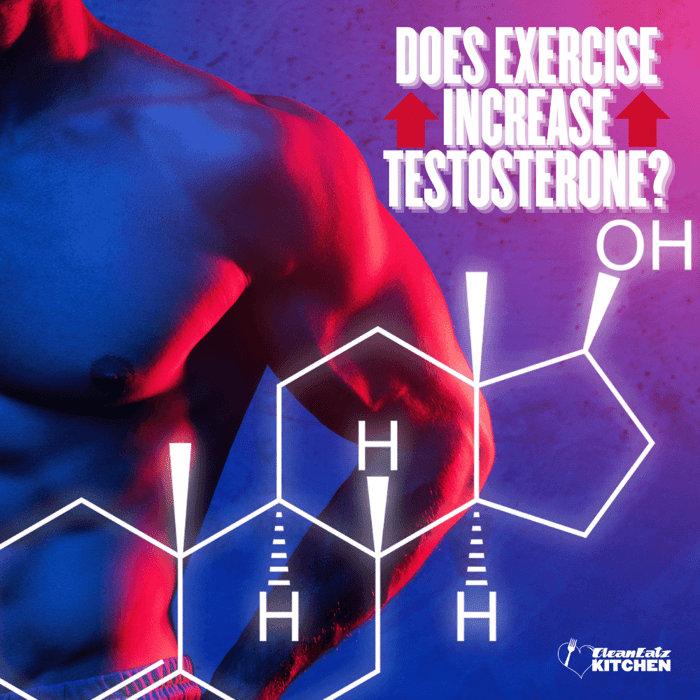
Quick Answer: Yes, exercise can influence testosterone—but context matters. Some workouts produce a short-lived rise after training, while regular resistance training, improved body composition, adequate energy intake, and good sleep may support healthier testosterone status over time. The most reliable levers are progressive strength training, moderate conditioning, adequate calories and protein, and 7–9 hours of sleep. In contrast, very high endurance volumes combined with poor recovery or chronic under-eating may lower testosterone in some people.
Last reviewed & updated: April 16, 2026
The relationship between exercise and testosterone is more nuanced than fitness marketing often suggests.
Yes, lifting weights can temporarily increase testosterone, but the size and duration of that response depends on the training stimulus, recovery, sleep, and overall energy availability.
These distinctions matter because the wrong approach can backfire. Very high training loads without enough calories, poor sleep, and aggressive dieting may suppress testosterone rather than support it.
The goal is to build muscle, improve muscle-to-fat balance, and recover in a way that helps maintain a healthy hormonal environment.
For a complete framework on structuring exercise for body composition and health, see our Complete Exercise Guide for Weight Loss.
Complete Exercise Guide.
Get our free guide — all the info you need on exercising, all in one place.
What the Science Actually Shows
Research draws an important distinction between the acute and longer-term effects of exercise on testosterone.
Acute changes happen in the minutes after training. Heavy resistance exercise and some interval protocols can produce a temporary rise in testosterone, often lasting less than an hour after the session. This response is real, but it should not be overinterpreted: a short-term post-workout increase does not necessarily predict muscle gain on its own.
Longer-term changes are more complex. Over time, regular resistance training, improved body composition, adequate recovery, and sufficient energy intake may support healthier testosterone status, particularly in men with obesity, low baseline fitness, or other lifestyle factors that negatively affect hormonal health. In men with obesity, weight loss has been associated with higher testosterone levels, but exercise is only one part of that picture.
A 2025 cross-sectional study published in Frontiers in Physiology found that testosterone levels were positively associated with muscle mass in adult males. That is useful supportive evidence, but because the study was cross-sectional, it cannot show that higher testosterone directly caused greater muscle mass or that training itself was the reason for the difference.
Endurance training presents a more nuanced picture. Moderate cardio supports cardiovascular health, metabolic health, and body-fat management. The concern is not cardio itself, but very high endurance volumes combined with inadequate fueling, low energy availability, or insufficient recovery, which have been associated with lower resting testosterone in some male endurance athletes.
For women, resistance training improves strength, lean mass, bone health, and body composition without causing the kind of testosterone-driven “bulking” often implied in fitness myths. The main benefits come from neuromuscular adaptation, improved muscle quality, and better metabolic health—not from large hormonal shifts.
Who Benefits Most
Not everyone responds equally to exercise-related changes in testosterone. In general, the biggest improvements tend to occur in people with the most room to improve their overall metabolic health.
Men with low baseline fitness, excess body fat, poor sleep, or low energy availability may benefit more from improving these fundamentals than from chasing any single “testosterone-boosting” workout. Resistance training can be part of that process, especially when combined with better recovery, nutrition, and body-composition changes.
People carrying excess body fat—particularly central adiposity—often see testosterone improve with weight loss. Adipose tissue influences hormone metabolism, and reductions in fat mass are often accompanied by changes in insulin sensitivity, SHBG, and testosterone levels.
Sleep also matters. Short sleep duration and sleep restriction have been associated with lower testosterone levels in men, so improving sleep may help support hormonal health alongside training and nutrition.
Heavy alcohol use can also work against these improvements. Chronic excessive intake has been associated with lower testosterone and broader disruption of male reproductive and metabolic health.
Best Training for Healthy Testosterone
The training approach most likely to support healthy testosterone is one that builds muscle, improves body composition and metabolic health, and allows adequate recovery. In practice, that usually means making resistance training the foundation, using compound lifts that recruit large muscle groups, progressing gradually over time, and adding conditioning in a way that supports health without compromising recovery.
Strength training should be the foundation. For most people, 2–4 sessions per week built around fundamental movement patterns—squat, hinge, push, pull, and carry—is a practical starting point. Exercises such as squats, deadlifts, presses, rows, lunges, and carries recruit more total muscle mass and generally create a stronger training stimulus than isolation work alone.
Conditioning should complement your lifting rather than dominate it. Moderate cardio supports cardiovascular fitness, metabolic health, and body-fat management, while occasional interval work can add efficiency and variety. The goal is not to avoid cardio, but to keep total training stress appropriate to your recovery, energy intake, and overall goals.
Progression is what matters most over time. Add load, reps, or training volume gradually, and avoid turning every session into an all-out effort. Consistent training plus adequate sleep, calories, and recovery is far more supportive of hormonal health than chasing exhaustion.
Weekly Templates
Here are two sample weekly frameworks that balance resistance training, conditioning, and recovery. They are not the only effective options, but they reflect the kind of structure that can support muscle gain, body composition, and overall hormonal health when paired with good sleep and nutrition.
3-Day Template
Day 1 — Full Body A: Back squat 4×6–8, Bench press 4×6–8, Row 3×8–10, RDL 3×8, Plank 3×30–45s
Day 2 — Conditioning: Elliptical or treadmill intervals 16–20 min (30s hard/90s easy) + Zone 2 10–15 min
Day 3 — Full Body B: Deadlift 4×3–5, Overhead press 4×6–8, Pull-ups or Lat pulldown 3×8–10, Split squat 3×8/side, Carry 3×40–60m
4-Day Template
Day 1 — Lower: Squat 5×5, RDL 4×6–8, Lunges 3×10/side, Calf raises 3×12–15
Day 2 — Upper: Bench 5×5, Row 4×6–8, Incline DB press 3×8–10, Face pulls 3×12–15
Day 3 — Conditioning: Treadmill Zone 2 25–40 min (or bike/row)
Day 4 — Full Body Power: Deadlift 4×3–5, Push press 4×3–5, Chin-ups 3×6–8, Hip thrust 3×8–10, Farmer carry 3×60m
Recovery, Sleep, and Nutrition
Training provides the stimulus, but recovery is where much of the adaptation happens. Hormonal health depends not only on exercise, but also on energy intake, sleep, and overall recovery.
Calories matter. Chronic low energy availability can work against testosterone, performance, and recovery, even in people who train consistently. If fat loss is the goal, a modest calorie deficit is generally more sustainable than aggressive restriction. Use a reliable Calorie Calculator to estimate a reasonable target.
Protein helps preserve lean mass during training and fat loss. A daily intake that adequately covers training demands is more important than chasing a single “perfect” number. Spreading protein across meals can also help support muscle protein synthesis. The Protein Calculator can help estimate your target, and Protein Powder can be a practical option when whole-food intake falls short.
Carbohydrates help fuel higher-intensity training. If training volume is high, overly restrictive carbohydrate intake may impair performance and recovery. Prioritizing carbs around harder sessions can be useful, especially before and after training.
Dietary fat matters too. Fat contributes to overall diet quality and supports normal hormone physiology, so chronically driving fat intake too low is not a smart strategy when training hard. Emphasize minimally processed sources such as olive oil, nuts, seeds, eggs, and fatty fish.
Sleep is one of the most important recovery variables. Short sleep duration and sleep restriction have been associated with lower testosterone levels in some studies, in addition to worse recovery and appetite regulation. Aim for 7–9 hours per night whenever possible, with a consistent sleep schedule and wind-down routine.
Alcohol is best kept moderate. Larger amounts are associated with poorer sleep and may negatively affect testosterone and broader metabolic health. If you drink, keep intake moderate and avoid letting it interfere with recovery.
Micronutrients matter most when intake is inadequate. Vitamin D, zinc, and magnesium are all relevant to normal physiology, but supplements are best used to correct genuine gaps rather than as a shortcut or “testosterone booster.” Food first is still the better default.
Common Pitfalls to Avoid
Several common training and lifestyle patterns can work against healthy testosterone.
Too much endurance, not enough strength. The issue is not cardio itself, but very high training volumes without enough resistance work, recovery, or energy intake. A better balance is to make strength training the foundation and use conditioning to support cardiovascular health without overwhelming recovery.
Chronic calorie deficits. Aggressive dieting can reduce energy availability and make recovery harder, especially when training volume is high. In most cases, a modest deficit is more sustainable than prolonged restriction.
Sleep deprivation and heavy alcohol use. Both are associated with poorer recovery, and both may negatively affect testosterone status over time. Prioritizing sleep and keeping alcohol intake moderate is usually more helpful than searching for a specific “testosterone-boosting” protocol.
Program hopping. Constantly changing routines makes it harder to apply progressive overload consistently. Sticking with a well-designed program long enough to build skill, track progress, and recover appropriately is usually the better approach.
Testing Basics
If you have symptoms such as persistent fatigue, low libido, reduced morning erections, or unexplained loss of strength—and those symptoms persist despite good training, nutrition, sleep, and recovery habits—it may be worth discussing testing with your clinician.
In most cases, the starting point is morning total testosterone, interpreted alongside symptoms and clinical context. Free testosterone may also be useful in some cases, especially when SHBG is likely to be altered.
Illness, medications, body composition, and underlying health conditions can all affect testosterone-related markers, so context matters. Testing is typically done in the early morning, and repeat testing on a separate day is often recommended before confirming a diagnosis.
Lifestyle optimization still matters. Strength training, sleep, weight management, adequate energy intake, and alcohol moderation can all improve symptoms and overall health, and they remain foundational whether or not medical treatment is eventually needed.
The Bottom Line
Exercise can support healthy testosterone levels, but the effect depends on training, recovery, sleep, energy intake, and overall metabolic health. In practice, the most reliable approach is to make resistance training the foundation, keep conditioning moderate, recover well, and avoid chronic under-fueling or excessive training stress.
The biggest improvements often come from getting the basics right: consistent strength training, adequate sleep, a sustainable fat-loss and muscle-maintenance strategy, and moderate alcohol intake. Those habits support testosterone status, performance, recovery, and long-term health.
For a complete guide to structuring exercise for health and body composition, see our Complete Exercise Guide for Weight Loss.
FAQs
Does lifting weights increase testosterone?
Yes—lifting weights can cause a temporary rise in testosterone after training. Over time, resistance training may also support healthier testosterone status indirectly by helping improve muscle mass, body composition, metabolic health, and recovery habits.
What exercises are best for increasing testosterone?
Resistance exercises that use large muscle groups—such as squats, deadlifts, presses, rows, and pull-ups—are the most practical place to start. The goal is not to chase a specific “hormone workout,” but to build muscle, improve muscle-to-fat balance, and recover consistently over time.
Can too much cardio lower testosterone?
Moderate cardio is beneficial. The concern is very high endurance volumes combined with poor fueling, low energy availability, or inadequate recovery, which have been associated with lower testosterone in some male endurance athletes.
How long until exercise affects testosterone levels?
Some people notice improvements in energy, training performance, or body composition within weeks. Changes in testosterone-related markers, when they happen, usually depend on the bigger picture—training consistency, sleep, energy intake, recovery, and broader metabolic changes over time.
Should women worry about testosterone from lifting weights?
No. Resistance training does not cause the kind of testosterone-driven “bulking” often implied in fitness myths. For women, the benefits include greater strength, more lean mass, better bone health, and improved metabolic health.
Disclaimer: This content is for educational purposes only and does not replace personalized professional advice.
References
- Riachy R, et al. Various Factors May Modulate the Effect of Exercise on Testosterone Levels in Men. J Funct Morphol Kinesiol. 2020 Nov 7;5(4):81.
- Zhang W, et al. (2025) Testosterone levels positively linked to muscle mass but not strength in adult males aged 20–59 years: a cross-sectional study. Front. Physiol. 16:1512268.
- Hackney AC. Hypogonadism in Exercising Males: Dysfunction or Adaptive-Regulatory Adjustment? Front Endocrinol (Lausanne). 2020 Jan 31;11:11.
- Cupka M, Sedliak M. Hungry runners - low energy availability in male endurance athletes and its impact on performance and testosterone: mini-review. Eur J Transl Myol. 2023 Apr 11;33(2):11104.
- Hackney AC, Lane AR. Low testosterone in male endurance-trained distance runners: impact of years in training. Hormones (Athens). 2018 Mar;17(1):137-139.
- Okobi OE, et al. Impact of Weight Loss on Testosterone Levels: A Review of BMI and Testosterone. Cureus. 2024 Dec 21;16(12):e76139.
- Smith I, Salazar I, RoyChoudhury A, St-Onge MP. Sleep restriction and testosterone concentrations in young healthy males: randomized controlled studies of acute and chronic short sleep. Sleep Health. 2019 Dec;5(6):580-586.
- Genchi VA, et al. Understanding the Role of Alcohol in Metabolic Dysfunction and Male Infertility. Metabolites. 2024 Nov 15;14(11):626.