
Access Denied
IMPORTANT! If you’re a store owner, please make sure you have Customer accounts enabled in your Store Admin, as you have customer based locks set up with EasyLockdown app. Enable Customer Accounts
- cardio
- clean eatz
- covid
- desserts
- diet
- exercise
- fat burn
- healthy dinner ideas
- hydration
- keto
- lifestyle
- meal plans
- meal prep
- muscle
- recipes
- snacks
- sustainability
- vegetables
- water
- weight loss
- workouts
- Nutrition
- Exercises & Fitness
- Healthy Recipes
- Weight Loss
- Healthy Lifestyle
- Mental Health
- Sleep
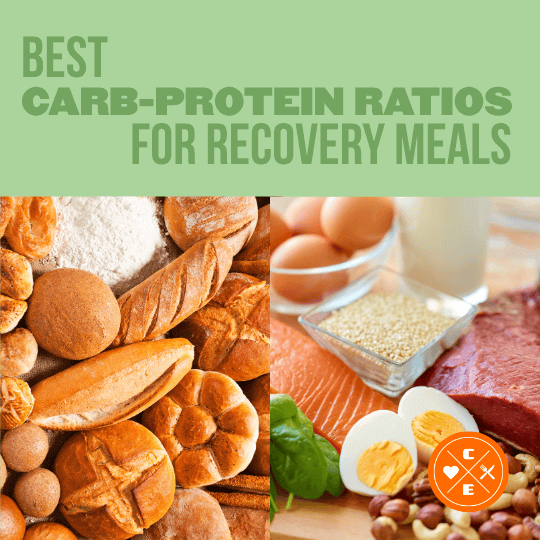
Best Carb-Protein Ratios for Post-Workout Recovery
Tina Sassine, RD, MPH
Nutrition
02/08/2026 7:02pm
6 minute read
Listen to article
Audio generated by DropInBlog's Blog Voice AI™ may have slight pronunciation nuances. Learn more
Quick Answer: The ideal carb-to-protein ratio for recovery depends on your workout. Endurance athletes benefit from a 4:1 ratio (carbs to protein), while strength trainers might require a different ratio. 1 Eating within 30 minutes to 2 hours post-exercise can help with glycogen restoration and muscle repair. 2
Why Ratios Matter for Recovery
Post-workout recovery isn’t just about what you eat — it’s about how nutrients work together.
Carbohydrates and protein play different but complementary roles after exercise, and the ratio between them can influence how efficiently your body recovers.
After training, your muscles are in a highly receptive state. Carbohydrates help replenish glycogen, the stored fuel that gets depleted during exercise, while protein supplies amino acids needed for muscle repair and rebuilding.
When these nutrients are consumed together in appropriate proportions, they can support faster recovery than either one alone.
The carb-to-protein ratio isn't one-size-fits-all. A marathon runner finishing a two-hour training session has different recovery needs than someone who just completed a 45-minute strength workout. The type of exercise determines how depleted your glycogen stores are and how much muscle repair is required.
For a complete look at how nutrition supports different training goals, check out our Complete Exercise Guide for Weight Loss.
Matching Ratios to Your Workout Type
Endurance training (running, cycling, swimming for 60+ minutes) depletes glycogen stores significantly. Some research supports a 3- 4:1 carb-to-protein ratio for these athletes— about four grams of carbohydrate for every gram of protein. 1 This higher carbohydrate load focuses on energy restoration while still providing enough protein to begin muscle repair. If you ran for 90 minutes, your primary need is refueling the tank.
Strength training and high-intensity interval training (HIIT) typically cause more muscle damage than they deplete glycogen stores when compared with long endurance exercise. Because the primary adaptive stimulus from these workouts is muscle repair and growth, protein intake becomes a higher priority after training to support muscle protein synthesis, reduce muscle breakdown, and facilitate recovery. 1
Carbohydrates remain important — they help maintain blood glucose, support training volume, and enhance glycogen restoration when needed — but the evidence does not support a fixed carbohydrate-to-protein ratio for strength or HIIT recovery. 1
Instead, ensuring sufficient protein (20–40 g, or ~0.25–0.40 g/kg) shortly after exercise and spread evenly throughout the day consistently stimulates muscle repair and training adaptations, while carbohydrate intake should be tailored to overall energy needs, session intensity, and recovery time.1
Timing Your Recovery Nutrition
The post-workout window—sometimes called the "anabolic window"—is real, though perhaps not as narrow as once believed.
Your muscles are most receptive to nutrients within the first 30 minutes to 2 hours after exercise. During this time, blood flow remains elevated and insulin sensitivity is heightened, meaning nutrients get absorbed and utilized more efficiently.
That said, if you can't eat a full meal immediately, don't stress. If daily carbohydrate intake is high enough (about 8 g/kg/day or more), muscles usually restore their glycogen within a day—making precise post-workout timing less critical. 1
Timing becomes most important when recovery time is limited, such as:
Multiple training sessions in the same day
Competition or training schedules with < 4–8 hours between bouts
In these situations, eating sooner after exercise helps accelerate recovery, supporting both energy restoration and muscle repair so the body is ready for the next session.
Practical Recovery Meal Ideas
While ratios aren't set, here's an example that translates ratios to actual food:
4:1 ratio (endurance recovery): Greek yogurt with a banana and honey, or a smoothie with fruit, oats, and a scoop of protein powder. The emphasis is on carbs with enough protein to begin muscle repair.
3:1 ratio (moderate training/ mixed training): Rice bowl with grilled chicken and vegetables, or whole grain toast with eggs and avocado. Balanced energy restoration with solid protein support.
2:1 ratio (strength training): Chicken breast with quinoa, or salmon with sweet potato. More protein-forward while still providing the carbs needed to replenish glycogen and support protein synthesis.
The key is consistency. Having go-to meals you can prepare quickly—or having pre-made options ready—eliminates the guesswork when you're tired after training.
Making Recovery Nutrition Easy
Meal prep simplifies recovery nutrition dramatically. Batch-cook your carbohydrate sources (rice, quinoa, sweet potatoes) and protein (chicken, salmon, eggs) on weekends. Pre-portion them into containers matching your target ratios. When you finish a workout, you grab and reheat rather than cook from scratch.
If meal prep isn't realistic for your schedule, Clean Eatz Kitchen's High Protein Meal Plan offers chef-prepared, portion-controlled meals designed for recovery. At $59.95 with no subscription required, you get balanced macros without the planning. Their meals arrive frozen and microwave-ready—useful for hitting that recovery window when time is tight.
For more meal prep strategies, our Complete Meal Prep Guide walks through batch cooking and portioning in detail.
Frequently Asked Questions
What is the best carb-to-protein ratio for post-workout recovery?
It depends on your workout type. Endurance athletes benefit from a 4:1 carb-to-protein ratio to replenish glycogen stores. Strength trainers do better with an emphasizes on more protein for muscle repair.
How soon after a workout should I eat for optimal recovery?
Aim to eat within 30 minutes to 2 hours after exercise. Your muscles are most receptive during this window. If you can't eat a full meal right away, start with a quick snack containing both carbs and protein, then follow up with a complete meal.
The Bottom Line
Recovery nutrition isn't complicated once you understand the framework. Match your carb-to-protein ratio to your workout type. Eat within the recovery window when your muscles are primed to absorb nutrients.
The best recovery plan is one you'll actually follow. Whether you meal prep on Sundays or rely on convenient pre-made options, consistency matters more than perfection. Get the ratios roughly right, stay within the timing window, and your body will handle the rest.
References:
1. Betts, J. A., Thompson, D., & Gonzalez, J. T. (2024). Athletes’ nutritional demands: A narrative review of nutritional requirements. Frontiers in Nutrition, 11, Article 10848936. https://doi.org/10.3389/fnut.2024.10848936
2. Burke, L. M., van Loon, L. J. C., & Hawley, J. A. (2017). Postexercise muscle glycogen resynthesis in humans. Journal of Applied Physiology, 122(5), 1055–1067. https://doi.org/10.1152/japplphysiol.00940.2016 (Reprinted in Nutrients, 2017). https://www.ncbi.nlm.nih.gov/pmc/articles/PMC5596471/
Disclaimer: This content is provided for informational use only and is not intended as medical advice or as a substitute for the medical advice of a healthcare professional.
Related Articles
HACCP Documentation: Regulatory Requirements
14 minute read

How to Stick to Your Meal Plan When Life Gets Busy
10 minute read

Invalid password
Enter