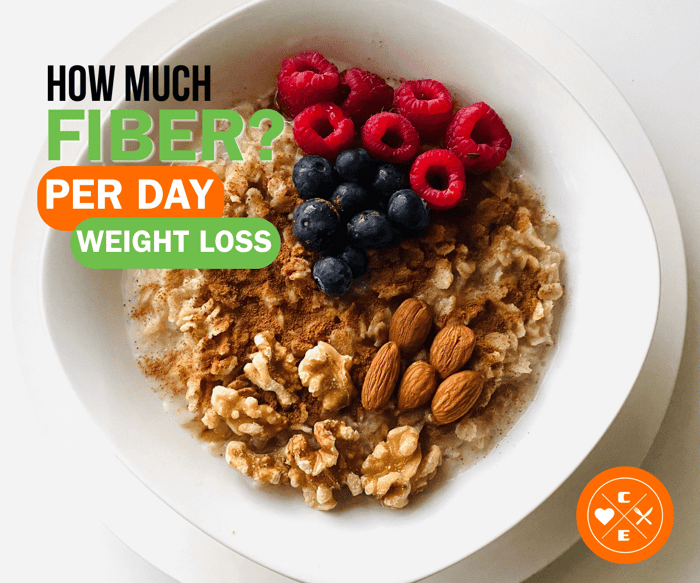

Quick Answer: Fiber drives weight loss through three overlapping effects: it reduces hunger without requiring willpower, it physically reduces the calories your body extracts from food (a 3-7% absorption reduction that compounds over time), and it shifts your gut bacteria toward species associated with leanness. Research links every 4-gram daily fiber increase to about 3 pounds of weight loss over six months — independent of calorie restriction. Aim for 30-38 grams a day, increase gradually, and prioritize beans, oats, vegetables, and berries.
Most weight loss strategies depend on fighting hunger. Fiber doesn't ask you to fight anything. It changes how hungry you actually get, smooths out the blood sugar swings that drive cravings, and — strangely — even reduces the number of calories your body extracts from the food you eat. None of these effects require deprivation, which is why every meaningful piece of weight loss research keeps landing on the same conclusion.
In an analysis of the POUNDS Lost trial — a randomized study of 345 adults over six months — each 4-gram increase in daily fiber was associated with about 3.25 additional pounds of weight loss, independent of calorie restriction or macronutrient composition.1 A 2023 analysis of workplace participants in the Full Plate Living program found similar results: change in fiber intake emerged as a consistent and strong predictor of weight loss.2 People who eat more fiber lose more weight. The harder question is why, and the answer is that fiber works through several different mechanisms at once.
For the bigger picture on what fiber does throughout your body — gut microbiome, blood sugar, heart health, the full picture — our Ultimate Guide to Dietary Fiber covers the science in depth. This article is the weight-loss-specific take.
Health starts with a healthy gut
Get all of our FREE info on fiber — best foods, soluble vs. insoluble, recipes and more
Why fiber kills hunger before willpower has to
The most immediate effect of eating more fiber is that you stop being hungry as often, and the meals you do eat keep you full for longer. This happens through three overlapping mechanisms that all push in the same direction.
Fiber-rich foods take up physical space. A cup of raspberries (8 grams of fiber) and a cup of marshmallows have similar volumes, but the raspberries deliver a fraction of the calories. Your stretch receptors don't care about calories — they respond to volume — so you feel full faster on the same number of calories.
Soluble fiber also forms a gel in your stomach and small intestine that slows gastric emptying. Food remains in your stomach longer. The "I just ate but somehow I'm hungry again" feeling gets postponed by hours. This is why a bowl of oatmeal at 8 a.m. carries you to noon while a sugary cereal has you raiding the pantry by 10.
And fiber-rich foods trigger the release of satiety hormones — CCK, GLP-1, PYY — that tell your brain you're full. CCK rises within fifteen minutes of fiber consumption. GLP-1 peaks 30-60 minutes after a meal. PYY stays elevated for 3-6 hours, which is why a high-fiber breakfast tends to reduce calorie intake at lunch and even at dinner.3 These are the same hormone systems that drugs like Ozempic act on — fiber doesn't replicate the effect at anywhere near the same magnitude, but it's working through the same pathways.
The blood sugar piece reinforces all of this. When you eat refined carbohydrates, glucose floods your bloodstream quickly, your pancreas overcorrects with insulin, and an hour or two later your blood sugar crashes below baseline. You feel hungry, irritable, and specifically craving more sugar. Fiber slows this process down — the gel from soluble fiber traps carbohydrates and releases them gradually, which means your blood sugar rises in a smooth curve, your insulin response is moderate, and there's no rebound craving an hour later.
The practical result of all this: people on high-fiber diets tend to consume 100-300 fewer calories per day than people on lower-fiber diets, without consciously trying. Over a year, that's a 10-30 pound swing for the same level of effort.
The calorie absorption thing nobody mentions
Here's the part that surprises people. Fiber doesn't just make you feel fuller — it actually reduces the number of calories your body extracts from the food you eat.
Studies have shown that high-fiber diets reduce fat absorption by 3-4% and protein absorption by 5-7%.4 Fiber physically traps some of the macronutrients in food and carries them out of the body before your small intestine can absorb them. Some of those trapped nutrients also feed your gut bacteria, which use them rather than letting your body have access to them.
The percentages sound small, but they compound. Across a 2,000-calorie day, that's roughly 50-100 calories your body never sees — 5-10 pounds a year from this mechanism alone, no other change required. Calorie counts on high-fiber foods slightly overstate what your body actually absorbs, while refined foods deliver closer to 100% of their stated calories. The math quietly favors the fiber eater.
The gut bacteria angle
The bacteria in your colon are the third part of the story. They influence appetite, energy storage, inflammation, and metabolism — and fiber is their primary food source.
Different bacterial populations have different metabolic effects. Some species are associated with leanness; others with weight gain. The diet that feeds the lean-associated species most reliably is one rich in diverse plant fibers. When beneficial bacteria ferment fiber, they produce short-chain fatty acids — particularly butyrate, propionate, and acetate — that reduce inflammation, improve insulin sensitivity, and signal satiety to the brain through the gut-brain axis.5 Low-fiber diets starve these bacteria and shift the microbiome toward species that promote inflammation and metabolic dysfunction.
This is why fiber diversity matters as much as fiber quantity for weight loss. Hitting 30 grams from oatmeal alone is good. Hitting the same 30 grams from oats, beans, berries, vegetables, nuts, and seeds is meaningfully better — because it feeds a wider range of bacterial species and builds a more resilient microbiome over time.
How much fiber, and how to actually get there
The standard daily recommendation (25-38 grams depending on age and sex) is the floor for general health. For meaningful weight loss effects, the research clusters around intakes of 30-38 grams a day. Going much higher — into the 40-50 gram range — produces some additional benefit but also increases the digestive adaptation challenges that derail most attempts.
The current average American intake is about 15 grams.6 Most people need to roughly double their current intake. The right pace is gradual — around 5 grams of additional fiber per week — to avoid the bloating and gas that send people back to refined carbs by Friday. Our guide to ramping up fiber without the bloating covers the gradual approach in detail.
The practical formula is simple: build every meal around a high-fiber base, and add lean protein. The combination is more satiating than either nutrient alone, and the meals tend to be lower in calories than refined-carb alternatives. For specific high-fiber foods organized by category, our list of the 30 highest-fiber foods covers the heavy hitters. For the broader take on weight-loss-friendly eating across all food categories, our complete guide to the best foods for weight loss covers the full landscape.
If executing a high-fiber, calorie-controlled plan from scratch every week isn't realistic, our Weight Loss Meal Plan handles both at once — portion-controlled meals built around fiber-rich whole foods like vegetables, legumes, and whole grains, with the protein you need for sustained satiety. Our comparison of the best high-fiber meal delivery services covers what to look for if you're shopping around.
A few questions people ask
How does fiber help with weight loss?
Through three overlapping mechanisms: it increases satiety so you eat less without trying, it reduces the calories your body absorbs from food by 3-7%, and it feeds gut bacteria associated with leanness. Research links each 4-gram daily fiber increase to about 3 pounds of weight loss over six months.
How much fiber should I eat to lose weight?
Target 30-38 grams a day. The average American eats 15g, so doubling intake is usually the goal. Ramp up gradually — about 5 grams per week — to avoid digestive discomfort.
Does fiber help reduce belly fat?
Yes, specifically. High soluble fiber intake is associated with less visceral fat. One five-year study found a 3.7% reduction in visceral fat for every 10-gram daily increase in soluble fiber.
Can you lose weight just by eating more fiber?
Often yes — modest weight loss of 2-5 pounds typically happens with fiber alone, even without other changes. The bigger benefit is that fiber makes calorie reduction nearly automatic by increasing fullness, which compounds over months.
What's the best high-fiber food for weight loss?
Beans and lentils. They pair 6-8g of fiber per half cup with 7-9g of protein, and research shows bean consumption increases acute fullness by 31% versus control foods. Chia, oats, berries, and avocado are also strong choices.
The bottom line
Fiber works for weight loss because it isn't a willpower strategy — it's a physiology strategy. You eat less because you're fuller, your blood sugar stays steady so cravings don't take over, your body absorbs slightly fewer calories, and your gut bacteria shift toward species associated with leanness. None of these effects require fighting hunger, which is why fiber-based approaches tend to outlast deprivation-based ones.
The simplest move is to add one fiber-rich whole food to every meal and gradually build from there. If you'd rather skip the planning, our Weight Loss Meal Plan delivers calorie-controlled, fiber-rich meals built around exactly the foods that drive these mechanisms.
References
1. Miketinas DC, Bray GA, Beyl RA, Ryan DH, Sacks FM, Champagne CM. Fiber Intake Predicts Weight Loss and Dietary Adherence in Adults Consuming Calorie-Restricted Diets: The POUNDS Lost Study. Journal of Nutrition. 2019;149(10):1742-1748.
2. Kelly RK, Calhoun J, Hanus A, Payne-Foster P, Stout R, Sherman BW. Increased dietary fiber is associated with weight loss among Full Plate Living program participants. Frontiers in Nutrition. 2023;10:1110748.
3. Slavin JL. Dietary fiber and body weight. Nutrition. 2005;21(3):411-418.
4. Baer DJ, Rumpler WV, Miles CW, Fahey GC Jr. Dietary fiber decreases the metabolizable energy content and nutrient digestibility of mixed diets fed to humans. Journal of Nutrition. 1997;127(4):579-586.
5. Koh A, De Vadder F, Kovatcheva-Datchary P, Bäckhed F. From Dietary Fiber to Host Physiology: Short-Chain Fatty Acids as Key Bacterial Metabolites. Cell. 2016;165(6):1332-1345.
6. U.S. Department of Agriculture and U.S. Department of Health and Human Services. Dietary Guidelines for Americans, 2020-2025.