
Quick Answer: Week one on a GLP-1 medication is mostly an exercise in eating less, more often, and more gently than you are used to. Expect appetite to drop sharply and nausea to peak somewhere around days two to four before easing. Build meals around protein, keep fat and portion size down, eat on a schedule rather than waiting for hunger, and sip fluids between meals rather than with them. This page covers what each stretch of the week tends to feel like, the strategies that help, and the specific symptoms that warrant a call to your prescriber rather than patience.
Table of Contents
What Week One Actually Feels Like
The first week is strange more than it is difficult.
The internet supplies two versions and neither is accurate for most people. One says nothing much happens. The other is a wall of horror stories. What actually tends to happen is subtler and harder to prepare for: your appetite stops behaving like your appetite. Food you liked on Monday sounds unappealing by Wednesday. A portion that used to be normal now feels like too much halfway through. And because nobody warned you, you spend day three standing in front of the fridge genuinely unsure whether you are supposed to make yourself eat.
That confusion is the thing worth addressing, because the physical side of week one is usually manageable. Gastrointestinal side effects during dose initiation affect a substantial share of people starting these medications, but they are typically mild to moderate and settle as the body adjusts.
A note before anything else: your prescriber sets your dose, your titration schedule, and your targets. Nothing here replaces that conversation, and if you take medication for diabetes or blood pressure, your other prescriptions may need adjusting as your intake changes. This page is about what to eat around a plan your clinician has already made.
GLP-1 Meal Plan Delivery

$94.95
Protein-packed, portion-controlled meals that work with your medication — not against it. Chef-prepared and ready in minutes. GLP-1 Meal Plan – A Curated Box for Your Goals Dietitian-selected, chef-prepared meals designed to support your body on Ozempic®, Wegovy®, Mounjaro®, and… read more
Day by Day
Day 1
Usually uneventful. Most people feel close to normal on injection day, with maybe a slight drop in appetite by evening.
Eat your usual food, a little smaller. This is not the day to stress-test your tolerance with something rich, and it is a good day to cook ahead, because days two through four are when you will least want to.
Days 2 to 4
This is the stretch. Nausea is most common during dose initiation and often peaks somewhere in this window, frequently worse in the morning. Appetite drops noticeably. Fullness arrives much earlier than you expect and much more forcefully.
Shift to four or five small meals instead of three normal ones, and lean on gentle proteins and simple starches. Cold food is often easier than hot when you are queasy, which is why Greek yogurt, a protein smoothie, or cold chicken frequently go down when a hot meal will not.
The single most useful habit here is slowing down. Twenty to thirty minutes a meal, fork down between bites. The fullness signal is delayed on these medications, so eating at your old pace means overshooting before your body has told you anything.
New to GLP-1s? You're not alone.
Get our free GLP-1 nutrition guide — what to eat, what to expect, and how to get the best results.
Days 5 to 7
Most people notice things improving by day five or six. Appetite stays low, but the nausea recedes and you start to develop a working sense of what portion size actually leaves you comfortable.
You can widen the range a little here, still avoiding the high-fat and heavily spiced end of things. By day seven you should have a rough answer to three questions: how much is too much, which foods sit well, and what your new version of satisfied feels like.
If you want a structured week of meals to work from rather than improvising, our 7-day GLP-1 meal plan lays out every meal with macros and a grocery list. For the longer-term picture beyond the adjustment period, the Complete GLP-1 Diet Guide is the deeper resource.
The Protein Question
Protein matters more on these medications than it does on most diets, and the reason is worth understanding rather than taking on faith.
A meaningful share of the weight lost on GLP-1 medications is lean mass rather than fat. Published trial data puts it somewhere between roughly a quarter and 40 percent depending on the drug and the study, with fat loss outpacing lean loss overall and considerable variation between individuals. That proportion is broadly comparable to what happens with any substantial weight loss. The difference is that the total is larger, so the absolute amount of lean tissue involved is larger too. Our guide to preventing muscle loss on GLP-1 medications goes through the training side properly; what follows here is just the week-one protein piece.
What helps is protein intake and resistance training. Research presented to the Endocrine Society in 2025 found that among people on semaglutide, eating less protein was associated with greater muscle loss, alongside being older and being female. That is an association rather than proof of cause, but it points the same direction as everything else in this area.
On the number: a 2025 joint advisory from several professional societies recommends 1.2 to 1.6 grams of protein per kilogram of body weight daily during active weight loss on these medications. That is roughly 85 to 112 grams for a 70kg adult and 120 to 160 grams for a 100kg one. The flat "100 to 120 grams" figure that circulates online is a reasonable midpoint and a poor rule, because it shortchanges larger people and overshoots for smaller ones. Work from your own weight, and confirm it with your dietitian or prescriber if you have kidney concerns.
Practically, this means eating your protein first at every meal. When fullness arrives early and without warning, you want it arriving after the protein rather than before it.
Four Things That Make It Easier
Eat by the clock, not by hunger. Your hunger cues will be unreliable this week. Set times — something like 8am, noon, 3pm, 6pm — and eat something at each one whether or not you feel like it. Even a few bites of yogurt or half a shake counts.
Slow down past the point of feeling silly. Twenty minutes minimum per meal. Put the fork down. Sip water. The gap between satisfied and uncomfortably full is now about three bites wide, and eating fast means you find that out afterwards.
Stop at satisfied. Learn the difference between "I could eat more" and "I am fine." When you think you are fine, stop. If you are genuinely still hungry in two hours, eat again — that is what the smaller, more frequent structure is for.
The fourth is the one nobody mentions: keep fluids between meals rather than during them. Drinking with food fills you up before the food does, and on a stomach that is already emptying slowly that is a meaningful amount of your protein displaced by water. Sip through the day instead.
Two smaller things that help disproportionately: use smaller plates, because a half-full small plate reads as more satisfying than a quarter-full large one, and keep something bland and protein-rich within arm's reach for the days when cooking is not going to happen.
Managing the Common Side Effects
Nausea is the headline one, usually worst in the mornings during days two to four. Small amounts of plain carbohydrate early in the day help, as does ginger tea. Cold foods are often better tolerated than hot. Stay upright for a couple of hours after eating, and drop greasy, fried, and heavily spiced food entirely for now.
Constipation catches a lot of people, because these medications slow intestinal motility along with everything else. Water, fibre from oats, berries and vegetables, and movement all help — even a short walk. Cutting carbohydrate too aggressively tends to make it worse rather than better. Our guide to dietary fiber covers the mechanics if you want more than a list.
Reflux and heartburn respond to timing more than anything. Finish dinner at least three hours before bed, keep meals small, and note which triggers are yours — tomato, citrus, coffee and chocolate are the usual suspects but not universal.
Very low appetite is not a problem to solve so much as a situation to work around. Prioritise protein, accept that liquid nutrition counts, and stop worrying about finishing things. If the difficulty is finding anything appealing that still carries protein, we have a list of high-protein snack ideas built for low appetite.
Mistakes Worth Skipping
Forcing normal portions is the most common one. Your stomach capacity has not changed, but the satiety signalling has, and pushing through it makes you feel genuinely unwell for hours. Start at a third to a half of what you used to eat.
Skipping meals altogether is the mirror image and just as unhelpful, because it makes the protein target unreachable. Something protein-rich every three or four hours, even if it is small.
Testing risky foods "just once" is a week-one classic. Week one is not when you discover how your new stomach handles fried chicken. Give it two or three weeks.
Coffee on an empty stomach is worth mentioning specifically because so many people do it without thinking. Coffee increases stomach acid, and on an empty stomach in week one that often means nausea and reflux. Eat something first, even just an egg.
Not prepping anything is the mistake that causes the others. On day three, tired and queasy, you will not cook. Either batch-cook some plain proteins before your first injection, or take the cooking off the table entirely — our GLP-1 Meal Plan is built for exactly this window, with portions already sized down and protein already handled, heating in about three minutes. There is no subscription, so a single box to cover the adjustment period is a perfectly sensible way to use it. If you would rather compare it against the other options first, the full curated meal plan range is worth a look.
One habit worth adding rather than avoiding: keep a rough note of what you ate and how you felt an hour or two later. By day seven you will not remember, and those patterns are what make weeks two through four easier.
When to Call Your Doctor
Most of week one is uncomfortable rather than concerning. These are the exceptions.
Call immediately for severe or persistent vomiting that stops you keeping fluids down; signs of dehydration such as dark urine, dizziness on standing, extreme fatigue or confusion; severe abdominal pain that is worsening, particularly pain radiating through to your back, which can indicate pancreatitis; any sign of allergic reaction including rash, swelling or difficulty breathing; blood sugar below 70 mg/dL if you have diabetes; or sudden vision changes.
Call during office hours if nausea has stopped you eating anything for more than a day, constipation has run past four or five days despite fluids and fibre, heartburn is not responding to over-the-counter treatment, or you are unsure whether your other medications need adjusting. That last one matters more than people expect, especially with diabetes medication.
Expected, and not a reason to call: reduced appetite, mild to moderate nausea, early fullness, mild fatigue, some constipation, mild headache, and food aversions or changes in what tastes good.
When you are not sure, call. Nobody on a clinical team minds the question, and week one is exactly when you should be asking it.
Frequently Asked Questions
What should I eat during my first week on Ozempic or Wegovy?
Small, frequent, protein-forward meals built from gentle foods: scrambled eggs, Greek yogurt, chicken breast, white fish, oatmeal, steamed vegetables. Greasy, fried, spicy, and very high-fat foods tend to make nausea worse, partly because fat already slows stomach emptying and these medications slow it further. Eat slowly and stop at satisfied rather than full.
Is it normal to have no appetite during the first week on GLP-1?
Yes. Reduced appetite is the medication working as intended, not a side effect to push through. GLP-1 medications slow gastric emptying and increase fullness signalling. Eating on a schedule rather than waiting for hunger helps you keep meeting your nutrition needs, and protein shakes are a reasonable substitute on days when solid food is unappealing.
How much should I eat in my first week on semaglutide?
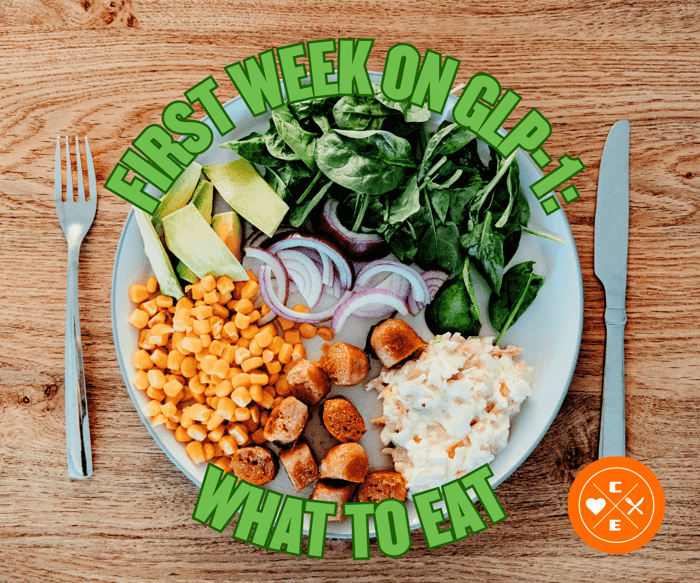
Considerably less than before, though the exact amount is individual. Many people find a first-week meal looks like 3-4 oz of protein, half a cup of a starch, and a cup of vegetables, spread across four or five smaller meals rather than three larger ones. Your prescriber or a registered dietitian should set your actual targets, particularly if you take other medications.
When will the nausea from Mounjaro go away?
Nausea is most common during dose initiation and typically eases as the body adjusts over the following weeks. Gastrointestinal side effects affect a substantial share of people starting these medications and are usually mild to moderate. If nausea is severe, stops you keeping fluids down, or is not improving, that is a conversation with your prescriber rather than something to wait out.
Can I skip meals on Zepbound if I am not hungry?
Skipping meals entirely tends to make it hard to meet protein needs, which matters because lean mass makes up a meaningful share of the weight lost on these medications. If solid food is not happening, a protein shake, smoothie, or small protein-rich snack counts. Eating something on a schedule is more useful than waiting for a hunger cue that may not arrive.
How much protein do I need on a GLP-1 medication?
A 2025 joint advisory from several professional societies recommends 1.2 to 1.6 grams of protein per kilogram of body weight per day during active weight loss on these medications. For a 70kg adult that is roughly 85 to 112 grams; for a 100kg adult, 120 to 160 grams. Flat numbers quoted online often under-serve larger people and overshoot for smaller ones, so calculate from your own weight or ask your dietitian.
What foods should I avoid in my first week on GLP-1?
Greasy and fried foods, very spicy dishes, heavy cream-based meals, carbonated drinks, alcohol, high-fat meats, and large portions of anything. Fat and volume are the two things most likely to sit uncomfortably. This is also not the week to test whether your new stomach handles pizza.
When should I call my doctor during the first week on GLP-1?
Call straight away for severe or persistent vomiting that stops you keeping fluids down, signs of dehydration such as dark urine or dizziness on standing, severe or worsening abdominal pain including pain radiating to the back, any allergic reaction, or blood sugar below 70 mg/dL if you have diabetes. Mild nausea, reduced appetite, and early fullness are expected and do not need an urgent call.
The Bottom Line
Week one is an adjustment, not a preview. The nausea eases, the appetite settles into something predictable, and most people have a working routine by week three or four.
What to hold onto in the meantime: eat on a schedule rather than on hunger, put protein first, keep portions and fat down, slow the pace right down, and drink between meals rather than with them. Everything else can wait until you feel more like yourself.
And keep the list of call-your-doctor symptoms somewhere you can find it. Most of week one is just uncomfortable. The handful of things that are not are worth recognising quickly.
When you are ready to think past the adjustment period, our 7-day GLP-1 meal plan gives you a structured week to follow, and the Complete GLP-1 Diet Guide covers the long game. If cooking is the part you would rather not deal with while you adjust, the GLP-1 Meal Plan handles the portioning and the protein for you.
One day at a time. It gets considerably easier than this.