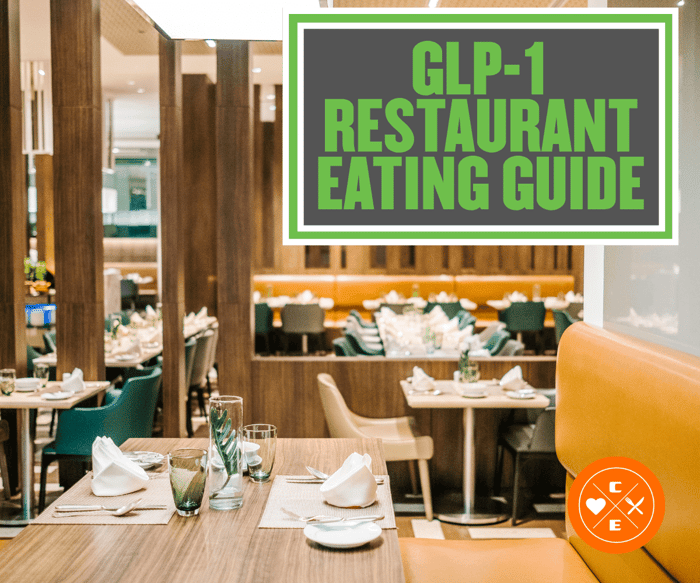

Quick Answer: Eating out on a GLP-1 medication comes down to four things: choose somewhere you can control what arrives, order grilled protein with vegetables and sauces on the side, eat slowly enough that fullness catches up with you, and stop before the plate is empty. Fried food, cream sauces and carbonation are the reliable triggers. Build-your-own bowl chains, seafood, Mediterranean and Japanese restaurants are the easiest fits; buffets are the hardest. Ask for modifications without apologising — kitchens field them all day.
Table of Contents
Can You Eat Out on GLP-1 Medications?
Yes, and the adjustment is smaller than most people fear.
What makes restaurants awkward is not the food itself but the format. Entrees are built at two to three times the portion you now want. Fat is everywhere and mostly invisible — butter finishing a steak, oil in a dressing, cream thickening a sauce. Food arrives fast and everyone eats at the table's pace. And there is a low hum of social pressure to order the way you used to.
None of that is unmanageable. It just means ordering deliberately instead of by habit, which takes about two meals to get used to.
This guide covers what to ask for, where it is easiest, how to handle the social side, and what the evidence actually says about alcohol — which is not what most articles on this topic will tell you. If you are still in the adjustment window, our guide to your first week on a GLP-1 is the better starting point, and the Complete GLP-1 Diet Guide covers the at-home framework.
New to GLP-1s? You're not alone.
Get our free GLP-1 nutrition guide — what to eat, what to expect, and how to get the best results.
The Rules That Travel Anywhere
These hold at any restaurant, any cuisine, any occasion.
Never arrive starving. A small protein snack an hour or two beforehand — yogurt, an egg, half a shake — changes what you order and how fast you eat it. This is the single highest-leverage habit on the list.
Protein first. Eat the chicken, fish or steak before you touch the starch. If fullness arrives early, and it will, you want it arriving after the protein rather than instead of it.
Ask for modifications without apologising. Grilled instead of fried. Sauce on the side. Vegetables instead of fries. No butter. A half portion, or the lunch size at dinner. Servers handle these requests all day and will not think twice.
Then there is pace, which is where most restaurant meals go wrong. Put the fork down between bites, sip water, talk. The fullness signal is delayed on these medications, so eating at the table's speed means finding out you have overshot about fifteen minutes after it stopped being fixable. Being the last one still eating is fine.
Two smaller habits worth building. Ask for a box when the food arrives rather than at the end, and box half immediately — it removes the decision entirely. And send the bread basket to the other end of the table, because pre-meal carbs take up the stomach space you were going to use for protein.
Which Restaurants Actually Work
Build-your-own bowl chains are the easiest fit by a distance. Chipotle, Cava, Sweetgreen and Dig all let you specify every component, skip the heavy ones, and see the nutrition numbers before you order. If you get to choose where the group goes, choose one of these.
Seafood restaurants are next. Grilled or baked fish is standard rather than a special request, steamed vegetables are usually on the menu already, and the default preparations are lighter. Just ask them to go easy on the butter, which is where the calories hide.
Mediterranean and Greek restaurants are built around exactly what you want — grilled protein, vegetables, olive oil rather than cream. Kebabs, grilled fish plates, or a salad with protein added all work without modification.
Japanese restaurants also work well if you order carefully. Sashimi is close to pure protein, and edamame, miso and seaweed salad are all easy additions. Tempura, tonkatsu and mayo-heavy rolls are not; nigiri in small amounts is fine.
Italian restaurants are the tricky middle. The menu is built on pasta and bread, portions run large, and cream sauces are everywhere. It is still doable: order a grilled chicken or fish entree, ask for vegetables in place of the pasta side, and skip the breadsticks entirely rather than negotiating with them.
Buffets are the one format worth avoiding outright. Everything about them — the sunk cost, the trays, the walking back — works against portion control, and warming-tray food skews greasy. Fried chicken and burger chains are the other clear miss, since even the grilled options tend to arrive with more fat than you want right now.
GLP-1 Meal Plan Delivery

$94.95
Protein-packed, portion-controlled meals that work with your medication — not against it. Chef-prepared and ready in minutes. GLP-1 Meal Plan – A Curated Box for Your Goals Dietitian-selected, chef-prepared meals designed to support your body on Ozempic®, Wegovy®, Mounjaro®, and… read more
Chain Restaurant Orders
Approximate figures below. Chains reformulate constantly, so check the current nutrition calculator if the numbers matter to you.
| Chain | Order this | Skip | Roughly |
|---|---|---|---|
| Chipotle | Bowl, not burrito: chicken or steak, fajita vegetables, light beans, fresh salsa, lettuce, small guacamole | Rice, cheese, sour cream, queso | 400-450 cal, 30-40g protein |
| Chick-fil-A | Eight-count grilled nuggets plus a side salad, light dressing | Anything fried, fries, shakes | Nuggets alone ~130 cal, 25g protein |
| Panera | You Pick Two: half Greek salad with chicken, dressing on side, plus a broth-based soup | Bread bowl, cream soups, full sandwiches | ~350 cal, 30g+ protein |
| Sweetgreen | Greens base, grilled chicken or salmon, all the vegetables, a little avocado, light dressing or lemon | Warm grain bases, heavy dressings | ~400 cal, 35g+ protein |
| Subway | Protein bowl, no bread, double meat, all vegetables, oil and vinegar | Footlongs, meatball marinara | ~350 cal, 40g protein |
| Starbucks | Egg white and roasted red pepper egg bites, or the spinach feta wrap | Pastries, frappuccinos, croissant sandwiches | Bites ~170 cal/12g; wrap ~290 cal/20g |
The Chick-fil-A grilled nuggets are quietly the best protein-per-calorie order on any fast food menu, which is worth knowing when the group vote goes somewhere you would not have chosen.
At a sit-down chain like Olive Garden, the play is different: order a grilled fish or chicken entree, ask for vegetables instead of the pasta side, and box half before you start. The portion, not the dish, is the problem.
Restaurant fatigue? Plenty of our customers keep restaurants for the meals that are actually social and let everything else run on autopilot. Our GLP-1 Meal Plan is portioned and protein-loaded for exactly this stage, heats in about three minutes, and has no subscription attached. You can also browse the wider curated meal plan range or pick every meal yourself in Build a Meal Plan.
Ordering by Cuisine
Mexican. Fajitas are the reliable order — eat the protein and vegetables, take one tortilla or none. Ceviche, grilled fish in lettuce wraps, or a chicken or steak salad without the fried shell all work. Ask for extra vegetables instead of rice, or for a bowl instead of a burrito. Queso and fried items are the ones to leave.
Italian. Grilled chicken or veal piccata, branzino or salmon, or skewers. A Caesar with grilled chicken and light dressing does the job. Ask whether you can substitute vegetables for the pasta — most kitchens will.
Chinese. Steamed chicken and vegetables with the sauce on the side, moo goo gai pan, steamed fish, or a small bowl of hot and sour soup. Fried rice, lo mein, General Tso's and anything sweet-and-sour are the ones that will sit badly. "Steamed, not fried" and "light sauce" are the two phrases to have ready.
Japanese is one of the easier cuisines to order on: mostly sashimi, with a few pieces of nigiri for variety, plus edamame, miso soup and seaweed salad to round it out. Grilled teriyaki salmon works if you ask for light sauce. Thai takes slightly more care, because curries and coconut-milk soups carry far more fat than they appear to and pad thai is mostly noodles — tom yum, larb, grilled chicken or shrimp, or a stir-fry with protein are the safer picks.
At an American casual place, grilled chicken or a six-ounce sirloin with vegetables and a side salad is the straightforward answer, and vegetables instead of fries is a request nobody blinks at. At breakfast, an egg white omelette with vegetables, or eggs with turkey sausage, beats anything from the pancake side of the menu.
Social Eating
Most restaurant meals are really social events, and the food is the setting rather than the point.
For work meals, suggest the restaurant if you can, order without over-explaining, and let the conversation carry it. For birthdays and celebrations, eat something small beforehand, order an appetiser as your main if that is what you want, and take a couple of bites of the cake — participating matters more than the portion. At family gatherings, small amounts of several things, protein first, and an offer to bring a dish you know works.
Someone will eventually comment. Short answers close it down without a conversation you did not want to have: your appetite has changed, smaller portions suit you better now, you are full faster than you used to be. You are never obliged to explain a prescription to anyone at a dinner table.
Alcohol: What the Evidence Actually Says
Almost every article on this subject tells you that GLP-1 medications make alcohol hit harder and faster because they slow gastric emptying. That reasoning runs backwards.
Alcohol is absorbed mainly in the small intestine, not the stomach. Slowing the rate at which the stomach empties therefore delays alcohol reaching the place it gets absorbed. A 2025 study in Scientific Reports tested this directly: participants on semaglutide, tirzepatide or liraglutide drank doses calculated to reach roughly 0.08 percent, and their breath alcohol concentration rose more slowly than the comparison group's. The researchers suggest this slower rise may be part of why people on these medications tend to drink less.
So the popular explanation is wrong. That does not make drinking a good idea, and the real reasons are more useful than the myth.
The first is a mismatch between how drunk you feel and how drunk you are. Participants in that study reported feeling less intoxicated at comparable exposure. Feeling fine is not evidence of being fine, and that gap matters most for anyone deciding whether to drive.
The second is your stomach. Alcohol and these medications both irritate the gastric lining and both affect motility, and the combination reliably intensifies nausea and reflux — particularly in the first weeks or after a dose increase. Plenty of people find one drink costs them the following morning.
The third is arithmetic. You are eating considerably less, so there is less food buffering anything you drink, and tolerance falls as body weight does. The drink that was unremarkable a few months ago may not be now.
If you drink: one, with food, never on an empty stomach, slowly, with water alongside. Dry wine at around 120 calories per five ounces, a light beer, or spirits with soda and lime are the sensible choices; sugary cocktails are the ones to skip. And if it makes you feel worse, that is information — take it seriously rather than repeating the experiment.
If you would rather not drink and would rather not discuss it, sparkling water with lime in a rocks glass ends the question. So does "I'm taking a break" or "it doesn't mix well with something I'm on."
Mistakes Worth Skipping
Ordering what you used to order. Your old favourite was calibrated for a different appetite. Read the menu as though for the first time.
Skipping meals to save room. Arriving ravenous produces exactly the meal you were trying to avoid. Eat normally through the day and have a protein snack beforehand.
Finishing it because you paid for it. The money is gone either way. Two meals for one price is the better framing, and being uncomfortable for three hours is a poor return on twenty-five dollars.
Trying something new at a restaurant is the underrated one. If a dish turns out too rich or too spicy, you are stuck with it in public. Experiment at home where you control the preparation and the exit.
And drinking on a nearly empty stomach compounds every other problem on this page. If alcohol is part of the evening, food comes first.
Frequently Asked Questions
Can I eat at restaurants while on GLP-1 medications?
Yes. The adjustments are practical rather than restrictive: pick places where you can control what arrives, order grilled protein and vegetables with sauces on the side, eat slowly, and stop when you are satisfied rather than finishing the plate. Fried food, cream sauces, and oversized portions are the reliable triggers. Most kitchens handle modification requests without comment.
What should I order at restaurants on Ozempic?
Grilled or baked protein first, vegetables second, starch only if you still have room. Grilled chicken salad with dressing on the side, baked fish with vegetables, kebabs without heavy sauce, an egg-white omelette, or a customisable protein bowl all work well. Ask for grilled rather than fried, sauce on the side, no butter, and a half or lunch portion where one exists.
What restaurants are best for GLP-1 users?
Build-your-own bowl chains such as Chipotle, Cava, Sweetgreen and Dig, because you control every component. Seafood restaurants, where grilled fish is standard. Mediterranean and Greek places, where grilled protein and vegetables are the core of the menu. Japanese restaurants, for sashimi and lighter dishes. Breakfast spots, for egg-based options. Buffets are the worst fit, since the format works against portion control.
Does alcohol hit harder on GLP-1 medications?
Probably not in the way the internet claims. Alcohol is absorbed mainly in the small intestine, and because these medications slow gastric emptying, a 2025 study found blood alcohol rose more slowly in people taking semaglutide, tirzepatide or liraglutide. The real risks are different: you may feel less intoxicated than you actually are, alcohol frequently worsens nausea and reflux, you have less food in your stomach to buffer it, and tolerance drops as you lose weight. Keep it to one drink, with food, and never on an empty stomach.
How do I handle social eating events on Mounjaro?
Eat a small protein snack an hour or two before you arrive so you are not making decisions while ravenous. Take small portions of whatever you want to try, start with protein, and pace yourself with the conversation rather than the table. If someone comments, a short answer closes it: your appetite has changed. You do not owe anyone a medical explanation.
What should I avoid ordering at restaurants on GLP-1s?
Fried anything, cream-based dishes, heavily greasy food, very spicy dishes, carbonated drinks, bread and chip baskets before the meal, and full-size entrees where a smaller option exists. Fat is the main culprit, because it slows stomach emptying further on top of what the medication is already doing.
How do I order at Chipotle on Zepbound?
A bowl rather than a burrito, with chicken or steak, fajita vegetables, a light portion of beans, fresh salsa, lettuce, and a small amount of guacamole. Skip or minimise the rice, cheese, sour cream and queso. That lands somewhere around 400-450 calories with 30-40g of protein, though you should check current figures on the Chipotle nutrition calculator since recipes change.
Should I tell the server I am on weight loss medication?
No need. Specific requests get you what you want without any disclosure: grilled instead of fried, dressing on the side, a half portion, or the lunch size at dinner. Servers field these constantly. If pressed, saying your appetite has been smaller lately is both true and sufficient.
The Bottom Line
Restaurants stay on the table. What changes is that you order for the appetite you have now rather than the one you used to have.
Pick somewhere you can control the plate. Order grilled protein and vegetables, sauces on the side. Eat slowly enough that your body can keep up. Box half before you start if the portion is oversized. And treat alcohol with more caution than the usual advice suggests, though for different reasons than you have probably been told.
After a few meals this stops requiring thought. You will know which places work, which orders are safe, and how to ask for what you want without a preamble.
For the rest of the week, the cooking is the part worth outsourcing. Our GLP-1 Meal Plan handles the portioning and protein so restaurants can be the exception rather than the daily decision.
More GLP-1 guides: the Ultimate GLP-1 Diet Guide for the full nutrition picture, the 7-Day GLP-1 Meal Plan for a structured week, how to prevent muscle loss during weight loss, and high-protein snack ideas for low-appetite days.
This article is for informational purposes only and is not medical advice. Talk to your healthcare provider before changing your diet or alcohol consumption while taking a prescription medication, including GLP-1 receptor agonists.