Greek yogurt & berries
ClassicThree-quarters of a cup of plain nonfat Greek yogurt with half a cup of blueberries. The classic for a reason. Plain yogurt keeps the sugar low, and the berries add sweetness and fiber.
Build every snack around protein, add produce for volume, then measure the fats. Twenty-nine ideas with calories and protein from USDA data, plus the three-step formula to make your own.

The best snacks for weight loss pair protein with fiber and stay around 100 to 250 calories. Greek yogurt with berries (about 142 calories, 18g protein), two hard-boiled eggs with carrots, cottage cheese, a tuna pouch and a cup of edamame (188 calories, 18g) all fit. Use the three-step Snack Builder below, then pick from 29 ideas with calories and protein for each.
Snacking gets blamed for a lot of stalled diets. Usually the snack isn't the problem. The kind of snack and the size of it are.
Every number below comes from USDA FoodData Central for the portion we name, rounded, so you can check it and swap in your own brands. For your full daily targets, start with our Calorie Calculator and Protein Intake Calculator.
There's a persistent myth that snacking sabotages weight loss. The real problem is snacking on foods that don't fill you up, or in portions that run bigger than you think. A handful of crackers or a granola bar is technically a snack, but it won't do much for your appetite. You may be hungry again well before dinner, reaching for something else while the calories stack up.
Strategic snacking works differently. A snack with enough protein and fiber between meals does three useful things:
Treat snacks like mini-meals, not afterthoughts. Pair protein with fiber-rich fruit, vegetables or whole grains, sized to your calorie needs. For many people, about 200 calories is a practical starting point. As Paddon-Jones and colleagues put it, a moderately higher protein intake inside a controlled calorie budget is a practical weight loss strategy.
You don't need to memorize a list of approved snacks. Once you know the formula, you can build a satisfying, portable snack from whatever is in your kitchen, at home or on the go.
Combine macronutrients and control the portion, and you have a snack that supports weight loss. Target about 100 to 250 calories. If you regularly come up short on protein at meals, move your snacks toward the higher-protein picks below.
Use this cheat sheet to build your own combinations. Values are from USDA FoodData Central for the portion shown, rounded. Your brand's label is the final word.
These combinations follow the Snack Builder formula. Adjust portions to your own targets.
The highest protein per calorie on the list. Watch the sodium on deli meat and smoked fish.
Meatless picks that bring fiber along with the protein.
For when you want a lot to eat for not many calories.
For the sweet tooth, with a measured portion built in.
Shelf-stable or ready-made picks for busy days. Compare labels, especially for sodium.
Three-quarters of a cup of plain nonfat Greek yogurt with half a cup of blueberries. The classic for a reason. Plain yogurt keeps the sugar low, and the berries add sweetness and fiber.
Three-quarters of a cup of 2% cottage cheese with half a cup of pineapple. Cottage cheese is having a moment, and it deserves the attention. Most of its protein is casein, which digests slowly, so it holds you longer than a fruit cup alone.
Two large hard-boiled eggs with about 10 baby carrots. Cook a batch on Sunday and you have grab-and-go protein for the week.
One part-skim mozzarella stick with a medium apple. Lower in protein than most snacks here, but the mix of fat, fiber and crunch is more satisfying than either one alone.
Stir a teaspoon of dry ranch seasoning into half a cup of plain Greek yogurt and serve with a cup and a half of pepper and cucumber sticks. It's a high-protein dip that beats most store-bought versions.
Roll 3 ounces of deli turkey around a smear of mustard and crisp lettuce. Zero prep. Note that USDA's sliced turkey breast carries about 760mg of sodium in that portion, so check labels for a lower-sodium option.
A 3-ounce pouch of light tuna with six whole-wheat crackers. Flavored pouches like lemon pepper or sriracha make it more interesting. See our tuna guide for mercury considerations.
Three ounces of smoked salmon on a cup of cucumber rounds, with a tablespoon of cream cheese. A little schmear is fine, just measure it. Smoked salmon is salty, at about 570mg of sodium for 3 ounces.
Four ounces of cooked shrimp with a quarter cup of cocktail sauce. Shrimp is a lean, high-protein seafood that's low in calories, and this is the highest-protein snack on the list. The sauce brings most of the sodium. See our shrimp guide for more.
One cup of shelled edamame, sprinkled with a little salt or everything bagel seasoning. Soy is a complete plant protein, and a cup is a filling amount of food.
Three tablespoons of hummus with a cup and a half of bell pepper strips. Lower in protein than most options, but a big pile of vegetables adds fiber and volume.
Made from half a cup of drained canned chickpeas, patted dry, sprayed lightly with oil and roasted until crisp. Season with cumin, chili powder or cinnamon for variety.
Four ounces of firm tofu, cubed, tossed in a spice rub and air-fried until crisp. Firm tofu varies a lot: USDA entries for 4 ounces run from about 90 calories and 10g of protein to 165 calories and 20g, so read your package.
Half a cup of rinsed black beans with a quarter cup of salsa and a squeeze of lime. Beans are underrated as a snack, and this takes 30 seconds to put together.
Three cups of air-popped popcorn with chili-lime seasoning. Three cups is a lot of food for under 100 calories. Our popcorn guide covers the best ways to make it.
Two plain brown rice cakes topped with half a cup of 2% cottage cheese and tomato slices. The cottage cheese turns a bland rice cake into something worth eating.
Roll 3 ounces of deli turkey around two dill pickle spears. Salty, crunchy and almost no carbs. It's also about 1,330mg of sodium, more than half of the 2,300mg daily limit, so pick lower-sodium turkey or pickles if you eat this often. See our pickle guide.
One corn tortilla with an ounce of cheddar and a spoonful of salsa, crisped in a dry pan. The salsa adds flavor for almost no calories.
One scoop of protein powder shaken with a cup of unsweetened almond milk. Not just for after workouts: when you're short on time, a shake can be the most efficient snack you have. The almond milk adds about 36 calories to your powder's label. Our Shakez Protein Powder has 20g of whey protein and 1g of sugar per scoop.
Bars range from candy with a protein claim to a decent mini-meal. Look for at least 15g of protein, under about 200 calories and little added sugar. Our protein bar guide explains what to look for.
Half a cup of rolled oats, half a cup of unsweetened almond milk and half a scoop of protein powder, mixed in a small jar and chilled overnight. A portable, sweet-ish snack. Our High Protein Overnight Oats skip the measuring: 20g of protein per pouch at $3.49, just add milk and chill.
Two tablespoons of powdered peanut butter mixed with water, spread on a sliced medium apple. Powdered peanut butter gives you the flavor with most of the fat pressed out.
A medium banana with one measured teaspoon of peanut butter. Lower in protein, but it brings carbohydrates, some fat and potassium for a quick energy boost. Keep the peanut butter to the teaspoon.
Two tablespoons of chia seeds stirred into half a cup of 2% milk with a little vanilla, chilled until thick. Make it ahead for when you want something creamy and sweet.
Brands like Two Good, Ratio and Oikos Pro make high-protein yogurt cups. Formulas change, so compare protein, calories and added sugar on the labels in front of you.
One ounce of jerky. Portable and shelf-stable. USDA's beef jerky entry has about 500mg of sodium per ounce, so compare brands if you're watching sodium.
One cup of canned lentil or chicken noodle soup. Warming, filling and more satisfying than you'd expect. Watch the sodium: USDA's canned lentil soup with ham runs about 1,300mg a cup.
One tablespoon of almonds, one tablespoon of raisins and a cup of popcorn. Portion it yourself: store-bought trail mix servings are often far bigger than this. The nuts bring healthy fats that help with fullness.
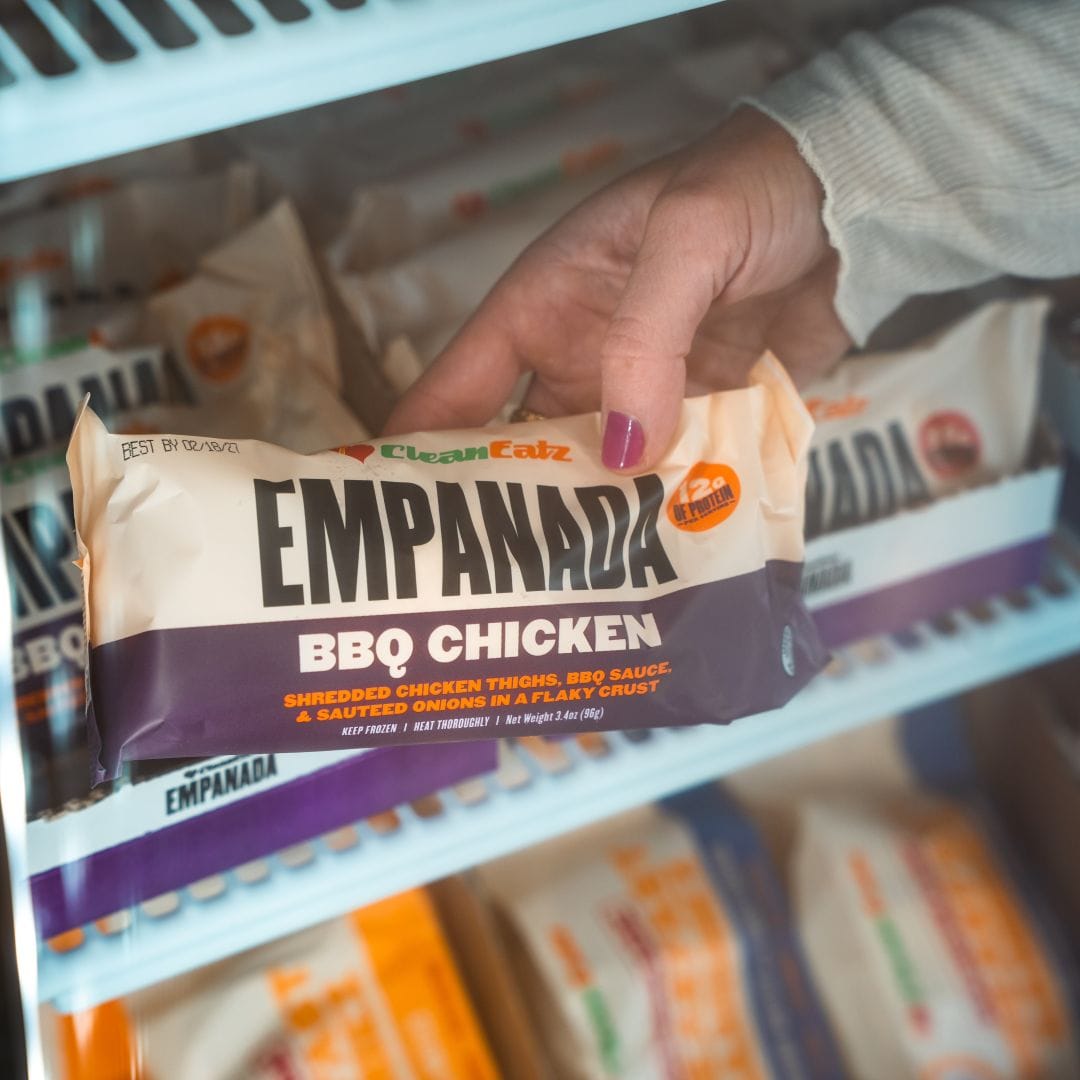
If you have Clean Eatz meals on hand, half a meal makes a high-protein snack. Our current menu runs from 250 to 630 calories and 20 to 55g of protein a meal, so half lands at about 125 to 315 calories and 10 to 28g, and every meal's numbers are on our Nutrition Info page. For a ready-to-eat option, our Protein Peanut Butter & Jelly has 250 calories and 11 to 12g of protein for $2.99.
Different situations call for different snacks. Here's how to adapt.
At your desk, no fridge: stock shelf-stable options. Tuna pouches, jerky, protein bars, pre-portioned nuts, popcorn bags, rice cakes with single packets of powdered peanut butter, and whole fruit like apples and bananas.
Traveling or at the airport: most airports now sell Greek yogurt cups, cheese sticks, nuts and fruit. Compare labels and portions. Many trail mixes and protein boxes carry more added sugar or refined carbs than you'd expect, so look for options that lead with protein and fiber.
Before a workout, an hour or two out: go for easily digested carbs plus moderate protein. A banana with Greek yogurt, a small turkey wrap or a protein yogurt with berries all work. Skip high-fat or high-fiber snacks that slow digestion.
Late at night: if you're truly hungry, eat. Lying awake hungry, sleeping badly and overeating the next day is the worse outcome. Pick something protein-forward and light: cottage cheese with cinnamon, plain Greek yogurt or a small protein shake.
Most snacking mistakes come down to the same few issues.
Choosing healthy but low-protein snacks. Rice cakes, fruit on its own, veggie chips and many granola bars are less filling eaten alone. Pair them with a protein-rich food.
Eyeballing calorie-dense foods. Nuts, cheese, nut butter and oils are healthy, but the calories add up fast when you don't measure. A tablespoon of almonds is about 52 calories. Pour three or four without measuring and you're at 150 to 200.
Eating straight from the package. It's hard to track portions when you're reaching into a bag. A Cochrane review of 58 studies and 6,603 people found that people reliably eat more when served bigger portions or packages, and estimated that cutting exposure to larger sizes could trim 144 to 228 calories a day. Put a portion in a bowl and close the bag.
Ignoring liquid calories. Smoothies, coffee drinks and juice can carry a lot of calories without much fullness. A 16-ounce bottle of orange juice is about 220 calories. If you drink your snack, make sure it has protein, like a shake, rather than just carbs, like juice.
Smart snacking comes down to combining protein, fiber and volume so you stay satisfied between meals. Use the 3-step Snack Builder, choose from the 29 options above, and measure the calorie-dense parts. Chosen well, snacks support fullness and make healthy eating easier to keep up.
For a complete framework on eating for weight loss, see our 100 Best Foods for Weight Loss guide. If the hard part is the cooking, our Weight Loss Meal Plan delivers portion-controlled, chef-cooked meals that heat in a few minutes in the microwave, from $89.95 for 10 meals with free shipping and no subscription.
This article is general nutrition information, not medical advice. If you have a health condition or specific dietary needs, talk with your doctor or a registered dietitian.
When you feel real hunger between meals, especially if your next meal is still a few hours away. The goal is to keep hunger from turning into overeating at the next meal, not to snack out of habit or boredom. If you're never hungry between meals, you may not need a snack at all.
Snacks that combine protein and fiber, since that pairing tends to satisfy longest. Examples: Greek yogurt with berries (about 18g protein), eggs with carrot sticks, cottage cheese with fruit, or hummus with a big pile of crunchy vegetables. Add volume with produce, and measure the nuts and cheese.
Yes, if you're truly hungry. Keep the snack light, balanced and portioned, like plain Greek yogurt, cottage cheese with cinnamon or a small protein shake, so it settles your hunger without derailing the day's total. Going to bed hungry often backfires with poor sleep and a bigger appetite tomorrow.
Something easy to digest that gives you quick energy without feeling heavy, an hour or two before you train. A banana with Greek yogurt, a small turkey wrap or a protein yogurt with berries all work. Skip high-fat or very high-fiber snacks right before, since they digest slowly.
Use one rule: build around a whole-food protein, then keep the portion reasonable. Fruit with yogurt, a couple of eggs or a small savory option beats most packaged snack foods. If you're buying something packaged, check that protein is near the top of the label and calories land under about 250.
Plan ahead and keep a few reliable options where you'll see them: eggs boiled on Sunday, yogurt cups in the fridge, tuna pouches in your desk. When the healthy choice is the easiest one to grab, you're far more likely to follow through and stay satisfied between meals.