How to Increase Fiber Without Bloating: 7 Tips

How to increase fiber without bloating (7 tips)

Fiber bloating usually means you added it too fast, not that fiber doesn't agree with you. Seven steps, a four-week ramp with the gram math shown, and the signs it's something other than adaptation.

  • Free Shipping on Every Meal PlanFree Shipping
  • Up to 20% Off 30-Meal PlansUp to 20% Off
  • Chef Cooked, Dietitian BuiltDietitian Built
  • Heat & Eat in MinutesHeat & Eat
Romaine Rusnak, RD, LDN
Romaine Rusnak, RD, LDNRegistered Dietitian · Apr 28, 2026
Clean Eatz Kitchen High Fiber Meal Plan box with vegetable-packed meals
Quick answer

Go slowly. Add about 5 grams of new fiber a week, drink an extra 8 to 16 ounces of water with each step up, and start with gentle soluble fibers like cooked oats, ripe bananas, avocado and sweet potato before beans and raw cruciferous vegetables. In bean feeding studies, 70% or more of the people who got gassy said it faded by week two or three.

Plenty of people who set out to eat more fiber give up fast. Not because the food tastes bad, and not because they stopped believing in the health benefits. They quit because their stomach turns into a beach ball, they spend three days clenching their abs through meetings, and they decide their body must just not tolerate it.

Their body can tolerate it. They just added too much, too soon.

The bloating is a pacing problem, and pacing problems have a pacing fix. Here is why it happens, seven steps that keep it small, and the signs that something else is going on.

Why fiber causes bloating

Your gut bacteria are behind

What happens when you suddenly start eating beans and broccoli at every meal isn't a sign that fiber doesn't agree with you. It's a sign that the bacteria in your colon aren't ready for the workload.

Fermentable fibers, especially the kind in legumes and cruciferous vegetables, pass mostly undigested through your stomach and small intestine. Once they reach your colon, gut bacteria break them down. That fermentation produces short-chain fatty acids, which are good for your health, and gas, which is not great when you're stuck on a video call.

The starting point matters. Most Americans average only about 15 grams of fiber a day, against recommendations of 25 grams for women and 38 for men. And low-fiber Western diets shift gut bacteria away from the species that break fiber down, according to a 2019 opinion article by two Stanford microbiologists. If you've eaten 15 grams a day for years, you don't yet have enough of the right bacteria to handle 35 grams without complaints.

That microbiome shift is also why it's worth getting through the adjustment in the first place. The bacteria you're feeding influence everything from immunity to blood sugar. Our Ultimate Guide to Dietary Fiber covers what happens in your body once you're past the bloating, and why most of the benefits build over weeks and months.

How to increase fiber without bloating step by step

Seven steps to more fiber, less gas

The trick is making the transition gentle enough that you actually reach week four. The steps run roughly in the order you'd use them.

Step 1: Add about 5 grams a week

Slow it way down

The single most useful piece of advice on increasing fiber is also the most boring: do it slowly. Cleveland Clinic's dietitian puts it plainly. Add fiber too quickly and you get bloating, gas or diarrhea until your gut microbiome adjusts. A common rule of thumb is no more than about 5 grams of new fiber a week. Sensitive people do better with 2 or 3.

Five grams a week sounds maddeningly cautious when you want to fix your diet right now. But look at what it adds up to, starting from 15 grams a day.

A four-week fiber ramp from 15 grams a day (USDA figures, rounded)
WeekDaily totalThe one change
119gAdd a medium apple, skin on (about 4.4g)
222gSwap white rice for brown at one meal (about 2.5g more per cup)
326gAdd half a cup of raspberries to breakfast (about 4g)
428gSwitch two slices of white bread to whole wheat (about 2.4g more)

A four-week fiber ramp from 15 grams a day (USDA figures, rounded)

The apple is from USDA FoodData Central (2.4g per 100g, 182g medium apple), the raspberries too (6.5g per 100g, 62g in half a cup). Blueberries would add only about 2g, so the berry matters.

A month later you're at 28 grams, the FDA Daily Value, and you never had a bad day. Your microbiome adapted at every step. Compare that to the usual approach, overhauling everything on Monday, suffering by Wednesday, abandoning it Saturday. The slow version is the one that works for most people. Men aiming for 38 grams just keep the ramp going for two more weeks.

Step 2: Drink more water with more fiber

More than you think you need

This is the most overlooked fact about high-fiber diets: fiber absorbs water. That's how it adds bulk to stool and slows digestion. Increase fiber without drinking more and you create a traffic jam in your gut. The symptoms, constipation, cramping and, paradoxically, more bloating, feel almost identical to "I can't tolerate fiber."

Some people who decide they're sensitive to fiber are really just short on water.

A practical rule of thumb is an extra 8 to 16 ounces of water for every 5-gram bump in fiber. Going from 15 grams to 30 means an extra 24 to 48 ounces a day on top of what you already drink. Coffee, tea, sparkling water and broth-based soups count.

Step 3: Start with gentle soluble fibers

Pick the quiet fibers first

Not all fiber ferments the same way. Some types are slow and quiet in your colon. Others are fast and loud. When you're starting out, lean on the slow ones.

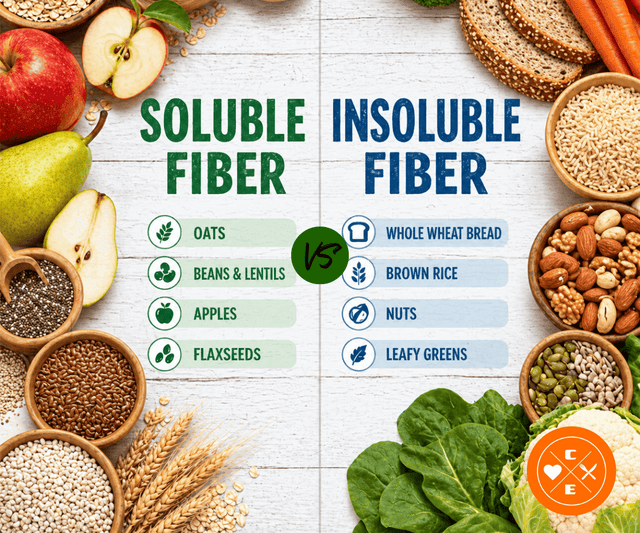
The gentle group is mostly soluble fiber from cooked or soft plant foods: cooked oatmeal, ripe bananas, peeled apples, well-cooked carrots, sweet potatoes, avocado and psyllium husk. They ferment, but slowly enough that gas stays manageable. Psyllium is a special case. It forms a gel and ferments little, which is why it's so widely tolerated.

Gentle first, fermentable later
Fiber sourceFermentationWhen to add it
Cooked oats, ripe banana, peeled appleSlowWeek 1
Cooked carrots, sweet potato, avocadoSlowWeek 1
Psyllium huskLowWeek 1, if you want a supplement
Whole wheat bread, brown rice, berriesModerateWeeks 2 to 3
Beans, lentils, broccoli, Brussels sproutsFastWeeks 3 to 4
Raw onion, raw garlic, inulin or chicory root barsFastLast, in small amounts

Gentle first, fermentable later

Step 4: Save beans & cruciferous vegetables for later

Week three or four

The fast-fermenting group is beans and lentils, raw onions and garlic, broccoli and Brussels sprouts, wheat-based products, and the inulin or chicory root extract added to processed "high-fiber" snack bars.

None of these are bad. Beans in particular are some of the best foods you can eat. They're just hard on a gut that hasn't adapted yet. Bring them in around week three or four, starting with a quarter to half cup at one meal.

Step 5: Soak, rinse & cook beans until tender

Pour off the soaking water

If beans are giving you trouble specifically, soak dried beans overnight and discard the soaking water. In one lab study, soaking beans for 16 hours, pouring off the water and then cooking cut their gas-producing sugars by roughly a quarter to two-fifths: raffinose by 25%, stachyose by 25% and verbascose by 42%.

Cook them until truly tender, not just edible. Draining and rinsing canned beans works the same way in less time. None of this changes the fiber content, only how much gas the beans produce.

Step 6: Spread fiber across your meals

Not all at dinner

Twenty-five grams eaten in one big bean-and-broccoli dinner hits your colon all at once. The same 25 grams split across breakfast, lunch, dinner and a snack arrives in smaller loads your bacteria can keep up with.

A simple target: aim for 5 to 8 grams at each meal once you're through the ramp, and let a fruit snack cover the rest.

Step 7: Go easy on soda & some sweeteners

Don't add gas to the gas

Soda counts as fluid, but the carbonation can make bloating worse for reasons that have nothing to do with fiber. Some sugar substitutes, especially sugar alcohols such as sorbitol, can also cause extra gas, because they reach your colon undigested and ferment there.

While your gut is adjusting, stick with water, coffee, tea and broth, and check "sugar-free" snack labels before you blame the fiber.

When bloating isn't just adaptation

Still uncomfortable after a month

Most fiber bloating resolves on its own within a month. If yours doesn't, and you're a month in, increasing carefully, drinking water and still uncomfortable, something else is probably going on.

Irritable bowel syndrome (IBS), FODMAP sensitivity, lactose intolerance and small intestinal bacterial overgrowth (SIBO) all produce symptoms that look like fiber intolerance but aren't. A registered dietitian or a gastroenterologist can sort out which one you're dealing with.

That's a separate problem from what most people have, which is a normal microbiome trying to catch up to a new diet too quickly.

High fiber meals without the planning

Where our meals fit

The hardest part of a slow ramp isn't knowing what to eat. It's planning a slightly different week, four weeks in a row.

If that's the part you'd like to skip, our High Fiber Meal Plan has at least 5 grams of fiber in every meal, built with vegetables, legumes and whole grains plus protein. It starts at $94.95 for 10 meals. Two of those meals a day give you a steady 10 grams or more without any planning, which leaves breakfast and snacks for the gentle foods above.

Every meal on our current menu lists its fiber on our Nutrition Info page, and the table sorts by it. Across the 32 meals, fiber runs from 0 to 9 grams, with a median of 5. So if you build your own order, sort first. The meals are chef-cooked, flash-frozen and heat in a few minutes, there's no subscription, and meal plan orders ship free to the contiguous 48 states.

The bottom line on fiber without bloating

Slow the ramp. The rest follows

The bloating people get when they start eating more fiber isn't a sign that fiber is bad for them. It's a sign their gut bacteria are catching up to a better diet.

Add about 5 grams a week. Drink more water than feels necessary. Start with oats and bananas before working up to beans and broccoli, and spread it across your meals. The discomfort almost always fades within a few weeks.

If meal planning isn't realistic this week, our High Fiber Meal Plan puts at least 5 grams in every meal so you can focus on the rest of the ramp.

Fiber & bloating FAQ

A few questions people ask

Why does fiber make me bloated?

Gut bacteria ferment fiber and produce gas. When you increase fiber suddenly, you don't yet have enough of the bacteria that handle the load, and gas builds up faster than your body releases it. Adding about 5 grams a week, drinking more water and starting with gentle soluble fibers solves this for most people.

How long does the bloating last?

Two to four weeks for most people, as long as you keep fiber intake steady through that period. In bean feeding studies, 70% or more of those who got gassy said it faded by week two or three. If it lasts past a month, you may be increasing too quickly, drinking too little, or have an underlying sensitivity.

Is psyllium easier on the stomach than other fibers?

Generally, yes. Psyllium husk is mostly soluble, forms a gel and ferments little, so it's widely tolerated even by people who react to other fibers. It's a reasonable starting point if you want to add fiber without adding much food volume. Take it with a full glass of water.

Can I just take a fiber supplement instead of eating fiber-rich foods?

You can, but you miss most of the point. Whole foods deliver fiber alongside vitamins, minerals and other nutrients, and a variety of fiber types feeds a variety of gut bacteria. Most supplements come from a single source. Use them as a backup, not a replacement.

Should I talk to a doctor?

If you've been increasing carefully for a month and still feel terrible, yes. Bloating with significant pain, alternating constipation and diarrhea, unintended weight loss, blood in your stool, or visible swelling that doesn't resolve overnight all deserve a real evaluation rather than more experimenting at home.

How much fiber should I eat a day?

The FDA Daily Value on food labels is 28 grams. Common recommendations are about 25 grams a day for women and 38 for men. Most Americans average about 15, so the gap is usually 10 to 20 grams, which is three to five weeks of a gentle 5-gram-a-week ramp.

Tap a meal count to add

30 meals work out to $7.56 a meal

View plan details

Tap a meal count to add

30 meals work out to $9.16 a meal

View plan details