
Running for weight loss
Is running good for weight loss? What actually works
Yes, with a food plan. A 155-pound runner burns about 288 calories in 30 minutes at 5 mph. Why post-run hunger shrinks the deficit, how much to run, which type to choose and what to eat around it.
- Free Shipping on Every Meal PlanFree Shipping
- Up to 20% Off 30-Meal PlansUp to 20% Off
- Chef Cooked, Dietitian BuiltDietitian Built
- Heat & Eat in MinutesHeat & Eat

Running & weight loss
Is running good for weight loss?
Quick answer
Yes, but it works best with a food plan. Running often burns hundreds of calories an hour, depending on pace and body size. Across 116 trials, each 30 weekly minutes of aerobic exercise meant about 0.5 kg lost.
First, the burn. Harvard Health's estimates put 30 minutes at 5 mph, a 12-minute mile, at about 240 calories for a 125-pound person, 288 for 155 pounds and 336 for 185 pounds. At an 8-minute mile, those become 375, 450 and 525. So an hour of running burns about 480 to 1,050 calories, depending on your size and speed.
Now the weight. A 2024 JAMA Network Open meta-analysis of 116 randomized trials and 6,880 adults with overweight or obesity found that each 30 minutes of aerobic exercise a week was associated with about 0.52 kg less body weight. Do the math and 150 minutes a week comes to about 2.6 kg, or about 6 pounds. That's useful, and it's also smaller than most people expect for that much work.
Adding diet changes the size of the result. A 2025 meta-analysis of 17 studies and 732 people found that exercise plus diet took off about 2.85 kg more than exercise alone. Interestingly, combining them didn't beat exercise on liver or visceral fat, so exercise is doing something the scale misses.
Post-run hunger
Why can running make you so hungry?
Quick answer
Appetite signals vary from person to person, and they can push back against the calories you burned. Hard exercise may suppress hunger briefly, and some people then eat larger portions later, which can shrink or erase the deficit.
If you've ever finished a run and felt like you could eat everything in your fridge, you've met what many people call runger, strong post-exercise hunger. This isn't weakness or a lack of willpower. Appetite and energy balance are regulated by multiple signals, and responses vary widely.
A 2024 review of exercise and appetite describes hormone changes consistent with appetite suppression right after exercise, involving ghrelin and possibly GLP-1. Effects on how hungry people feel and how much they then eat remain equivocal, likely because studies have been small. So you may not feel hungry right away, and that may not last. Everyone's different.
Real life adds a behavioral layer. In two daily diary studies of 48 and 55 people tracked over 28 days, post-exercise meals were actually less likely to be unhealthy than meals on rest days. But in the study that measured portions, they were larger. That's the trap. You're choosing well and eating more of it, so a run that creates a deficit on paper can turn into maintenance.
That doesn't make running useless for weight loss. It means pairing it with a simple plan for what you'll eat after you run, so hunger doesn't steer the whole day.
How running helps weight loss
How does running actually help?
Quick answer
It widens your calorie deficit, may help preserve lean mass and can improve insulin sensitivity. Long-term runners also tend to carry less body fat than inactive people. Any afterburn effect is small, so most of the benefit comes from the run itself.
When paired with mindful eating, running is a strong fat loss tool, because it raises daily energy expenditure while nutrition controls intake.
Running can widen your calorie deficit and support fat loss alongside diet. It may also help preserve lean mass during weight loss, which matters for performance and metabolic health. Higher-intensity running can create a small afterburn effect, known as EPOC, where calorie burn stays slightly elevated after your workout. The biggest impact still comes from the run itself and your overall weekly volume. Running can also improve insulin sensitivity, which may support how your body handles carbohydrates over time.
There's supporting evidence from runners themselves. A study of 1,296 adults aged 18 to 65 found that recreational runners, who averaged about 22 to 31 km a week, had lower body fat and visceral fat than inactive people of the same age. It's a cross-sectional comparison, so it can't prove the running caused the difference, and body weight didn't differ in the youngest groups.
There's also a behavioral benefit. Many runners report making better food choices because they don't want to undermine their training, which fits the diary studies above. After 30 minutes of work, rewarding the run with a heavy fast-food meal can feel less appealing.
For a complete breakdown of how to structure exercise for weight loss, including how running fits with strength training, see our complete exercise guide for weight loss.
How much running for weight loss
How much running do you actually need?
Quick answer
Start with three 20-minute sessions a week and build. Guidelines ask for 150 minutes of moderate or 75 of vigorous activity a week. For weight, the research points past 150 minutes, with benefits increasing up to about 300.
The Physical Activity Guidelines call for 150 minutes of moderate activity a week, or 75 minutes of vigorous activity, plus 2 days of muscle strengthening. Running usually counts as vigorous, so you may meet the health target with less time than you'd think.
Weight loss is a higher bar. The JAMA Network Open meta-analysis found that 150 minutes a week at moderate to vigorous intensity is where reductions in waist circumference and body fat become clinically important, with benefits increasing up to about 300 minutes. The American College of Sports Medicine says 150 to 250 minutes of moderate activity provides only modest weight loss on its own, and that clinically significant loss has been tied to more than 250.
For running, that might look like 30 to 60 minutes most days. The nuance: if you're also controlling your diet, you don't need to run yourself into the ground. The same position stand found that 150 to 250 minutes improves weight loss with moderate diet restriction. A moderate running volume with a modest calorie deficit is far more sustainable than trying to outrun your diet.
If you're new to running, start with what you can do consistently. Three 20-minute sessions a week is a great starting point. Consistency over months beats intensity over weeks. Increase duration and frequency gradually as your fitness improves.
Types of running for weight loss
Which type of running should you do?
Quick answer
Combine them. Two to three steady runs a week plus one interval or hill session adds variety and supports fitness. Steady running is the most accessible, while intervals and hills are more demanding and need more recovery.
Not all running looks the same. Choose the style that fits your body and schedule, and mix options to avoid burnout.
- Steady-state running, at a conversational pace, is the most accessible option. It builds aerobic fitness, burns solid calories and is sustainable for longer durations, which makes it ideal for beginners.
- Interval training alternates hard efforts and recovery, for example 30 seconds faster and 90 seconds easy, repeated for 20 to 30 minutes. Intervals can feel time-efficient and may increase post-exercise oxygen consumption compared with steady cardio, but they're more demanding and require recovery.
- Hill running adds resistance, builds leg strength and can feel less jarring than flat sprints for some runners, because the incline may reduce impact forces going up. Take the downhill easy.
Best approach: combine them. Two to three steady runs a week plus one interval or hill session adds variety, supports fitness and keeps the plan sustainable.
What to eat when running for weight loss
What should runners eat for weight loss?
Quick answer
Prioritize protein, about 0.6 to 0.8 grams per pound of body weight a day for many active adults. Skip the carb load for short runs, don't reward yourself with food, and consider tracking for 5 to 7 days.
This is where many runners accidentally undercut their fat loss. The principles are simple, and once you set them up, they're easy to repeat.
Prioritize protein. Higher-protein intake can help preserve lean mass during weight loss and improve fullness. For many active adults, a practical target is about 0.6 to 0.8 grams per pound of body weight a day, in line with the International Society of Sports Nutrition's range for exercising people, and the higher end often fits better for those running frequently, strength training or dieting aggressively. At 150 pounds, that's about 90 to 120 grams, spread across meals. After runs, a protein-rich meal or snack can also support recovery. Our 100 best foods for weight loss guide covers the highest-protein options in detail.
Time your carbs on purpose. You don't need to carb-load for a 30-minute jog. For shorter, easy-to-moderate runs, most people do fine with a normal balanced meal earlier in the day. If you're running within the next few hours, a light meal 2 to 3 hours before, or a small snack 30 to 60 minutes before if needed, can help performance. After your run, prioritize protein and produce, and add carbs based on your training volume. They matter more for longer or harder sessions.
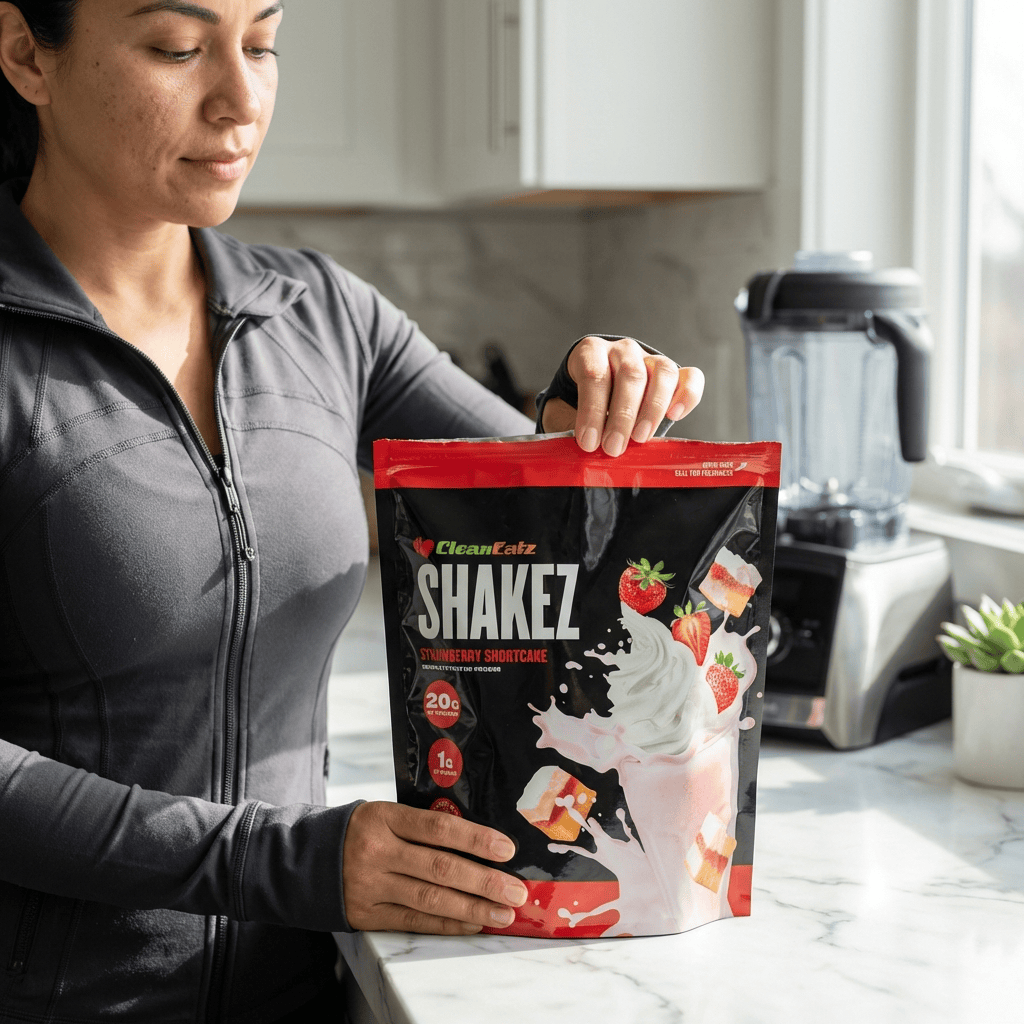
Don't reward yourself with food. This is one of the biggest traps. Three 30-minute runs at 5 mph burn about 864 calories a week for a 155-pound person. A 400-calorie bakery muffin after each one is 1,200. If you need something after running, choose protein-forward options such as Greek yogurt, cottage cheese, eggs or a protein shake, and add carbs on purpose rather than automatically.
Consider tracking, briefly. You don't need to log forever, but 5 to 7 days of accurate tracking can be eye-opening. It's easy to overestimate calories burned and underestimate calories eaten, and a short tracking window often shows why the scale isn't moving.
If meal planning feels overwhelming on top of training, that's a workload problem, and workload problems have different solutions than knowledge problems. Our Weight Loss Meal Plan delivers portion-controlled, calorie-controlled, macro-balanced meals that heat in a few minutes.
 Make it easy withWeight Loss Meal PlanFrom $89.95View plan
Running tips for sustainable weight loss
How do you keep running without getting hurt?
Quick answer
Get fitted shoes, warm up and cool down, increase mileage gradually, drink water for runs under an hour and keep it interesting. Small increases beat big jumps, so hold your volume steady for a week if aches show up.
A few practical habits will help you stay consistent and reduce injury risk, so your routine lasts long enough to work.
- Invest in proper shoes. Running is low-cost, but shoes matter. Worn-out or poorly fitted shoes can increase discomfort and make consistency harder. If you can, visit a specialty running store to get fitted.
- Warm up and cool down. A few minutes of easy walking or jogging before you run helps your body ease in. Afterward, a short cool-down and light mobility work can support recovery, especially if you're adding volume.
- Progress gradually. A common rule of thumb is the 10% guideline: don't increase weekly mileage too fast. It's not a perfect rule, but the principle is solid. Small increases beat big jumps. If soreness or nagging aches show up, hold your volume steady for a week before adding more.
- Hydrate sensibly. For runs under an hour, water is usually enough. Sports drinks add calories you often don't need. Save them for longer sessions, especially in heat, or when you're training hard and truly need the carbs and electrolytes.
- Keep it interesting. Boredom is hard on consistency. Rotate routes, try trails, switch up workouts or use music, podcasts or audiobooks, whatever makes it easier to show up.
Starting running for weight loss
What should you do next?
Quick answer
Start where you are and run consistently. Hit a protein target you can sustain, and try not to reward workouts with extra calories. If the scale isn't moving, track your intake for a few days to spot the pattern.
Running is a great tool for weight loss, but it's a tool, not a solution by itself. People in the National Weight Control Registry, who lost an average of 33 kg and kept it off for more than 5 years, report both high levels of physical activity and a consistent, calorie-conscious way of eating. They don't appear to be choosing between the two, and you don't have to either.
Don't use runs as permission to eat anything, and don't expect the scale to drop just because you logged miles. Sustainable weight loss comes from habits you can maintain for years, not punishing workouts you'll abandon in weeks.
If you're ready to take the nutrition side seriously, our Weight Loss Meal Plan can handle the part that's hard to execute on training days: calorie-controlled portions with no meal prep. The running is still on you.
This content is for educational purposes only and doesn't replace personalized professional advice.
Running for weight loss FAQ
Running, answered
Is running good for weight loss?
Yes. Running can support weight loss by increasing energy expenditure, often by hundreds of calories an hour depending on pace and body weight. It works best paired with a calorie-controlled eating plan. Exercise alone often leads to modest average weight loss, and diet plus exercise tends to do better.
How much should I run to lose weight?
A common target is 150 to 300 minutes a week of running or other cardio, about 30 to 60 minutes most days. If your diet doesn't change, more than 250 minutes may be needed for noticeable loss. If you're also controlling intake, about 150 minutes a week can be effective and far more sustainable.
Why am I not losing weight even though I run every day?
A common reason is hunger after running or reward eating, which can shrink the deficit without you noticing. Others include overestimating calories burned, underestimating calories eaten, water shifts from muscle soreness and normal scale changes. Tracking your intake for 5 to 7 days, just as a diagnostic, often shows what's happening.
Is running better than walking for weight loss?
Running usually burns more calories per minute than walking, but the best exercise is the one you can do consistently. Walking is lower impact, easier to recover from and simple to do daily, especially for beginners. For fat loss, weekly consistency matters more than choosing the perfect cardio.
What should I eat when running for weight loss?
Prioritize protein to support fullness and preserve lean mass, about 0.6 to 0.8 grams per pound of body weight a day for many active adults. For shorter runs, skip the carb load and eat a balanced meal 2 to 3 hours before, then protein and produce afterward. Keep post-run snacks intentional.
More exercise & weight loss guides
Keep reading
 Ellie Lopez, LDN, MS · Oct 9, 2026

Sources
On this page