
Pilates for weight loss
Is Pilates good for weight loss? What you need to know
It can help, but it's a small calorie burn. Think about 120 to 190 calories an hour at 150 lb. What Pilates burns, what the trials found, what it does well and how to fit it into a weight loss week.
- Free Shipping on Every Meal PlanFree Shipping
- Up to 20% Off 30-Meal PlansUp to 20% Off
- Chef Cooked, Dietitian BuiltDietitian Built
- Heat & Eat in MinutesHeat & Eat

Pilates & weight loss: the short answer
Is Pilates good for weight loss?
Quick answer
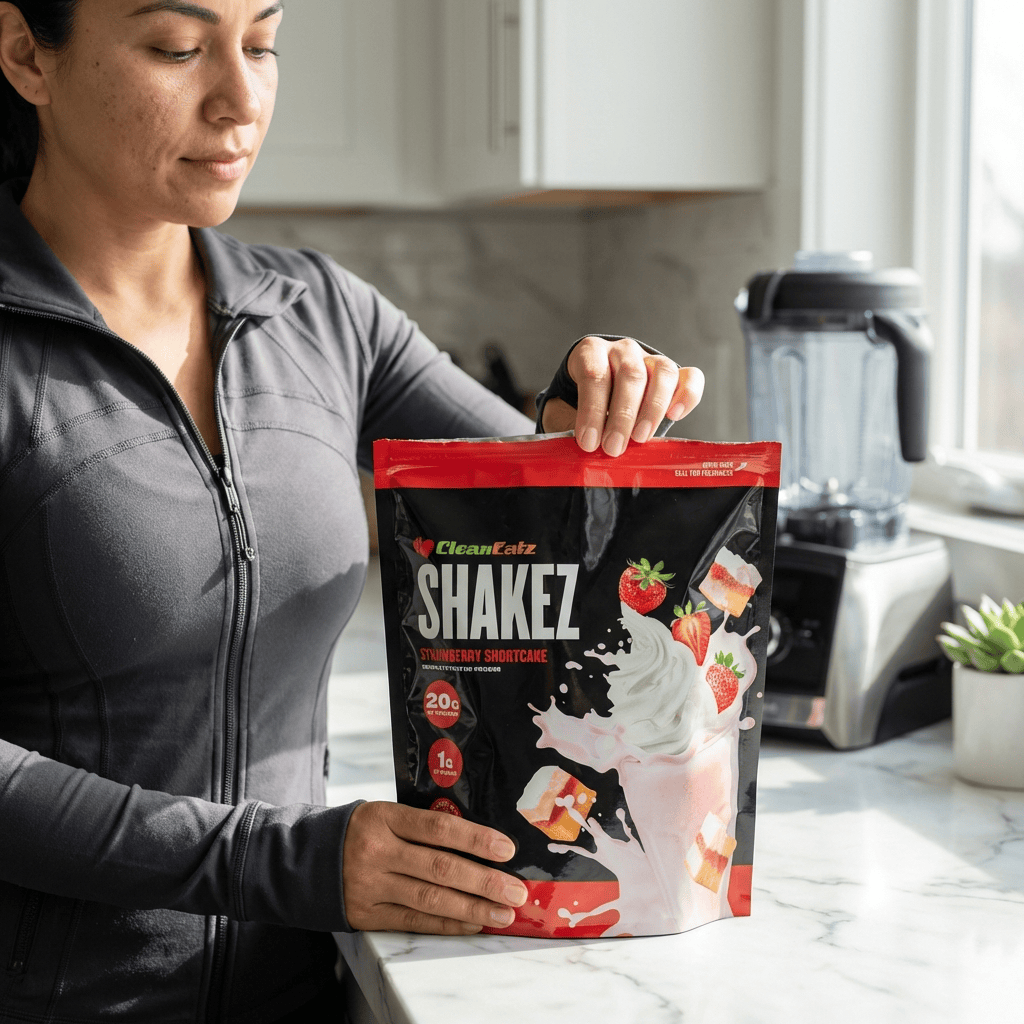
Pilates can help, but it won't do the job alone. It burns about 120 to 190 calories an hour at 150 lb, and trial results are mixed. It works best alongside cardio, strength training and a calorie-controlled diet.
Pilates alone is unlikely to dramatically change your body composition. If your main goal is weight loss, there are more efficient ways to burn calories.
That doesn't mean Pilates isn't valuable. It just isn't a high-calorie workout, and it wasn't designed to be one. Think of it as one tool in your fitness toolbox. It's strong on core strength, posture, flexibility and body awareness, and those can help you move better in your other workouts and in daily life.
The people who get the best results from Pilates for weight loss typically do three things:
- Combine it with other exercise, especially cardio and strength training
- Pair their workouts with a calorie-controlled diet
- Use the strength and mobility they gain to stay more active through the day
For a full breakdown of how different exercises contribute to weight loss, see our Complete Exercise Guide for Weight Loss.
How many calories Pilates burns
How many calories does Pilates burn?
Quick answer
About 120 to 190 calories an hour for a 150 lb person, based on the 2024 Compendium of Physical Activities. In a lab study of young women, mat sessions burned about 116 calories an hour and reformer sessions about 155.
Calorie burn depends on your body weight, how hard the class is and the type of Pilates you do. The best measured data we found is a small 2021 study of 18 healthy young women, at about 134 lb on average, who did both a mat and a reformer session while their oxygen use was measured. Mat Pilates came in at 1.93 calories a minute, which works out to about 116 an hour. Reformer came in at 2.59 a minute, or about 155 an hour.
To compare it with other activities, we used the 2024 Adult Compendium of Physical Activities, the standard research reference. Multiply its rating by your weight in kilograms and you get calories per hour. Here's how that works out at 150 lb, or 68 kg.
| Activity | Calories per hour |
|---|---|
| Mat Pilates, traditional | about 120 |
| Pilates, general | about 190 |
| Hatha yoga | about 155 |
| Strength training, moderate | about 240 |
| Strength training, vigorous | about 410 |
| Brisk walking, 3.5 to 3.9 mph | about 325 |
| Very brisk walking, 4 mph | about 375 |
| Running, 6 mph | about 630 |
Estimated calories per hour for a 150 lb person, from the 2024 Adult Compendium of Physical Activities.
These are estimates, and your number will differ with your body size and class. A fast reformer class probably beats these figures, but we didn't find good measurements of one, so don't assume it does by much.
As you can see, a brisk walk burns more calories than Pilates. That isn't a knock on Pilates. It's what happens when a workout is built around control and not around raising your heart rate. In the 2021 study, neither session raised heart rate or blood lactate significantly above resting values.
Here's the arithmetic for a typical plan. You'd burn about 70 calories an hour just sitting at 150 lb, so an hour of general Pilates adds about 120 calories on top of that. Three sessions a week comes to about 360 extra calories, which is roughly a tenth of a pound of fat by the rough 3,500-calorie rule. One large muffin can cancel it out.
The takeaway: don't count on Pilates as your only exercise if weight loss is the goal. Use it alongside activities that burn more.
What research shows about Pilates for weight loss
Do studies show Pilates causes weight loss?
Quick answer
Results are mixed. One 2021 meta-analysis found about 2.4 kg more weight lost than comparison groups in people with overweight or obesity, but another found mat Pilates no better than other options. Trial quality is often low.
The calorie math would predict small results, and the research mostly agrees, with some noise:
- A 2021 meta-analysis of 11 randomized trials with 393 people with overweight or obesity found Pilates lowered body weight by about 2.4 kg (about 5 lb), BMI by about 1.2 and body fat by about 4 percentage points. It found no significant change in waist size or lean mass, and the authors called for larger, better trials.
- A 2020 meta-analysis of 10 studies of mat Pilates found it was no better than traditional exercise or control groups for BMI, lean mass, body fat or waist size.
- An umbrella review of 27 systematic reviews concluded that Pilates can reduce BMI and body fat percentage, but the certainty of the evidence ran from very low to moderate, and most of the reviews were low quality.
- A 12-week trial in 30 middle-aged people with obesity doing 60 minutes of mat Pilates three times a week found no significant differences in body composition between groups, though fitness, mental health and muscle properties improved.
- A 12-week trial in 35 women with obesity put everyone on a Mediterranean diet and added online mat Pilates for half of them. The Pilates group lowered their fat percentage and gained fat-free mass compared with diet alone. It's a preliminary study, but it points to where Pilates fits best.
For context, a 2023 review found that exercise training, mostly aerobic, adds only about 2 to 3 kg of weight loss on average in people with overweight or obesity. So even the more encouraging Pilates result is in the normal range for exercise, and the bigger reason to do it may be fitness, which that review also stresses.
Real benefits of Pilates for your body
What does Pilates do well?
Quick answer
Pilates does well on core strength, posture, mobility and body awareness, and it's low impact. The umbrella review also found improvements in pain, disability, balance and sleep, though the evidence quality was mostly low. These matter even when the scale doesn't move.
The scale is a poor way to judge Pilates. Here's where it's more likely to pay off:
- Core strength: Pilates works the deep core muscles that support your spine and help with stability, which can carry over to other exercise, from running to lifting.
- Posture: Better alignment can help you stand taller and can change how your clothes fit, even with no weight change. That's a change in how you carry yourself, not fat loss.
- Muscle tone: Pilates won't build much muscle mass. In the 2021 meta-analysis, lean mass didn't change on average. What many people call toning is a mix of muscular endurance and, with enough fat loss, seeing more of the muscle you have. Pair it with strength training if building muscle is the goal.
- Flexibility and mobility: More range of motion can make everyday movement and other workouts feel easier.
- Body awareness: Pilates teaches you to tune into how your body moves. Some people find that carries over into how they move during the day, and some into how they eat, though we didn't find good evidence on the eating part.
- Low impact: It's joint-friendly, so it works well for recovery days and for people who can't do high-impact exercise. If you have an injury or a back condition, or you're pregnant, talk with your doctor first.
Types of Pilates compared
Which type of Pilates is best for weight loss?
Quick answer
The one you'll keep doing. Reformer burned more than mat in the one direct lab comparison, at about 155 versus 116 calories an hour, but that gap is small. Mat is the cheapest and easiest place to start.
All Pilates styles offer similar benefits, so choose based on availability, budget and what you enjoy.
| Type | How it works | Good for |
|---|---|---|
| Mat | Bodyweight on a padded mat | Beginners, low cost |
| Reformer | Sliding carriage with springs | More challenge, studio access |
| Chair | Compact springs and pedals | Legs and core, added resistance |
| Barre Pilates | Pilates plus ballet moves | People who like faster classes |
Four common types of Pilates and who each suits.
- Mat Pilates: It's done on a padded mat using your bodyweight. It's the most accessible and affordable, and a good starting point for beginners.
- Reformer Pilates: It uses a sliding carriage with springs for resistance. It's more challenging and burns somewhat more calories, but it needs studio access or expensive equipment.
- Chair Pilates: Compact equipment with springs and pedals, good for targeting your legs and core with added resistance.
- Barre Pilates: It combines Pilates with ballet-inspired movements, and classes are often paced faster than traditional Pilates, though that varies by instructor.
The best type of Pilates is the one you'll do consistently. If you like the workout, you'll stick with it, and that's worth more than a small difference in calories.
A weekly Pilates plan for weight loss
How often should you do Pilates to lose weight?
Quick answer
Aim for 2 to 3 sessions a week of 45 to 60 minutes, alongside 150 to 300 minutes of moderate cardio and 2 strength sessions. Diet will still do most of the work, since Pilates adds only a modest burn.
If you want Pilates in your weight loss plan, here's a realistic week. The cardio and strength numbers match the US Physical Activity Guidelines, and three weekly sessions is the dose used in the trials above.
| Activity | How much | Why |
|---|---|---|
| Pilates | 2 to 3 sessions, 45 to 60 min | Core, posture, mobility |
| Cardio | 150 to 300 min, moderate | Most of your calorie burn |
| Strength training | 2 sessions | Helps keep muscle |
| Daily movement | 7,000 to 10,000 steps | Adds up through the day |
A realistic weekly exercise plan that includes Pilates.
Walking, cycling and swimming all work for the cardio. That's where most of your exercise calories will come from. Resistance training is what's specifically advised to hold on to lean mass while you lose weight, so don't let Pilates replace it entirely.
Diet drives the calorie deficit
Here's what matters most: your diet drives the deficit.
If you burn about 120 extra calories in a Pilates class and then eat more than your body needs afterward, your progress can stall or reverse. That post-class smoothie can be worth more calories than the class. The most effective weight loss plans combine exercise with planned eating.
The Mediterranean diet trial above is a good example of the combination. For more on how to balance calories burned with calories consumed, see our complete guide.
Using Pilates in a weight loss plan
What should you do next?
Quick answer
Keep Pilates if you like it, add cardio and strength around it, and put most of your effort into what you eat. If cooking is what keeps slipping, that's the piece to fix first, since it decides your deficit.
Pilates is excellent at what it's designed to do: build core strength, support posture, increase flexibility and improve body awareness. It can absolutely be part of an effective weight loss plan.
On its own, though, it isn't a weight loss solution. The calorie burn is modest, and meaningful fat loss takes a bigger energy deficit than most sessions provide. Use it as one part of a well-rounded routine, with cardio for calorie burn, strength training to keep muscle and planned eating to drive the deficit.
The nutrition side is where the week usually falls apart, because it's a daily job and Pilates is an hour. Our Weight Loss Meal Plan has portion-controlled, calorie-controlled meals, starting at $89.95 for 10 meals with free shipping and no subscription. Or build your own meal plan and filter the menu by the Weight Loss goal.
 Make it easy withWeight Loss Meal PlanFrom $89.95View plan
Pilates & weight loss FAQ
Questions about Pilates & weight loss, answered
Is Pilates good for weight loss specifically?
It can support weight loss, but it isn't an efficient calorie burner, and trial results are mixed. Its real value is in core strength, posture and body awareness, and it's unlikely to add much muscle by itself. For significant weight loss, combine it with cardio, strength training and changes to what you eat.
How many calories does Pilates burn?
About 120 to 190 calories an hour for a 150 lb person, based on the 2024 Compendium. In one lab study of young women, mat burned about 116 calories an hour and reformer about 155. That's less than brisk walking, at about 325 an hour, or running at 6 mph, at about 630.
How often should I do Pilates for weight loss?
Aim for 2 to 3 sessions a week, combined with cardio and strength training. Trials commonly use three 60-minute sessions a week. Pilates alone won't create a big enough calorie deficit for most people, so treat it as a part of your plan, and make what you eat the main lever.
Is Pilates better than yoga for weight loss?
Neither is meaningfully better for burning calories. The 2024 Compendium puts general Pilates at about 190 calories an hour at 150 lb and hatha yoga at about 155, with vinyasa at about 185. Pilates focuses more on core strength, and yoga on flexibility and mindfulness. Choose whichever you'll do consistently.
What should I combine with Pilates for faster weight loss?
Add cardio like walking, cycling or swimming for a bigger calorie burn, and strength training to help keep muscle. Most important, pair your exercise with a calorie-controlled diet. For complete exercise recommendations, see our Complete Exercise Guide for Weight Loss.
More exercise & weight loss guides
Keep reading
 Ellie Lopez, LDN, MS · Nov 26, 2022
Sources
On this page