Best Foods for Menopause Symptoms: What to Eat

Protein, calcium, fish, fiber and soy. What food can do in menopause, and what it can't. Six food groups that support muscle, bone and heart health through the transition, the triggers worth watching and when to talk with your doctor.

Ellie Lopez, LDN, MS
Ellie Lopez, LDN, MSLicensed Dietitian · Jul 10, 2023
Clean Eatz Kitchen High Protein Meal Plan box with plated chef-cooked meals
Quick answer

The best foods for menopause are protein-rich foods, calcium-rich foods, fatty fish, fiber-rich plants and, if you enjoy them, soy foods. They support muscle, bone, heart and metabolic health as estrogen falls. Food doesn't stop hot flashes: hormone therapy is the most effective treatment for them, so talk with your doctor if symptoms are moderate to severe.

If you're going through perimenopause or menopause, you may have noticed that your body responds to food differently than it used to. Maybe your sleep feels more fragile, your appetite has changed, or weight seems easier to gain and harder to lose.

These changes aren't "just in your head." The menopause transition brings hormonal shifts, changes in body composition and age-related muscle loss, all of which can affect metabolism, appetite and where fat is stored.

The good news is that food can genuinely help. It won't eliminate menopause symptoms, but it can support energy, muscle, bone health, digestion and heart health. For hot flashes and night sweats that are moderate to severe, nutrition works best as one part of a broader plan, not a substitute for medical care.

Why nutrition matters more during menopause

During midlife, several changes tend to happen at the same time. Aging, hormonal shifts, lower energy needs, disrupted sleep and changes in activity can all contribute to weight gain or changes in body composition. In the long-running SWAN study, summarized in a 2024 review in Current Obesity Reports, 3,064 midlife women gained an average of about 0.7 kg (1.5 pounds) a year. Menopause is also linked to a shift toward more abdominal fat, even when the scale doesn't move much.

Muscle is part of the picture. The Menopause Society notes that adults lose about 3% to 8% of their muscle mass per decade after age 30, and less muscle usually means a lower resting metabolic rate.

Bone health becomes even more important as estrogen falls. According to a 2023 review in Nutrients, bone loss around menopause averages about 2% a year, starting 1 to 3 years before the final period and lasting 5 to 10 years, for a total drop of roughly 10% to 12% in spine and hip bone density. Over time that raises the risk of osteoporosis and fractures, which is why calcium, vitamin D, protein and strength training matter so much at this stage.

1

Protein-rich foods

Muscle
1.0 to 1.2g per kg of body weight a day if active or losing weight

If there's one area many women can improve during menopause, it's protein. Muscle declines with age, and the hormonal changes of the transition can make lean mass harder to hold on to.

Base protein on body weight rather than one number for everyone. The Nutrients review puts the baseline at 0.8g per kilogram of body weight a day, rising to 1.0 to 1.2g per kilogram for women who exercise regularly or are losing weight. That's roughly 0.45 to 0.55g per pound. For a 150-pound woman (68 kg), it works out to about 68 to 82g of protein a day. During weight loss, the Current Obesity Reports review found that protein of at least 1.2g per kilogram, or at least 30% of calories, helped protect body composition.

Spreading protein across the day, instead of saving most of it for dinner, can make the target easier to reach. Good choices include chicken, turkey, eggs, Greek yogurt, cottage cheese, fish, tofu, tempeh, edamame and legumes, plus higher-protein, minimally processed convenience foods when you need them. The goal isn't perfection. It's making protein easy enough to eat consistently.

Pair it with strength training. Protein works best alongside resistance exercise, which is what actually signals your muscles to stay.

2

Calcium & vitamin D foods

Bone
1,200mg calcium a day for women over 50

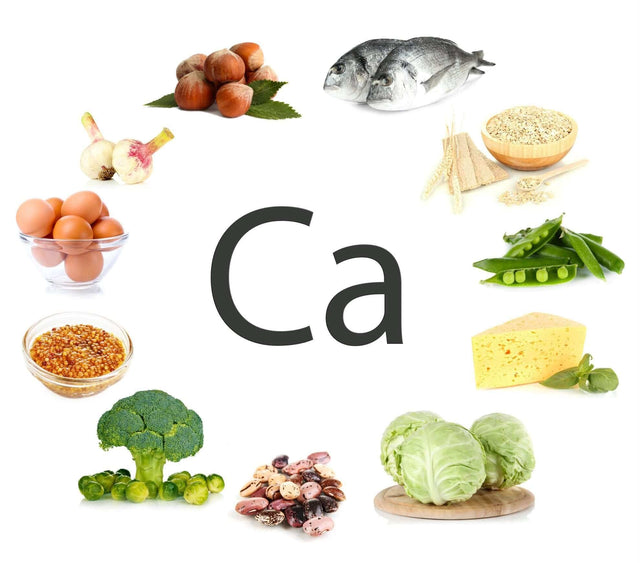
Bone health deserves special attention in any menopause nutrition plan. According to the NIH Office of Dietary Supplements, women over 50 generally need 1,200mg of calcium a day.

Vitamin D matters too, because it helps your body absorb calcium. The NIH recommendation is 600 IU a day for adults 19 to 70 and 800 IU for adults 71 and older, though individual needs vary with blood levels, diet, sun exposure and medical history. Vitamin D food sources include fatty fish, egg yolks and fortified foods, and many women benefit from a conversation with their clinician about testing or supplements.

Good calcium sources include yogurt, milk, cheese, fortified plant milks, calcium-set tofu, canned fish with bones, and greens such as kale and bok choy. Here's how much some of them carry, per USDA data for tofu, yogurt, sardines, milk, kale and bok choy:

• Calcium-set firm tofu: about 680mg per 3.5 oz

• Plain low-fat yogurt: about 450mg per cup

• Canned sardines with bones: about 380mg per 3.5 oz

• 2% milk: about 290mg per cup

• Raw kale: about 250mg per 3.5 oz

• Cooked bok choy: about 90mg per 3.5 oz

Check the label on tofu: the calcium depends on how it's set. Tofu made with calcium sulfate is far higher than tofu set with other coagulants.

3

Fatty fish & Mediterranean-style foods

Heart health
Olive oil, fish, legumes, vegetables, nuts & whole grains

A Mediterranean-style eating pattern can be especially helpful during menopause. It focuses on extra-virgin olive oil, fatty fish, legumes, vegetables, fruit, nuts, seeds and whole grains, and heart and metabolic health become more important in midlife as estrogen's protective effects fade.

A 2024 systematic review in AIMS Public Health looked at seven Mediterranean diet intervention studies in menopausal women and found reductions in body weight, blood pressure, triglycerides, and total and LDL cholesterol. The studies were small and varied, but the direction was consistent.

Fatty fish such as salmon, sardines and mackerel are especially useful because they bring protein, omega-3 fats and, in the case of canned fish with bones, calcium. Along with other minimally processed foods, they help support overall health through the transition.

4

Fiber-rich plant foods

Fullness & digestion
Legumes, vegetables, fruit, nuts, seeds & whole grains

Fiber can become even more important during menopause, especially if you notice more bloating, constipation or changes in appetite. A fiber-rich eating pattern supports fullness, regular bowel movements and overall diet quality, and it naturally brings more legumes, vegetables, fruit, nuts, seeds and whole grains onto your plate.

Build fiber up gradually rather than all at once, and drink enough fluids along the way. That helps support digestion without making bloating or discomfort worse.

For a deeper look at how fiber supports overall health, our Ultimate Guide to Dietary Fiber covers the science and practical strategies.

5

Soy foods, flax & other plant estrogens

Good protein
Nutritious, but not a proven hot flash fix

Phytoestrogens are plant compounds that can interact weakly with estrogen receptors. That's why soy and flax come up so often in conversations about menopause.

The research on hot flashes is disappointing, though. A 2025 meta-analysis in PeerJ of 12 studies found that soy isoflavones had small effects on some symptoms, such as headache, palpitations and low mood, but no significant effect on hot flashes, sweating or other vasomotor symptoms. A 2024 meta-analysis of five randomized trials with 425 women found no effect on menopausal symptoms overall, with a small drop in depression scores, and flagged a high risk of conflict of interest in the studies. The Menopause Society's 2023 nonhormone therapy statement does not recommend soy foods or soy extracts for hot flashes.

That doesn't make soy a poor choice. Tofu, tempeh, edamame and soy milk are excellent sources of protein, and calcium-set tofu is one of the richest calcium foods there is. Flaxseeds, sesame seeds, chickpeas and lentils fit well too. Eat them because they're nutritious, not because they'll cool hot flashes. If you're considering soy or isoflavone supplements, especially with a history of hormone-sensitive breast cancer, talk with your doctor first.

Foods & drinks that may worsen symptoms

Not every woman notices the same triggers, but some find that alcohol, caffeine or spicy foods make hot flashes worse. The evidence here is thin: the Menopause Society's 2023 statement found too little support to recommend avoiding triggers as a treatment. So treat this as personal observation, not a rule. If a glass of wine reliably sets off night sweats for you, that's worth acting on.

Alcohol can also disrupt sleep, which matters at a stage of life when sleep may already feel fragile.

It can help to cut back on added sugars and highly refined foods too. Not because they're uniquely "bad" during menopause, but because they make it harder to build an eating pattern that supports steady energy, fullness and weight management. Excess sodium is worth watching as well, especially if your diet is light on whole, minimally processed foods.

A practical place to start is to notice your personal triggers, reduce the ones that clearly make symptoms worse, and build most meals around foods that leave you satisfied and well nourished.

What a menopause-supportive plate looks like

Rather than following a restrictive "menopause diet," it's usually more helpful to build meals around a few simple priorities:

  • Start with a solid source of protein.
  • Add vegetables or fruit for fiber and micronutrients.
  • Include healthy fats such as olive oil, nuts, seeds or fatty fish.
  • Make room for calcium-rich foods every day.
  • Include soy foods if you enjoy them.
  • Keep ultra-processed foods and your own symptom triggers in proportion.

A breakfast of Greek yogurt with berries and ground flax, a lunch of salmon over greens with chickpeas and olive oil, or a tofu and vegetable stir-fry over brown rice all fit the pattern.

This kind of eating is realistic, flexible and far more sustainable than a plan built around fear or rigid food rules. It also leaves room for real life, which matters when many women are busy, tired and not looking for another impossible wellness routine.

When diet is not enough for menopause symptoms

Nutrition matters, but it doesn't replace treatment when symptoms are moderate to severe. The 2022 hormone therapy position statement from The Menopause Society (formerly the North American Menopause Society) says hormone therapy remains the most effective treatment for hot flashes and night sweats and has been shown to prevent bone loss and fracture. For women under 60, or within 10 years of menopause, without health reasons to avoid it, the benefits generally outweigh the risks.

For women who can't or prefer not to take hormones, the 2023 nonhormone statement recommends options such as cognitive behavioral therapy, clinical hypnosis and several prescription medicines, and it lists weight loss as a recommended approach for some women. It does not recommend dietary changes, soy or herbal supplements for hot flashes.

So if hot flashes, night sweats, sleep problems or mood changes are affecting your daily life, you haven't "failed" if food alone isn't enough. Talk with your doctor about the full range of options. Nutrition is one important part of support, not the whole treatment plan.

Making menopause-friendly eating easier

Menopause often arrives during a season of life when women are juggling work, family, aging parents, stress and poor sleep. The goal isn't a flawless diet. It's making nourishing food easier to stick with.

That's where practical shortcuts help: protein-rich breakfasts, pre-cooked proteins, frozen vegetables, calcium-fortified staples, simple snack pairings and balanced ready-made meals when you need them. Convenience doesn't cancel out nutrition. Often it's what makes consistency possible.

If cooking protein-rich meals from scratch feels like too much, our High Protein Meal Plan adds 2 extra ounces of meat to each meal, about 10g more protein, from $63.00 for 6 meals. Across our current menu, meals run from 20g to 55g of protein, and 20 of the 32 have at least 30g. If fiber is your focus, every meal on the High Fiber Meal Plan has at least 5g. Or pick meals one by one with Build A Meal Plan.

Sodium varies a lot across our menu, from 360mg to 1,550mg a meal, so if you're watching it, sort the Nutrition Info page by sodium before you choose. Shipping is free on every meal plan order, and there's no subscription.

Best foods for menopause bottom line

What you eat during menopause does matter, but not because there's one perfect menopause diet. The most helpful approach is a steady one: enough protein, enough calcium and vitamin D, more fiber-rich plant foods, healthy fats and a realistic awareness of your own symptom triggers. That kind of eating supports your changing body without turning food into another source of stress.

Just as important, food is only one part of the picture. Strength training, better sleep, stress support and evidence-based medical care all play a role. The Menopause Society suggests 150 minutes of aerobic activity a week plus strength training at least twice a week, and your doctor can help you weigh treatment options for symptoms that food can't touch.

Sources

  1. The 2022 hormone therapy position statement of The North American Menopause Society, Menopause 2022
  2. The 2023 nonhormone therapy position statement of The North American Menopause Society, Menopause 2023
  3. Hurtado et al., Weight gain in midlife women, Curr Obes Rep 2024
  4. The Menopause Society, MenoNote: Midlife weight gain (patient education)
  5. Erdelyi et al., The importance of nutrition in menopause and perimenopause: a review, Nutrients 2023
  6. Goncalves et al., Systematic review of Mediterranean diet interventions in menopausal women, AIMS Public Health 2024
  7. Luan et al., Effects of soy isoflavones on menopausal symptoms in perimenopausal women, PeerJ 2025
  8. Gencturk et al., Soy isoflavones in the climacteric period: systematic review and meta-analysis, Explore 2024
  9. NIH Office of Dietary Supplements: Calcium fact sheet for health professionals
  10. NIH Office of Dietary Supplements: Vitamin D fact sheet for health professionals
  11. USDA FoodData Central: Tofu, raw, firm, prepared with calcium sulfate
  12. USDA FoodData Central: Yogurt, plain, low fat
  13. USDA FoodData Central: Sardine, Atlantic, canned in oil, with bone
  14. USDA FoodData Central: Milk, reduced fat, 2%
  15. USDA FoodData Central: Kale, raw
  16. USDA FoodData Central: Bok choy, cooked, boiled, without salt

Frequently asked questions

What foods should you eat during menopause?

A menopause-supportive eating pattern includes protein-rich foods, calcium-rich foods, fatty fish, fiber-rich plant foods and minimally processed soy foods if you enjoy them. These choices support muscle, bone, digestive and heart health during the transition. Pair them with strength training for the biggest payoff.

What foods should you avoid during menopause?

There's no single list of foods every woman needs to avoid. Some women find that alcohol, caffeine or spicy foods make hot flashes worse or disrupt sleep, though research hasn't shown that avoiding triggers works as a treatment. It's usually more helpful to notice your own triggers and limit added sugars and highly refined foods than to follow a rigid elimination plan.

Do phytoestrogens help with menopause symptoms?

Not much for hot flashes. Recent meta-analyses found no significant effect of soy isoflavones on hot flashes or other vasomotor symptoms, with small effects on some symptoms like low mood, and The Menopause Society does not recommend soy for hot flashes. Soy foods are still worth eating for their protein and, in calcium-set tofu, calcium.

How much protein do you need during menopause?

The baseline for adults is 0.8g per kilogram of body weight a day. Many women do better with 1.0 to 1.2g per kilogram, roughly 0.45 to 0.55g per pound, especially if they're active, trying to preserve muscle or losing weight. For a 150-pound woman, that's about 68 to 82g a day. Needs vary, so a registered dietitian can help you set a target.

Can diet alone manage menopause symptoms?

Diet can help, but it's often not enough for moderate to severe hot flashes and night sweats. Hormone therapy remains the most effective treatment for them in appropriate candidates, and there are nonhormone prescription options too. Talk with your doctor about what fits your health history.

Tap a meal count to add

30 meals work out to $7.56 a meal

View plan details

Tap a meal count to add

18 meals work out to $8.82 a meal

View plan details