
Why people regain weight after a diet
Why most people regain weight after a diet & how meal structure prevents it
Most lost weight comes back. The biology explains why, and structure is what holds the line. The regain numbers, the hunger and metabolism changes behind them, and a 5-step maintenance plan built on routine.
- Free Shipping on Every Meal PlanFree Shipping
- Up to 20% Off 30-Meal PlansUp to 20% Off
- Chef Cooked, Dietitian BuiltDietitian Built
- Heat & Eat in MinutesHeat & Eat

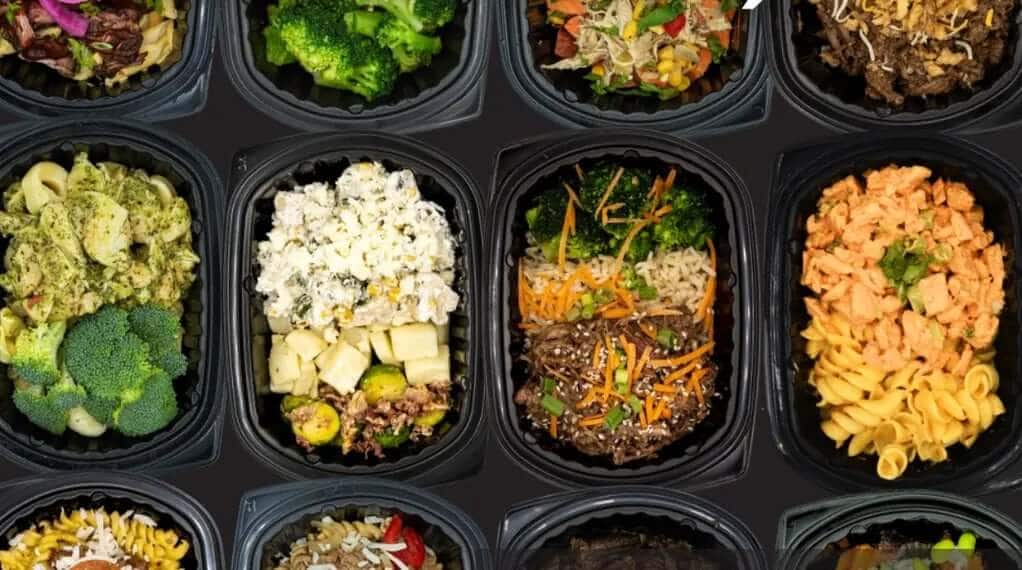
Most dieters regain most of what they lost: more than half within two years and more than 80% by year five. After weight loss, appetite rises about 100 calories a day for every kilogram lost while metabolism slows. A steady meal structure, enough protein and regular weigh-ins make maintenance far more likely.
Reaching a goal weight takes months. Keeping it is the harder half, and most diets say very little about it. The research on what happens after the diet ends is clear and a little humbling: for most people, some or all of the weight comes back.
This post explains the biological and behavioral reasons that happens, and why the structure of how you eat matters more than the rules about what you eat. It ends with a practical plan for the most vulnerable stretch: the first one to two years after the diet officially ends.
Weight regain statistics after dieting
Regain is the rule, not the exception
The diet industry markets the loss phase. The data on what happens next is far less visible, because it doesn't sell. In a meta-analysis of 29 U.S. studies of structured weight-loss programs, more than half of the lost weight was back within two years, and by year five more than 80% had returned, as Hall and Kahan summarize it.
The same analysis has a quieter, more hopeful number. Five years out, the average participant was still about 3 kg (6.6 lb) below their starting weight. Regain is common, but it isn't total, and it isn't fate.

So how many people succeed? Researchers Rena Wing and Suzanne Phelan estimate that about 20% of people with overweight manage long-term weight loss, defined as losing at least 10% of their starting weight and keeping it off for at least a year. The other 80% regain part or all of it. That gap is why the period right after a diet deserves its own plan.
Regain is common, but it isn't total, and it isn't fate.
Staci Gulbin, MS, MEd, RD
Why the first year after a diet matters most
The risky window opens early
A 2022 meta-analysis of 27 trials with 7,236 people found that weight stayed fairly stable for about 36 weeks after a lifestyle program ended, and then a steady regain began. Some participants regained everything in under a year. The same review found that monthly check-ins with a health professional during maintenance helped slow regain.
That timing matches the biology below. The hormonal and metabolic push back is strongest in the months after loss, and the new habits are at their most fragile. A plan that carries you through the first 12 to 24 months changes the odds for the years after.
The biology of weight regain
Your body pushes back for years
None of this is a willpower problem. After weight loss, the body changes how much energy it burns and how hungry you feel, and both changes favor regain.
Adaptive thermogenesis after weight loss
You burn less than the calculator says
After weight loss, your body burns fewer calories than a standard equation predicts for your new size. This is adaptive thermogenesis, and it can last for years. Hall and Kahan estimate that for each kilogram lost, daily calorie burn drops by about 20 to 30 calories.
Do the math for a 10 kg (22 lb) loss. That is 200 to 300 fewer calories burned a day than before, a gap no maintenance calculator shows you. A small daily surplus on top of that compounds quickly.
Hunger hormone changes that persist
Hunger outlasts the diet
The bigger force is appetite. Hall and Kahan estimate that appetite climbs by about 100 calories a day above your pre-diet level for every kilogram lost, three to five times the drop in calorie burn.
The hormones behind it don't reset quickly. In a study of 50 adults who lost an average of 13.5 kg on a 10-week very-low-calorie diet, leptin (which signals fullness) stayed lower and ghrelin (which drives hunger) stayed higher a full year later, and people still reported more hunger. These signals run automatically. You don't choose them.
These signals run automatically. You don't choose them.
Staci Gulbin, MS, MEd, RD
The body's set point defense
A weight range the body defends
The body appears to defend a weight range, and moving well below it triggers compensation: lower energy expenditure, lower thyroid hormone (T3) levels, less spontaneous movement and a stronger pull toward rewarding foods. How strong that pull is varies a lot from person to person.
This helps explain why two people eating the same calories can have different results, and why plans that rely on willpower alone, without changing the environment and routine around eating, tend to fade.
Behaviors that drive weight regain
Old habits come back quietly
Biology sets up the pressure. A few predictable habits let it win.
The diet is over mindset
The diet ends, the structure shouldn't
The most damaging belief at the end of a successful diet is that it is over. Treating maintenance as a reward phase, rather than a continuation, removes the very framework that produced the loss. The people in weight control registries describe the opposite: they kept many of the habits that got them there.
Returning to the old food environment
The pantry fills back up
Most diets work partly by changing the food environment. Restaurants get fewer visits, trigger foods leave the pantry and snacking gets redesigned. When the diet ends, the environment often drifts back to what it was before. A review of five weight control registries found that keeping healthy foods available at home was one of the most common strategies among people who kept weight off.
Erosion of daily tracking
Small surpluses add up unseen
Tracking calories or weighing food every day feels unsustainable forever, so most people stop soon after reaching their goal. Awareness drops, portion estimates drift up and the deficit that produced the loss quietly becomes a small surplus. Weight rises slowly enough that no single week feels alarming, until 15 pounds have returned.
Meal structure for weight maintenance
Structure does work willpower can't
Meal structure is the architecture of how you eat across a week: when meals happen, roughly what they contain and how big they are. It matters because it keeps working when motivation dips.
A diet is a temporary set of restrictions designed to produce a result. A framework is a lasting set of patterns designed to keep it. Diets end. Frameworks don't. Portion-controlled meals work as a framework because the portions stay the same whatever kind of week you are having.
Diets end. Frameworks don't.
Staci Gulbin, MS, MEd, RD
There is evidence that consistency itself protects you. In a study of 1,429 registry members, people who ate the same way on weekdays and weekends were about 1.5 times more likely to stay within 5 pounds of their weight over the next year than people who dieted strictly on weekdays only.

The biological push to regain shows up as more hunger, stronger cravings and a stronger pull toward rewarding foods. Regular meal times make eating more predictable and leave less room for late-night grazing. Adequate protein helps protect lean muscle, which supports resting energy expenditure, and it is filling.
Decision fatigue & weight regain
Fewer choices, fewer slips
Every food decision takes a little effort, and the effort adds up by late afternoon, when tired, hungry choices are most likely. Structure removes many of those decisions ahead of time. If lunch and dinner are already settled, there is less to negotiate with yourself.
That is where prepared meals earn their place. They cut the number of daily food decisions and make the healthy choice the easiest one to repeat. A sustainable routine with some room for flexibility tends to last longer than a rigid plan that collapses the first time life gets busy.
A 5-step plan to prevent weight regain
Bridge the gap from loss to maintenance
The move from losing to maintaining is one of the hardest phases of weight management. Appetite is up and calorie burn is lower than expected, so carrying the structure that worked into this stage is what bridges the gap.
- Use a conservative starting point. Instead of jumping straight to a calculated maintenance number, add calories gradually and watch your weight trend for several weeks. Because of adaptive thermogenesis, real maintenance needs are often lower than equations estimate.
- Keep structured meals for the first few months. Use portion-controlled meals that fit your new calorie target for two or three meals a day. It cuts decisions and keeps the routines you built.
- Eat enough protein every day. In a 2024 meta-analysis of 47 trials, higher protein intake helped people keep muscle during weight loss. Intakes above about 1.3 g per kilogram of body weight a day were linked with muscle gain, and intakes below 1.0 g/kg with a higher risk of losing it.
- Keep monitoring. Frequent self-weighing is one of the habits most consistently linked with long-term maintenance. It lets you catch small upward trends early, when a modest change is enough.
- Reassess every two to three months. Check your weight, hunger, activity and how sustainable the routine feels. Adjust meals, food choices or activity before small drifts become setbacks.
Done slowly, this transition lasts. Consistent meals, enough protein, regular check-ins and some flexibility give maintenance a foundation that can hold for years.
What to look for in a maintenance meal delivery service
Maintenance needs a different menu
Maintenance asks different things of a meal service than weight loss does. Calorie needs rise, variety matters more over a longer stretch and flexibility for social eating counts. These features separate a service that supports maintenance from one that only fits the loss phase.
- A calorie range that spans loss & maintenance: meals from about 350 to 650 calories can cover both. Four meals at 350 calories add up to 1,400 calories, and four at 600 reach 2,400. Our current menu (October 2026) runs from 250 to 630 calories a meal. Browse Clean Eatz Kitchen's curated meal plans at your new calorie target.
- Protein that protects muscle: look for meals with about 30 grams of protein or more. On our current menu, 20 of 32 meals have at least 30g, and the High Protein Meal Plan adds about 10g of protein per meal with 2 extra ounces of meat.
- No subscription: a maintenance stretch includes holidays, travel and surprise schedule changes. A subscription that charges you for boxes you didn't need adds stress at a vulnerable time. Our meals are one-time orders, so you reorder when you need to.
- Enough variety to avoid burnout: maintenance lasts much longer than the loss phase, and the same eight meals on repeat get old fast. Our current menu has 32 meals, and Build A Meal Plan lets you pick them one by one.
- Macro transparency: gradual calorie increases are easier to manage when every meal shows protein, carbohydrates and fat in grams. Ours are all on the Nutrition Info page.
Daily habits that help prevent regain
Three habits that hold the line
Members of the National Weight Control Registry, who lost an average of 33 kg and kept it off for more than five years, reported a consistent set of habits: about an hour of physical activity a day, regular breakfast, self-monitoring their weight and a consistent eating pattern across weekdays and weekends, according to Wing and Phelan.
Regular weigh-ins
Watch the trend, not the day
Regular self-weighing helps you spot small changes before they become large ones. Look past normal day-to-day swings and watch for a sustained rise over several days or weeks. If the trend creeps up, a small adjustment to eating or activity is much easier than undoing 15 pounds later.
Continued strength training
Keep the muscle you built
Resistance training two to three times a week helps you keep the muscle that supports your metabolic rate, something cardio alone doesn't do as well. Physical activity was the most consistent factor linked with maintenance across the registries Paixão and colleagues reviewed. Pair it with enough protein and the maintenance phase gets easier to hold.
Stress management
Stress shows up at the table
For many people, stress changes eating through cravings, short sleep and skipped workouts. Simple habits such as a daily walk, regular exercise, a wind-down routine before bed or a few minutes of mindfulness make the rest of the plan easier to keep.

Common mistakes during the maintenance phase
Where maintenance usually slips
The urge to stop tracking the day you hit your goal is almost universal. Keep tracking, measuring portions and leaning on portion-controlled meals until you are settled into maintenance, not just arrived at it.
The other common slip is the foods that drove the original weight gain. They tend to keep their pull. Bringing them back in large amounts right after a diet undoes a lot of progress. Reintroduce them gradually, in small portions, and see how you respond before you scale up. If your weight stalls instead, our guide to weight loss plateaus covers what is normal.
When to seek professional support
You don't have to do this alone
A registered dietitian can review your eating pattern and suggest adjustments that support long-term maintenance. A primary care physician can record your health markers once you reach your goal and track them over time. The 2022 meta-analysis above found that counseling from a health professional at least once a month during maintenance was linked with less regain. For more on the medical side, see the NIDDK weight management pages and the CDC's healthy weight resources.
Weight regain bottom line
Build maintenance before you need it
Long-term weight management takes more than motivation. Many diets produce real short-term loss, and keeping it is harder because the biology and the habits that maintain weight differ from the ones that lose it. Appetite rises, calorie burn falls and old routines creep back.
If you are at or near your goal, start building the maintenance structure before the loss phase ends. Keep protein steady through the day, add high-protein snacks where you need them, and use portion-controlled meals such as the Weight Loss Meal Plan to keep the routines that got you here.

The dietitian's take
Plan for maintenance the way you planned for weight loss. Raise calories slowly, keep most meals the same size and weigh in once or twice a week so a small rise never surprises you. If hunger feels relentless or regain keeps returning, talk with a dietitian or your doctor about more support.
Staci Gulbin, MS, MEd, RD · Registered Dietitian
 Make it easy withWeight Loss Meal PlanFrom $89.95View plan
Weight regain FAQ
Quick answers
Why do most people regain weight after a diet?
After weight loss, appetite rises by about 100 calories a day for every kilogram lost, and calorie burn drops by about 20 to 30 calories per kilogram. Hunger hormones can stay shifted for a year or more. At the same time, many people drop the habits that produced the loss.
How much weight do people typically regain?
A meta-analysis of 29 U.S. studies found that more than half of lost weight was regained within two years and more than 80% by five years. The average participant was still about 3 kg below their starting weight at five years, so regain is common but rarely total.
When is the risk of weight regain highest?
In the first year or two after a diet ends. A 2022 meta-analysis of 27 trials found weight stayed fairly stable for about 36 weeks after the program and then began to climb, with some people regaining everything in under a year.
Does meal structure really help maintain weight loss?
It helps. Registry members who ate the same way on weekdays and weekends were about 1.5 times more likely to stay within 5 pounds over the next year. Portioned meals, regular meal times and steady protein cut daily decisions and keep portions consistent when motivation dips.
How much protein do I need to keep weight off?
A 2024 meta-analysis found that intakes above about 1.3 g of protein per kilogram of body weight a day helped people keep muscle during weight loss, and intakes below 1.0 g/kg raised the risk of losing it. A dietitian can set a target for your size and activity.
More weight maintenance guides
Keep reading
 Weight loss
How to Break a Weight Loss Plateau: Science-Backed Fix
 Ellie Lopez, LDN, MS · Aug 26, 2022
 Weight loss
Metabolism & Weight Loss: What Actually Works (2026)
 Sherrill Johnson, RD, LDN · Jan 24, 2023
 Weight loss
How to Prevent Muscle Loss on GLP-1 Medications
 Romaine Rusnak, RD, LDN · Oct 16, 2026
Sources
- Anderson JW et al. Long-term weight-loss maintenance: a meta-analysis of US studies. Am J Clin Nutr 2001
- Sumithran P et al. Long-term persistence of hormonal adaptations to weight loss. N Engl J Med 2011
- Hall KD, Kahan S. Maintenance of lost weight and long-term management of obesity. Med Clin North Am 2018
- Hall KD, Kahan S. Maintenance of lost weight and long-term management of obesity (free full text, PMC)
- Wing RR, Phelan S. Long-term weight loss maintenance. Am J Clin Nutr 2005
- National Institute of Diabetes and Digestive and Kidney Diseases: Weight management
- Centers for Disease Control and Prevention: Healthy weight
- Kokura Y et al. Enhanced protein intake on maintaining muscle mass, strength, and physical function in adults with overweight/obesity. Clin Nutr ESPEN 2024
- Paixão C et al. Successful weight loss maintenance: a systematic review of weight control registries. Obes Rev 2020 (PMC)
- Machado AM et al. Understanding weight regain after a nutritional weight loss intervention: systematic review and meta-analysis. Clin Nutr ESPEN 2022 (PubMed)
- Gorin AA et al. Promoting long-term weight control: does dieting consistency matter? Int J Obes 2004 (PubMed)
On this page