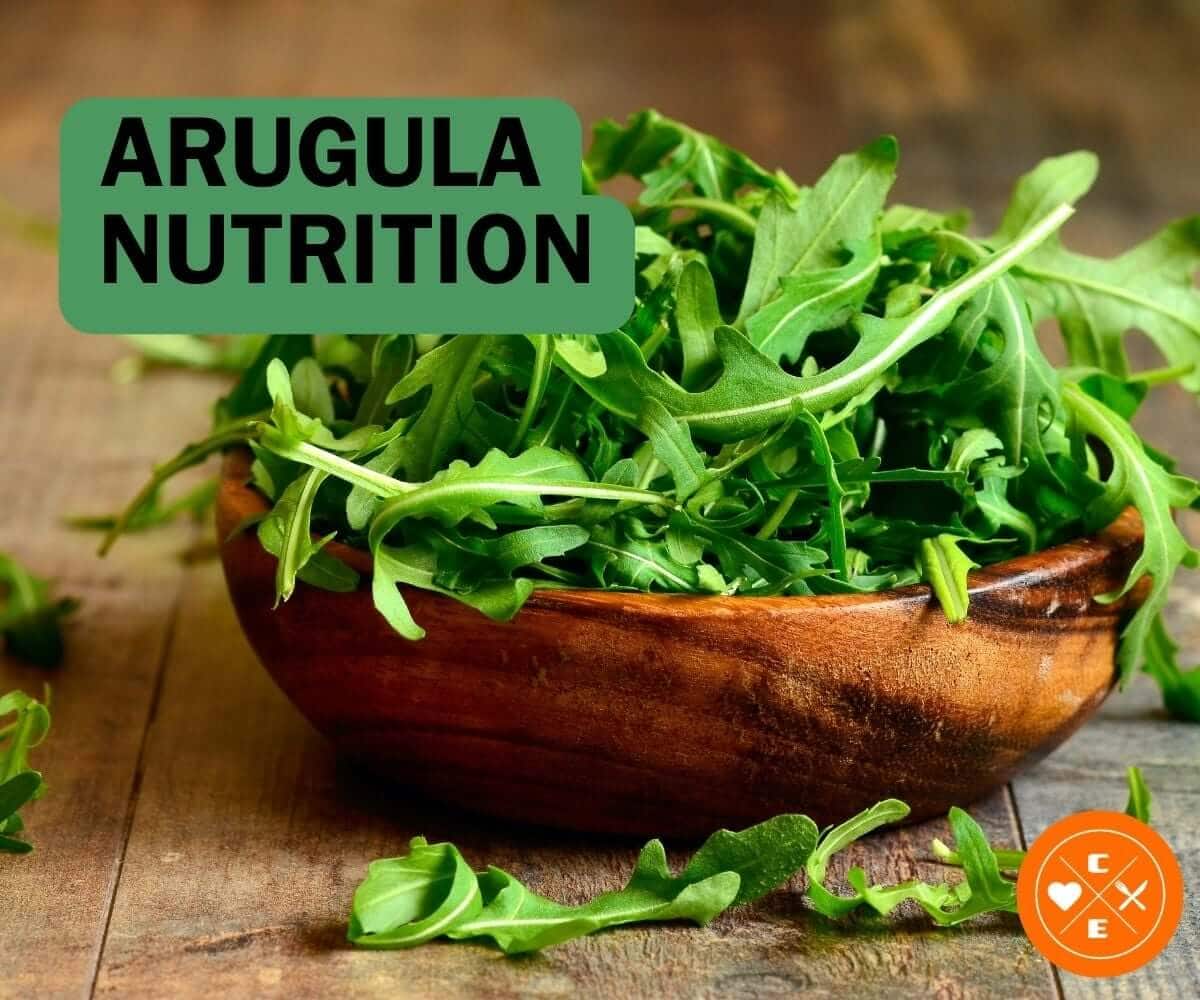

Quick Answer: Arugula is a cruciferous green with about 5 calories, 32 mg of calcium, and 22 micrograms of vitamin K per cup, plus the peppery glucosinolates that give it its bite. It is genuinely nutrient-dense per calorie, and very lightweight — a cup weighs just 20 grams — so it works best as a fresh addition to a full meal rather than as the meal itself.
Arugula tastes like pepper and mustard with a faintly bitter finish. It's a common addition to salad blends, and it can be used as a tasty topping for sandwiches and pizza. That characteristic bite comes from glucosinolates, sulfur compounds it shares with broccoli, kale, and mustard greens. Older leaves taste sharper, but baby arugula is mild enough that even self-described arugula haters may not notice it on a sandwich.
What follows is what a serving actually contains, where the internet's arugula numbers get slippery, and the one thing about this green that we know from running kitchens rather than from reading studies.
Arugula nutrition, per serving and per 100 grams
Nutrition facts are often stated per 100 grams. However, 100 grams of arugula is about five packed cups — not exactly a realistic portion.
Here's the nutrition data from USDA FoodData Central for 20 grams (a reasonable 1-cup portion) and 100 grams.
| Nutrient | Per 1 cup (20 g) | Per 100 g (~5 cups) |
|---|---|---|
| Calories | 5 | 25 |
| Protein | 0.5 g | 2.6 g |
| Fiber | 0.3 g | 1.6 g |
| Calcium | 32 mg | 160 mg |
| Vitamin K | 22 mcg | 109 mcg |
| Folate | 19 mcg | 97 mcg |
| Potassium | 74 mg | 369 mg |
| Iron | 0.3 mg | 1.5 mg |
Vitamin K is the standout even at realistic portions — a single cup covers close to a fifth of a day's target, and two cups in a salad clear it entirely. Folate holds up reasonably well too. The calcium is respectable for a plant source, and more useful than the number suggests for reasons covered below.
However, at 0.3 grams of fiber per cup, arugula contributes almost nothing to a daily fiber target. If that is what you are chasing, our complete guide to dietary fiber covers the foods that move the number.
Arugula vs spinach: the calcium difference is real
Spinach looks better on paper. Per 100 grams it contains more iron, more folate, more magnesium, and roughly the same amount of calcium.
However, spinach is also one of the highest-oxalate foods in the produce aisle. Oxalates bind with calcium into a compound your gut cannot easily separate, reducing calcium absorption. When researchers measured this directly in The American Journal of Clinical Nutrition, absorption of calcium from spinach averaged 5.1% against 27.6% from milk in the same women. A follow-up study on kale — a low-oxalate brassica, the family arugula belongs to — found roughly 41% absorption, beating milk.
Nobody has run that experiment on arugula specifically, so treat this as mechanism rather than measurement. But arugula is a low-oxalate brassica, so it may be a better choice than spinach as a regular salad green or soup addition if you are prioritizing calcium intake. The best option? Include a variety of greens in your diet!
Who should limit arugula
Arugula accumulates more nitrate than any other common vegetable. A review in Nutrients describes rocket, the European name for arugula, as a hyper-accumulator of nitrates, with levels that swing widely depending on season, soil, and nitrogen fertilizer.
However, the amount found in arugula still appears too small to have a definitive, noticeable impact on health. Just don't eat tons and tons of arugula day after day.
One genuine caution, though: the vitamin K in arugula interacts with warfarin and similar anticoagulants. Speak to your prescribing clinician about how much vitamin K is appropriate for you if you're on one of these medications.
Why you will never find arugula in a frozen meal
We flash-freeze several thousand meals a week across three kitchens, and there is a short list of vegetables that survive that process. Broccoli survives it. Green beans, sweet potatoes, peppers, corn, sugar snap peas — all fine, which is why they turn up constantly across our menu.
Tender salad leaves do not freeze well, though. Ice crystals rupture the cell walls that hold a raw leaf rigid, and what thaws out is limp and watery. No amount of packaging fixes it. That is a formulation constraint that applies to every frozen meal company, ours included.
This makes arugula the perfect thing to add after the microwave. Heat a meal for three to five minutes according to the heating instructions, then drop a handful of arugula on top and let the residual heat wilt it. You get the peppery contrast, the vitamin K, and a bit of freshness in a tray of food that was frozen four days ago, for just 5 more calories.
However, arugula alone won't make a very good meal. Two generous cups contain roughly 10 calories and a single gram of protein. Our current menu of 36 meals ranges from 23 to 55 grams of protein per tray, and you can check the calories, protein, carbs, and allergens for every one of them before you order. Put the two together and the salad becomes a fresh, tasty, nutrient-dense addition.
If you want to build out a meal plan yourself, the Build A Meal Plan menu filters by calories (250–350, 350–500, 500+) and by protein (20–30g, 31–40g, 41g+), so you can stack a box of lower-calorie trays and let fresh greens do the volume work. For heavier training weeks, the High Protein Meal Plan runs 35 grams or more per serving. Either way, greens go on top at home — we cover the same idea from the other direction in our guide to high-protein salads that actually fill you up, and in the wider guide to the best foods for weight loss.
Frequently asked questions
Is arugula good for you?
Yes. Arugula is a cruciferous vegetable that delivers vitamin K, folate, calcium, and plant compounds called glucosinolates for about 5 calories per cup. Its weakness is volume: a cup weighs only 20 grams, so the impressive per-100-gram numbers require roughly five packed cups.
Does arugula have fiber?
Very little. Arugula has 1.6 grams of fiber per 100 grams, which works out to about 0.3 grams in a one-cup serving. A cup of raspberries has roughly 25 times more. Arugula is not the best choice if you're looking to up your fiber intake.
Is arugula healthier than spinach?
Neither wins outright, but arugula has one clear advantage: it is low in oxalates, so your body can more easily absorb the calcium it contains. Spinach beats arugula on iron, folate, and magnesium per gram.
Can you cook arugula?
Yes, and it takes seconds. Arugula wilts almost on contact with heat, so stir it into hot pasta, soup, or a reheated meal at the very end rather than cooking it as a vegetable. Heat also mellows the peppery bite considerably.
Can you freeze arugula?
Not if you want to eat it raw afterward. Freezing ruptures the cell walls in tender leaves, and arugula thaws into a limp, watery mess. Frozen arugula is only usable stirred into something hot, and this is exactly why prepared frozen meals use sturdier vegetables like broccoli and green beans instead.
The bottom line
Arugula is a good green that weighs very little, so it's difficult to eat enough to get a massive nutrient boost. Still, it is a strong source of vitamin K, a better calcium source than spinach, and a nearly free way to add flavor and texture to a plate.
However, it should be relied on as the foundation of your meal. Build the meal around protein, then throw the handful of arugula on top after it comes out of the microwave.