
Quick Answer: Turmeric has a small, genuine effect on body weight — and it is much smaller than the marketing suggests. A 2023 umbrella review of 50 randomized trials found curcumin supplementation reduced body weight by 0.59 kg, BMI by 0.24 kg/m², and waist circumference by 1.32 cm on average. That is about 1.3 pounds. The effect was concentrated in people with obesity, type 2 diabetes, PCOS, fatty liver disease or metabolic syndrome, and bioavailability-enhanced formulations worked better than plain extract. Culinary turmeric will not get you near the doses studied. Treat it as a marginal addition to a calorie deficit, not a strategy.
Table of Contents
What the Evidence Actually Shows
Turmeric occupies an odd position: aggressively oversold, and yet not nothing.
The supplement aisle version promises melted belly fat and a metabolism transformed. The backlash version says it is an expensive yellow placebo. The research supports neither, which is why this is worth writing about at all.
Here is the number that matters. The 2023 umbrella review and meta-analysis in the American Journal of Clinical Nutrition pooled 50 randomized controlled trials and found curcumin supplementation reduced body weight by 0.59 kg, BMI by 0.24 kg/m², and waist circumference by 1.32 cm. When the authors excluded the trials at high risk of bias, the effects held up and were slightly larger.
Two qualifications do most of the interpretive work. The benefit was greatest in adults with obesity, type 2 diabetes, PCOS, non-alcoholic fatty liver disease or metabolic syndrome — not in generally healthy people looking to drop a few pounds. And bioavailability-enhanced formulations outperformed both whole turmeric and plain curcumin extract, which tells you something important about what most people are actually buying.
Roughly 1.3 pounds. Over eight to twelve weeks. In the populations where it works best. That is the honest headline, and it is the one nobody selling capsules will lead with.
If you are weighing up supplements more broadly, our guide to weight loss supplements puts turmeric alongside the alternatives and applies the same standard of evidence to each.
The Mechanisms, and How Far They Go
There are reasons researchers keep studying this, and they are more interesting than the effect size.
Inflammation
Excess adipose tissue produces inflammatory cytokines, and chronic low-grade inflammation makes metabolic problems worse in a loop that is hard to break from either end. Curcumin's anti-inflammatory activity is the best-documented thing about it: a systematic review of randomized trials found curcumin supplementation significantly reduced inflammatory markers including C-reactive protein in people with metabolic syndrome and obesity.
What that does for weight is indirect. Lower inflammation may make a metabolic environment slightly more favourable, but it does not burn fat, and "may make things marginally easier" is the strongest honest phrasing available.
Athletes commonly report less exercise-induced soreness with curcumin, and that has a more practical connection to body composition: recovering better means training more consistently. Our anti-inflammatory eating guide covers that ground properly.
Insulin sensitivity
This is the strongest signal in the literature, and it comes with conditions worth stating plainly.
A 2024 randomized controlled trial in Nutrition Journal gave 1500mg of curcumin daily or placebo for twelve months to adults with obesity and type 2 diabetes. The curcumin group ended with better beta-cell function, lower insulin resistance, lower fasting glucose and HbA1c, higher adiponectin and lower leptin. Body weight and BMI were also lower than placebo at every visit.
Now the conditions. Every participant was also taking metformin. All had recently diagnosed, well-controlled diabetes with a BMI of at least 23. It was a single-centre trial in Thailand with 229 participants in the final analysis, and the authors themselves flag limited generalizability. Most importantly for the weight claim: the researchers note the placebo group gained weight over the year, so part of the between-group difference is the control arm moving in the wrong direction rather than curcumin driving loss.
None of that makes it a bad study. It makes it a study about medicated diabetes patients, which is not the same as a study about weight loss in the general population — and it is exactly the sort of nuance that disappears when a finding gets summarised into a product page.
What about metabolism?
You will see claims that curcumin raises thermogenesis by some specific number of calories a day. We could not find human evidence supporting a figure like that, and we are not going to invent one.
What does exist is mostly preclinical: animal and cell work showing curcumin can inhibit pre-adipocytes maturing into fat cells, and early research on curcumin acting as a prebiotic and shifting gut bacteria. Both are plausible mechanisms and neither has been shown to produce meaningful weight change in humans. Treat them as reasons the research continues, not as reasons to buy anything.
Turmeric vs. Curcumin
These are not interchangeable, and the confusion costs people money.
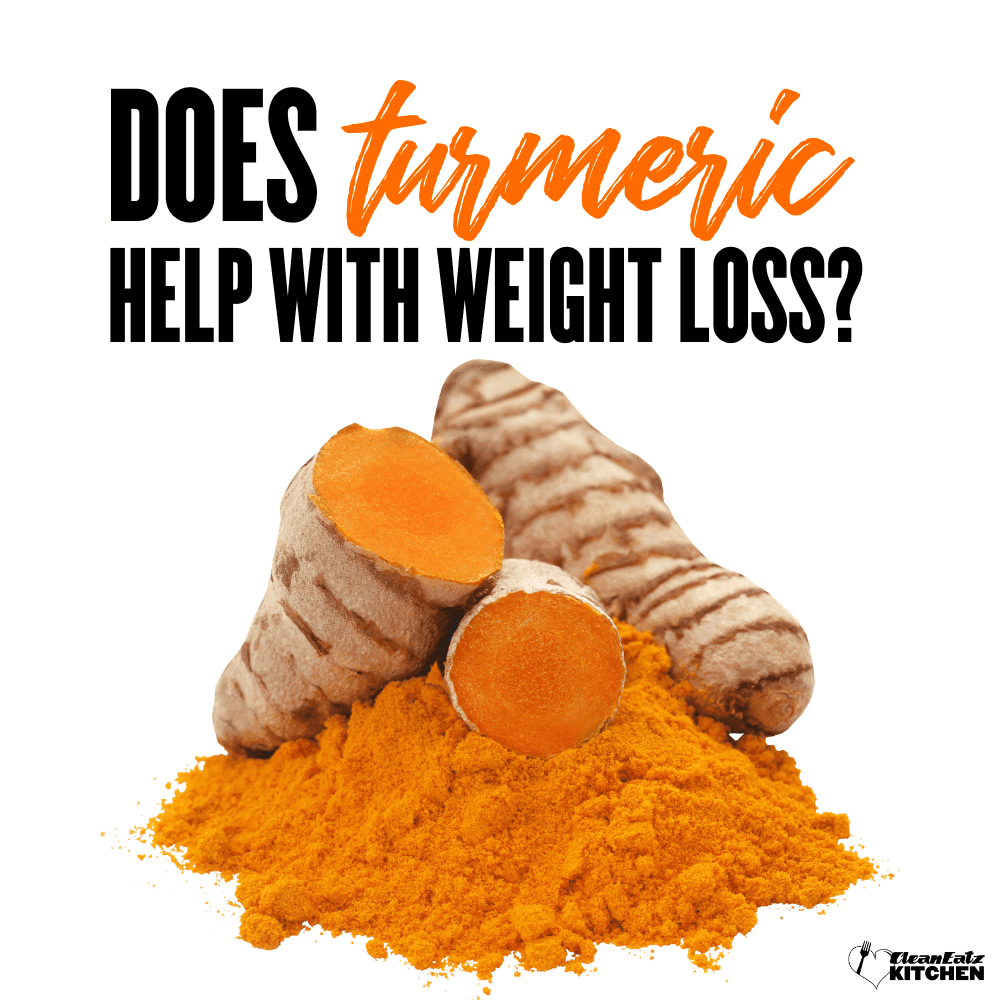
Turmeric is the whole spice, the dried ground root of Curcuma longa. Curcumin is the active compound inside it, and it makes up only 2 to 5 percent of turmeric powder by weight. Every trial above used concentrated curcumin, not the jar in your spice rack.
| Form | Curcumin content | Absorption | What it is good for |
|---|---|---|---|
| Culinary turmeric powder | 2-5% (~20-50mg per tsp) | Very poor | Flavour, colour, general antioxidant intake |
| Standard curcumin extract | 95% curcuminoids | Poor without an enhancer | Little, on its own |
| Curcumin + piperine | 95% curcuminoids plus 5-10mg piperine | Substantially better | The common research-grade format |
| Phytosome or liposomal | Varies by formulation | Best available | Higher absorption, gentler on the stomach |
The arithmetic settles it. Matching a 500 to 2000mg study dose from turmeric powder would take somewhere between 10 and 40 teaspoons a day. That is not a diet, it is a dare.
So: cook with turmeric because it makes food better and carries antioxidants along with it. If you specifically want to test the effect the trials measured, that requires a supplement with a bioavailability enhancer, and you should read the next two sections before buying one.
If You Decide to Try It
Take it with fat. Curcumin is fat-soluble. A capsule swallowed with water on an empty stomach delivers a fraction of the dose. Take it with a meal that contains some fat, and when cooking, get the turmeric into oil early.
Add black pepper if your supplement does not already contain it. Piperine substantially raises absorption, which is why it appears in most credible formulations. Phytosome and liposomal products solve the same problem a different way and are usually easier on the stomach.
Split the dose and be patient. Curcumin clears reasonably quickly, so 500mg twice daily beats 1000mg once. And trials ran eight to twelve weeks minimum — an effect this small is not detectable in a fortnight.
On dose: research generally uses 500 to 2000mg of curcuminoids daily. It is worth knowing that the JECFA acceptable daily intake for curcumin is 0 to 3mg per kilogram of body weight, about 210mg a day for a 70kg adult. Supplement trial doses sit several times above that intake guideline. That is not a reason to panic — short-term human studies at much higher doses have found few serious effects — but it is a good reason to start low and involve your doctor rather than jumping to 2000mg because a bottle says you can.
Buying advice, condensed: look for third-party verification (USP, NSF, or ConsumerLab), a stated curcuminoid content rather than "turmeric root," and a named bioavailability enhancer. Skip proprietary blends that hide amounts, anything bundled with a dozen other herbs, and any label making weight loss claims. Testing has repeatedly found turmeric supplements containing far less than labelled, and adulteration with lead chromate is a documented problem in the wider turmeric supply chain.
Where People Waste Their Money
The expensive mistake is treating turmeric as the strategy rather than a rounding error on it. If your calorie intake and activity are not where they need to be, no supplement closes that gap — and the research above is unambiguous that curcumin's effect only shows up alongside dietary and lifestyle intervention, and often alongside medication too.
The second is taking it in a form or manner that delivers almost nothing: plain curcumin with no enhancer, swallowed with water, on an empty stomach. That combination wastes most of the capsule.
The third is inconsistency. Eight to twelve weeks is the minimum to judge, and a fortnight of enthusiasm followed by a forgotten bottle tells you nothing.
And the fourth is falling for detox marketing. Your liver does not need cleansing; that is what it does. Curcumin has real hepatoprotective activity in research settings, and "detox" is not what that means.
If the fundamentals are the actual gap, that is where to spend effort first. Our meal planning guide covers building them, and the Weight Loss Meal Plan handles the portion control and macro balance if cooking is the constraint rather than knowledge.
Safety, Dosage, and Interactions
Turmeric has a long safety record, and "natural" still does not mean "no interactions." This section matters more than the weight section.
Common and usually mild: digestive upset, nausea and bloating when starting, diarrhoea more likely above 2000mg daily, occasional headache. Skin reactions are rare and somewhat more associated with piperine-enhanced products.
Talk to your doctor first if any of these apply. Blood thinners, because curcumin has anticoagulant properties and can compound the effect of warfarin, aspirin or clopidogrel. Diabetes medication, since curcumin lowers blood glucose and the combination can push too far. Gallbladder disease, because curcumin stimulates bile production and can provoke an attack. Iron deficiency, since high doses reduce iron absorption — separate the two by a couple of hours. A history of kidney stones, because turmeric is high in oxalate. Pregnancy and breastfeeding, where culinary amounts are fine but there is insufficient data on supplement doses. And stop roughly two weeks before any scheduled surgery.
Stop and seek advice if you get persistent stomach pain, any sign of unusual bleeding or bruising, an allergic reaction, or unexplained fatigue or jaundice.
Store supplements cool and dark, and use turmeric powder within six to twelve months of opening — heat and light degrade curcumin quickly, which is one reason the jar that has lived next to your hob for two years is not doing much.
Frequently Asked Questions
How much weight can turmeric actually help you lose?
Very little on its own. The largest pooled analysis, an umbrella review of 50 randomized trials published in the American Journal of Clinical Nutrition in 2023, found curcumin supplementation reduced body weight by 0.59 kg, BMI by 0.24 kg/m2, and waist circumference by 1.32 cm on average. That is roughly 1.3 pounds over the course of a study. Real, measurable, and nowhere near what supplement marketing implies.
Is turmeric powder as effective as a curcumin supplement?
No. Turmeric powder is only 2 to 5 percent curcumin by weight and curcumin is poorly absorbed on its own. Reaching the 500 to 2000mg doses used in trials would take something like 10 to 40 teaspoons of turmeric a day. Cook with turmeric because it tastes good and adds antioxidants. If you want to test the effect studied in the research, that means a supplement.
Who is most likely to see a benefit from curcumin?
The 2023 umbrella review found the effect concentrated in adults with obesity, type 2 diabetes, PCOS, non-alcoholic fatty liver disease, or metabolic syndrome. Bioavailability-enhanced formulations outperformed plain curcumin extract. If you are already metabolically healthy, the expected effect is smaller still.
Should I take turmeric with black pepper?
If you are taking plain curcumin, yes. Piperine from black pepper substantially increases curcumin absorption, which is why most quality supplements include it or use a phytosome or liposomal formulation instead. When cooking, a pinch of black pepper and some fat in the pan both help. Curcumin is fat-soluble, so taking a capsule with water on an empty stomach wastes most of the dose.
What dose of curcumin do studies use?
Trials generally run 500 to 2000mg of curcuminoids daily, often split into two doses with meals. Worth knowing: the JECFA acceptable daily intake for curcumin is 0 to 3mg per kilogram of body weight, which works out to roughly 210mg a day for a 70kg adult. Supplement doses in the research sit well above that intake guideline, which is a reason to involve your doctor rather than self-prescribe at the top of the range.
Can turmeric cause side effects or interact with medications?
Yes to both. Digestive upset, nausea and diarrhoea are the common complaints, more likely above 2000mg daily. Curcumin has anticoagulant effects and can interact with blood thinners, can lower blood sugar on top of diabetes medication, can trigger problems with gallbladder disease, and should be stopped roughly two weeks before surgery. Turmeric is also high in oxalate, which matters if you have a history of kidney stones.
How long before you would know if it is working?
Most trials ran 8 to 12 weeks, and several ran longer. If you are going to test it, give it at least two to three months while holding everything else steady, and be honest about the fact that an effect this small is hard to distinguish from normal weight fluctuation.
Does turmeric work without diet and exercise?
No. Every trial showing an effect ran alongside standard dietary and lifestyle advice, and in several the participants were also on medication. Curcumin is not a fat burner and there is no credible evidence it produces weight loss in isolation. Anyone marketing it that way is misrepresenting the research.
The Bottom Line
Turmeric is not a weight loss supplement. It is a compound with genuine anti-inflammatory and insulin-sensitising activity that happens to move the scale by about a pound and a half in the people most likely to respond.
If you are starting out, do not start here. A consistent calorie deficit, adequate protein, resistance training and sleep account for essentially all of the result. Get those running for a month or two before adding anything.
If those are already in place and you have stalled, curcumin is a defensible thing to test: a bioavailability-enhanced product, 500 to 1000mg twice daily with meals, twelve weeks, everything else held constant. If nothing changes, you have spent a modest amount and learned something.
If you have inflammatory or metabolic conditions, the case is stronger — and that is also the case where a doctor should be involved, because the interactions are real.
And if you just like cooking with it, keep going. Turmeric earns its place in the spice rack on flavour alone, and the antioxidants are a bonus rather than the point. It works well in marinades, roasted vegetables, rice, and dressings, and a pinch of black pepper alongside costs nothing.
The unglamorous truth is that the things which actually move weight are the ones nobody can sell you in a bottle. If the hard part is execution rather than knowledge, our Build a Meal Plan menu lets you filter for the goal you are working toward with the macros already printed on every meal, and the curated range covers it if you would rather not choose.
This article is for general informational purposes only and is not a substitute for professional medical advice, diagnosis, or treatment. Consult your healthcare provider before starting any supplement, particularly if you take prescription medication or have an existing health condition.