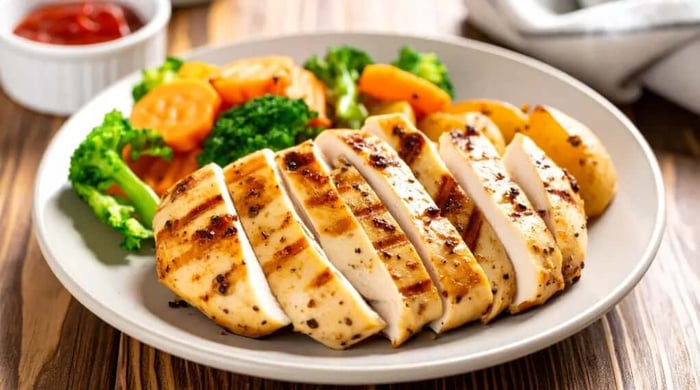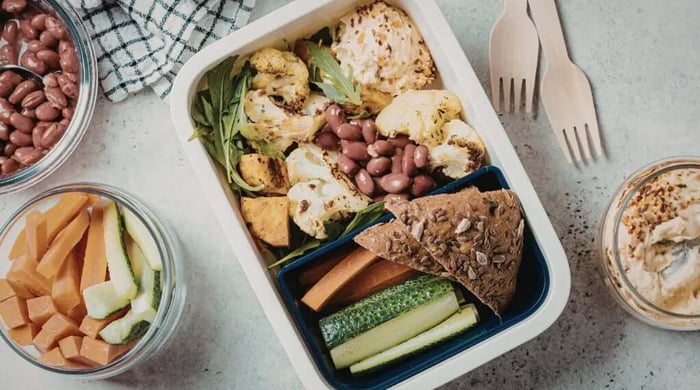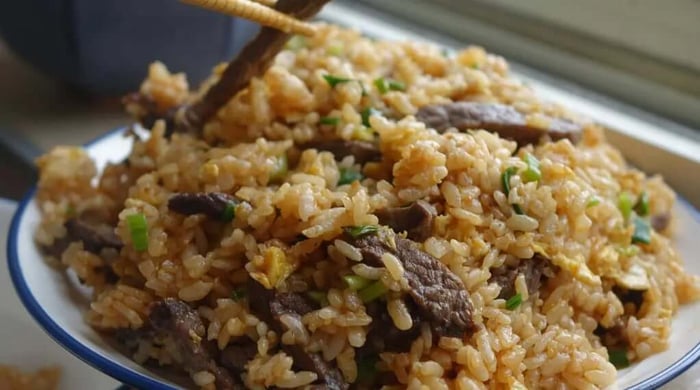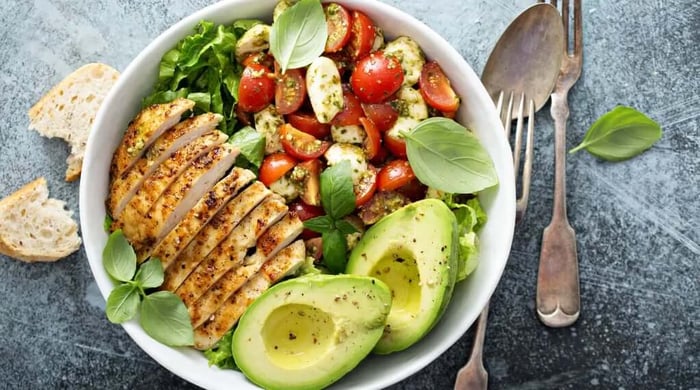

Quick Answer: This chicken and vegetable bowl makes four servings at 445 calories and 38g protein each. It's built around two foundational nutritional principles that matter most for people on GLP-1 medications: getting enough protein into a smaller appetite, and food that stays tolerable when digestion slows and taste changes. It contains sheet-pan vegetables, seared chicken, brown rice, and a tahini-lemon drizzle, and it's ready in about an hour.
Disclaimer: This blog post is for educational purposes only and is not medical advice. If you have any concerns about GLP-1 medications and your diet, consult your prescribing doctor or a registered dietitian.
Eating while taking a GLP-1 (glucagon-like peptide-1 receptor agonist) medication is a bit different than eating for weight loss generally. The appetite suppressant effect of the medication makes it much easier to follow a calorie deficit. However, you need to ensure the smaller amount of food you are eating contains enough protein to maintain your muscle mass. Muscle loss can be a significant problem for people taking GLP-1 medications — and muscle is weight that you definitely want to hold onto. Our complete GLP-1 diet guide covers the full picture. This bowl is one example of a meal that that contains plenty of protein, and it can be used as a framework to ensure that every meal you make contains the protein you need.
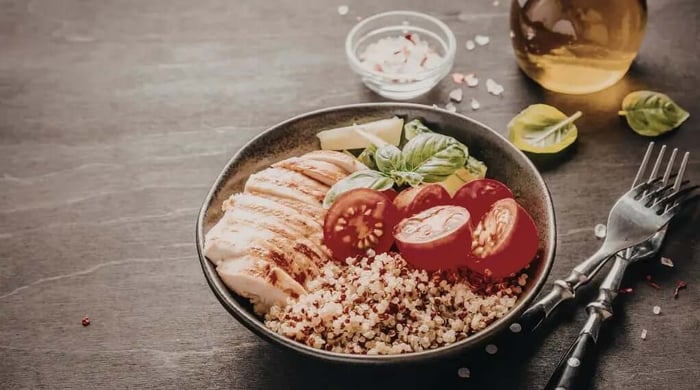
Recipe at a Glance
Prep Time: 20 minutes
Cook Time: 35–40 minutes
Total Time: 55–60 minutes, most of it passive
Servings: 4 bowls
Per bowl: 445 calories, 38g protein
What Makes This Recipe Work
Here's the scoop on why this recipe is great for people on GLP-1 medications:
- Protein-rich: At 38 grams of protein per bowl, this recipe meets the 30-gram-per-meal figure that experts suggest will help you hold onto lean mass best while losing weight.
- Moderate volume: This recipe is a balanced meal that does not require you to finish a mountain of food to get the most nutrition out of it, making it ideal for people with a reduced appetite.
- Fiber-forward: Brown rice, sweet potato, broccoli, peppers and spinach all add fiber, which supports digestion and blood sugar management.
- Mild but flavorful: This recipe is full of flavor without being spicy, so it's a good fit for people who may be experiencing nausea or appetite changes.
Ingredients
Get everything measured and chopped first. The oven, the stovetop and the skillet all run at once toward the end.
1.5 pounds boneless, skinless chicken breast — trimmed and patted completely dry, which is what lets it sear instead of steam
1 cup dry brown rice — long-grain is fluffier and less sticky
2 cups low-sodium chicken broth — cooking the rice in broth instead of water adds extra flavor
1 large sweet potato, peeled and cut into 3/4-inch cubes
2 medium bell peppers, seeded and sliced into 1/2-inch strips
2 cups broccoli florets, cut to uniform size so they roast evenly
3 cups loosely packed baby spinach — wilts down to almost nothing in the warm rice
2 tablespoons extra-virgin olive oil, divided
3 cloves garlic, minced
Juice of 1 large lemon, freshly squeezed
1 teaspoon smoked paprika
1 teaspoon ground cumin
1/2 teaspoon garlic powder
Salt and pepper, to taste
For the tahini drizzle: 2 tablespoons tahini, 1 tablespoon lemon juice, 1 tablespoon warm water, pinch of salt
Instructions
Preheat the oven to 425°F and line a large rimmed baking sheet with parchment.
Marinate the chicken. Combine 1 tablespoon olive oil, the lemon juice, smoked paprika, cumin, garlic powder, half the minced garlic, and a pinch of salt and pepper. Add the chicken and turn to coat. Set it aside while you prep the vegetables — even 10 minutes can make a noticeable difference.
Load the sheet pan. Toss the sweet potato, peppers, and broccoli with the remaining olive oil and garlic, then sprinkle on some salt and pepper. Spread into a single uncrowded layer, using two pans if you need to. (Crowding will steam the food rather than allowing it to roast and develop a satisfying crisp texture.)
Roast 25 to 30 minutes, tossing once halfway, until the sweet potatoes are fork-tender and the broccoli and pepper edges have caramelized.
Start the rice while the vegetables roast. Bring rice and chicken broth to a rolling boil, then reduce to low and cook covered for 30 to 35 minutes or until the rice is tender and has absorbed the liquid.
Sear the chicken during the last 12 to 15 minutes of roasting. Heat a skillet over medium-high until a drop of water sizzles. Let the excess marinade drip off, then cook 6 to 7 minutes per side without moving the breasts so a crust can form.
Check for 165°F at the thickest part of the chicken, then rest it on a board for a full 5 minutes before slicing to retain juiciness.
Fluff the rice and fold in the spinach immediately, stirring gently so the residual heat wilts the spinach leaves.
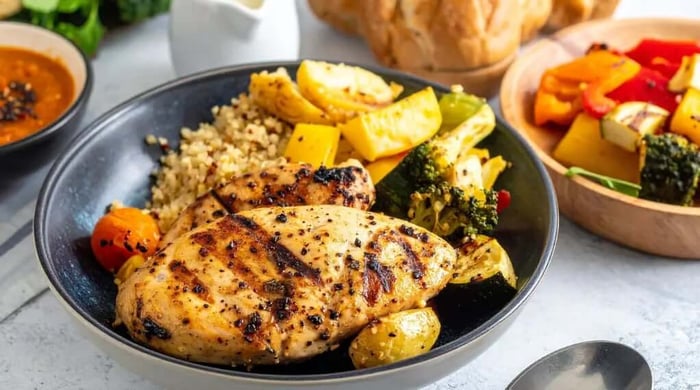
Slice the chicken against the grain into 1/2-inch strips, whisk the tahini drizzle, and assemble: rice at the bottom, roasted vegetables alongside, chicken fanned on top, drizzle over everything.
Nutrition Information (Per Serving)
Calories: 445 kcal
Protein: 38g
Carbohydrates: 42g, mostly from the brown rice and sweet potato
Estimated values based on the ingredients as listed. Actual nutrition will vary with brands, portion sizes, and substitutions.
Adjusting the Bowl to How You Feel That Day
Need to switch it up? Here are a few strategies, depending on your appetite and how you're feeling.
- On a low-appetite day, keep the full chicken portion and halve everything else. You land near 300 calories with the protein untouched.
- If things are sitting heavily, swap the brown rice for quinoa, which is lighter in the stomach with comparable protein, or cauliflower rice to cut the volume further. Going easier on the roasted sweet potato and heavier on the peppers and broccoli also lightens the load.
- If chicken has become unappealing, press and roast a block of extra-firm tofu with the same cumin-paprika rub. It picks up seasoning well and adds around 20 grams of plant protein.
- If you are struggling to hit protein at all on a given day, this recipe isn't the only lever. Our roundup of GLP-1 snack ideas for low appetite covers small, dense options for the days when a full meal is not happening, and GLP-1 breakfast ideas handles the morning end.
Buying and Prepping the Chicken
Fresh beats previously frozen chicken here. The freeze-thaw cycle can break down muscle fibers and release moisture, which can fight the sear. If frozen is what you have, thaw it slowly in the refrigerator overnight rather than in the microwave. Thawing in the microwave can lead to the edges cooking well while the center is still icy.
Air-chilled chicken is worth looking for if your store carries it. Conventionally processed chicken is cooled in water baths and absorbs some of that water, which you pay for by the pound. This added water can also work against browning.
Storage and Meal Prep
Store components separately. Place rice, vegetables, chicken and drizzle in their own airtight containers. Glass containers with locking lids hold up best against spice stains and odors.
Cool before refrigerating, and never leave anything at room temperature more than two hours. Spreading the rice and vegetables on a sheet pan cools them faster.
Store in the refrigerator for 3-4 days. The chicken is the most perishable component, so eat the earliest-prepped servings first. Discard any chicken that has an off odor, sliminess or discoloration, regardless of its "best by" date.
Keep up to three months frozen. Assemble single servings in freezer-safe containers, press plastic wrap directly onto the surface to help prevent freezer burn, and thaw overnight in the fridge.
Reheat in a covered skillet, not the microwave. Place two tablespoons of broth, rice and sliced chicken in the pan, lid on, and heat on medium-low for 4 to 5 minutes. This heats everything evenly, without overcooking the chicken.
When Cooking Isn't Going to Happen
Batch-cooking four bowls on a Sunday takes care of lunch or dinner for chunk of the week. But if you're too busy to cook, then it's time to look for an easy to prep protein to ensure this important nutrient doesn't get skipped.
Our GLP-1 Meal Plan is built for that gap: portioned, macro-labeled, heat-and-eat in a few minutes, no subscription. If you would rather choose every meal yourself, Build a Meal Plan lets you filter the menu by protein target and calorie range. And if you want a full week mapped out rather than individual meals, our 7-day GLP-1 meal plan lays one out with macros and a grocery list.
Frequently Asked Questions
What if brown rice causes bloating or discomfort?
GLP-1 RA medications slow how quickly the stomach empties, and a high-fiber grain like brown rice may cause a heavy feeling for some people. Quinoa is the easiest swap, with comparable protein and a lighter mouthfeel. Cauliflower rice reduces the volume further while keeping the bowl format intact. If a particular food consistently causes discomfort, that is worth discussing with your prescribing clinician.
The full bowl is too much food. How should I scale it down?
Don't scale everything down evenly, because that cuts the protein along with the rest. Keep the full portion of chicken and halve the rice and vegetables instead. That gives you roughly 300 calories with the protein intact, and the leftover components keep for the next meal.
Can I use chicken thighs instead of chicken breast?
Yes. Boneless skinless thighs are a valid substitution that many people prefer for the richer flavor and the more forgiving cooking window. They contain a little more fat, which slows digestion slightly, so if you are already dealing with lingering fullness, chicken breast may sit easier.
Everything tastes different since I started the medication. Will this help?
Taste changes are a commonly reported experience on these medications, and they vary a lot from person to person. This recipe leans on smoked paprika, cumin, lemon and garlic rather than heat or heavy sweetness, so it's flavorful but mild. If meat in particular has become unappealing, the tofu version in the swaps section above is worth trying.
How can I increase the protein even further?
A soft-boiled egg on top adds about 6 grams, while a tablespoon of hemp hearts stirred into the rice adds roughly 3 grams. Swapping the tahini drizzle for a Greek yogurt-based sauce adds around 5 grams while keeping the creamy texture.
Can I make this bowl spicy?
The base recipe leaves heat out deliberately, since nausea and heightened taste sensitivity are common enough that spice is a gamble. If heat agrees with you, add a quarter teaspoon of cayenne to the marinade, toss the vegetables with red pepper flakes, or finish with sriracha or chili crisp so you can control it bowl by bowl.
Is this recipe suitable for people not taking GLP-1 RA medications?
Yes. Nothing about the ingredients or the preparation is medication-specific. It is a high-protein, vegetable-forward bowl that anyone can eat.
What other vegetables work well in this bowl?
Zucchini, asparagus, snap peas, roasted cauliflower, and shaved Brussels sprouts all work in this bowl. Aim for vegetables that roast well at 425°F, and cut them to similar sizes so the timing stays consistent. Watery vegetables like tomatoes and cucumbers are better as fresh toppings than roasted components.
Do I need to rinse the brown rice before cooking?
Yes. Before cooking, run cold water over the dry rice in a fine-mesh strainer for 30 to 60 seconds, agitating with your hand until the water runs mostly clear. This removes the surface starch that would otherwise make the cooked grains gummy.
The Bottom Line
You can build any meal to be GLP-1 friendly using this bowl as an example. Lead with protein, include complex carbohydrates, add fiber-rich vegetables, and pay attention to what your body is telling you about tolerances week to week. Every ingredient in this recipe is interchangeable — the structure is what matters most for meal planning.