Quick Answer: McDonald’s gets a worse reputation than it deserves—and a better one than it earns. Some single items can be perfectly workable (like a plain hamburger at 250 calories or an Egg McMuffin at 310), especially when you order them as-is and move on. The real “health trap” is the combo system: it turns a modest order into an easy 1,000+ calorie meal without you noticing. A Big Mac is 580 calories on its own—but a standard Big Mac Meal (medium fries + a medium soft drink) comes out to 1,170 calories. Nothing about the burger changed—your order just got bundled, upsized, and made to feel normal.
The Combo Meal Problem
Here’s what most nutrition articles miss about McDonald’s: the individual items aren’t always the problem. A plain hamburger is 250 calories with 12g protein—that’s not wildly different from the “quick protein” snacks people grab on the go. A 4-piece McNuggets is 170 calories. An Egg McMuffin is 310 calories with 17g protein, which is genuinely reasonable for a fast-food breakfast.
The problem is that McDonald’s is built to turn those reasonable items into massive meals. “Make it a combo?” “Want to size up?” “Add a dessert?” Each “yes” doesn’t feel like much in the moment—but it quietly stacks hundreds of extra calories onto your order.
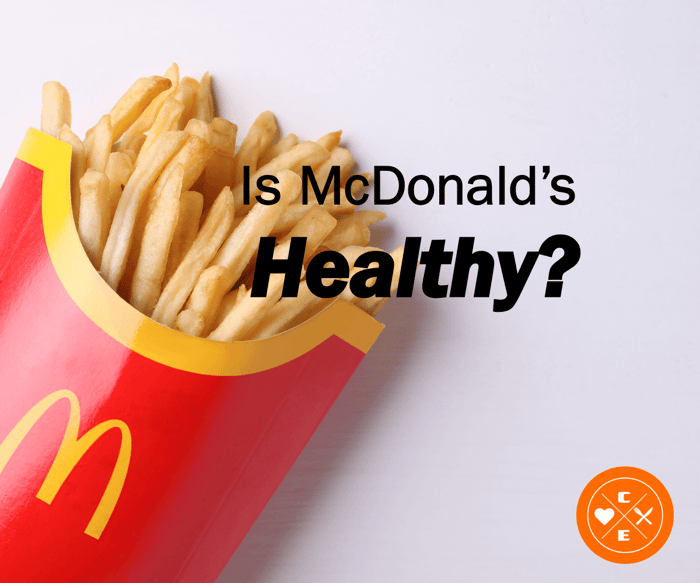
Here’s the math that explains it. A Big Mac alone is 580 calories—high, but potentially manageable as a standalone meal. But once you turn it into the meal (medium fries + a medium drink), you’re at 1,170 calories. Size it up and you’re quickly in the 1,300+ calorie range—well over half of a 2,000-calorie day in one sitting. The burger didn’t change. The combo culture did the damage.
That’s the real McDonald’s “health trap”: not that everything is terrible, but that everything is designed to be combined into calorie-heavy defaults. Once you see that, it becomes much easier to order smarter at the Golden Arches.
The Genuinely Reasonable Options
Strip away the combo pressure, and McDonald’s actually has a handful of workable, portion-controlled picks—especially if you order them à la carte and keep the extras simple.
Plain Hamburger
At 250 calories, the plain Hamburger is one of the most reasonable burgers on the menu. It’s simple, smaller in portion, and easy to fit into a day without turning into a “whole thing.” It’s not health food, but it’s also not automatically a diet-derailer when you keep it basic. If you want to make it feel more like a meal, add lettuce or tomato when available—it won’t meaningfully change the nutrition, but it can make the sandwich more satisfying.
Egg McMuffin
If you do breakfast at McDonald’s, the Egg McMuffin is usually the most reliable “better choice.” It’s 310 calories, brings solid protein for the calorie count, and avoids the heavier biscuit/McGriddle-style builds that add calories fast. In real life, it’s one of the few breakfast items that can stand alone without needing hash browns and a sweet drink to feel filling.
4-Piece Chicken McNuggets
The 4-piece is a classic example of “fine in a small portion.” At 170 calories, it can work—especially if you treat it as a small protein add-on instead of the start of a bigger order. The real issue isn’t the nuggets; it’s what happens when the order jumps to 10 or 20 pieces plus dipping sauces. If nuggets are your thing, keep the portion small and be intentional with dips.
Fruit & Maple Oatmeal
For something warm with a bit more “real food” feel, Fruit & Maple Oatmeal is a decent option at 320 calories. It’s one of the few menu items that gives you some fiber—just keep in mind it’s sweeter than it tastes because of the fruit + maple flavoring.
McChicken
The McChicken can work as a budget-friendly, standalone sandwich when you’re hungry and want something more substantial—especially if you skip the combo default. It’s not the lightest option, but it’s often easier to keep “reasonable” if you pair it with water and skip dessert drinks.
Note: Nutrition varies by location. If you want exact macros, use the McDonald’s Nutrition Calculator for your region.
For more foods that support weight management, see our complete guide to the best foods for weight loss.
Where McDonald's Becomes a Problem
This is where McDonald’s earns its reputation: the “stacked” items (multiple components bundled into one order) and the dessert-in-disguise drinks. These are the choices that can blow past a reasonable meal—fast.
Big Breakfast with Hotcakes
If you want one clear example, it’s this. The Big Breakfast with Hotcakes clocks in at 1,340 calories and 2,070 mg sodium in a single breakfast. It’s not just one item—it’s a full spread (biscuit, hash browns, sausage, eggs, hotcakes, syrup), which is exactly why the total climbs so high.
Double Quarter Pounder with Cheese
This one is a “burger-only” reminder that you don’t need fries for an order to get heavy. The Double Quarter Pounder with Cheese is 740 calories, and McDonald’s lists 2.5g trans fat for the sandwich. The WHO recommends keeping trans fat under 2.2g/day for a 2,000-calorie diet—so one sandwich can take you basically to the daily limit.
Large Chocolate Shake
A chocolate shake is essentially dessert you drink. McDonald’s lists 520 calories for the small Chocolate Shake, and larger sizes can climb quickly—often into “this is basically another meal” territory. Exact calories vary by size and location—so if you’re ordering it, check the Nutrition Calculator.
Mocha Frappé (Large)
McCafé drinks can be sneaky because they feel like “coffee,” but in larger sizes they function more like dessert. A large Mocha Frappé can land in the 600+ calorie range depending on location and formulation. If your goal is better energy, steadier appetite, or improved blood sugar stability, this is one of those “looks harmless, adds a lot” picks.
McFlurry with M&M’s (Regular)
McDonald’s lists the regular M&M’s McFlurry at 570 calories. It’s the classic add-on that turns “I just needed lunch” into “I accidentally did lunch + dessert.”
Bacon Quarter Pounder with Cheese
This is a great example of how one add-on changes the whole profile. The Bacon Quarter Pounder with Cheese is 630 calories and 1,470 mg sodium—a big sodium hit in one sandwich before you even add fries or a drink.
The Breakfast Menu Trap
McDonald’s breakfast deserves special scrutiny because it’s where a lot of people make their “worst without realizing it” choices. Breakfast items can look smaller than lunch burgers, but the build (sausage + cheese + biscuit/McGriddle) packs in calories and sodium fast—especially once you add the standard sides.
The sausage-based sandwiches are the most consistent culprits. The Sausage McGriddles is 430 calories with 990 mg sodium. Add egg and cheese and you’re suddenly in “this is basically lunch” territory. The same pattern shows up with biscuit-based sandwiches: processed sausage + cheese + a sodium-heavy base is a reliably dense combo.
And then comes the “it’s just breakfast” add-on stack. Hash browns are 140 calories on their own, and they’re often ordered automatically. Pair that with orange juice (or any sweet drink), and a “simple breakfast” can quietly climb past what most people expect—before you’ve even hit lunch.
If you want the smarter lane at McDonald’s breakfast, it’s a short list: Egg McMuffin, Fruit & Maple Oatmeal, or a basic burrito-style option. Everything else is best treated as an occasional pick—not a routine.
Smart Ordering Strategies
If you’re going to eat at McDonald’s, these tactics keep your order from turning into a calorie-and-sodium snowball.
1) Don’t order a combo.
Combos aren’t “value” if they add food you weren’t truly hungry for. Order individual items, drink water, and decide on fries as an intentional choice—not a default. If you want fries, go small and consider sharing.
2) Skip the cheese (when you can).
Cheese is one of the easiest ways to inflate calories and sodium without adding much staying power. If you like cheese, keep it for the meals that really feel worth it—don’t let it become an automatic add-on.
3) Choose apple slices when you want a side that actually helps.
Apple slices are the cleanest side on the menu. They won’t replace a fry craving, but they do add something useful instead of subtracting from your day.
4) Don’t look for grilled chicken at McDonald’s (it’s not a reliable option in the U.S.).
This is a real limitation right now: McDonald’s U.S. doesn’t offer a standard grilled chicken sandwich the way it used to, and salads were discontinued from the U.S. menu and have been widely reported as unlikely to return. That means you have fewer “lean + veggie” pathways here than at some competitors.
5) Watch the sauces.
Sauces are small, but they add up. If you’re doing nuggets or a sandwich that comes with sauce, keep it to one, and treat it like part of the order—not a free extra.
For portion-controlled meals without the mental math, Clean Eatz Kitchen meal plans deliver balanced nutrition with transparent macros. Or find a Clean Eatz café near you for grab-and-go options that don't require strategy.
How McDonald's Compares
So where does McDonald’s land on the “healthiest fast food” spectrum?
It’s not the worst—but it’s far from the easiest. The biggest difference isn’t that McDonald’s food is uniquely “bad.” It’s that McDonald’s gives you fewer easy ways to customize toward balance than some competitors.
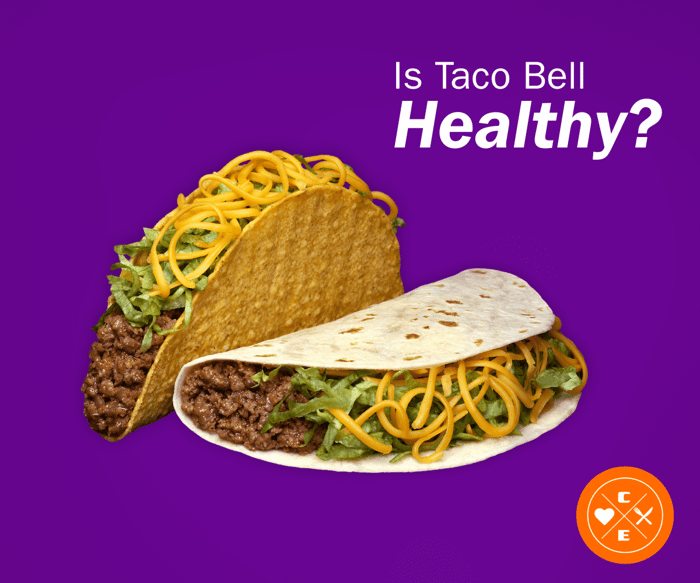
Versus Taco Bell: Taco Bell is generally more flexible with swaps and removals (including options like “Fresco Style,” which can replace higher-fat toppings with tomatoes on many items). At McDonald’s, it’s harder to “lighten it up” without changing the order entirely.
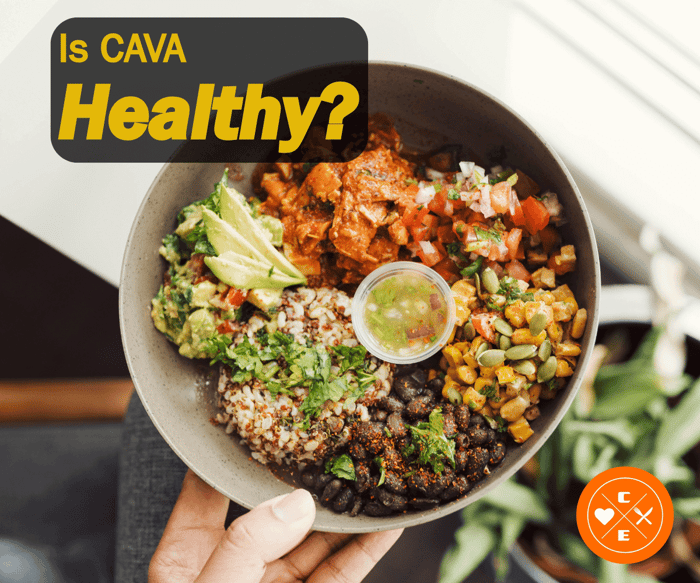
Versus Chipotle or CAVA: Build-your-own formats make it easier to anchor a meal around protein + volume + fiber (greens, beans, salsas, veggies) instead of defaulting to fries and soda. CAVA, in particular, is designed for mix-and-match bowls and salads—so “vegetable-forward” choices are baked into the menu.
Versus Chick-fil-A: McDonald’s doesn’t offer a consistent grilled chicken option on U.S. menus the way Chick-fil-A does, which matters if you’re trying to keep meals higher-protein without going all-fried.
Where McDonald’s does hold its own is in the basics. A plain hamburger, a small nugget order, or an Egg McMuffin can be competitive with equivalent picks at other traditional burger chains. The challenge is that the menu (and the ordering flow) leans heavily toward bundles and indulgent defaults, with fewer obvious “build a balanced plate” options.
One real disadvantage right now is that the most straightforward “healthier” choices are simply less available than they used to be. McDonald’s discontinued salads in the U.S., and multiple outlets have reported they’re unlikely to return nationally—which leaves fewer easy ways to add produce and fiber within a typical McDonald’s order.
The Bottom Line
McDonald’s isn’t as unhealthy as its reputation suggests—but it’s also not as harmless as people want it to be when they call it “just a quick bite.” The menu ranges from genuinely manageable choices (like a simple hamburger) to truly excessive ones (like the Big Breakfast with Hotcakes). What makes McDonald’s especially tricky isn’t one single item—it’s how smoothly the ordering process pushes you toward the upgrade path: combo meals, size-ups, sweet drinks, and desserts that can turn a modest order into an easy calorie overload.
If you eat at McDonald’s, success comes down to resisting that upsell. Ordering à la carte instead of as a combo is the simplest win because it removes the automatic fries-and-soda add-on. Choosing water over soda keeps the “liquid calories” from quietly stacking up, and skipping shakes, frappes, and McFlurries prevents the common pattern of turning lunch into lunch-plus-dessert. When in doubt, sticking to the basics—like a plain hamburger, a small nugget portion, or an Egg McMuffin—makes it much easier to keep your meal reasonable without doing mental math.
And because McDonald’s has fewer vegetable-forward and grilled options than it used to, it can be harder to navigate than chains built around customization. If you’re focused on eating well while eating out, build-your-own spots like CAVA or Chipotle often give you an easier path to protein, fiber, and volume. McDonald’s can still work—but it works best when you treat it as what it is: fast food that’s easiest to manage when you order with intention.
FAQs
Is McDonald's actually healthy?
McDonald’s isn’t “healthy” in the way a whole-food meal is—but some individual items can be reasonable if you order them on their own. A plain Hamburger is 250 calories, and a 6-piece Chicken McNuggets is 250 calories—both can fit into a balanced day depending on what the rest of your day looks like. The problem is the combo-meal culture: once you bundle fries + a sugary drink (and maybe a dessert), your “quick bite” can jump into the 1,000+ calorie range quickly.
What is the healthiest thing to eat at McDonald's?
There isn’t one perfect “healthiest” item—there are just better defaults. If you want the most consistently reasonable picks, stick with the plain Hamburger (250 calories), 4-piece McNuggets (170 calories), Egg McMuffin (310 calories), or Fruit & Maple Oatmeal (320 calories). For a side, apple slices are the cleanest option when you want something that adds nutrition instead of extra salt and fat.
What should I avoid at McDonald's?
The biggest “avoid” category is anything that combines multiple high-calorie components in one order—especially oversized breakfast platters and dessert-style drinks. A clear example is the Big Breakfast with Hotcakes (1,340 calories). Also be cautious with the “double + cheese” burgers and large sweet drinks (shakes/frappes), because they can add a lot of calories and sugar fast—often without improving fullness.
Is McDonald's healthier than other fast food?
McDonald’s sits in the middle. Its basic items can be comparable to other classic burger chains, but it’s harder to “build a balanced meal” there because customization is limited compared with build-your-own places. Another real disadvantage is that salads were discontinued in the U.S., which removed one of the easiest ways to add volume and fiber at McDonald’s.
How many calories are in a Big Mac meal?
A Big Mac is 580 calories on its own. A standard Big Mac Meal (medium fries + a medium soft drink) comes out to 1,170 calories—before any dessert or extra add-ons. That’s why the combo format is the real trap: the burger stays the same, but the default bundle changes the entire calorie load.
References
- McDonald’s — Nutrition Calculator . Accessed Feb 2026
- U.S. Food and Drug Administration (FDA). Sodium in Your Diet. FDA, 2024
- World Health Organization (WHO). Trans fat (Fact sheet). Accessed Feb 2026
- Food & Wine. McDonald’s Discontinued Its Salad Offerings in America. Accessed Feb 2026.
Disclaimer: This article is for educational purposes only and does not replace medical or personalized nutrition advice.