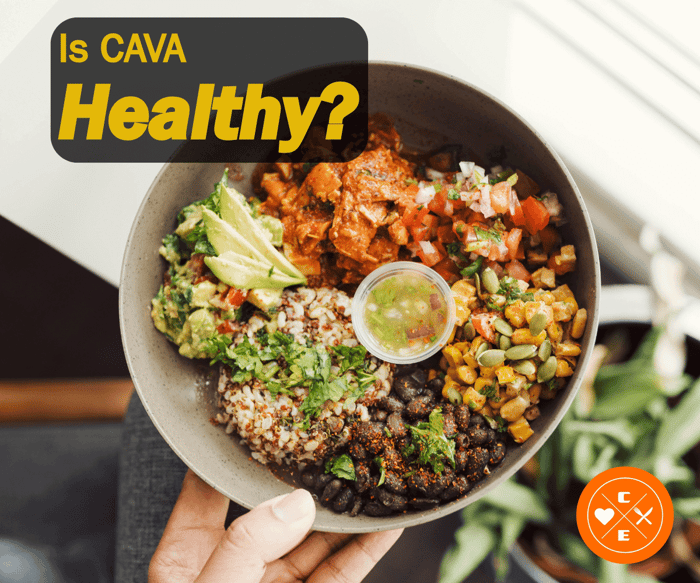

Quick Answer: Yes—CAVA is one of the better fast-casual options because it’s genuinely easy to build a meal around vegetables, legumes/whole grains, and a solid protein, with sauces that often lean on olive oil, yogurt, or tahini instead of heavy cream. The catch is that the “Mediterranean” label can make it feel automatically light—and it isn’t. Some curated pitas and bowls land in the 800–970+ calorie range, and sodium can climb fast if you stack multiple dips, pickled toppings, olives, feta, and dressing.
Why CAVA can be a solid choice
At its best, CAVA delivers what people actually mean when they say “Mediterranean-style”: plenty of colorful vegetables, a fiber base from beans or grains, healthy fats like olive oil or tahini, and a straightforward protein option. That mix is a big reason Mediterranean-style eating patterns are so often linked with better heart health and overall diet quality—not because of one “magic” ingredient, but because the pattern consistently leans on whole, minimally processed foods and a balanced plate.
That said, you’re not automatically “eating the Mediterranean diet” just because you’re at CAVA. You’re getting access to the building blocks. The nutrition of your final meal depends on how you build it—your base, your dips, your dressing, and the extras you add on top.
The biggest calorie drivers at CAVA (what actually moves the needle)
1) Base choice (greens vs grains vs pita)
Your base is the decision that shifts calories the most before you even add toppings. Brown rice comes in around 310 calories, black lentils are about 270 calories (and they pull their weight with 18g protein and 15g fiber), and a whole pita is roughly 310 calories on its own. Greens are comparatively light—SuperGreens are about 40 calories—which is why a salad-style bowl can feel filling without getting calorie-dense fast.
Dietitian take: If your goal is a lighter bowl that still keeps you satisfied, half greens + half lentils is often the sweet spot. You get volume plus fiber and plant protein, without the “all-rice” calorie jump.
2) Dips/spreads (small scoops that add up)
Dips are where CAVA meals quietly gain momentum. A single serving of tzatziki (35 calories) or hummus (45 calories)is usually no big deal. But once you start layering two or three spreads—especially higher-calorie, higher-sodium picks like Crazy Feta (70 calories) or harissa (70 calories)—your bowl can pick up an extra 150–200 calories quickly. Calories aren’t the only consideration here, either: sodium stacks fast when multiple spreads, pickled toppings, and cheese show up together (more on that below).
3) Dressings (often the hidden calorie swing)
Dressings can be the difference between a reasonable bowl and one that’s unexpectedly heavy. Greek Vinaigrette adds about 130 calories, while Yogurt Dill is closer to 30. Lemon-Herb Tahini sits around 70 calories, and Garlic Dressing is the biggest outlier at about 180 calories per serving.
Easy win: choose a lighter dressing, or ask for dressing on the side so you control how much you actually use.
4) Protein: mostly reasonable—falafel is the main “gotcha”
CAVA’s grilled proteins are generally a straightforward choice. Grilled chicken is about 250 calories with 28g of protein, and grilled steak is around 170 calories with 23g of protein. The main curveball is falafel, which lands around 350 calories for a full portion and is easier to overdo because it’s more energy-dense than it looks.
One important reminder: plant-based doesn’t automatically mean lower-calorie—falafel is typically more calorie-dense than grilled proteins, especially once sauces and extras are added.
For more practical, high-satiety options, see our complete guide to the best foods for weight loss.
What I’d order: best picks from CAVA’s curated menu (with real numbers)
More balanced curated bowls (better “default” choices)
If you want something you can order quickly without overthinking, these curated bowls tend to land in a more reasonable range for calories and protein—while still tasting like a “real” meal.
The Greek Salad comes in at 585 calories with 37g of protein. The one caveat: it’s still fairly salty at 1,830 mg sodium, which is worth noting if you’re sodium-sensitive or you’ve already had a higher-sodium day. The Steak + Harissa bowl is another strong pick at 615 calories with 36g protein, and Garlicky Chicken Shawarma is similar at 600 calories with 27g protein—satisfying, but not automatically “light” if you’re aiming for a lower-calorie meal.
Options to treat as “heavy meals”
Some menu items are better thought of as a higher-calorie entrée rather than a lighter Mediterranean-style lunch. The Falafel Crunch bowl is a good example: about 860 calories and 2,230 mg sodium. Curated pitas can also creep up quickly. They generally range from 630 to 970 calories, and the Crispy Falafel pita hits 945 calories.
Dietitian translation: curated pitas can be delicious, but nutritionally they behave more like a full fast-food entrée than a “light Mediterranean lunch.”
Note on numbers: calorie, protein, fiber, and sodium figures referenced below come from CAVA’s published nutrition and allergen information. Values can vary slightly with portioning and customizations.
Best build-your-own blueprint (simple, repeatable)
The “everyday healthy” bowl (roughly ~470 kcal)
Here’s a concrete build using CAVA’s per-item numbers that keeps calories reasonable without feeling skimpy:
Start with SuperGreens (40), add Grilled Chicken (250), then choose Tzatziki (35) and Hummus (45) as your two spreads. Load up on crunchy, high-volume toppings like Tomato + Onion (20), Persian Cucumber (15), and Cabbage Slaw (35), and finish with Yogurt Dill (30).
That puts you at ~470 calories total, with strong protein and plenty of produce.
But sodium still matters: depending on the exact toppings and portioning, that same “healthy” bowl can still land around ~1,400 mg sodium, especially if you add feta, olives, pickled items, or extra sauce.
If you’re hungry / active: “more fuel, still solid”
If you need more staying power, add a higher-fiber or higher-carb base: lentils (+270 calories) or brown rice (+310 calories). The key is to keep the rest of the build steady—stick to 1–2 dips total and choose one lighter dressing (or get it on the side) so calories and sodium don’t balloon.
If you’re watching carbs
Go with a greens base, choose grilled steak or chicken, add one dip, and use a lighter dressing. If sodium is a concern, keep higher-salt toppings like olives, pickles, and feta more modest—those are the easiest ingredients to unintentionally stack.
What to watch out for (the common “healthy halo” traps)
1. The pita math
Pitas are where CAVA can stop feeling “light” very quickly. A whole pita is about 310 calories before you add a single scoop of dip or any protein, and many filled curated pitas land in the 800–970 calorie range. If you want bread without turning your order into a calorie-heavy entrée, a practical compromise is to order a bowl and add a side pita (about 80 calories)—you still get the bread experience, but you control the portion.
2. Pita chips
Pita chips are another easy add-on that quietly changes the math. A serving is about 270 calories, and because they feel like a “side,” they’re easy to eat without realizing you’ve essentially added an extra mini-meal—especially if your bowl already includes rice or lentils.
3. Sodium stacking (very real at “healthy” restaurants)
Even at a place like CAVA, sodium can build fast. The biggest contributors tend to be multiple dips and dressings, plus salty toppings like feta, olives, and pickled items. For context, U.S. guidance commonly uses 2,300 mg per day as an upper limit for most adults, and some people aim lower depending on health needs.
If sodium matters for you, keep it simple: choose one dip, go with a lighter dressing (or get it on the side), and use olives/pickles/feta more sparingly.
Looking for the same Mediterranean-style balance with built-in portion control? Clean Eatz Kitchen's Weight Loss Meal Plan offers macro-friendly meals with more predictable calories and sodium. Prefer to dine in instead—visit a Clean Eatz café for an easy, no-guesswork option.
CAVA vs other fast-casual chains (a fair way to think about it)
Compared with a lot of fast-casual spots, CAVA makes it easier to build a veggie-forward meal without defaulting to cheese-heavy or cream-heavy add-ons. The ingredients and flavor profile naturally lean Mediterranean—think greens, grains/legumes, grilled proteins, and sauces built around olive oil, yogurt, and tahini.
That said, the same build-your-own format cuts both ways. You can create a bowl that supports your goals, or you can just as easily build a bowl—or especially a pita—that’s calorie- and sodium-dense enough to feel more like a “special occasion” meal.
Bottom Line
CAVA earns its “healthy” reputation because it gives you a straightforward path to a balanced meal: plenty of vegetables, a satisfying protein, and flavorful sauces that don’t have to rely on heavy cream or fried add-ons. The catch is that “Mediterranean-inspired” doesn’t automatically mean light, and the build-your-own setup makes it easy to overdo the most calorie- and sodium-dense pieces—pitas, multiple dips and dressings, and salty extras like feta, olives, and pickled toppings. If you want CAVA to work consistently for weight loss, maintenance, or higher-protein goals, keep your approach simple: choose bowls more often than pitas, start with greens (or greens + lentils), pick a grilled protein, limit dips to one or two, and use dressing lightly or on the side while piling on veggie toppings. Do that, and CAVA stays in the “smart fast-casual” category; skip it, and a meal that looks healthy on the surface can quickly eat up your calorie and sodium budget.
If building the “right” bowl still feels like too much math, Clean Eatz Kitchen meal plans offer a more predictable option—pre-portioned, macro-balanced meals with Mediterranean-style flavors, without needing to calculate anything.
FAQs
Is Cava actually healthy?
It can be—and it’s often one of the stronger fast-casual choices if you build your meal around greens, vegetables, and a solid protein. The main caveat is the “healthy halo”: some curated pitas can reach 945–970 calories, and a few curated bowls climb to 800+ calories, which can be more than people expect from a Mediterranean-style menu.
What’s a good “default” order?
A reliable go-to is a greens-based bowl with grilled chicken or steak, one or two dips, and a lighter dressing (or dressing on the side). Then load up on veggie toppings for volume and flavor without a big calorie jump.
Are CAVA pitas healthy?
They’re usually the most calorie-dense format. The whole pita is about 310 calories before fillings, and most curated pitas end up around 800–970 calories once dips, sauces, and toppings are added. If you want bread, a bowl with a side pita is often a more flexible option.
Is falafel at CAVA healthy?
Falafel can fit into a balanced meal, but it’s typically more calorie-dense than grilled proteins. At CAVA, the Crispy Falafel pita is about 945 calories, and the Falafel Crunch bowl is about 860 calories, so it’s better treated as a higher-calorie choice rather than an automatic “healthy” swap.
References
- CAVA — Nutrition & Allergen Guide (Jan 2026)
- Rosato V, Temple NJ, La Vecchia C, Castellan G, Tavani A, Guercio V. Mediterranean diet and cardiovascular disease: a systematic review and meta-analysis of observational studies. Eur J Nutr. 2019 Feb;58(1):173-191. doi: 10.1007/s00394-017-1582-0. Epub 2017 Nov 25. PMID: 29177567.
- Wu PY, Chen KM, Tsai WC. The Mediterranean Dietary Pattern and Inflammation in Older Adults: A Systematic Review and Meta-analysis. Adv Nutr. 2021 Mar 31;12(2):363-373. doi: 10.1093/advances/nmaa116. PMID: 33002104; PMCID: PMC8009747.
- U.S. Food and Drug Administration (FDA). Sodium Reduction in the Food Supply. FDA, 2024
Disclaimer: This article is for educational purposes only and does not replace medical or personalized nutrition advice.