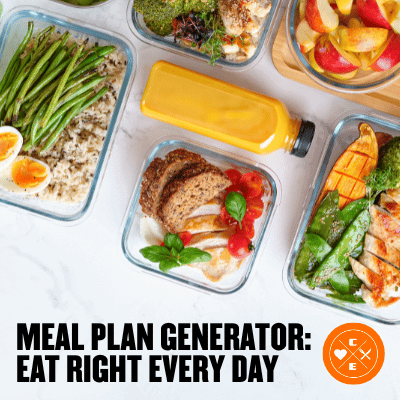
Meal Plan Generator: Eat Right Every Day
Quick answer: Use the generator to turn your calorie and protein targets into a week of simple, satisfying meals. For best results, set your numbers first (calories + protein), choose 3–5 eating occasions per day, apply any dietary filters (e.g., vegetarian, dairy-free), then save or export your plan. The guide below shows how to personalize macros, swap foods, and build a repeatable routine.
How to Use the Meal Plan Generator (Step by Step)
- Pick your goal: fat loss, maintenance, or muscle gain.
- Enter calories (from our Calorie Calculator).
- Set protein (use the Protein Intake Calculator), then let carbs and fats flex.
- Choose meals/day: 3, 4, or 5 eating occasions. The generator will size portions accordingly.
- Apply filters: vegetarian/vegan, dairy-free, seafood-forward, quick recipes, or budget-friendly picks.
- Customize & save: swap foods you don’t love, then export or copy your plan. Reuse the same “skeleton” weekly with different flavors.
Meal prep doesn't have to be complicated.
Get our free guide — shortcuts, meal ideas, and a system that makes eating well the easy option.
Set Your Targets (Calories, Protein, Meals/Day)
- Calories: start from your personalized number via the Calorie Calculator. For fat loss, keep the deficit modest (e.g., ~300–500 kcal/day).
- Protein: most adults do well at ~0.6–1.0 g per lb (1.3–2.2 g/kg). See details in the Protein Intake guide.
- Meals/day: 3–5 works for most. Choose the pattern you’ll stick to (e.g., 3 meals + 1 snack).
Macro Ranges by Goal (Flexible Templates)
Hit protein first, then let fats and carbs flex within ranges you enjoy.
| Goal | Protein | Fat | Carbs | Notes |
|---|---|---|---|---|
| Fat loss | ~0.7–1.0 g/lb | ~0.3–0.5 g/lb | Remainder | Higher protein for fullness; choose carb/fat bias you prefer |
| Maintenance | ~0.6–0.8 g/lb | ~0.3–0.5 g/lb | Remainder | Balanced carbs for training days |
| Muscle gain | ~0.8–1.0 g/lb | ~0.35–0.6 g/lb | Remainder | Slight calorie surplus + progressive strength training |
Per-Meal Targets & Easy Distribution
Spread protein across the day for better satiety and recovery. Use this quick splitter:
| Daily protein | 3 meals | 4 meals | 5 meals |
|---|---|---|---|
| 100 g | ~33 g | ~25 g | ~20 g |
| 120 g | ~40 g | ~30 g | ~24 g |
| 140 g | ~47 g | ~35 g | ~28 g |
| 160 g | ~53 g | ~40 g | ~32 g |
Food Lists & Smart Swaps
Protein anchors
- Eggs/egg whites, Greek yogurt, cottage cheese
- Chicken/turkey, lean beef, salmon, tuna, shrimp
- Tofu/tempeh, edamame, beans/lentils (beans guide)
- Protein bars or a scoop of Protein Powder when busy
Smart carbs
- Oats, potatoes, rice (rice guide), quinoa, high-protein pasta
- Fruit (see best fruits), popcorn
Veg & flavor
- Leafy greens, broccoli/cauliflower, peppers, zucchini, mushrooms
- Herbs, citrus, vinegar, spices; measured oils; see hot sauce tips
Swap system (keep macros steady)
- Protein: swap chicken ↔ salmon ↔ tofu in the same ounce amount
- Carbs: swap rice ↔ potatoes ↔ high-protein pasta by equal cooked cups
- Fats: swap 1 tsp oil ↔ 1 Tbsp nuts ↔ 1 Tbsp pesto (adjust taste, keep portions)
More ideas: Healthy Food Alternatives (Smart Swaps) and Best Healthy Dinner Recipes.
Sample 1-Day Templates You Can Tweak
Macros and calories vary by brand/portion. Use your generator output as the source of truth—these are patterns you can copy.
Balanced Day (3 meals + 1 snack)
- Breakfast: Greek yogurt bowl + berries + 2 Tbsp high-protein cereal
- Lunch: Turkey burrito bowl — ½ brown rice + ½ riced cauliflower, black beans, fajita veg, salsa, yogurt crema
- Snack: Protein bar or cottage cheese + fruit
- Dinner: Lemon-garlic salmon, roasted broccoli & potatoes
High-Protein, Lower-Carb Day
- Eggs + egg whites scramble with spinach/mushrooms; ½ avocado
- Chicken salad bowl (lots of veg) with olive-oil + lemon; optional small fruit
- Greek yogurt + walnuts + cinnamon
- Shrimp stir-fry with zucchini/peppers; small portion of rice if desired
Vegetarian Day
- Overnight oats with protein powder + berries
- Tofu peanut power bowl (tofu, veg, brown rice, light peanut sauce)
- Edamame + fruit
- Chickpea spinach coconut curry (light) over rice
Shopping List & Batch-Prep Framework
- Protein (buy 3): chicken thighs, salmon or tuna, tofu/tempeh, eggs, Greek yogurt
- Carbs (choose 2): rice, potatoes, high-protein pasta, oats
- Veg (5 bags or fresh picks): broccoli/cauliflower, peppers/onions, spinach/greens, zucchini, mushrooms
- Flavor: lemon/lime, garlic, vinegars, salsa, light pesto, spices
- Batch-prep rhythm: cook a pot of rice/quinoa + sheet-pan protein/veg on Sunday; midweek quick top-up
Troubleshooting (Hunger, Stalls, Time, Budget)
- Hungry? Add veg volume, check protein per meal (hit your target), and ensure the calorie deficit isn’t too aggressive.
- Weight plateau? Track oils, dressings, nut butters, and snacks for 7–10 days; consider a tiny calorie nudge (±100–150) and add 2–3k daily steps.
- No time? Use frozen veg, pre-cooked grains, rotisserie chicken, tuna pouches, and our High-Protein Box.
- Budget? Eggs, canned tuna/salmon, bulk yogurt, beans/lentils, and high-protein pasta give great protein per dollar.
- Hydration: steady water; on hot/training days use a light electrolyte—see Electrolytes guide.
Related Reading
- Calorie Calculator: Find Your Daily Needs
- Protein Intake Calculator
- Healthy Food Alternatives (Smart Swaps)
- Best Healthy Dinner Recipes
- Is Rice Good for Weight Loss?
- Are Beans Good for Weight Loss?
- Is Popcorn Good for Weight Loss?
FAQs
How many calories should I choose?
Use the Calorie Calculator for a personalized number. For fat loss, aim for a modest deficit so you can stay consistent.
How much protein per day?
Typically ~0.6–1.0 g per lb (1.3–2.2 g/kg), spread over 3–5 eating occasions. Use the Protein Intake Calculator.
3 meals or 4?
Both work. Choose the pattern that fits your schedule and helps you hit protein. The generator sizes portions to your choice.
Can I do vegetarian or dairy-free?
Yes—apply filters and use tofu/tempeh, edamame, beans/lentils, soy/coconut yogurts, and high-protein pasta.
What if the plan feels too salty or I cramp when training?
Use herbs/acid for flavor to keep sodium moderate and review our Electrolytes guide for balanced hydration.
Disclaimer: This article is general information and not medical advice. If you have medical conditions or specialized nutrition needs, work with your clinician.
References
- USDA FoodData Central (typical nutrition values)
- CDC: Adult Physical Activity Basics