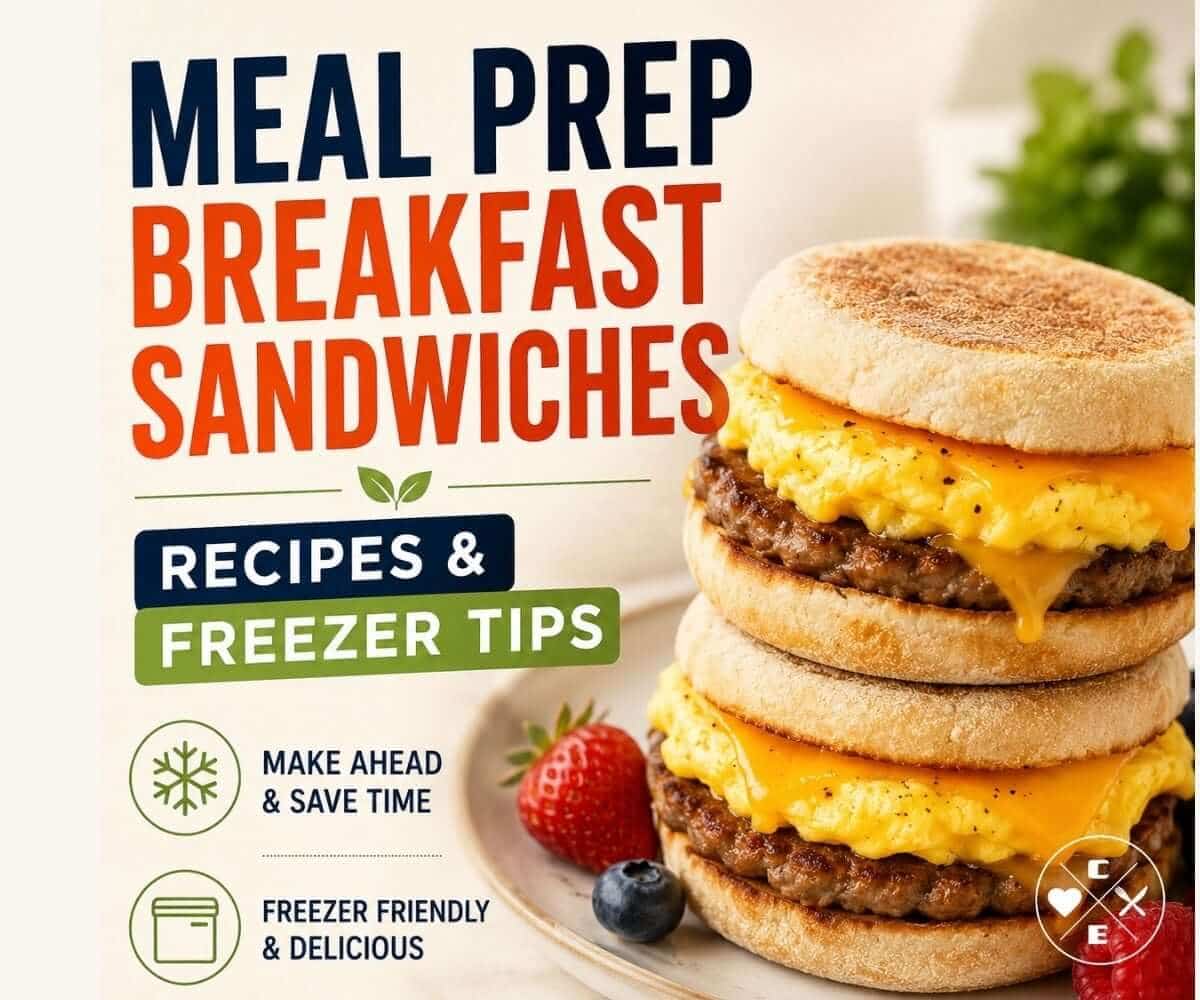

Quick Answer: Meal prep breakfast sandwiches are baked eggs, cheese and a cooked protein on toasted English muffins, frozen one by one so you can reheat a single sandwich on a busy morning. The easiest way to batch them is to bake a dozen eggs in one 9x13 pan, cut six rounds, and assemble. A batch of six takes about 35 minutes plus an hour or two to freeze. To keep them from going soggy, bake the eggs until just set, toast the muffins, and cool everything before wrapping. Frozen, they're best within 1 to 3 months; in the fridge, eat them within 3 to 4 days.
Table of Contents
The fast-food breakfast sandwich built an empire on one promise: a hot, hand-held breakfast in under a minute. You can make your own at home for less, with more protein and no drive-thru line, and stash a week or more of them in the freezer in about 35 minutes. The trick is batching them so they reheat like the real thing instead of a soggy puck.
This guide gives you one full recipe built on the sheet-pan egg method, three more fillings to keep your rotation interesting, and the storage and reheating details that decide whether your muffin stays sturdy or turns to mush. If even half an hour in the kitchen isn't happening this week, there's an honest shortcut near the end.
Why breakfast sandwiches are great for meal prep
Breakfast sandwiches hit the meal-prep sweet spot: they're fast to batch, they freeze and reheat reliably, and you can eat one with one hand. The English muffin is sturdy enough to hold eggs, cheese and meat through freezing and reheating, which is why it became the breakfast-sandwich standard. Because the eggs bake in a single pan while the meat cooks on the stove, a full batch takes about as long as making breakfast the usual way a couple of times.
They're also an easy way to get protein in early. Depending on the filling, the sandwiches in this guide land between about 25 and 35 grams of protein each, enough to keep most people full until lunch. If you're putting together a wider make-ahead routine, our Complete Meal Prep Guide covers the batch-cooking and storage systems that apply to every meal of the day.
High Protein Breakfast Sandwiches

$4.99
Clean Eatz Breakfast Sammiez – High-Protein, Ready in 90 Seconds Skip the drive-thru without skipping protein. Our frozen breakfast sandwiches deliver 23-25g protein per sandwich with real, simple ingredients — cage-free eggs, premium meats, and no mystery fillers. Why You’ll… read more
The recipe: sausage, egg & cheese freezer sandwiches
Baking the eggs in one pan instead of frying them one at a time is what makes breakfast sandwiches batchable. Every filling in this guide uses this recipe; only the protein and cheese change.
Makes: 6 sandwiches | Prep: 10 min | Cook: 25 min | Total: 35 min, plus 1 to 2 hours to freeze
Ingredients
- 12 large eggs
- 1/4 cup milk
- 1/2 tsp salt
- 1/4 tsp black pepper
- Nonstick spray or 1 tsp butter, for the pan
- 12 oz breakfast sausage (pork or turkey), shaped into 6 thin patties
- 6 English muffins, split
- 6 slices cheddar cheese
Instructions
- Bake the eggs. Heat the oven to 350°F. Line a 9x13-inch baking dish with parchment and grease it. Whisk the eggs, milk, salt and pepper, pour into the dish and bake 18 to 22 minutes, until the center is just set. Cool completely.
- Cook the sausage. While the eggs bake, cook the patties in a skillet over medium heat, 3 to 4 minutes per side, until no pink remains (160°F). Drain on paper towels and cool.
- Toast the muffins. Toast the split English muffins until lightly golden. This gives them enough structure to survive freezing and reheating.
- Cut and assemble. Cut the eggs into 6 rounds with a biscuit cutter or wide jar lid, or into 6 squares. Stack muffin bottom, egg, cheese, sausage and muffin top, folding in any cheese that hangs over the edge.
- Wrap and freeze. Once fully cool, wrap each sandwich in parchment (to microwave later) or foil (for the oven or air fryer). Freeze on a tray for 1 to 2 hours until solid, then move to a labeled freezer bag.
- Reheat. Unwrap, wrap in a paper towel and microwave 1 1/2 to 3 minutes from frozen, flipping halfway, until the center reaches 165°F.
Nutrition per sandwich (estimated): 500 calories, 31g protein, 29g fat, 28g carbohydrate, 2g fiber, 1,040mg sodium. Calculated from USDA FoodData Central values for whole eggs, pork sausage, cheddar and plain English muffins. Your brands will change the numbers; turkey sausage and a reduced-fat cheese bring the fat down noticeably.
Why the method works
Pull the eggs while the center is barely set. Eggs keep cooking when you reheat the sandwich, and overbaked eggs turn rubbery and weep water into the muffin.
Use a 9x13 dish, not a sheet pan, for six sandwiches. A dozen eggs spread across a full sheet pan bakes too thin to cut into a proper patty. A 9x13 gives you six rounds about the size of an English muffin. Save the scraps for a scramble.
Toast the muffins. Toasting gives the bread enough structure to survive freezing and reheating without going gummy.
Cool before you wrap. Wrapping a warm sandwich traps steam that soaks into the muffin before it ever freezes.
3 more fillings to rotate
Variety is what keeps a freezer stash from going stale on you. Each one makes 6 sandwiches with the recipe above: swap the sausage and cheddar for the ingredients listed, and keep everything else the same unless noted.
1. Bacon, egg & cheese
Swap in: 12 slices bacon and 6 slices of your favorite cheese. Bake the bacon on a sheet pan alongside the eggs until crisp, drain it well, and halve each slice so it layers neatly, two halves per sandwich.
2. Veggie & egg white
The lightest build here. Swap in: 3 cups liquid egg whites in place of the whole eggs and milk; 1 cup chopped spinach; 1/2 cup diced bell pepper; 6 slices reduced-fat cheese; 6 whole-wheat English muffins; and cut the salt to 1/4 tsp. Sauté the vegetables until dry (squeeze the spinach), stir them into the whisked whites, and bake as above until just set. Estimated per sandwich: about 260 calories, 25g protein, 6g fat, 29g carbohydrate and 5g fiber.
3. Ham & Swiss (or Canadian bacon)
The fastest filling, because the meat comes precooked. Swap in: 6 slices Canadian bacon or 12 oz thinly sliced deli ham, and 6 slices Swiss cheese. Warm the meat briefly in a skillet, cool, and assemble.
Storage, freezing & reheating
Wrap individually, and match the wrap to the reheat. Parchment is best if you'll microwave; foil is best for the oven or air fryer. Either way, wrap snugly, then keep the wrapped sandwiches together in a labeled freezer bag.
Know your timelines. Homemade breakfast sandwiches are best within 1 to 3 months frozen. English muffins outlast most breads, but the texture still slips over time. In the fridge, eat them within 3 to 4 days, the USDA window for cooked egg dishes and cooked meat.
Reheat for your texture. The microwave is fastest: unwrap, wrap in a paper towel (it absorbs moisture that would otherwise soften the muffin), and heat 1 1/2 to 3 minutes from frozen, flipping halfway. For a crisper muffin, air-fry at about 350°F for 8 to 10 minutes, or bake wrapped in foil at 375°F for 20 to 30 minutes from frozen. Thawing overnight in the fridge first cuts any of these roughly in half. A reheated muffin won't be quite as crisp as a fresh-toasted one; popping the top half in a toaster for a few seconds brings it back.
Food safety check: Reheat until the center is steaming hot, 165°F on an instant-read thermometer. The egg in the middle of a frozen sandwich is the last part to heat through, so flip it halfway and check there.
3 mistakes that ruin a freezer sandwich
Overbaked eggs. The most common one. Eggs baked until firm overcook again on reheat, turning rubbery and watery. Pull them while the center is just barely set.
Wrapping while warm. Sealing a warm sandwich traps steam that condenses into the muffin and makes it soggy before it freezes. Let everything cool completely first.
Skipping the toast. An untoasted muffin has no defense against moisture. A quick toast before assembly is the difference between a sturdy sandwich and a damp one.
The no-cook shortcut
Batching breakfast sandwiches is quick once you know the one-pan egg trick, but some weeks it's still more than you have time for. Ready-made breakfast sandwiches get you the same hot, hand-held breakfast without the prep.
Clean Eatz Kitchen makes full-size breakfast sandwiches with cage-free eggs in three varieties: Sausage, Egg & Cheese Biscuit with turkey sausage (407 calories, 21g protein), Chicken & Waffle (570 calories, 24g protein; available east of Colorado only) and Blueberry Waffle with Turkey Sausage (440 calories, 14g protein). They ship frozen, keep up to 12 months in the freezer, and heat in about 90 seconds in the microwave, or in the oven or air fryer for a crispier result. They're $4.99 each with no subscription. You can see the rest of the lineup, including burritos and overnight oats, in our high-protein breakfast collection.
Most people end up doing both: a homemade batch when there's a free morning, a box of ready-made ones for the weeks there isn't. If you'd rather wrap your breakfast in a tortilla, the same batch-and-freeze approach carries over to meal prep breakfast burritos, and alternating the two keeps a freezer rotation from getting repetitive.
Frequently asked questions
How long do meal prep breakfast sandwiches last in the freezer?
Wrapped airtight, homemade breakfast sandwiches are best within 1 to 3 months. They stay safe longer at 0°F, but the egg and muffin dry out over time. Label each one with the filling and the date.
How long do breakfast sandwiches last in the fridge?
Three to four days, wrapped individually, which is the USDA window for cooked egg dishes and cooked meat. Freeze anything you won't eat by day four.
How do you keep freezer breakfast sandwiches from getting soggy?
Bake the eggs until just set, let everything cool completely before assembling, and toast the muffins first. When microwaving, wrap the sandwich in a paper towel to absorb moisture, or use the oven or air fryer for a crisper result.
How do you reheat a frozen breakfast sandwich?
Unwrap it, wrap it in a paper towel, and microwave 1 1/2 to 3 minutes from frozen, flipping halfway, until the center is steaming (165°F). For a crisper muffin, air-fry at 350°F for 8 to 10 minutes, or bake wrapped in foil at 375°F for 20 to 30 minutes. Thawing overnight in the fridge first cuts those times roughly in half.
What is the best way to cook eggs for batch breakfast sandwiches?
Bake them in one pan. Whisk a dozen eggs with a little milk, pour them into a greased, parchment-lined 9x13 dish, and bake at 350°F for 18 to 22 minutes, until just set. Cut six rounds or squares to fit your muffins.
What is the best bread for freezer breakfast sandwiches?
English muffins hold up best to freezing and reheating without going gummy. Bagels, biscuits and sandwich thins also work. Toast whichever you use before assembling.
The bottom line
Meal prep breakfast sandwiches turn about 35 minutes of cooking into a week or more of hot, protein-rich breakfasts. Bake the eggs in one pan, cut them to fit, toast the muffins, cool everything before wrapping, and freeze them on a tray so you can grab one at a time. On the weeks a cooking session isn't in the cards, a box of ready-made breakfast sandwiches does the same job in about 90 seconds.