
Quick Answer: Meal prep is the practice of preparing meals in advance to save time (6-8 hours weekly), money ($100+ monthly), and improve nutrition. Start with 2-3 simple recipes, dedicate 2 hours on Sunday, invest in quality containers, and scale up gradually. Whether you prep everything yourself or combine with services like our Build-a-Meal Plan, meal prep transforms how you eat and live.
Table of Contents
What Is Meal Prep & Why It Matters
Getting Started: Your First Prep Session
Essential Tools & Equipment
Best Proteins for Meal Prep
Best Carbs & Grains
Best Vegetables for Meal Prep
Meal Prep Formulas That Work
Meal Prep Recipes
Budget Meal Prep Strategies
Storage & Food Safety
Meal Prep by Goal
Common Mistakes & Solutions
FAQs
What Is Meal Prep & Why It Matters
If you've ever stood in front of your refrigerator at 6 PM, exhausted from work, staring at random ingredients while your family asks, "what's for dinner?"—you already understand why meal prep has become essential.
Meal prep is the practice of planning, preparing, and portioning meals in advance, typically for 3 to 7 days. It turns the daily scramble of eating decisions into something you handle once or twice per week instead of several times per day.
Public health frameworks back this up. The USDA's MyPlate emphasizes meal planning as a practical tool for balanced eating, portion awareness, and long-term dietary consistency. Beyond nutrition, prepping ahead reduces daily mental load — repeated food decisions add to cognitive fatigue, especially after long workdays. By planning meals when you have clarity, you avoid last-minute choices driven by exhaustion rather than intention.
Meal prep doesn't have to be complicated.
Get our free guide — shortcuts, meal ideas, and a system that makes eating well the easy option.
What the Research Says
The benefits show up consistently in the data. A large French study published in the International Journal of Behavioral Nutrition and Physical Activity, which tracked over 40,000 adults, found that people who plan meals are more likely to have a higher-quality diet, more food variety, and lower odds of obesity. A 2021 longitudinal study in Nutrition Journal tracking 1,740 adults with obesity using a digital meal planning platform found a mean weight loss of 6.2 pounds over a median of 25 months — without any specific calorie-restriction intervention beyond planning ahead.
The financial impact is just as compelling. According to the USDA Economic Research Service, U.S. food-away-from-home spending reached $1.52 trillion in 2024, and the average U.S. household spends nearly $4,000 annually on food away from home. Home-prepped meals cost $3 to $5 per serving versus $12 to $20 for takeout — a gap that adds up to over $1,300 in savings per year for many households.
Then there's waste. The USDA estimates 30-40% of the U.S. food supply is lost or wasted, and the typical American family of four loses roughly $1,500 per year to uneaten food. Meal prep, when done well, drives that loss close to zero because every ingredient has a planned destination before it enters your fridge.
For a deeper dive into the foods that support weight loss, see our 100 Best Foods for Weight Loss guide.
The Four Meal Prep Methods
Batch cooking involves preparing large quantities of complete meals that are portioned and stored. You might roast three sheet pans of chicken and vegetables, cook a big pot of chili, and prepare a large casserole — all in one Sunday afternoon. The investment of 2-3 hours yields 15-20 complete meals.
Ingredient prep focuses on preparing components rather than complete meals. You cook several proteins with basic seasoning, chop all your vegetables, cook your grains, and prepare sauces. This method offers maximum flexibility — you combine these prepped ingredients in different ways throughout the week.
Freezer prep involves preparing and freezing complete meals that can last for months. You might spend one Saturday per month preparing 30-40 meals. Soups, stews, casseroles, and marinated meats all freeze beautifully.
The hybrid method combines elements of all three approaches. You batch cook a few complete meals for lunches, do ingredient prep for flexible dinners, and keep a stash of freezer meals for emergencies. This balanced approach is what we recommend for most people.
Want to Skip the Prep?
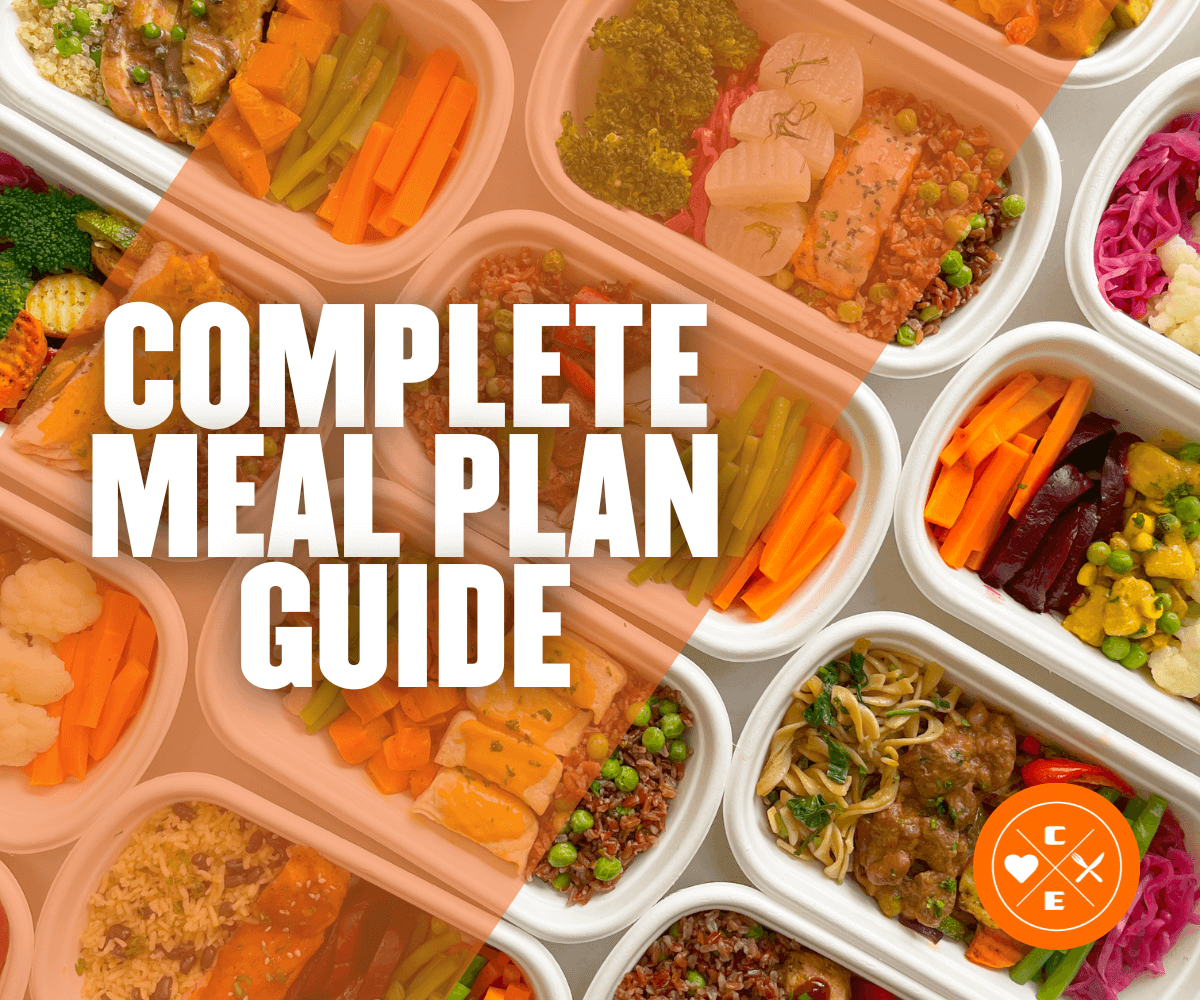
Our Build-a-Meal Plan lets you choose your proteins and sides, filter by dietary restriction or goal, and have perfectly portioned meals delivered. It's our most-ordered offering for a reason — the filter UI does the planning work for you.
Getting Started: Your First Prep Session
Your first meal prep doesn't need to be perfect, elaborate, or Instagram-worthy. It just needs to happen. Start small: prep 5 lunches and 3-4 dinners. This prevents overwhelm while building the habit.
Before You Start
Define your goal. If weight loss is your focus, you're creating a portion control system — each container becomes a boundary that aligns with your calorie goals. You can use our calorie calculator to determine your needs.
If you're focused on muscle gain or athletic performance, prioritize protein — aim for 20 to 35 grams per meal. Our Complete Guide to Gaining Healthy Weight covers the specifics. Research published in the British Journal of Sports Medicine indicates roughly 1.6 grams of protein per kilogram of body weight per day supports muscle building when paired with resistance training.
If saving time is your main motivation, focus on one-pot meals, sheet pan dinners, and recipes that reheat well. If budget is the priority, focus on chicken thighs, ground turkey, eggs, bulk grains, and seasonal vegetables.
The 2-Hour First Session
1. Setup (15 minutes): Clear your kitchen completely. Set out all containers, tools, and ingredients. Preheat oven to 400°F and fill a large pot with water for grains.
2. Vegetable prep (20 minutes): Wash all vegetables at once, then chop systematically. Cut vegetables for roasting larger (they'll shrink), stir-fry pieces medium, soup ingredients smaller.
3. Parallel cooking (30 minutes): While chicken breasts bake in the oven (25-30 minutes at 400°F), cook rice on the stovetop (20-25 minutes). Use this time to clean prep dishes and prepare sauces.
4. Cooling (15-20 minutes): Spread cooked items on sheet pans to cool quickly. Never put hot food directly into containers — it creates condensation that leads to soggy meals and, more importantly, falls outside the USDA's two-hour cooling window for food safety.
5. Portioning and labeling (20 minutes): Once foods reach room temperature, portion into containers. Label each with meal name, date prepped, and use-by date.
Essential Tools & Equipment
Must-Have Basics ($75-100 Total)
| Tool | Why Essential | Budget Option | Upgrade Option |
|---|---|---|---|
| Chef's Knife | 80% of prep tasks | Victorinox 8" ($30) | Wüsthof Classic ($120) |
| Cutting Boards (2) | Separate meat/vegetables | Basic plastic ($15) | Bamboo set ($35) |
| Sheet Pans (2) | Batch roasting | Nordic Ware ($12 each) | Vollrath ($28 each) |
| Storage Containers (15-20) | Portion control | Rubbermaid 30-piece ($25) | Glasslock 18-piece ($45) |
The two cutting boards is a small detail that matters more than people expect. The CDC's food safety guidance specifically recommends separating raw meat from produce to prevent cross-contamination — using one board for raw chicken and another for everything else is the simplest way to do that without thinking about it.
Container Selection Guide
| Container Type | Best For | Pros | Cons |
|---|---|---|---|
| Glass | Home storage | Microwave safe, no stains/odors, longer freshness | Heavy, can break |
| BPA-Free Plastic | Work lunches | Lightweight, stackable, affordable | Can stain, shorter lifespan |
| 3-Compartment | Portion control | Pre-measured sections, no mixing | Less flexible |
| Mason Jars | Salads, overnight oats | Airtight, visible contents | Not microwave safe with lid |
Best Proteins for Meal Prep
Protein is the foundation of satisfying meal prep. The key is choosing proteins that cook well in batches, store without drying out, and reheat without turning rubbery. The 2020-2025 Dietary Guidelines for Americans recommend 5-7 ounces of protein-equivalent foods daily for most adults, and meal prep is the easiest way to hit that target consistently. For detailed protein recommendations, see our 100 Best Foods for Weight Loss.
| Protein | Cost/lb | Protein/4oz | Meal Prep Notes |
|---|---|---|---|
| Chicken Thighs | $1.99-2.99 | 26g | Best choice — stays moist 5 days, more flavor than breast |
| Chicken Breast | $3.49-4.99 | 31g | Classic choice — brine before cooking, don't overcook past 165°F |
| Ground Turkey (93% lean) | $4.99-5.99 | 22g | Extremely versatile — meatballs, burgers, taco meat, bowls |
| Eggs | $0.20-0.40/egg | 6g/egg | Cheapest complete protein — hard boil, make egg muffins |
| Salmon | $8.99-12.99 | 25g | Omega-3s, best eaten within 3 days — bake at 400°F 12-15 min |
| Dried Beans/Lentils | $1.50-2.00 | 18g (cooked cup) | Cheapest protein per gram — batch cook and freeze portions |
Protein Cooking Tips
Chicken thighs: Season with salt, pepper, and garlic powder. Roast at 425°F for 25-30 minutes until internal temp hits 165°F. They'll stay moist for 5 days refrigerated. The dark meat has more connective tissue and intramuscular fat, which is why it doesn't dry out the way breast does — a fact backed up by basic poultry science from the USDA Food Safety and Inspection Service.
Chicken breast: The meal prep classic, but it requires care. Marinate in Greek yogurt, lemon juice, and herbs for at least 2 hours — the yogurt's lactic acid tenderizes while adding moisture insurance. Cook to exactly 165°F, not a degree more, and rest 5 minutes before slicing.
Ground turkey: Brown in batches with your preferred seasoning. One batch can become taco bowls, meatballs, or burger patties — just change the spice profile. The USDA notes that ground meats must be cooked to 165°F because grinding distributes surface bacteria throughout the product.
Best Carbs & Grains
Not all grains hold up equally over 5 days in the fridge. Here's what works and what doesn't:
| Grain/Carb | Calories/Cup | Storage Life | Meal Prep Notes |
|---|---|---|---|
| Quinoa | 222 | 5-7 days | Best choice — actually improves with age, nutty flavor deepens |
| Brown Rice | 216 | 4-5 days | Good choice — can get slightly dry, reheat with splash of water |
| Sweet Potatoes | 180 (medium) | 5-7 days | Excellent — cube and roast, holds texture well |
| Farro | 200 | 5-7 days | Excellent — chewy texture holds up perfectly |
| White Rice | 206 | 3-4 days | Gets hard after day 3 — use for fried rice or freeze |
| Pasta | 220 | 3-4 days | Cook al dente, toss with oil, store sauce separately |
For fiber-rich carb options that support weight loss and gut health, see our Ultimate Guide to Dietary Fiber. The Harvard T.H. Chan School of Public Health recommends whole grains over refined carbs for stable blood sugar and better satiety, both of which matter for meal-prepped lunches you'll be reheating six hours later.
Best Vegetables for Meal Prep
The key to vegetables that don't turn to mush: choose hardy varieties and use the right cooking method.
| Vegetable | Best Prep Method | Storage Life | Notes |
|---|---|---|---|
| Broccoli | Roast at 425°F | 5 days | Roasted holds up far better than steamed |
| Brussels Sprouts | Halve, roast at 400°F | 5-6 days | Excellent — caramelized edges stay good |
| Bell Peppers | Slice raw or roast | 5-7 days | Store raw for crunch, roast for sweetness |
| Cauliflower | Roast at 425°F | 5 days | Goes from good to great when roasted |
| Cabbage | Shred raw or roast wedges | 7+ days | Budget king — keeps forever, extremely versatile |
| Green Beans | Blanch and shock | 4-5 days | Blanch to bright green, shock in ice water |
| Zucchini | Roast at high heat | 3-4 days | Gets watery — use early in the week |
| Spinach | Store raw, wilt when eating | 3-4 days | Don't cook ahead — wilts from residual heat |
The Roasting Rule
When in doubt, roast. Roasted vegetables hold their texture, develop better flavor, and reheat without getting soggy. Toss with olive oil, salt, and pepper. Spread in a single layer (don't crowd the pan). Roast at 400-425°F until edges are browned. The high heat triggers the Maillard reaction — the same browning chemistry that makes seared steak taste better than boiled — and that's why roasted broccoli on Friday still tastes like food rather than punishment.
Meal Prep Formulas That Work
These formulas let you create infinite variety from a handful of ingredients. Master these and you'll never be bored.
The Grain Bowl Formula
Base grain + Protein + Vegetables + Sauce + Toppings = Complete meal
One formula, endless variations:
| Style | Grain | Protein | Vegetables | Sauce | Cost/Serving |
|---|---|---|---|---|---|
| Mediterranean | Quinoa | Chicken | Cucumber, tomato, feta | Tzatziki | $3.50 |
| Mexican | Brown rice | Black beans | Corn, peppers, onion | Salsa, Greek yogurt | $2.10 |
| Asian | Brown rice | Chicken | Broccoli, snap peas | Teriyaki | $2.75 |
| Indian | Basmati rice | Chickpeas | Spinach, tomatoes | Curry sauce | $2.40 |
The Sheet Pan Formula
Protein + Hardy vegetables + Starch (optional) = One pan, complete meal
Everything goes on one pan at 400-425°F. The beauty is minimal cleanup and seasonal adaptation — use whatever vegetables are cheapest. Three sheet pans running simultaneously produces 12-15 meals in 30 minutes active time.
Winning combinations: chicken thighs with root vegetables, sausage with cabbage and potatoes, salmon with asparagus and baby potatoes, or tofu with Brussels sprouts and sweet potatoes.
The Soup and Stew Formula
Aromatics (onion, carrot, celery) + Protein + Vegetables + Broth + Beans/grains = 8+ servings
The base costs under $2 and provides flavor foundation for endless varieties. These one-pot meals improve with age, freeze beautifully, and stretch expensive ingredients. A pound of ground meat, typically serving four, stretches to eight servings in chili.
Need More Recipe Ideas?
Browse our Curated Meal Plans for chef-built rotations targeting weight loss, weight gain, and GLP-1 support — perfect for inspiration or to supplement your own prep.
Meal Prep Recipes
Greek Chicken Power Bowl
Yield: 5 servings | Prep: 15 min | Cook: 25 min | Per serving: 450 cal, 38g protein
Ingredients:
1.5 lbs chicken breast • 1 cup Greek yogurt • 2 lemons (juice and zest) • 2 tbsp olive oil • 2 tsp dried oregano • 3 cloves garlic, minced • 2 cups quinoa, uncooked • 2 cups cucumber, diced • 2 cups cherry tomatoes, halved • 1 cup feta cheese • Tzatziki for serving
Instructions:
Marinate chicken in Greek yogurt, lemon juice, oregano, and garlic for at least 2 hours. Bake at 400°F to exactly 165°F internal (about 25 minutes). Rest 5 minutes, then slice. Cook quinoa according to package. Let cool completely. Portion quinoa into 5 containers, top with sliced chicken. Store cucumber, tomatoes, feta, and tzatziki in separate small containers — add fresh when eating.
30-Minute Sheet Pan Fajitas
Yield: 5 servings | Prep: 5 min | Cook: 20 min | Per serving: 380 cal, 32g protein
Ingredients:
1.5 lbs chicken breast, sliced • 3 bell peppers (mixed colors), sliced • 2 large onions, sliced • 3 tbsp olive oil • 2 tbsp fajita seasoning • 10 tortillas • Optional: salsa, guacamole, Greek yogurt, cheese
Instructions:
Preheat oven to 425°F. Slice chicken, peppers, and onions into strips (5 minutes total). Toss everything with oil and seasoning on a large sheet pan. Roast 20 minutes, stirring once halfway. Portion fajita mixture into 5 containers. Store tortillas separately wrapped. Keep toppings in small containers.
Budget Chickpea Curry Bowl
Yield: 8 servings | Prep: 15 min | Cook: 30 min | Per serving: 340 cal, 16g protein, 12g fiber | Cost: $2.40/serving
Ingredients:
4 cans chickpeas (or 1 lb dried, soaked) • 2 large onions, diced • 6 cloves garlic • 2 tbsp fresh ginger • 2 cans (28 oz) crushed tomatoes • 2 tbsp curry powder • 1 tbsp garam masala • 1 can coconut milk • 4 cups brown rice, cooked • Fresh spinach
Instructions:
Sauté onions, garlic, and ginger until fragrant (5 minutes). Add curry powder and garam masala, toast 1 minute. Add tomatoes and chickpeas, simmer 20 minutes. Stir in coconut milk. Portion rice into 8 containers, top with curry. Store fresh spinach separately — it wilts from residual heat when you reheat.
Overnight Oats (5 Variations)
Yield: 5 servings | Prep: 10 min | Per serving: 320 cal, 18g protein, 8g fiber
Base recipe (per jar): 1/2 cup rolled oats • 1/2 cup milk • 1/4 cup Greek yogurt • 1 tbsp chia seeds
Five variations:
Chocolate Peanut Butter: + 1 tbsp cocoa + 1 tbsp PB2
Apple Cinnamon: + grated apple + 1/2 tsp cinnamon
Tropical: Use coconut milk + diced pineapple
Berry Blast: + 1/4 cup mixed berries + vanilla
Banana Bread: + mashed banana + crushed walnuts
Seal jars, refrigerate overnight (minimum 4 hours, up to 5 days). Grab and go.
Budget Meal Prep Strategies
The myth that healthy eating requires a premium budget falls apart under scrutiny. After analyzing hundreds of meal prep budgets, a clear pattern emerges: the people spending the least are often eating the best. The difference between random grocery shopping and strategic meal prep can save a family of four thousands of dollars per year.
The Real Numbers
According to U.S. Bureau of Labor Statistics data, the average American household spends thousands annually on food away from home. Converting just half of those meals to prep saves over $1,500 per year using conservative estimates. Add in reduced food waste — from the U.S. average of 30-40% down to under 5% — and you're saving an additional $1,500 annually that would otherwise end up in the garbage.
Strategic Shopping Principles
Shop the sales, plan around them. When chicken breast drops to $1.99 per pound, buy ten pounds, not two. When seasonal produce peaks, build your menu around those ingredients. This flexible approach can meaningfully reduce grocery costs.
Shop with a detailed list. Research from marketing science journals consistently shows that detailed shopping lists reduce impulse purchases. Organize by store layout to minimize time in-store, which reduces exposure to marketing triggers.
Time your shopping. Wednesday mornings often capture new sale cycles. The last hour before closing frequently features marked-down items perfect for freezing.
Protein Strategy
Protein is typically your largest expense. The price per gram varies dramatically:
Chicken thighs ($1.99/lb): roughly $0.09 per gram of protein
Chicken breast ($3.99/lb): roughly $0.18 per gram — double the cost for marginally more protein
Eggs ($0.20-0.40 each): $0.03-0.07 per gram — cheapest animal protein available
Dried beans/lentils: $0.02-0.04 per gram — cheapest protein period
Incorporating two meatless days weekly can reduce protein costs significantly while improving overall nutrition through added fiber. Rice and beans together form complete proteins containing all essential amino acids — a fact Harvard Nutrition Source highlights for plant-based eaters.
Zero-Waste Mindset
A whole chicken ($8) exemplifies complete utilization. It's roasted for Sunday dinner. Breast meat becomes Monday's chicken salad. Thighs transform into Tuesday's tacos. The carcass simmers into Wednesday's soup stock. The broth anchors Thursday's rice pilaf. Five meals from one $8 purchase.
Broccoli stems become slaw. Carrot tops become chimichurri. Wilting lettuce revives in soup. This mindset shift can reduce grocery spending by 15-20%.
Budget Meal Prep Made Even Easier
If you'd rather not deal with sourcing, our Build-a-Meal Plan lets you filter by goal (weight loss, weight gain, GLP-1 support) and protein target — so every meal hits your macros and your budget without you running price math at the grocery store.
Storage & Food Safety
Food safety matters. Proper storage, cooling, and reheating practices are essential to prevent foodborne illness when preparing meals in advance. The following guidelines are based on official recommendations from the USDA Food Safety and Inspection Service and FoodSafety.gov.
Refrigerator Storage Guidelines
| Food Type | Refrigerator (40°F) | Freezer (0°F) | Notes |
|---|---|---|---|
| Cooked chicken/beef/pork | 3-4 days | 2-3 months | Store with sauce/broth to prevent drying |
| Cooked fish | 2-3 days | 2-3 months | Best eaten within 3 days — quality drops fast |
| Cooked grains (rice, quinoa) | 4-6 days | 6 months | Freeze in portions for quick defrosting |
| Roasted vegetables | 4-5 days | 2-3 months | Quality better refrigerated than frozen |
| Cut raw vegetables | 3-5 days | Not recommended | Store with damp paper towel |
| Soups and stews | 3-4 days | 4-6 months | Best freezer meal — actually improves with time |
| Hard boiled eggs | 7 days | Not recommended | Keep shell on until ready to eat |
⚠️ Food Safety Rules:
Cool food to room temperature before refrigerating (within 2 hours of cooking, per FDA guidelines).
Never put hot food directly in containers — creates condensation and bacterial growth.
Reheat all proteins to 165°F internal temperature.
When in doubt, throw it out — no meal is worth food poisoning.
Reheating Guide
| Food Type | Best Method | Time/Temp | Pro Tip |
|---|---|---|---|
| Rice/Grains | Microwave with water | 2-3 min, stir halfway | Cover with damp paper towel |
| Proteins | Oven or air fryer | 350°F, 10-15 min | Add moisture (broth/sauce) |
| Vegetables | Sauté pan | Medium heat, 3-5 min | Add fresh seasonings |
| Soups/Stews | Stovetop | Medium-low, 5-7 min | Add liquid if thick |
Meal Prep by Goal
Weight Loss Meal Prep
Focus on portion control and protein. Each container should be 400-600 calories with 25-35g protein. Fill half the container with vegetables, quarter with lean protein, quarter with complex carbs — the same plate model the Harvard Healthy Eating Plate uses. For detailed food choices, see our 100 Best Foods for Weight Loss guide.
| Macro | Daily Target | Per Meal (3 meals) |
|---|---|---|
| Calories | 1,500 | 400-500 |
| Protein | 110g (30%) | 30-40g |
| Carbs | 150g (40%) | 45-55g |
| Fat | 50g (30%) | 15-18g |
Muscle Building Meal Prep
Protein is king. Aim for 30-40g per meal across 4-5 meals daily (0.7-1.0g per pound of bodyweight). A 2018 meta-analysis in the British Journal of Sports Medicine found that protein intakes around 1.6 g/kg/day maximize gains from resistance training. Include post-workout meals with fast carbs. See our Complete Guide to Healthy Weight Gain for detailed strategies.
| Macro | Daily Target | Per Meal (5 meals) |
|---|---|---|
| Calories | 2,500-3,000 | 500-600 |
| Protein | 180-220g (35%) | 35-45g |
| Carbs | 250-300g (40%) | 50-60g |
| Fat | 70-85g (25%) | 14-17g |
Athletic Performance Meal Prep
Time your meals around training. Pre-workout: carbs plus moderate protein 2 hours before. Post-workout: protein plus fast carbs within 30 minutes. Research published by the International Society of Sports Nutrition supports protein doses of 0.4-0.55 g/kg per meal spread across 4 meals to maximize muscle protein synthesis. See our Complete Exercise Guide for workout strategies that pair with these meals.
Hit Your Protein Goals Easier
Our High Protein Meal Plan delivers 35-40g+ protein per meal — perfect for muscle building, post-workout recovery, or GLP-1 support without the guesswork. Or browse High Protein Grab-and-Go for à la carte options.
Common Mistakes & Solutions
| Mistake | Why It Happens | The Fix |
|---|---|---|
| Prepping too much | Enthusiasm exceeds reality | Start with 5 lunches + 4 dinners max |
| Dry chicken | Overcooking, no moisture | Stop at 165°F, use thighs, store with broth |
| Soggy vegetables | Steaming instead of roasting | Roast at high heat, don't crowd pan |
| Flavor boredom | Same seasoning every day | Prep components, vary sauces daily |
| Food going bad | Prepping more than you'll eat | Freeze day 4+ meals immediately |
| Soggy salads | Dressing on greens | Store dressing separately, use hardy greens |
| Running out of containers | Poor planning | Count containers before shopping |
Frequently Asked Questions
Getting Started
How much time does meal prep really save?
Batch cooking typically saves 6-8 hours weekly. Instead of spending 45 minutes daily cooking (about 5.25 hours/week), you'll spend 2-3 hours once, cutting total cooking time by roughly 60%.
What's the minimum equipment I need to start?
Start with: 10-15 containers ($25), 1 good knife ($30), 2 sheet pans ($25), and 2 cutting boards ($15). Total investment: under $100.
How many meals should beginners prep?
Start with 3-4 dinners and 5 lunches. This prevents overwhelm while building the habit. Scale up by 2-3 meals weekly as you get comfortable.
Food Safety
How long do meal prepped foods really last?
Most cooked meals last 3-4 days refrigerated at 40°F per USDA guidelines. Soups and stews: 3-4 days. Cut vegetables: 3-5 days. Cooked grains: 3-5 days. Freeze anything you won't eat within 4 days.
Is it safe to freeze and reheat meal prep?
Yes, when done properly. Cool foods completely before freezing, store at 0°F or below, and reheat to 165°F internal temperature. Most meals maintain quality for 2-3 months frozen.
Can I prep salads ahead?
Yes. Layer ingredients from wet to dry in jars (dressing on bottom, greens on top), or store components separately. Hearty greens like kale last 5 days prepped.
Budget
How much money does meal prep actually save?
Average savings are $100+ monthly compared to eating out. Home-prepped meals cost $3-5 per serving versus $12-20 for takeout. Households waste roughly $1,500 per year on uneaten food according to USDA — meal prep cuts most of that loss.
Is buying organic worth it for meal prep?
Focus organic purchases on the Environmental Working Group's "Dirty Dozen" (strawberries, spinach, kale). Buy conventional for the "Clean 15" (avocados, sweet corn). This approach saves money while reducing pesticide exposure.
Troubleshooting
Why does my chicken get dry when reheated?
Don't overcook initially (stop at 165°F). Store with a splash of broth, reheat covered with moisture, and consider dark meat which stays juicier.
How do I prevent meal prep boredom?
Rotate 3 proteins weekly, change seasonings/sauces, prep components (not complete meals), and allow 2 "free" meals weekly. Keep a recipe collection of 10-15 favorites.
What if I don't have time even for meal prep?
Try hybrid meal prep: prep breakfasts/snacks only, use our Build-a-Meal Plan for dinners, or do "ingredient prep" instead of full meals. Even 30 minutes helps.
The Bottom Line: Your Meal Prep Journey Starts Now
Meal prep isn't about perfection — it's about progress. Whether you prep every meal or combine homemade with Clean Eatz Kitchen options, you're taking control of your nutrition, time, and budget. The research is consistent on this: people who plan their meals eat better, weigh less, save more money, and waste far less food than people who don't.
This Week's Action Plan
Pick ONE meal to prep (lunches are the easiest entry point).
Buy 5-10 containers.
Choose 2 simple recipes from this guide.
Block 2 hours this weekend.
Prep, portion, and celebrate your start.
Disclaimer: This content is provided for informational use only and is not intended as medical advice or as a substitute for the medical advice of a healthcare professional.
Ready to Transform Your Eating Habits?
Start your meal prep journey with Clean Eatz Kitchen. Use our calorie calculator to determine your needs, explore our meal plan generator, or dive straight into our Curated Meal Plans.