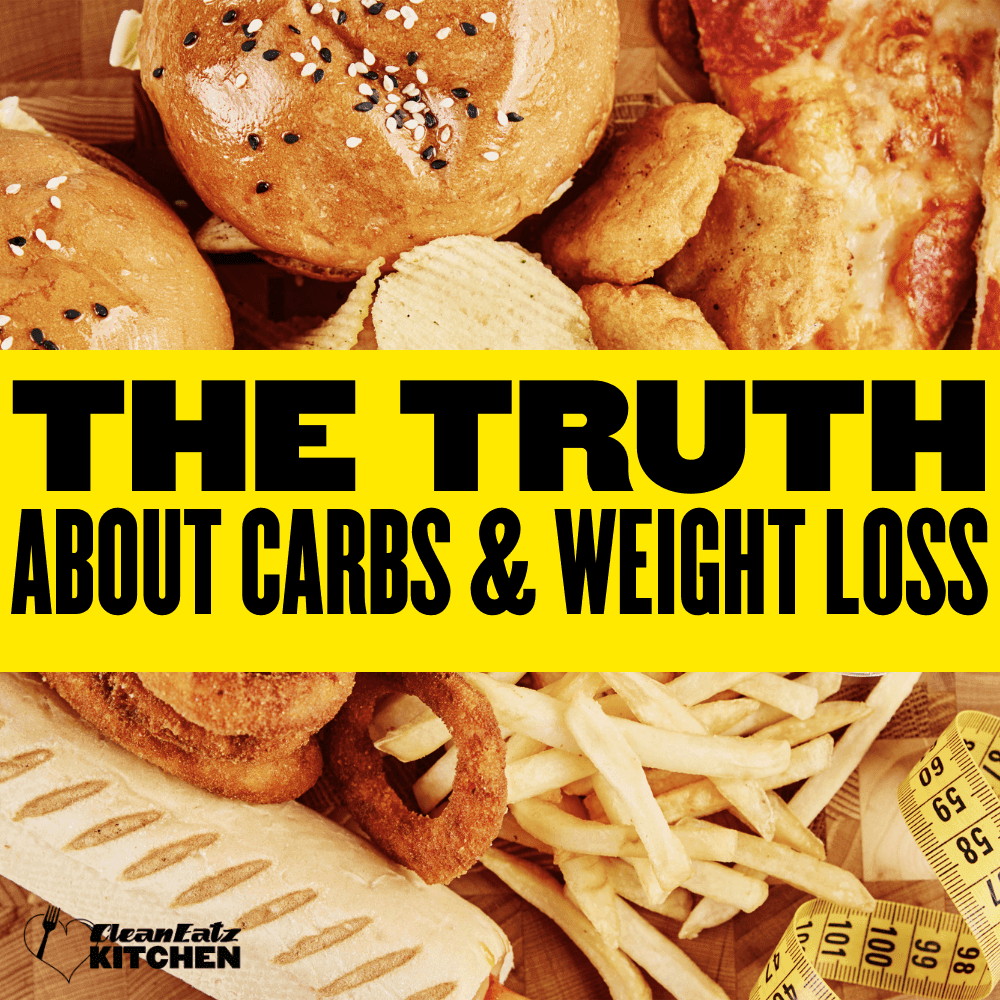

Quick Answer: Carbs don't make you gain weight on their own. Fat gain comes from eating more calories than you burn, and in long-term trials people lose about the same amount of weight on lower- and higher-carb diets. Two things make carbs seem guilty: they're stored with water, so a carb-heavy day can bump the scale overnight, and refined carbs like sugary drinks and white bread are easy to overeat. Fiber-rich carbs in measured portions, paired with protein, fit well in a weight loss plan.
Table of Contents
Do carbs make you gain weight?
Not by themselves. Your body gains fat when you take in more energy than you use over weeks and months, and carbohydrates are just one source of that energy, alongside fat and protein. A gram of carbohydrate has 4 calories, the same as protein and less than half the 9 calories in a gram of fat.
The best evidence comes from trials that compare diets head to head. In the DIETFITS trial, 609 adults followed either a healthy low-carb or a healthy low-fat diet for a year, and weight loss was not significantly different between the groups.1 An earlier two-year trial of 811 adults found the same thing across four diets with different amounts of fat, protein and carbohydrate: the diet people could stick to mattered more than its carb content.2
So why do so many people feel that carbs make them gain weight? Two real effects explain most of it.
Why the scale jumps after a high-carb day
Your body stores carbohydrate as glycogen in your muscles and liver, and each gram of glycogen is stored with at least 3 grams of water.3 A typical adult holds roughly 600 grams of glycogen.3
That has two effects people often misread:
- Cut carbs and the scale drops fast. As glycogen stores shrink, the water stored with them goes too. Much of the quick loss in the first week of a low-carb diet is water, not fat.
- Eat a carb-heavy meal and the scale goes up. Refilling glycogen pulls water back in, so a pasta dinner or a holiday weekend can add a pound or more by morning without any meaningful change in body fat.
Neither one is fat gain or fat loss. Watch your weekly trend rather than any single morning's number.
Not all carbs act the same
"Carbs" covers everything from lentils to soda, and the type makes a real difference over time.
Starches: rice, potatoes, oats, pasta, bread and tortillas.
Sugars: naturally occurring sugars in fruit and dairy, plus added sugars in drinks, desserts and sauces.
Fiber: the part of plant foods your body can't fully digest. Fiber slows how fast your stomach empties and triggers fullness hormones, which helps curb appetite.4 For more, see our Ultimate Guide to Dietary Fiber.
A Harvard study that followed more than 136,000 adults for up to 28 years found that the type of carb tracked with weight change. People who ate more refined grains, added sugar and starchy vegetables over time gained more weight. People who ate more fiber, whole grains, fruit and non-starchy vegetables gained less.5 That's an observational study, so it shows a link rather than proof of cause, but it matches what trials show about fullness and overeating.
If you're wondering whether carbs are bad for your health more broadly, not just your weight, see Are Carbs Bad for You?
How many carbs for weight loss?
There's no single number that fits everyone. The National Academies set the acceptable range for adults at 45 to 65 percent of calories from carbohydrate,6 and trials show long-term weight loss is similar across a wide range of carb intakes as long as you keep a calorie deficit.1,2
In practice, a good starting point is 1/2 to 1 cup of cooked grains or starchy vegetables per meal, as part of a plate that also has protein and vegetables. On days you train hard, a little more carbohydrate can help with energy and recovery. Then adjust based on your hunger, energy and weekly weight trend.
Carb timing that can help
Before workouts: Carbohydrates provide quick energy for training.
After workouts: A meal with both protein and carbohydrate helps you recover and refill glycogen.
Evenings: Carbs at night aren't "stored as fat" by default; your total calories for the day matter more. If an evening serving helps you stick to your plan, keep it.
Carbs to eat most often
- Fruits (apples, oranges, bananas, strawberries, blueberries)
- Non-starchy vegetables (broccoli, spinach, peppers, zucchini, asparagus, cauliflower)
- Beans and lentils
- Whole grains (oats, brown rice, quinoa, whole-grain pasta and bread)
- Starchy vegetables and white rice in measured portions (potatoes, corn, squash)
- Dairy (reduced-fat milk, yogurt, kefir)
Pair them with lean protein and plenty of non-starchy vegetables. For a full list of weight-loss-friendly foods, see our guide to the best foods for weight loss.
Carb habits that lead to weight gain
- Sugary drinks: Soda, sweet tea, specialty coffees and large juices add calories without filling you up. They're one of the most consistent links to weight gain in the research.7
- Unmeasured portions: Servings of rice, pasta and cereal easily grow larger than you think. Measure for a week to recalibrate your eye.
- High-calorie add-ons: Creamy sauces, butter and oil often add more calories to a carb dish than the carbs themselves.
- Too little protein: Carb-heavy meals without much protein are less filling. Eating more protein increases fullness and helps preserve muscle during weight loss.8
- Overly strict rules: Cutting carbs completely is hard to sustain. Sticking with an eating pattern predicts success better than its exact carb-to-fat ratio.2
Simple, balanced meal ideas (about 300 to 500 calories)
Chicken rice bowl: 3/4 cup cooked rice, 5 oz grilled chicken, peppers and onions, salsa and a Greek-yogurt drizzle.
Salmon and potatoes: 4 to 5 oz salmon, 4 to 6 oz roasted potatoes, asparagus and a lemon-dill yogurt sauce.
Bean and shrimp salad: 1/2 cup beans, 5 oz shrimp, greens, tomatoes, cucumber and a light vinaigrette.
Oats and protein breakfast: 1/2 cup dry oats cooked, a scoop of whey or a cup of Greek yogurt, berries and cinnamon.
Calories vary with portions and how much oil you cook with.
Make nutrition the easy part
If measuring portions every day isn't realistic, pre-portioned meals do it for you. Our Weight Loss Meal Plan is $89.95 for 10 meals, chosen for you to fit our weight loss criteria: under 500 calories (most around 400), at least 20 grams of protein and under 50 grams of carbs per meal. To pick your own meals, use Build a Meal Plan. For higher-protein options, there's the High Protein Meal Plan, and High Protein Overnight Oats (20 grams of protein) cover breakfast. Every order is one-time, with no subscription.
Frequently asked questions
Do carbs make you gain weight?
Not on their own. You gain fat when you eat more calories than you burn over time, whether those calories come from carbs, fat or protein. In studies that hold calories steady, people lose similar amounts of weight on lower- and higher-carb diets. The type of carb still matters: sugary drinks and refined grains make it easier to overeat.
Why do I gain weight overnight after eating a lot of carbs?
Mostly water. Your body stores carbs as glycogen, and each gram of glycogen is stored with at least 3 grams of water. A carb-heavy day refills those stores, so the scale can jump a pound or more by morning without any real change in body fat.
Can I eat carbs and still lose weight?
Yes. Keep a calorie deficit, measure portions of grains and starchy foods, choose fiber-rich carbs most often, and pair them with protein and vegetables so meals keep you full.
How many carbs should I eat to lose weight?
There's no single number. The National Academies' range for adults is 45 to 65 percent of calories from carbohydrate, and weight loss is similar across a wide range of carb intakes. A practical start is 1/2 to 1 cup of cooked grains or starchy vegetables per meal, adjusted for your hunger, activity and progress.
Do I need to avoid carbs at night?
No. Carbs eaten at night aren't stored as fat by default; your total calories for the day matter more. If an evening serving of carbs helps you stick to your plan or recover from a workout, keep it and measure the portion.
Which carbs are best for weight loss?
Fiber-rich ones: fruit, non-starchy vegetables, beans, lentils and whole grains. In a large Harvard cohort study, eating more fiber and whole grains was linked with less weight gain over time, while more refined grains, added sugar and starchy vegetables were linked with more.
References
- Gardner CD, Trepanowski JF, Del Gobbo LC, et al. Effect of low-fat vs low-carbohydrate diet on 12-month weight loss in overweight adults and the association with genotype pattern or insulin secretion: the DIETFITS randomized clinical trial. JAMA. 2018;319(7):667–679.
- Sacks FM, Bray GA, Carey VJ, et al. Comparison of weight-loss diets with different compositions of fat, protein, and carbohydrates. N Engl J Med. 2009;360(9):859–873.
- Murray B, Rosenbloom C. Fundamentals of glycogen metabolism for coaches and athletes. Nutr Rev. 2018;76(4):243–259.
- Soltani S, et al. The role of dietary fibers in regulating appetite, an overview of mechanisms and weight consequences. Crit Rev Food Sci Nutr. 2024;64(10):3139–3150.
- Wan Y, et al. Association between changes in carbohydrate intake and long term weight changes: prospective cohort study. BMJ. 2023;381:e073406.
- Institute of Medicine. Dietary Reference Intakes for Energy, Carbohydrate, Fiber, Fat, Fatty Acids, Cholesterol, Protein, and Amino Acids. Washington, DC: National Academies Press; 2005.
- Malik VS, Pan A, Willett WC, Hu FB. Sugar-sweetened beverages and weight gain in children and adults: a systematic review and meta-analysis. Am J Clin Nutr. 2013;98(4):1084–1102.
- Dhillon J, et al. The effects of increased protein intake on fullness: a meta-analysis and its limitations. J Acad Nutr Diet. 2016;116(6):968–983.
Disclaimer: This article is for general information only and isn't medical advice. If you have diabetes or another medical condition that affects how you handle carbohydrates, work with your doctor or a registered dietitian on your targets.