5 Weight Loss Challenges Solved by Meal Delivery

Most people know what to eat. The hard part is doing it on a Tuesday at 7 p.m. Five everyday obstacles that stall weight loss, what the research says about each, and where prepared meals help.

Ellie Lopez, LDN, MS
Ellie Lopez, LDN, MSLicensed Dietitian · Jan 29, 2025
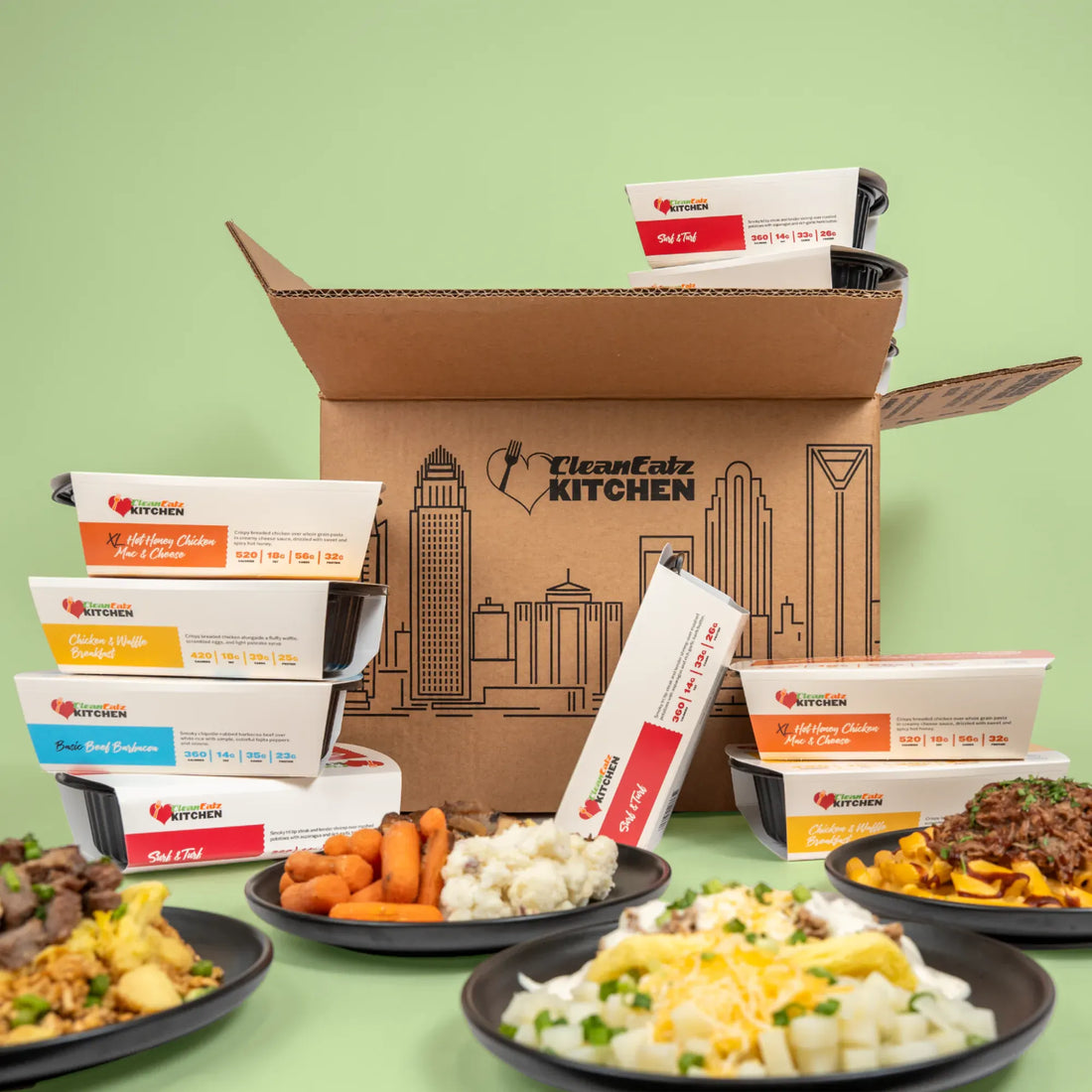
Clean Eatz Kitchen Weight Loss Meal Plan box with labeled, portioned meals
Quick answer

Meal delivery helps with five common weight loss problems: misjudged portions, too little time, unbalanced meals, diet boredom and emotional eating. Americans spend about 43 minutes a day on food prep and cleanup, per the 2025 American Time Use Survey. Pre-portioned, labeled meals cut that time and the estimating. They help with execution, not knowledge, and they cost more than cooking from staples.

Many people don't struggle with weight loss for lack of knowledge. They struggle because consistency is hard in everyday life. The basics sound simple on paper. Applying them when you're tired, stressed, short on time or staring into an empty refrigerator at 7 p.m. is another matter.

Meal delivery services have become a popular option for people trying to lose weight partly because they remove some of those everyday barriers. Here are five common challenges they can help with, what the research says about each, and where a prepared meal does and doesn't help.

Why meal delivery helps with weight loss

Weight loss depends on a calorie deficit you can keep up for months. Almost every obstacle below is a reason that deficit slips on a busy day: the portion was bigger than it looked, there was no time, the meal was mostly carbs, you were sick of chicken and broccoli, or the day was rough.

That's a workload problem, and workload problems have different solutions than knowledge problems. A prepared meal takes the planning, shopping, cooking and portioning off the list. It doesn't do the eating for you, and it doesn't fix sleep, stress or activity. It shrinks the number of decisions you have to get right each day.

1

Portion control is harder than you think

Portions
250 to 630 calories per meal, every one labeled

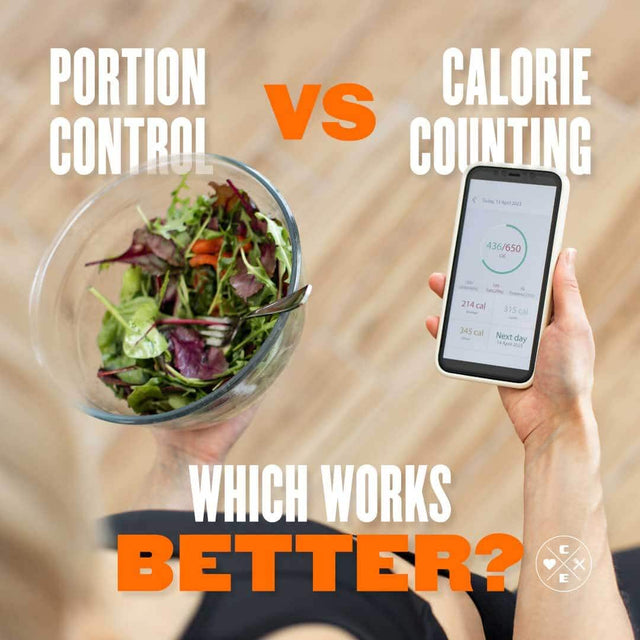
If you've ever poured yourself a serving of cereal or pasta, there's a good chance you ended up with more than one serving without realizing it. People misjudge portion sizes often, especially with calorie-dense foods such as nuts, oils, cheese and nut butters. A small handful can hold more calories than you'd expect when you estimate instead of measure. A 2022 systematic review of 29 studies and 2,964 adults found that portion misestimation and forgotten foods were the most common reasons self-reported intake was wrong, in both directions.

Bigger portions also get eaten. A Cochrane review of 58 studies and 6,603 people found that people consistently ate more when served larger portions, packages or plates. The authors estimated that cutting exposure to larger sizes across the whole diet could trim 144 to 228 calories a day for UK adults and children.

This matters because a sustained deficit is usually necessary for weight loss. When portions are regularly underestimated, that deficit gets much harder to keep, even when the food itself is healthy.

Pre-portioned meals reduce the problem a lot. Each meal has a set portion and labeled nutrition. Our current menu (October 2026) runs from 250 to 630 calories a meal, and every meal's calories, protein, carbs and fat are on our Nutrition Info page. There's less measuring and less doubt about how much you ate, which makes daily intake easier to track.

Over time, eating set portions can also give you a better sense of what a serving looks like, and for some people that carries over to the meals they cook. For the foods worth prioritizing, our complete guide to the best foods for weight loss covers what to put on the plate.
2

There's never enough time

Time
About 43 minutes a day on food prep & cleanup

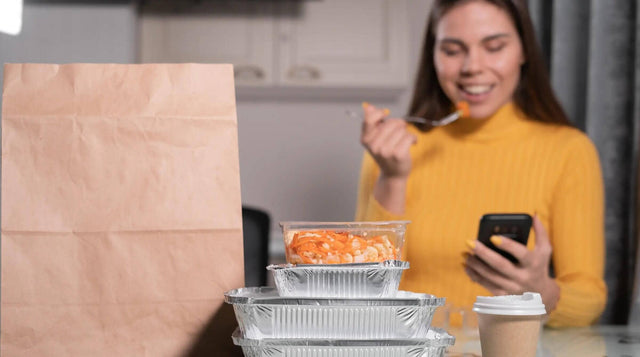
Time is a real barrier for many households. In the 2025 American Time Use Survey, people in the United States averaged 0.71 hours, about 43 minutes, a day on food preparation and cleanup. Only about 65% did any on a given day, and those who did averaged 1.09 hours, about 65 minutes. That doesn't count meal planning, grocery shopping or the mental effort of deciding what to cook.

Time pressure explains why healthy intentions so often give way to takeout, convenience foods or a last-minute restaurant meal. After a long day, even a simple meal can feel like too much. In that moment, the easiest option wins.

Meal delivery changes that equation. Most of the planning and preparation is done before the box arrives. Our meals come frozen and heat in a few minutes in the microwave, with nothing else to prep. That time can go to exercise, sleep, family or simply decompressing after work.

This isn't only about convenience. It's about whether the plan survives. An approach that demands too much time and mental energy is harder to keep going, and one that feels manageable day to day is easier to stick with. If you'd rather keep cooking but faster, our complete meal prep guide covers strategies for any schedule.

3

Balancing nutrition is complicated

Nutrition
20 to 55g protein per meal on our current menu

Eating fewer calories is only half the equation. Those calories also need to come from a balanced mix of protein, carbohydrates and fat to keep you full, fuel your day and cover your nutrient needs. Poorly balanced meals leave people less satisfied, lower on energy and more likely to fight cravings later.

Designing meals that are both balanced and on target for calories is hard. It takes some knowledge of food composition, portioning and meal structure, plus regular adjustments. Many people don't have the time, interest or nutrition background to do it consistently.

Professionally designed meals take on most of that work. Ours are chef-cooked, portion-controlled and built by a registered dietitian. On our current menu, protein runs from 20 to 55g a meal, and 14 of the 32 meals come in under 500 calories with 30g or more of protein. With structured weight loss meal plans, much of the nutritional planning is done before you open the freezer, which makes eating well more manageable.

4

Diet boredom kills consistency

Variety
32 meals on our current menu

A common pattern: someone starts eating healthier, finds a few meals they like and repeats them. For a week or two that works. Then boredom sets in. The grilled chicken and broccoli that felt fine at the start feels like a chore a few weeks later, and less structured choices start looking better.

That isn't a willpower problem. Repetition reduces enjoyment, and many people find it harder to stay consistent when meals feel monotonous. A chicken breast with steamed broccoli is nutritionally excellent and psychologically miserable.

A wider menu helps. Our current menu (October 2026) has 32 meals across cuisines, and 11 new meals were added to Build A Meal Plan this fall, so you can rotate without hunting for new healthy recipes. If protein is your priority, the High Protein Meal Plan adds 2 extra ounces of meat to each meal.

A note on gluten, since people ask: we don't offer a gluten-free plan. The Nutrition Info page has a Gluten/Wheat filter, but our meals are made on shared equipment, so we don't recommend them for anyone with celiac disease or a severe gluten reaction.

Variety and planning seem to go together. In a 2017 study of 40,554 French adults, people who planned their meals ahead had more varied diets, better diet quality and lower odds of obesity than people who didn't. It was a cross-sectional study, so it shows an association, not cause and effect. Variety isn't essential for everyone, but for many people it makes a healthy pattern more satisfying and easier to keep.

5

Emotional eating makes healthy eating harder

Stress
About 64% of stressed adults ate emotionally in one study

Stress, boredom, anxiety, loneliness and other emotions can drive eating that has little to do with physical hunger. Emotional eating also tends to favor energy-dense comfort foods over meals chosen for hunger or nourishment. A 2020 review found that this kind of eating predicts later weight gain in adults.

It can also become a cycle: stress, food for comfort, frustration afterward, more stress. In a 2022 survey of 2,333 adults during the pandemic, nearly 64% of those reporting stress were emotional eaters, and emotional eating scores rose with every point of perceived stress. It was one cross-sectional survey of mostly young adults in Ecuador, so treat it as a signal, not a universal rate. It does show how the pattern gets harder to break as stress climbs.

Part of what makes emotional eating hard is the decision gap. In a moment of stress or overload, a deliberate food choice feels much harder than it does on a calm day.

Pre-planned meals narrow that gap. When a balanced meal is already chosen, cooked and waiting in your freezer, there's one less decision to make in a vulnerable moment. The feeling may still be there. A prepared meal on hand makes it easier to choose it over takeout or a sleeve of cookies.

For more on eating well through high-stress stretches, see our guide to snacking smart on stressful days and our list of 29 healthy snacks for weight loss for between meals. Movement helps with stress too, and our complete exercise guide for weight loss is a good place to start.

When to get support: If emotional eating feels out of your control, or comes with binges you can't stop, talk with your doctor, a registered dietitian or a therapist. A meal plan helps with the logistics. It isn't a treatment.

At a glance

ChallengeThe numberHow meal delivery helps
1. Portion control is harder than you think144 to 228 cal a daySet portions, labeled nutrition
2. There's never enough timeAbout 43 min a dayHeat in a few minutes
3. Balancing nutrition is complicated20 to 55g proteinBuilt by a registered dietitian
4. Diet boredom kills consistency32 mealsRotate without new recipes
5. Emotional eating makes healthy eating harderAbout 64%A planned meal in the freezer

The five challenges side by side, with the number that makes each one real.

How to choose a weight loss meal delivery service

Meal delivery is a tool that reduces friction around healthy eating. The challenges it helps with are real obstacles that make weight loss harder to sustain. By helping with portions, time, meal structure, variety and the decision fatigue around food, it can make consistency easier to keep.

When you choose a service, look for:

  • Calorie-conscious options with full nutrition published for every meal.
  • Enough menu variety to keep meals interesting for more than a few weeks.
  • Flexibility that fits your routine, such as no subscription and the option to pick your own meals.
  • Honest dietary labeling. If you need a medical diet, check how allergens and gluten are handled before you order.

The Build Your Meal Plan option at Clean Eatz Kitchen lets you pick meals one by one, at $8.99 to $13.99 each, while keeping set portions and clear nutrition. Our Weight Loss Meal Plan starts at $89.95 for 10 meals, about $9.00 a meal, and drops to about $7.56 a meal at 30 meals. Shipping is free on meal plans to the contiguous 48 states, and there's no subscription.

Credit where it's due: cooking from staples is cheaper per serving than any prepared meal, including ours. If time isn't your bottleneck, a few cooking habits may do more for you than a delivery box. Many people do both, cooking on weekends and keeping prepared meals for the busiest nights.

The best weight loss approach is the one you can stick to. For some people, meal delivery makes that consistency more realistic than starting from scratch every day.

Sources

  1. Whitton et al., contributors to misestimation of food intake, Adv Nutr 2022
  2. Hollands et al., portion, package or tableware size and consumption, Cochrane Database Syst Rev 2015
  3. U.S. Bureau of Labor Statistics: American Time Use Survey, Table 1, 2025 annual averages
  4. Ducrot et al., meal planning, food variety, diet quality and weight status, Int J Behav Nutr Phys Act 2017
  5. Konttinen, emotional eating and obesity in adults, Proc Nutr Soc 2020
  6. Carpio-Arias et al., perceived stress and emotional eating, Clin Nutr ESPEN 2022

Frequently asked questions

Can meal delivery services really help with weight loss?

They can help some people. Meal delivery reduces several common barriers to consistent eating: portion uncertainty, nutrition planning, time pressure, meal boredom and decision fatigue. Pre-portioned meals with clear nutrition make it easier to hold a calorie deficit. They don't replace sleep, activity or a doctor's care, and they cost more than cooking.

How do pre-portioned meals help with weight loss?

Research shows people often misjudge portions, especially with calorie-dense foods. A 2022 review of 29 studies found portion misestimation among the most common reasons reported intake was wrong. Pre-portioned meals give you a set serving and labeled nutrition, so you can track intake without measuring or estimating everything yourself.

What should I look for in a weight loss meal delivery service?

Clear nutrition for every meal, portions that match your goals, enough variety to stay interesting and flexibility that fits your routine. Match it to your dietary needs, such as higher protein. If you need gluten-free food for celiac disease, check the kitchen's equipment, since many services, ours included, use shared equipment.

How does meal delivery help with emotional eating?

Pre-planned, ready-to-heat meals reduce the number of food decisions you face when you're stressed or tired. The emotion may still be there, but a prepared meal in the freezer makes it easier to choose a structured meal over takeout or comfort food. If emotional eating feels out of control, talk with a professional.

Tap a meal count to add

30 meals work out to $7.56 a meal

View plan details

Tap a meal count to add

18 meals work out to $8.82 a meal

View plan details