
Benefits of burpees
Benefits of burpees: Form, muscles worked & variations
A full-body conditioning move with no equipment, at about 13 calories a minute going hard. How to do one cleanly, which variation fits your level and how to program them without wrecking your joints.
- Free Shipping on Every Meal PlanFree Shipping
- Up to 20% Off 30-Meal PlansUp to 20% Off
- Chef Cooked, Dietitian BuiltDietitian Built
- Heat & Eat in MinutesHeat & Eat

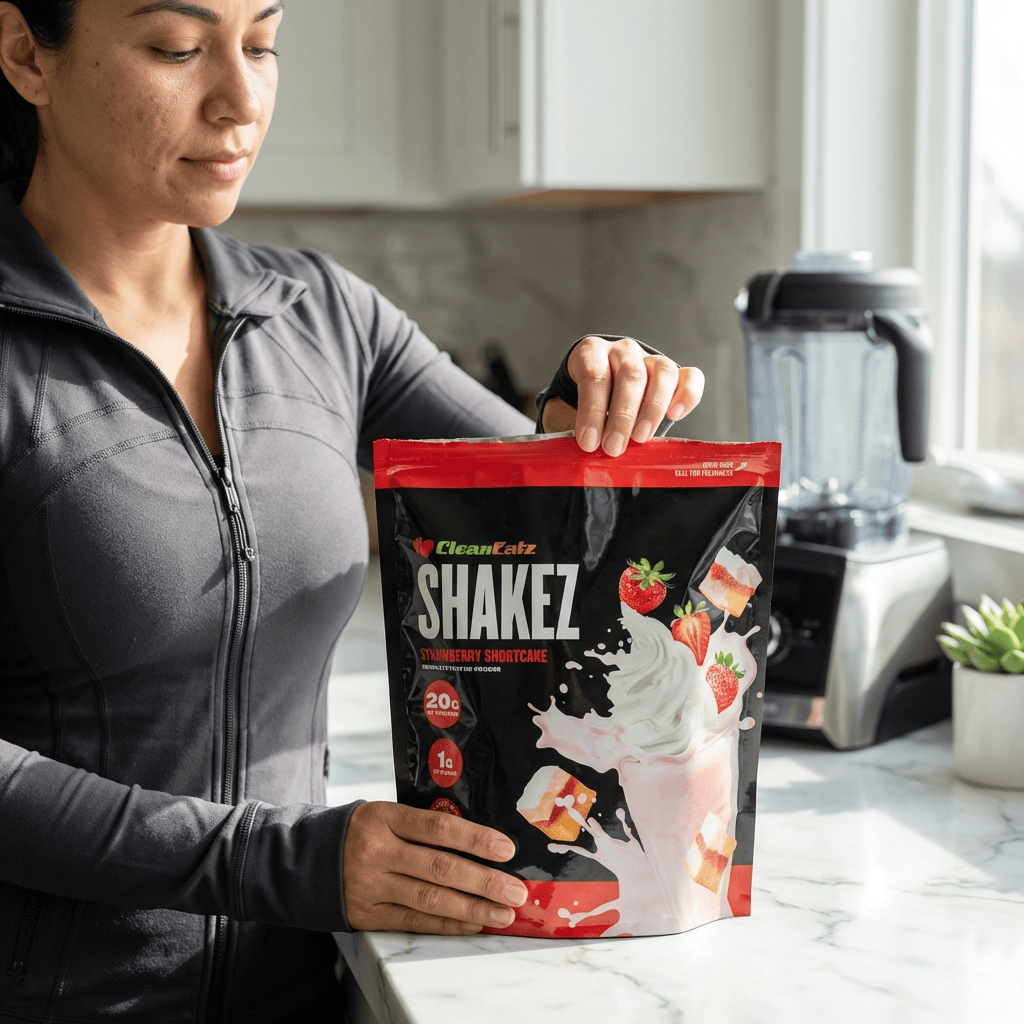
Burpee benefits for fitness & fat loss
Are burpees actually worth doing?
Quick answer
Yes, for conditioning. They work your whole body, need no equipment and burn about 13 calories a minute at 150 pounds during hard intervals. The afterburn is small, though. Nearly all the calories come from the work itself.
The case for burpees comes down to efficiency. In a single rep, you're working your quads and glutes during the squat and jump, your chest, shoulders and triceps during the push-up, and your core throughout to hold it all together. Very few exercises pack that much muscle engagement into one motion.
The calorie number is real but worth checking. The 2024 Adult Compendium of Physical Activities lists high-intensity interval burpees at 11 METs. That works out to about 13 calories a minute at 150 pounds and about 16 at 180 pounds, which are the minutes you're actually moving hard. Calisthenics at a vigorous but steadier effort sits at 7.5 METs, or about 9 to 11 calories a minute.
Now the arithmetic on a real session. Twelve rounds of 30 seconds on and 30 seconds off is 6 minutes of burpees, or about 78 calories at 150 pounds, plus a little for the walking. That's useful, and it's also less than a tablespoon of olive oil, at about 120 calories.
Then there's the afterburn. Your body does keep using extra oxygen after hard exercise, which exercise scientists call excess post-exercise oxygen consumption, or EPOC. It's often sold as the reason burpees melt fat. A review of the EPOC research found it accounts for only 6 to 15 percent of the oxygen cost of the exercise, and called the earlier optimism about its role in weight loss "generally unfounded." Intermittent exercise may run a little higher, but count the calories you burn during the set, not after.
What intense exercise does well is improve fitness in less time. In a 12-week trial, sedentary men who did 10-minute sprint interval sessions improved fitness and insulin sensitivity as much as men who did 50 minutes of steady cycling. It was small, 25 men, and those sprints were on a bike, not burpees.
Burpees themselves have been tested less. In a study of 43 active adults, very short burpee intervals over 5 days improved vertical jump, while sprint intervals improved running performance and burned more energy. Neither changed body composition or blood pressure, which isn't surprising after so few sessions.
Broader evidence favors getting some of your activity at this effort. In a study of 204,542 Australian adults, people who got 30 percent or more of their activity from vigorous exercise had a 13 percent lower risk of death over about 6.5 years than people who got none, at the same total activity. That's observational, so notable, but not causal. And it covers vigorous exercise in general, not burpees.
Your blood pressure may notice too. In a small crossover study of 23 women, one 50-minute class of step aerobics and bodyweight exercises lowered systolic blood pressure for at least 30 minutes afterward. No burpees were involved, so treat it as a signal for this style of training.
The practical benefits count as well. Burpees need no equipment and minimal space. You can do them in a hotel room, a park or your living room, which removes one of the most common exercise barriers: "I don't have time to get to the gym."
Muscles worked by burpees
What muscles do burpees work?
Quick answer
Nearly all of them. The primary movers are your quads, glutes, chest, shoulders and triceps. Your core stabilizes every transition, and your calves, lats and hip flexors assist. That's why one set feels so demanding.
Burpees engage the body comprehensively. The primary movers are the ones involved in squatting, planking, pushing and jumping. Your core works throughout to stabilize the transitions, and your calves, lats and hip flexors assist the movement.
| Phase | Main muscles |
|---|---|
| Squat & jump | Quads, glutes, with calves assisting |
| Plank | Core, with hip flexors and lats assisting |
| Push-up | Chest, shoulders, triceps |
Muscles worked in each phase of a burpee
This full-body recruitment is why burpees feel so demanding. You're not isolating one muscle group while others rest.
How to do a burpee with proper form
How do you do a burpee with proper form?
Quick answer
Stand, squat with hands under your shoulders, step or jump back to a straight plank, add a push-up if you like, bring your feet forward, then stand or jump. If your hips sag, scale back to a variation you can do cleanly.
Good form protects your joints and makes sure you're getting the full benefit of the movement. Here's the sequence:
- Start standing with feet about hip-width apart. Brace your core before you begin.
- Hinge and squat down, placing your hands on the floor directly under your shoulders, not far out in front of you, which puts unnecessary stress on your wrists.
- Step or jump your feet back into a solid plank position. Your body should form a straight line from head to heels, with ribs pulled down and glutes lightly engaged.
- Perform a push-up (optional), keeping your elbows at about 45 degrees from your body rather than flaring out wide.
- Step or jump your feet forward under your hips, keeping your heels down as you rise.
- Stand or add a vertical jump, landing softly with knees tracking over your toes.
The most important cue: move as one controlled unit. If your hips sag in the plank or your lower back arches, the rep doesn't count. Scale back to a variation you can do cleanly.
Burpee variations for every fitness level
Which burpee variation should you start with?
Quick answer
Start with step-back burpees if you're a beginner or your joints complain, since there's no jump at all. Incline burpees ease your wrists and shoulders. Add the push-up and the jump only once the plain version stays clean.
One of the best things about burpees is how easily they scale. If standard burpees are too demanding right now, that's fine. These are legitimate progressions, with less impact or complexity.
| Variation | What changes | Best for |
|---|---|---|
| Step-back burpee | No jumping, one foot at a time | Beginners, joint concerns |
| Incline burpee | Hands on a bench, box or sturdy chair | Sore wrists or shoulders |
| No-push-up burpee | A brief plank replaces the push-up | Building conditioning first |
| Half burpee (sprawl) | Feet jump in and out, no standing | Keeping the heart rate high |
Burpee variations by what they change
Step-back burpees remove the jump entirely. You step one foot back at a time into plank, then step forward to stand. This greatly reduces impact on your knees and suits beginners or anyone with joint concerns.
Incline burpees use a bench, box or sturdy chair for your hands. This reduces the load on your wrists and shoulders while still training the movement pattern.
No-push-up burpees skip the push-up. You simply hold a brief plank before jumping or stepping back to standing, which builds conditioning before you add upper-body strength demands.
Half burpees, or sprawls, stay low: from plank, jump your feet in and out repeatedly without ever standing. This keeps your heart rate high while reducing overall complexity.
For more advanced athletes, add a target touch, jumping to reach a low overhead mark, or pair burpees with a dumbbell row in the plank position for additional strength work.
How to program burpees into your workouts
How should you fit burpees into a workout?
Quick answer
Pick one intent per session. Beginners can do 5 to 7 step-backs each minute for 10 minutes. For conditioning, try 30 seconds on and 30 off for 8 to 12 rounds. After lifting, do 3 sets of 8 with no jump.
The biggest mistake people make with burpees is treating them like a race rather than a training tool. Pick one intent per session and execute it well.
| Goal | Format | Volume |
|---|---|---|
| Beginners | EMOM (every minute on the minute) | 5 to 7 step-backs a minute for 10 minutes |
| Fat-loss conditioning | 30 seconds on, 30 seconds of walking | 8 to 12 rounds |
| Finisher after strength | Controlled sets with no jump | 3 sets of 8 |
Three ways to program burpees
For beginners: try an EMOM. Set a timer for 10 minutes and do 5 to 7 step-back burpees at the start of each minute, walking during whatever time remains. This builds work capacity without destroying your form.
For fat-loss conditioning: use intervals, 30 seconds of burpees followed by 30 seconds of walking, repeated for 8 to 12 rounds. The key is a pace you can hold across all rounds, not going all-out in round one and collapsing by round four.
As a finisher after strength training: keep the volume modest, 3 sets of 8 controlled reps with no jump, to raise your heart rate without frying your legs after squats or deadlifts.
Whatever format you choose, prioritize quality reps. The moment your form breaks down, stop or switch to an easier variation.
Common burpee mistakes to avoid
What burpee mistakes should you watch for?
Quick answer
Four show up most, especially when you're tired: the worm push-up, landing with your heels up, an arched lower back in the plank and volume creep. Fewer clean reps beat more sloppy ones every time.
Even experienced exercisers make form errors with burpees, especially when fatigue sets in.
The "worm" push-up happens when your chest drops before your hips, creating a wave-like motion. Keep your ribs tucked and move as one plank throughout the push-up.
Landing with heels elevated puts excessive stress on your knees. When you jump your feet forward, make sure they land flat under your hips so you can drive through your heels to stand.
An arched lower back in plank usually means your core isn't braced. Squeeze your glutes lightly and exhale to set your ribs before jumping back.
Volume creep is the tendency to keep adding reps even as form deteriorates. More reps done poorly isn't better than fewer reps done well. Scale back or rest when quality drops.
Who should modify or skip burpees
Who should modify or skip burpees?
Quick answer
Anyone with wrist, shoulder, knee or lower-back issues should choose an incline or step-back version and skip the jump. Pregnant and postpartum exercisers need extra care. If you're new to exercise, start with 2 to 3 sets of 6 to 8 reps.
Burpees aren't for everyone in their standard form, and that's fine.
If you have existing wrist, shoulder, knee or lower-back issues, choose an incline or step-back variation and skip the jump. You keep most of the conditioning with less joint stress.
Pregnant and postpartum exercisers should prioritize pressure management and watch for core symptoms like doming or leaking. Incline or half burpees are typically better choices during this period.
If you're new to exercise entirely, start conservatively: 2 to 3 sets of 6 to 8 reps, two or three times per week. Rest days matter as much as training days.
Fueling burpee workouts & next steps
What should you do next?
Quick answer
Treat burpees as one tool, not the whole toolbox. Pick the variation you can do cleanly, program it two or three times a week, and eat enough protein and calories to recover between sessions.
Burpees deserve their reputation as one of the most efficient conditioning exercises available. They train your entire body, require no equipment, scale from beginner to advanced and fit into almost any workout format. The key is respecting your current fitness level, putting form ahead of volume, and using them as one tool in a broader program.
High-intensity conditioning work like this also demands proper nutrition. Without enough protein and calories, you won't recover well between sessions, and your performance will suffer. If you're training hard and don't have the energy to cook afterward, that's a workload problem, not a knowledge problem.
Our High Protein Meal Plan adds 2 extra ounces of meat per meal, or about 10 more grams of protein than our regular recipes. Or build your own plan from the meals that fit the macros you need.
 Make it easy withHigh Protein Meal PlanFrom $63.00View plan
For a comprehensive look at how to structure cardio, strength training and conditioning for weight loss, check out our Complete Exercise Guide for Weight Loss.
Burpee workout FAQ
Questions about burpees, answered
Are burpees good for fat loss?
They can help, because they raise your heart rate quickly and work well in interval formats, burning about 13 calories a minute at 150 pounds. Exercise alone doesn't create fat loss, though, and the afterburn is small. Your eating sets your calorie deficit, so pair burpees with a plan for that.
How many burpees should I do per workout?
For most people, 30 to 80 quality reps per session is plenty, depending on the variation and your conditioning level. If you're new to exercise, start with 2 to 3 sets of 6 to 8 reps. Quality matters more than quantity, so stop or scale back when your form slips.
How often should I do burpees?
Two to three times per week is enough for most people. Rotate variations and keep at least one day between hard burpee sessions to allow enough recovery. If your wrists, knees or lower back start complaining, drop to an incline or step-back version before you add more volume.
Do burpees build muscle?
They're better suited to conditioning than muscle building. They can help you stay active during fat-loss phases, but for real muscle growth, pair them with progressive resistance training and enough protein. See our guide on muscle-building mistakes to avoid for what tends to hold people back.
What can I do instead of burpees if they hurt my joints?
Try squat thrusts, which have no push-up or jump, incline burpees with your hands on a bench, or step-back variations. Kettlebell swings and rowing intervals are good conditioning alternatives. If the pain continues, talk with a healthcare professional before you go back to any of them.
More exercise & conditioning guides
Keep reading
 Jason Nista · Feb 7, 2023
 Ellie Lopez, LDN, MS · Oct 9, 2026
Sources
On this page