

Building muscle and losing fat use the same protein foods, but not the same strategy. To build muscle, aim for about 1.6 to 2.2g of protein per kilogram of body weight a day with a modest calorie surplus, and fattier picks like salmon, whole eggs and ribeye fit easily. To lose fat, keep protein in the upper part of that range, about 1.8 to 2.0 g/kg, and lean on lower-calorie sources like chicken breast, skyr, cottage cheese and legumes so every calorie works harder.
Eating more protein is one of the most common recommendations for building muscle and losing fat. The advice is sound, but the protein strategy that works best depends on your goal. Building muscle and losing fat call for different approaches to how much you eat, how you portion it, and which protein-rich foods fit the rest of your plate.
This guide puts the two goals side by side: the daily targets from the research, the animal and plant foods that do the most work, the timing habits worth keeping, and the mistakes that quietly cost you results. If you want a personal number first, our protein intake calculator will give you one.
Protein for building muscle vs losing fat verdict
Same foods, different math
There's no single best protein source for both goals, because the goals pull calories in opposite directions. Protein needs are similar. What changes is how much room you have for the fat and carbs that come along with it.
Building muscle wins on flexibility. Losing fat needs protein at the upper end of the range and the leanest sources you enjoy.
Your body needs two things to build new muscle protein: amino acids, and enough energy to pay for the process. For many people a modest calorie surplus makes that easiest, so a muscle-building plan has room for fattier protein foods. A ribeye steak, a salmon fillet or three whole eggs fit without much thought.
Fat loss is the opposite problem. You're in a calorie deficit, and losing fat without losing muscle takes protein near the top of the recommended range. A review by Phillips and van Loon put protein for athletes in an energy deficit at about 1.8 to 2.0g per kilogram a day, because higher intakes help protect lean mass while calories are short. Since every calorie counts, a lean, grilled chicken breast usually fits a fat-loss plan better than a ribeye.
Meal delivery can help with either goal, because the protein and calories are printed on every label. We'll come back to that at the end.
Muscle building vs fat loss protein at a glance
Two goals, side by side
This table sets the two goals next to each other on the questions people ask most. A check mark shows which goal the row favors, and rows without one apply to both.
The gram figures use a 180-pound (about 82kg) person as the example. Scale them to your own weight.
| Building muscle | Losing fat | |
|---|---|---|
| Calories | A modest surplus | A deficit |
| Daily protein | 1.6 to 2.2 g/kg (0.7 to 1.0 g/lb) | 1.8 to 2.0 g/kg (0.8 to 0.9 g/lb) |
| At 180 lb | About 131 to 180g a day | About 147 to 163g a day |
| Per meal | About 0.4 g/kg, 33g at 180 lb, over 4 meals | The same, with leaner sources |
| Fattier protein | Ribeye, salmon, whole eggs fit easily ✓ | Smaller portions |
| Lean protein | Works well | Chicken breast, skyr, venison, cottage cheese ✓ |
| Fiber-rich plant protein | Useful, but filling | Fullness on fewer calories ✓ |
| Timing | Total per day matters most | Total per day matters most |
We built this from published research, not opinion: sports nutrition reviews and position stands, the PROT-AGE recommendations for older adults, the NIH Office of Dietary Supplements, and USDA FoodData Central for every food number. We compared the two goals on:
- Daily protein target
- How much room there is for fat and calories around the protein
- Which foods fit best
- How much meal timing matters
- What changes after 65
Muscle building & fat loss protein side by side
Row by row
The table gives the quick answer. This breakdown explains each row, then ranks the protein foods themselves.
Losing fat asks for more protein, building muscle allows more calories, and the food list and timing rules are shared.
How much protein each goal needs
Higher: Losing fatFor muscle building, a 2018 review by Schoenfeld and Aragon recommends at least 1.6g of protein per kilogram of body weight a day, with an upper end of about 2.2 g/kg. That's roughly 0.7 to 1.0g per pound. A 180-pound trainee would aim for about 131 to 180g of protein a day. Once protein needs are met, eating enough total calories becomes the bigger lever for continued growth.
During fat loss, protein needs climb. Phillips and van Loon put the target at about 1.8 to 2.0 g/kg (about 0.8 to 0.9g per pound) for athletes in an energy deficit, which works out to roughly 147 to 163g a day for the same 180-pound person, now eaten inside fewer total calories. Lean lifters in a hard cut may need more still. A review of natural bodybuilding contest prep by Helms and colleagues suggested 2.3 to 3.1g per kilogram of lean body mass.
Those targets sit well above the baseline. The Harvard T.H. Chan School of Public Health notes the adult minimum of 0.8 g/kg, just over 7g for every 20 pounds, and the NIH Office of Dietary Supplements puts athletes at 1.2 to 2.0 g/kg, with more possible during intense training or when cutting calories.
Calories around the protein
More room: Building muscleHigher-fat protein foods fit more easily into a muscle-building diet because calories are plentiful. Fatty fish, whole eggs, whole-milk dairy and marbled beef bring useful nutrients along with their protein, and the extra calories help fund growth.
Fat loss rewards leaner choices because every calorie matters. Per 100g cooked, USDA lists roasted chicken breast at about 31g of protein and 165 calories, while 80/20 ground beef carries about 27g of protein and 272 calories. The protein is close. The calorie gap is what decides which one belongs in a deficit.
The best protein foods
Result: Same list, new portionsBoth goals draw from the same list: meat, poultry, fish, eggs, dairy, soy and legumes. High-quality protein matters for both, because the Office of Dietary Supplements notes that all essential amino acids are needed to stimulate muscle protein synthesis. Animal foods and soy cover them on their own, and other plant foods cover them in combination.
The difference is portion and pairing. A muscle-building plate might pair salmon with rice and avocado. A fat-loss plate might pair chicken breast with extra vegetables and a smaller scoop of rice. The rankings below show where each food fits.
Meal timing
Result: Total matters mostTotal daily protein drives most of the result for both goals. In the Helms contest-prep review, protein timing had little effect on fat mass or lean mass once the daily total was met. Even so, it suggested meals of about 0.4 to 0.5 g/kg around training as a practical way to reach that total.
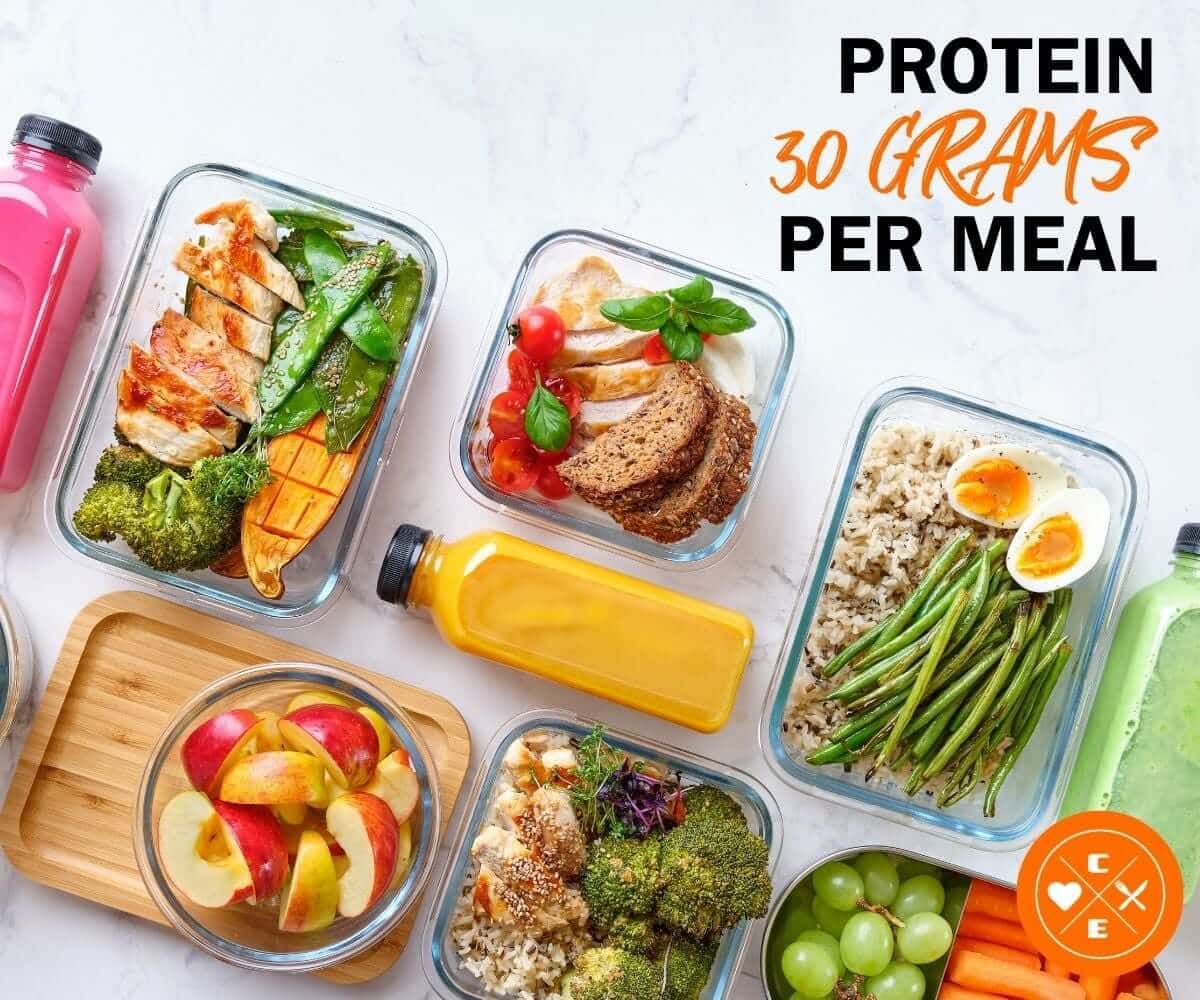
Spreading protein evenly is the simplest habit that helps either goal. Schoenfeld and Aragon suggest about 0.4 g/kg per meal across at least four meals, which is about 33g per meal for a 180-pound person. During a cut, it also keeps each meal filling, which makes the deficit easier to hold. Our guide to protein distribution across meals walks through the 30-gram-per-meal approach.
Protein after 65
Result: Both goals need moreOlder adults have higher protein needs for either goal, because of age-related muscle loss. Older muscle also responds less efficiently to the same protein dose. The PROT-AGE Study Group recommends at least 1.0 to 1.2g of protein per kilogram a day for healthy adults over 65, at least 1.2 g/kg for those who exercise, and 1.2 to 1.5 g/kg for those with acute or chronic illness. People with severe kidney disease are the exception and should follow their doctor.
The evidence keeps building. A 2025 trial in Frontiers in Nutrition gave 126 women aged 60 to 75 with sarcopenia either 1.2 or 0.8 g/kg of protein a day for 12 weeks. The higher intake improved muscle mass and physical function. For an older adult trying to lose fat, holding protein at those levels matters even more.
Animal protein sources ranked for muscle building
Complete protein, plenty of leucine
Animal proteins carry complete amino acid profiles and plenty of leucine, the amino acid most closely tied to switching on muscle protein synthesis. Here's how the main ones rank for building muscle, and how each fits a cut.
- Whole eggs. A large egg has about 6g of protein (USDA). The yolk seems to matter: in a small 2017 study of 10 trained men, whole eggs after lifting raised muscle protein synthesis more than egg whites with the same 18g of protein. For a cut, mix whole eggs with extra whites to trim calories.
- Dairy. Milk protein is a blend of whey, which digests fast, and casein, which digests slowly, so amino acids stay available for hours. Plain nonfat Greek yogurt has about 17g of protein in a 6-ounce container and about 23g in an 8-ounce cup (USDA), plus calcium. In a 2019 trial, untrained young men who ate Greek yogurt through 12 weeks of training gained more strength, muscle thickness and fat-free mass than a placebo group.
- Salmon. A 4-ounce portion of cooked Atlantic salmon has about 25g of protein (USDA) plus omega-3 fats, which Harvard notes are especially good for your heart. It's a great bulking protein, and a fine cutting protein in a smaller portion.
- Fatty beef cuts. Beef provides high-quality protein along with zinc, iron and naturally occurring creatine, about 2g per pound according to the Office of Dietary Supplements. A few servings a week suit heavy training blocks, and leaner cuts take over during a cut.
High-protein meal plans that rotate salmon, lean beef and poultry make it easier to keep fish in the mix without cooking it yourself.
Plant protein sources that work for both goals
Plant protein, chosen well
Plant proteins serve both muscle building and fat loss when you choose and combine them well. Figures below are per cooked cup from USDA FoodData Central.
- Soy foods: Soy comes closest of the common plant foods to the amino acid profile of animal protein, though methionine runs low. A cup of edamame has about 18g of protein, and a cup of tempeh has about 34g. That makes soy useful in both fat-loss and muscle-building plans.
- Lentils, chickpeas & black beans: A cup brings about 14 to 18g of protein and 12 to 16g of fiber (lentils, chickpeas, black beans). Harvard puts a cup of lentils at about 18g of protein and 15g of fiber, with virtually no saturated fat. The fiber supports fullness during fat loss. Pairing legumes with a grain like rice fills in each other's amino acid gaps, so a chickpea and rice bowl is a practical way to raise the protein quality of a meal.
- Quinoa & buckwheat: Both pseudo-grains carry all nine essential amino acids, though not in large amounts. A cup of cooked quinoa has about 8g of protein, so it works best as a base under a bigger protein source.
- Pea & hemp protein powders: Protein per scoop varies by brand, so read the label. Hemp also brings fiber and some omega-3 fat. Many plant powders blend sources, like pea with rice, so the mix covers every essential amino acid. Both work as supplements to whole-food plant protein, especially for vegan athletes who find it hard to reach higher targets from food alone.
A diet built mainly on plant protein takes more planning to reach the higher targets of either goal. Building meals around soy, legumes and whole grains, and adding a protein powder when you need one, gets most people there.
How to time protein intake across the day
Five habits that help
Total daily protein matters most, but a few timing habits make the total easier to reach, especially during fat loss.
- Aim for 30 to 40g at breakfast: You've gone all night without food, and most people eat the least protein in the morning. An egg and Greek yogurt combination gets you there, and so does a ready-made high-protein breakfast.
- Split the rest evenly: The International Society of Sports Nutrition suggests doses of 20 to 40g every 3 to 4 hours. Someone aiming for 180g a day would eat about 45g at each of four meals, or 60g at each of three.
- Put protein in snacks: A protein snack between meals helps with fullness and adds to the daily total.
- Eat after lifting: The same position stand puts the post-workout window anywhere from right after training to about two hours later. It doesn't have to be a shake. A regular meal with the same protein works just as well if it lands in that window.
- Add a slow protein before bed: Casein, the main protein in cottage cheese and Greek yogurt, digests slowly. A systematic review found 20 to 40g of casein about 30 minutes before sleep raised overnight muscle protein synthesis in young men, though the long-term benefit in older adults is less clear. Our guide to protein before bed goes deeper.
Pre & post-workout protein
Small before, solid after
A small protein and carbohydrate snack an hour or so before lifting delivers amino acids during training. A scoop of protein powder with a banana works, and so does a small prepared meal or one of our grab-and-go options. Keep it small and easy to digest, because a large meal right before lifting can upset your stomach.
After training, aim for a solid protein dose. The Office of Dietary Supplements summarizes the Academy of Nutrition and Dietetics and American College of Sports Medicine advice as about 0.3 g/kg of high-quality protein, around 20g for a 150-pound person, within 0 to 2 hours after exercise, then every 3 to 5 hours. Our Shakez Protein Powder has 20g of whey protein and 1g of sugar per scoop if you want something fast.
Protein sources most people underuse
Four easy wins
- Cottage cheese: About 24 to 25g of protein per cup of 2% cottage cheese (USDA), mostly slow-digesting casein. That makes it a good fit before bed, between meals, or as a high-protein base for fruit and nuts. Our look at cottage cheese for weight loss covers more.
- Sardines & canned mackerel: Small oily fish bring protein and omega-3 fats. A 100g serving of Atlantic sardines canned in oil has about 25g of protein and 208 calories (USDA). Canned fish keeps in the pantry, which makes it as easy as our high-protein grab-and-go picks when you're short on time.
- Lean game meats like bison & venison: Per 100g cooked, USDA lists ground venison at about 26g of protein and 187 calories (USDA) and grass-fed ground bison at about 25g and 179 calories (USDA), against 272 calories for 80/20 ground beef. Both add variety to a muscle-building plan, and their lower fat makes them a better fit than standard ground beef for fat loss.
- Skyr & other strained yogurts: Skyr is an Icelandic strained yogurt. One plain skyr in USDA's branded database lists 109 calories and 20g of protein per 8-ounce cup (USDA). Switching between skyr and Greek yogurt through the week keeps breakfasts and snacks interesting without changing your protein total.
Who should prioritize which protein strategy
Pick by your goal
Key takeaways
- Building muscle: about 1.6 to 2.2g of protein per kilogram a day, with a modest calorie surplus
- Losing fat: about 1.8 to 2.0 g/kg, inside a calorie deficit, with lean sources
- Spread protein over at least four meals of about 0.4 g/kg each
- Adults over 65 need at least 1.0 to 1.2 g/kg, and more if they exercise
- The same foods work for both goals, in different portions
Most people move between the two goals over a year, so the most useful skill is adjusting portions rather than swapping foods. Keep the protein steady, and move the calories around it: more rice, oil and fattier cuts during a build, more vegetables and leaner cuts during a cut.
Here's the short version of which strategy fits you right now. If you're not sure, start with your current body weight and the range for your goal.
Use the muscle-building strategy if
- You're eating at or above maintenance and training hard
- You're happy to include fattier protein like salmon, whole eggs and ribeye
- You want 4 or more protein-rich meals a day of about 33g or more
Use the fat-loss strategy if
- You're in a calorie deficit and want to keep the muscle you have
- You want the most protein per calorie from chicken breast, skyr, venison and legumes
- You need meals that keep you full on fewer calories
Mistakes that reduce protein effectiveness
Where results leak
Doses of about 20 to 40g of high-quality protein are generally recommended to make the most of muscle protein synthesis in most adults. Smaller doses still stimulate it, but may be less effective than larger ones. Spreading protein evenly across meals helps you get the most from each one and makes the daily goal easier to reach.
Protein powder is convenient and effective, but it can't replace whole-food protein. Whole foods bring vitamins, minerals, fiber and fullness that powders lack. Use powder to fill a gap, not to build the day.
Hitting a daily protein target consistently is harder than it sounds. Cooking high-protein meals at home takes planning, shopping and time, which most working adults don't have in abundance. Prepared meals with the protein printed on every label take the daily measuring off your plate.
How Clean Eatz Kitchen fits either goal
Labeled protein, either way
Our current menu (October 2026) has 32 meals running from 20g to 55g of protein, with a median of 31.5g. 20 of them have 30g or more and 11 have 40g or more. For fat loss, 14 meals come in under 500 calories with 30g or more of protein. Every number is on our Nutrition Info page.
For muscle building, our High Protein Meal Plan adds 2 extra ounces of meat per meal, about 10g more protein and 50 calories per serving, for meals of about 500 calories or more. It starts at $63 for 6 meals. For snacks and breakfasts, our High Protein Overnight Oats have 20g of protein per pouch for $3.49.
If you'd rather browse every plan, our meal plans cover both calorie levels, so one service can support either phase or the switch between them. Meals arrive frozen and keep for up to 12 months in your freezer, and shipping on meal plans is free.
Protein for muscle vs fat loss bottom line
Keep protein high, move calories
Building muscle and losing fat both run on plenty of protein from the same foods. To build muscle, eat about 1.6 to 2.2 g/kg with a modest surplus, and let fattier sources like salmon, whole eggs and beef help with calories. To lose fat, keep protein at about 1.8 to 2.0 g/kg inside a deficit, and lean on chicken breast, skyr, cottage cheese, game meats and legumes.
Spread it across at least four meals, add a slow protein before bed if it helps, and don't let a powder replace real food. If you'd rather have the protein counted for you, our High Protein Meal Plan and the rest of our meal plans do the math.
Protein for building muscle vs losing fat FAQ
A few questions people ask
Short answers to the questions we hear most, from how much protein to eat in a cut to whether timing really matters.
How much protein do you need to build muscle?
Research reviews recommend at least 1.6g of protein per kilogram of body weight a day, up to about 2.2 g/kg, which is roughly 0.7 to 1.0g per pound. For a 180-pound person, that's about 131 to 180g a day, spread over at least four meals.
Do you need more protein to lose fat?
Usually, yes. In a calorie deficit, about 1.8 to 2.0g per kilogram a day helps protect muscle, which is about 147 to 163g for a 180-pound person. Lean lifters in a hard cut may need more. Choosing lean sources keeps that protein from eating up your calorie budget.
What are the best protein sources for fat loss?
Sources with the most protein per calorie: chicken breast, white fish, plain Greek yogurt, skyr, cottage cheese, egg whites, venison and bison, plus legumes and tempeh, which add fiber for fullness. Fattier choices like salmon and whole eggs still fit in smaller portions.
Does protein timing matter?
Less than the daily total. Spreading 20 to 40g doses across the day, eating protein within about two hours after training, and having some casein before bed can each help a little, but none of them make up for missing your daily target.
Do older adults need more protein?
Yes. The PROT-AGE Study Group recommends at least 1.0 to 1.2g per kilogram a day for healthy adults over 65, at least 1.2 g/kg for those who exercise, and 1.2 to 1.5 g/kg with acute or chronic illness. People with severe kidney disease should follow their doctor's advice.
More protein guides
Keep reading
 Nutrition
Protein Distribution Across Meals: The 30-Gram-Per-Meal Method
 SaVanna Shoemaker, MS, RDN, LD · Jul 31, 2026
 Nutrition
Protein Before Bed: Does It Help Muscle Recovery?
 Tina Sassine, RD, MPH · Sep 22, 2025
 Nutrition
Best Foods for Muscle Growth: What Science Says
 Romaine Rusnak, RD, LDN · Oct 16, 2022
Sources
- Phillips SM, van Loon LJC. Dietary protein for athletes: from requirements to optimum adaptation. J Sports Sci 2011 (Taylor & Francis)
- Phillips & van Loon 2011 (DOI)
- Helms ER, Aragon AA, Fitschen PJ. Evidence-based recommendations for natural bodybuilding contest preparation: nutrition and supplementation. JISSN 2014
- Bauer J et al. Evidence-based recommendations for optimal dietary protein intake in older people: a position paper from the PROT-AGE Study Group. JAMDA 2013
- Bauer et al. 2013 (DOI)
- Schoenfeld BJ, Aragon AA. How much protein can the body use in a single meal for muscle-building? JISSN 2018
- Schoenfeld & Aragon 2018 (Springer)
- Protein, The Nutrition Source, Harvard T.H. Chan School of Public Health
- Academy of Nutrition and Dietetics: Sports and Athletic Performance (the former Protein and the Athlete page now redirects here)
- NIH Office of Dietary Supplements: Dietary Supplements for Exercise and Athletic Performance
- Ishaq I et al. Role of protein intake in maintaining muscle mass composition among elderly females suffering from sarcopenia. Front Nutr 2025
- Reis CEG et al. Effects of pre-sleep protein consumption on muscle-related outcomes: a systematic review. J Sci Med Sport 2021
- Bridge A et al. Greek yogurt and 12 weeks of exercise training on strength, muscle thickness and body composition. Front Nutr 2019
- Kerksick CM et al. International Society of Sports Nutrition position stand: nutrient timing. JISSN 2017
- van Vliet S et al. Consumption of whole eggs promotes greater stimulation of postexercise muscle protein synthesis than egg whites. Am J Clin Nutr 2017 (PubMed)
- USDA FoodData Central: Yogurt, Greek, plain, nonfat
- USDA FoodData Central: Cheese, cottage, lowfat, 2% milkfat
- USDA FoodData Central: Fish, sardine, Atlantic, canned in oil
- USDA FoodData Central: Plain skyr Icelandic yogurt
- USDA FoodData Central: Fish, salmon, Atlantic, farmed, cooked
- USDA FoodData Central: Chicken breast, meat only, roasted
- USDA FoodData Central: Egg, whole, raw
- USDA FoodData Central: Tempeh
- USDA FoodData Central: Edamame, frozen, prepared
- USDA FoodData Central: Lentils, cooked
- USDA FoodData Central: Chickpeas, cooked
- USDA FoodData Central: Black beans, cooked
- USDA FoodData Central: Quinoa, cooked
- USDA FoodData Central: Bison, ground, grass-fed, cooked
- USDA FoodData Central: Deer, ground, cooked
- USDA FoodData Central: Beef, ground, 80% lean, cooked