Eggs for weight loss

Are eggs good for weight loss? Protein, portions & easy meals

Yes, especially at breakfast. One large egg has about 72 calories and 6 grams of protein. What the trials found, how to build a filling plate and five egg meals with the math shown.

  • Free Shipping on Every Meal PlanFree Shipping
  • Up to 20% Off 30-Meal PlansUp to 20% Off
  • Chef Cooked, Dietitian BuiltDietitian Built
  • Heat & Eat in MinutesHeat & Eat
Romaine Rusnak, RD, LDN
Romaine Rusnak, RD, LDNLicensed Dietitian · May 7, 2026
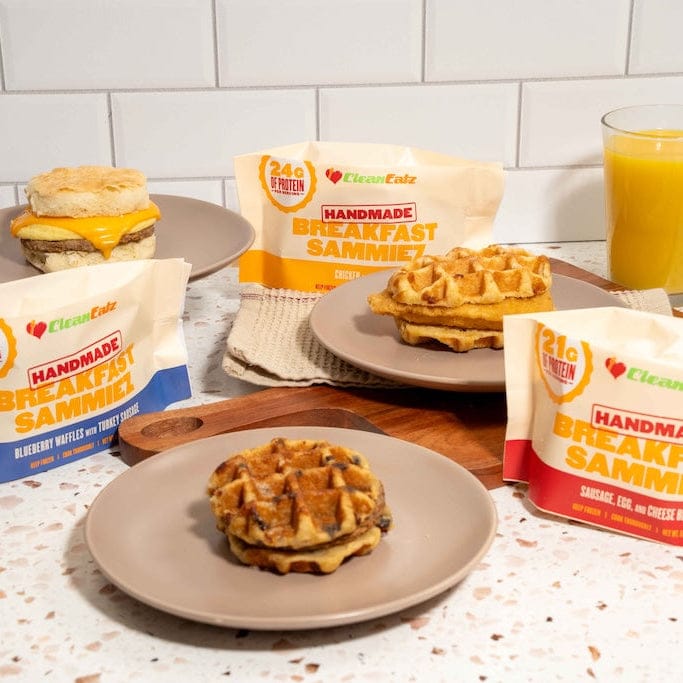
Clean Eatz Kitchen blueberry waffle breakfast sandwich plated with orange juice

Eggs have a reputation problem they don't deserve. For years people worried about the cholesterol and assumed eggs were fattening. Then the pendulum swung, and now they get sold as a fat-loss food.

Neither version holds up. Each egg is about 72 calories, and what the research supports is smaller and more useful: an egg breakfast can leave you fuller than a bagel with the same calories, and that helps when you're already eating in a deficit. Here's what that looks like in numbers, plus how to keep the plate from tripling in calories on the way to the table.

Why eggs work for weight loss

Do eggs actually help you lose weight?

Quick answer

They can, when you're already in a calorie deficit. In an 8-week trial, dieters eating eggs for breakfast lost 2.63 kg against 1.59 kg on bagels. Without the calorie cut, the eggs made no difference.

Start with the fear. A 2025 comprehensive review in Poultry Science concluded that moderate egg intake and dietary cholesterol weren't significantly associated with a higher risk of obesity in healthy adults. It also noted that cholesterol-sensitive people should keep their intake moderate, so the finding has limits, but the fattening label doesn't stick.

Now the hype. The best test is a trial of 152 adults with overweight or obesity, who ate either two eggs or a bagel breakfast with the same calories at least 5 days a week for 8 weeks. Among those also following a reduced-calorie diet, the egg group lost 2.63 kg and the bagel group lost 1.59 kg. That's about 1 kg, or a little over 2 pounds, of extra loss.

Here's the part that gets left out. The same trial had egg and bagel groups who were told not to change their calories, and those two groups showed no significant difference in weight. Their cholesterol and triglycerides didn't differ across groups either.

So eggs don't cause weight loss by themselves. They make a deficit easier to live with. For a full breakdown of how protein-rich foods support weight management, see our complete guide to the best foods for weight loss.

How eggs affect fullness & metabolism

Do eggs keep you full longer?

Quick answer

Probably, at least compared with a bagel. In a 30-woman study, an egg breakfast cut lunch by about 164 calories, and intake stayed lower for the next 36 hours. It's one small study, so treat it as a strong signal.

The weight loss case comes down to fullness. Eggs are rich in protein, and protein is the macronutrient most tied to satiety. When eggs replace a carb-heavy breakfast like cereal or a bagel, many people feel fuller for longer and eat less later on.

The classic study tested this in 30 women with overweight or obesity. They ate an egg or a bagel breakfast with the same calories and the same weight, then lunch 3.5 hours later. After eggs they felt fuller and ate about 575 calories at lunch, against about 739 after the bagel. Energy intake stayed lower for the rest of the day and for the next 36 hours.

Two caveats belong here. Thirty people is a small sample, and everything after lunch came from dietary recall, which is memory rather than a scale. The direction is encouraging. The 164-calorie gap is not a number to bank on every morning.

Then there's the thermic effect. Your body spends more energy digesting protein than it does digesting carbs or fat, and a review of diet-induced thermogenesis puts the cost at about 20% to 30% of protein calories, against 5% to 10% for carbs and up to 3% for fat. Two eggs carry about 50 protein calories, so digesting them costs about 10 to 15 calories. Real, and smaller than a bite of toast.

Egg nutrition at a glance

What's actually in one large egg?

Quick answer

One large egg is about 72 calories, 6.3 grams of protein, 4.8 grams of fat and 0.4 grams of carbs. One egg white is about 17 calories and 3.6 grams of protein, with almost no fat.

Rounded from USDA FoodData Central
ItemCaloriesProteinFat
1 large whole egg (50 g)About 726.3 g4.8 g (1.6 g saturated)
1 large egg white (33 g)About 173.6 gAlmost none
1 whole egg + 2 whitesAbout 10613.5 gAbout 5 g
2 whole eggs + 2 whitesAbout 17819.8 gAbout 10 g

Rounded from USDA FoodData Central

Eggs are about 76% water by weight, which helps keep their calorie density low. There's essentially no carbohydrate, just 0.4 grams an egg.

Beyond the macros, a large egg gives you about 28% of the daily value for selenium, 27% for choline and 19% for vitamin B12, based on USDA FoodData Central. The yolk holds most of those nutrients, along with vitamins A and D. Whites, by contrast, are almost pure protein with virtually no fat or cholesterol.

That's the trade. Whites add protein cheaply in calories, and the yolk is where the nutrition lives. Most people do well with both.

How to build a weight loss egg meal

How do you build an egg meal that lasts?

Quick answer

Use 1 to 2 whole eggs, add 2 whites if you want more protein, load a cup or more of vegetables, then a modest carb of 15 to 25 grams and a measured fat. That runs about 250 to 350 calories.

Eggs alone won't make or break your weight loss. How you prepare and pair them matters more. The goal is a balanced plate that keeps you full for hours without loading up on calories.

  • Start with your protein base. One to two whole eggs is a solid foundation. For more protein without much extra fat, add two egg whites. Two whole eggs plus two whites gets you to about 20 grams of protein for about 178 calories.
  • Load up on vegetables. This is where most people under-deliver. A generous cup or more of non-starchy vegetables, like spinach, peppers, onions, tomatoes, mushrooms or broccoli, adds volume, fiber and micronutrients for few calories. Sauté them in a measured teaspoon of olive oil or simply steam them.
  • Add a smart carb. A small serving of complex carbs rounds out the meal. Think one slice of whole-grain toast, half an English muffin, a quarter cup of oats or half a cup of black beans. Keep it to about 15 to 25 grams of carbs.
  • Control added fats. Eggs already contain fat, so you don't need much more. Use 1 to 2 teaspoons of olive oil for cooking, a quarter of an avocado or a small sprinkle of cheese. These add flavor and staying power, but they're calorie-dense, so measure rather than eyeball.

For more on building balanced meals that support your goals, check out our complete meal prep guide.

5 quick egg meals for weight loss

What are 5 easy egg meals for weight loss?

Quick answer

A veggie scramble with toast, avocado egg toast, black bean and egg tacos, a big garden salad with eggs and a cauliflower fried rice bowl. All five land between about 225 and 360 calories.

The calories here are our estimates from USDA FoodData Central, using the listed ingredients. Your bread, tortillas and dressing will move them a little, so check your own labels if you track.

1

Veggie egg scramble with toast

Breakfast
About 250 to 300 calories · about 20g protein

Scramble one whole egg plus two egg whites with a big handful of spinach, diced bell pepper and mushrooms. Serve with one slice of whole-grain toast. A teaspoon of oil puts it at the top of that range, and it's enough to keep most people satisfied through the morning.

2

Avocado egg toast

Breakfast
About 250 calories · about 11g protein

Toast one slice of whole-grain bread, top with a quarter of a mashed avocado and add a poached egg, or one fried with cooking spray. Finish with tomato slices or arugula. You get protein from the egg, fat from the avocado and fiber from the bread. It's the lightest on protein of the five, so add a second egg if you're hungry by 10.

3

Black bean & egg tacos

Any time
About 300 calories · about 20g protein

Scramble one whole egg plus two whites and divide between two corn tortillas. Add a quarter cup of black beans, plenty of salsa or pico de gallo and fresh cilantro. Two tacos feel indulgent and are actually well-portioned. For an even lighter version, use lettuce wraps instead of tortillas.

4

Big garden salad with eggs

Lunch or dinner
About 225 to 250 calories · about 15g protein

Start with two cups of mixed greens and add cucumber, cherry tomatoes, shredded carrots and any other vegetables you like. Top with two sliced hard-boiled eggs and a light vinaigrette of one teaspoon olive oil plus vinegar. It's a high-volume plate for few calories, so add a slice of toast or some beans if it's standing in for dinner.

5

Cauliflower fried rice bowl

Lunch or dinner
About 250 to 360 calories · about 15g to 20g protein

Sauté one to two cups of riced cauliflower, or a mix of cauliflower rice and half a cup of brown rice, with diced carrots, peas and broccoli. Push the vegetables to the side, scramble one whole egg plus one white in the pan, then mix everything with a splash of low-sodium soy sauce, garlic and ginger. The brown rice is the difference between the low and high end.

Common egg mistakes to avoid

What turns eggs into a problem?

Quick answer

What goes around the eggs. Two eggs are about 144 calories. A tablespoon of butter, an ounce of cheese and two slices of bacon bring the same plate to about 445, and a sausage patty takes it past 500.

The trouble with eggs usually isn't the eggs. Frying them in generous butter, piling on cheese and serving them with bacon or sausage can easily triple the calories of the meal without making it feel any bigger.

  • Watch your cooking fat. A tablespoon of butter adds about 100 calories. Use nonstick cookware and cooking spray, or measure out a teaspoon of olive oil, about 40 calories.
  • Be honest about cheese portions. A sprinkle of shredded cheese often turns into an ounce or more, about 110 calories. If you want cheese, measure it. About two tablespoons is plenty for flavor.
  • Skip the processed meats most days. Bacon and sausage are tasty, but they're calorie-dense and high in sodium and saturated fat. Save them for occasional meals rather than daily additions.
  • Don't forget the vegetables. An egg-only breakfast is fine, but vegetables make the meal more filling and nutritious for few extra calories. The fiber helps slow digestion, which helps you stay full.

Putting eggs into practice

What should you do next?

Quick answer

Swap, don't stack. Let eggs replace a higher-calorie breakfast rather than adding them on top, pair them with vegetables and measure your cooking fat. If breakfast keeps falling through on busy mornings, that's a workload problem.

Eggs are one of the more useful foods you can eat while losing weight. They're affordable, versatile and quick to prepare, and they deliver high-quality protein that helps most people stay full. The trials favor eggs over a carb-heavy breakfast, mainly when calories are already under control.

Context decides it. Replace something, don't add on top. Pair them with plenty of vegetables, control your cooking fats and skip the processed meat add-ons most of the time. Need more morning ideas? Try our 10 healthy breakfast ideas for weight loss.

Credit where it's due: a carton of eggs and a pan will cost less per serving than anything we ship. But if you're out the door before the pan is hot, the knowledge isn't the problem. Our High Protein Breakfast Sandwiches, $4.99 each, are made with cage-free eggs and heat in 90 seconds. The Breakfast Meal Plan, from $89.95 for 10 meals, gives you portion-controlled single-serve trays that heat in under 5 minutes. Or build your own plan one meal at a time. There's no subscription, and meal plan orders ship free to the contiguous 48 states.

Make it easy withWeight Loss Meal PlanFrom $89.95View plan

This content is for educational purposes only and doesn't replace personalized professional advice.

Eggs for weight loss FAQ

Questions about eggs, answered

Are eggs good for weight loss?

Yes, with limits. Eggs are high in protein, filling and easy to portion. A small study found an egg breakfast cut lunch by about 164 calories versus a bagel, and a 2025 review found moderate intake wasn't tied to obesity in healthy adults. Pair them with vegetables and low-calorie cooking methods.

How many eggs should I eat per day?

There's no single number. Harvard's Nutrition Source says up to one egg a day isn't linked to higher heart disease risk in healthy people, and it warns against reading that as a green light for daily three-egg omelets. For weight loss, one to two whole eggs plus whites covers most breakfasts. Ask your doctor if you have a cholesterol concern.

Should I eat whole eggs or just egg whites?

Both work for weight loss. Whole eggs bring the nutrients, since the yolk holds vitamins A, D and B12, choline and selenium. Whites offer protein with almost no fat. Many people combine them: one whole egg plus two whites has about 13.5 grams of protein for about 106 calories.

What's the best way to cook eggs for weight loss?

Boiled, poached or pan-cooked with minimal oil are your best options, because they add little or no fat. Use nonstick cookware, cooking spray or a measured teaspoon of olive oil, about 40 calories. Avoid drowning eggs in butter or cooking them in bacon grease, which can add 100 calories before you sit down.

Can I eat eggs at night?

Yes. For weight loss, your total daily calories matter more than the clock. Eggs make a solid evening protein option because they're quick to prepare and satisfying, and some people find protein at dinner helps prevent late-night snacking. Keep the same rules: measure the fat and add vegetables.

Tap a meal count to add

30 meals work out to $7.56 a meal

View plan details

Tap a meal count to add

30 meals work out to $9.16 a meal

View plan details