
1,500-calorie meal delivery weight loss
How much weight can you actually lose on a 1,500-calorie meal delivery?
On paper, about 0.6 to 1.8 pounds a week. In practice, usually less than the math says. Why maintenance calories decide it, what the first two weeks really show and how to tell if 1,500 is too low for you.
- Free Shipping on Every Meal PlanFree Shipping
- Up to 20% Off 30-Meal PlansUp to 20% Off
- Chef Cooked, Dietitian BuiltDietitian Built
- Heat & Eat in MinutesHeat & Eat

1,500-calorie weight loss math
How much weight can you lose on 1,500 calories?
Quick answer
If you maintain on 1,800 to 2,400 calories, eating 1,500 creates a daily gap of 300 to 900. By the old 3,500-calorie rule that's about 0.6 to 1.8 pounds a week, though real loss usually runs slower.
The 3,500-calorie-per-pound rule
Weight loss math is simple in theory, but complicated in practice. The body burns a certain number of calories daily to support basic functions and activity. When intake stays meaningfully below that number, the body taps stored fat to make up the difference.
The pace of fat loss depends on how large the daily gap is and how consistently it holds. The classic approximation is that a 3,500-calorie deficit produces one pound of fat loss. So a 500-calorie daily deficit produces about a pound a week, and a 1,000-calorie daily deficit about two pounds.
For someone who maintains their weight on 1,800 to 2,400 calories a day, eating 1,500 would theoretically create a deficit of about 300 to 900 calories. Multiply by 7 and divide by 3,500 and you get about 0.6 to 1.8 pounds a week. In practice, actual weight loss varies from person to person because metabolism and energy needs change over time.
Why maintenance calories vary so widely
Maintenance is the daily calorie burn that keeps your weight stable. A 5-foot-2-inch sedentary 55-year-old woman might maintain her weight at about 1,600 calories a day. A 6-foot-tall active 35-year-old man might maintain his at about 2,700. The same 1,500-calorie plan would produce a 100-calorie deficit for the first person and a 1,200-calorie deficit for the second, with wildly different results.
Your metabolic rate also adjusts to a calorie deficit, which means you'll likely lose weight more slowly than the 3,500-calories-per-pound rule predicts. Researchers have been arguing against it for years, for exactly this reason. That's why dietitians typically recommend a balanced approach that only modestly limits calories to encourage gradual weight loss.
Realistic weekly weight loss
What does realistic weekly weight loss look like?
Quick answer
About 1 to 2 pounds a week once the early water loss settles. The CDC says people who lose at that gradual pace are more likely to keep the weight off. Sustainable fat loss is slower than most people expect.
Sustainable fat loss is slower than most people expect. According to the Centers for Disease Control and Prevention, people who lose about 1 to 2 pounds a week are more likely to keep the weight off than people who lose it faster.
The first few weeks typically produce the biggest change on the scale because glycogen stores are depleted and the water stored alongside glycogen is released. When weight loss slows in the second month or so, the pace more closely reflects ongoing fat loss. That's normal, not failure.
Water weight vs fat loss
Is early weight loss water or fat?
Quick answer
Much of it is water. Each gram of glycogen is stored with at least 3 grams of water, so many adults lose several pounds of water in the first week. Steady progress after that reflects a larger share of fat.
Glycogen depletion & water loss
Understanding what's happening prevents a common mistake: thinking the plan stopped working when the rapid early loss slows. Each gram of glycogen stored in muscle is held with at least 3 grams of water, and a study of nine trained cyclists found that ratio could run higher. When calorie intake drops below maintenance, the body taps glycogen first and releases that water. Many adults may lose several pounds of water weight during the first week, although the amount varies.
Sodium & inflammation
Switching from a typical mixed diet to meals with less sodium and fewer highly processed foods can also change the scale. Ultra-processed food has been linked to low-grade inflammation, and salt intake affects how much water the body holds, as a tightly controlled study of 10 men showed. Either could mean an extra drop in scale weight during the first few weeks.
That depends on what you were eating before and what you switch to. Prepared meals aren't automatically lower in sodium. Our own current menu runs from 360 to 1,550mg a meal, so check the number for the meals you pick on our nutrition page.
What the scale reads vs the mirror
The rapid weight loss of the first few weeks often slows as water losses stabilize, but that doesn't mean your plan has stopped working. Continued progress in the following weeks typically reflects a greater proportion of fat loss. Staying consistent through this transition is what counts.
If the scale is stressing you out, you don't have to weigh yourself. Consider gauging your progress by how your clothes fit, by body measurements or by progress photos.
How activity changes weight loss results
How much does activity change your results?
Quick answer
A lot. Two adults of the same size can differ by 300 calories a day at maintenance depending on activity. Going from 4,000 to 10,000 daily steps can add about 200 to 300 calories burned, and strength training protects muscle.
Sedentary vs lightly active maintenance
Activity level is one of the biggest factors influencing daily calorie needs. Two adults of the same age and body size may have different maintenance calorie needs depending on how active they are. A sedentary adult typically needs about 1.2 times their basal metabolic rate (BMR) to maintain weight, while a lightly active adult may need about 1.4 times.
For a 75-kilogram adult with a BMR of 1,500 calories a day, that's an estimated 1,800 calories for someone who is sedentary and about 2,100 for someone who is lightly active. Even adding regular brisk walks can increase daily energy expenditure and support weight loss over time.
Why resistance training matters in a deficit
A pound of muscle burns roughly 6 calories a day at rest, compared with about 2 for a pound of fat, working from published tissue rates of 13 and 4.5 calories per kilogram. Muscle does burn more than fat, but gaining a few pounds of it only modestly raises your daily burn. Five pounds of new muscle is about 30 calories, a couple of bites of toast.
Its greatest benefit during weight loss is helping preserve lean tissue. Resistance training can reduce muscle loss during a calorie deficit, helping you maintain strength and physical function.
Step counts & non-exercise activity
Non-exercise activity thermogenesis is the calories burned through daily movement that isn't formal exercise. Standing, walking, fidgeting and household activities all count. The difference between 4,000 and 10,000 daily steps can be an additional 200 to 300 calories burned, which can compound significantly over weeks. Pairing a low-calorie meal delivery service with regular daily movement can provide a balanced approach to weight loss.
Why weight loss is slower than expected
Why do people lose less than expected?
Quick answer
Usually hidden calories, an overestimated maintenance number, too little protein, or short sleep and stress. A meal delivery plan covers only the meals it ships, so anything added at home counts toward your total for the day.
If you're losing less than you expected even though you've stuck to your plan, there are a few things you can troubleshoot. These can lower results on a meal plan at any calorie level, and catching them early can prevent the kind of discouragement that derails a plan.
Overestimated maintenance calories
Standard online calculators use general activity multipliers that may not match your real life. An office worker who spends most of the day sitting may burn fewer calories than a calculator predicts. If your weight loss is slower than expected after several weeks, your maintenance needs may be lower than you estimated.
Inadequate protein
Too little protein can increase the risk of losing lean muscle during weight loss. A systematic review and meta-analysis of adults over 50 compared diets below and above 25% of calories from protein, or 1.0 gram per kilogram a day. People on higher protein lost 0.45 to 0.83 kg less lean mass. Among lower-protein study groups, 48% lost 30% or more of their weight as lean mass, compared with 22% of higher-protein groups.
To help preserve muscle during weight loss, aim for approximately 1.2 to 1.6 grams of protein per kilogram of body weight each day, the range a 2025 review linked to greater fat loss and lean mass preservation.
Short sleep or chronic stress
Sleep may matter more than most people assume. In a small crossover study, 10 adults with overweight spent 14 days on a calorie-reduced diet with either 8.5 or 5.5 hours in bed. On the shorter schedule they lost 0.6 kg of fat instead of 1.4 kg, and more lean mass, with more hunger. It's a tiny, short study, so treat it as a signal. Sleep loss can also raise evening cortisol, as a study of young men showed, and chronic stress may do the same. Cortisol may in turn promote abdominal fat storage and water retention, though that link is less direct.
Getting results on a 1,500-calorie plan
How do you get the most from a 1,500-calorie plan?
Quick answer
Hit protein first at every meal, about 30 grams across three meals or 25 across four. Add vegetables and fiber for volume, walk after dinner and lift twice a week. That combination protects muscle and makes the plan easier to keep.
Hit protein first at every meal
Aim for 30 grams of protein per meal across three meals, or 25 grams per meal across four. That lands at about 90 to 100 grams daily on a 1,500-calorie plan. Adequate protein protects muscle, increases satiety and keeps the loss skewed toward fat.
A premade meal delivery option can cover a lot of that without daily planning. Check the actual numbers, because not every meal gets there: our current menu runs from 20 to 55g of protein a meal, with 20 of 32 meals at 30g or more.
Add volume with vegetables & fiber
Adding a large salad or two cups of roasted vegetables to any meal increases fullness without many calories. Aim for 25 to 35 grams of fiber a day on a 1,500-calorie plan, which sits inside the 21 to 38 grams MedlinePlus recommends. This helps with fullness and prevents the constipation that often comes with eating less food.
Plan your daily steps
A 30-minute walk after dinner and two weekly strength sessions can turn a 1,500-calorie diet from a slow grind into something you can live with. The walk increases daily energy expenditure. The strength sessions protect muscle. Both improve sleep and mood, which feed back into appetite control and adherence over time.
Is a 1,500-calorie meal plan right for you
Is a 1,500-calorie meal plan right for you?
Quick answer
Often not as a default. It may be too low for many people, especially once you add exercise. Calculate your own calorie needs first, choose a target you can sustain and evaluate your progress every few weeks.
While it may be tempting to follow a 1,500-calorie meal plan for weight loss, this calorie level may be too low for many people, especially once you add exercise.
Instead, calculate your daily calorie needs and choose a sustainable target based on that number. Add exercise you enjoy, including some resistance training to protect your muscles. Aim to get enough sleep, and add protein and fiber to every meal. Evaluate your progress every few weeks and make adjustments as needed. If you want extra support, consider a registered dietitian nutritionist or an obesity medicine specialist.
When you reach your target weight, gradually increase calories toward your estimated maintenance intake while continuing to monitor your weight and hunger. This can help you avoid the rebound that comes from jumping straight back to pre-diet eating. Some people use meal delivery during the loss phase, then move to a slightly higher-calorie version of the same routine for maintenance.
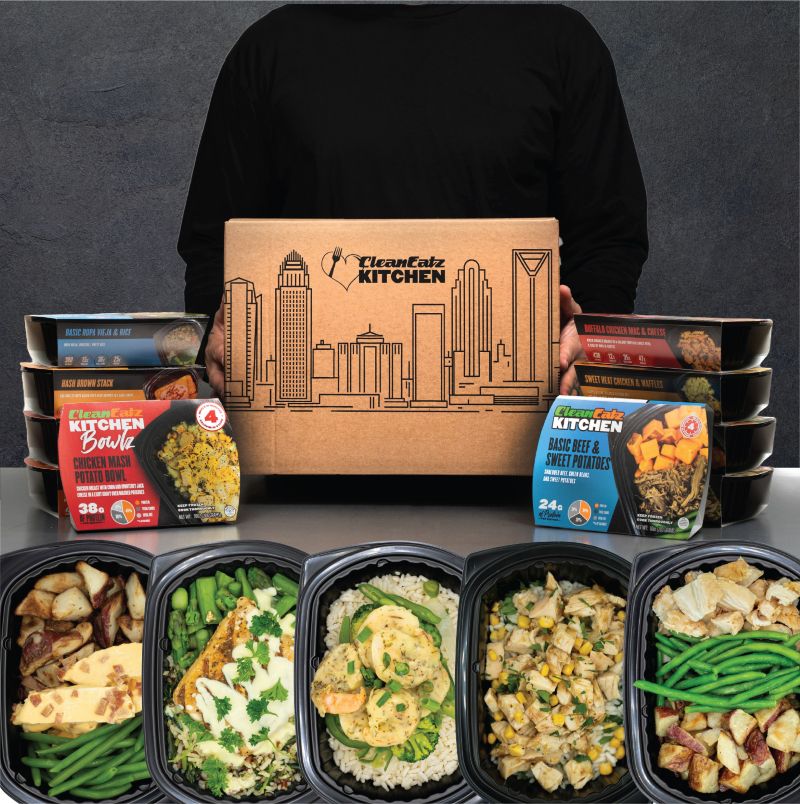
If the hard part is keeping portions and calories consistent, that's a workload problem. Our Weight Loss Meal Plan ships chef-cooked, single-serve, portion-controlled meals, so that part stops being a daily decision. For a sense of the arithmetic, our current menu has a median of 410 calories a meal. Three of those come to 1,230, which leaves about 270 for snacks in a 1,500-calorie day. Meals range from 250 to 630 calories, so your total depends on the ones you choose.
 Make it easy withWeight Loss Meal PlanFrom $89.95View plan
1,500-calorie meal plan FAQ
Calories, answered
Is 1,500 calories a day too low?
It depends on your size and activity. For a shorter, sedentary adult who maintains near 1,600 calories, it's a gentle deficit. For a tall, active adult at 2,700, it's a 1,200-calorie gap that's hard to sustain. If you're pregnant, have a medical condition or a history of disordered eating, talk with your doctor first.
How fast will I lose weight on 1,500 calories a day?
Expect several pounds in the first week or two, much of it water, then about 1 to 2 pounds a week at most. The exact pace depends on your maintenance calories, and it usually slows over time because your energy needs fall as you lose. Compare weekly averages rather than single weigh-ins.
What should I do when I reach my goal weight?
Raise calories gradually toward your estimated maintenance intake and keep watching your weight and hunger for a few weeks. Keep the protein and strength training that protected your muscle on the way down. Jumping straight back to your old eating is what usually brings the weight back.
More calorie & meal delivery guides
Keep reading
 Weight loss
1,500 vs 1,800 Calories: Picking the Right Meal Plan for Your Weight Loss Goal
 Staci Gulbin, MS, MEd, RD · Feb 28, 2026
 Weight loss
How Many Calories Can I Eat & Still Lose Weight?
 Crystal Zabka-Belsky MS, RDN, CSSD, LMNT, LDN · Jan 8, 2026
 Weight loss
How to Choose a Weight Loss Meal Delivery Service: A Step-by-Step Guide
 SaVanna Shoemaker, MS, RDN, LD · Jul 25, 2026
Sources
On this page