How to Cut: A Fat-Loss Phase That Protects Your Muscle

How to Cut: A Fat-Loss Phase That Protects Your Muscle

A cut is a slow, planned fat-loss phase, not a crash diet. Eat a little less, keep protein high, keep lifting, and lose about 0.5 to 1% of your body weight a week.

  • Free Shipping on Every Meal PlanFree Shipping
  • Up to 20% Off 30-Meal PlansUp to 20% Off
  • Chef Cooked, Dietitian BuiltDietitian Built
  • Heat & Eat in MinutesHeat & Eat
How to Cut: A Fat-Loss Phase That Protects Your Muscle

Most people who want to get lean do the same thing. They slash calories, add an hour of cardio, and lose weight fast. Then the muscle they spent a year building is gone too.

A cut done well is slower and more boring. You eat slightly less, you eat a lot of protein, you keep lifting, and you give it enough weeks to work. Here is how. It is written for healthy adults, so check with your doctor or a registered dietitian first if you have a medical condition.

The short answer

A cut is a planned fat-loss phase of about 8 to 16 weeks. Eat a modest calorie deficit that drops about 0.5 to 1% of your body weight a week, keep protein near 1.6 to 2.2 g per kg (about 130 to 180 g a day at 180 lb), lift 3 to 4 times a week, and track more than the scale. That is how you lose fat and keep the muscle you built.

What a cutting phase is

Less fat, same muscle, no crash

Lifters talk about bulking and cutting as two seasons. A bulk is a stretch of eating a little above maintenance to build muscle. A cutting phase is the opposite: eating a little below maintenance to lose fat while you hold onto that muscle.

The key word is little. A cut is not a 1,200-calorie crash. It is a modest deficit held for weeks, with enough protein and lifting that your body burns fat and keeps muscle. That is the real answer to how to lose fat without losing muscle.

  • A cut is temporary. It has a start date, an end date and a maintenance phase after it.
  • Fat loss is the goal, not weight loss. Water, glycogen and muscle all move the scale too.
  • The deficit stays small enough that you can still train hard and recover.
  • Protein goes up, not down, even though calories go down.

What you need before you start a cut

Four numbers & a food plan

  • A starting pointYour weight averaged over 3 to 4 mornings, a waist measurement and a photo.
  • A calorie targetMaintenance calories minus a modest deficit. The NIH planner estimates both.
  • A protein targetAbout 1.6 to 2.2 g per kg of body weight a day, split across 3 to 4 meals.
  • A lifting plan3 to 4 sessions a week you already know, not a brand-new program.
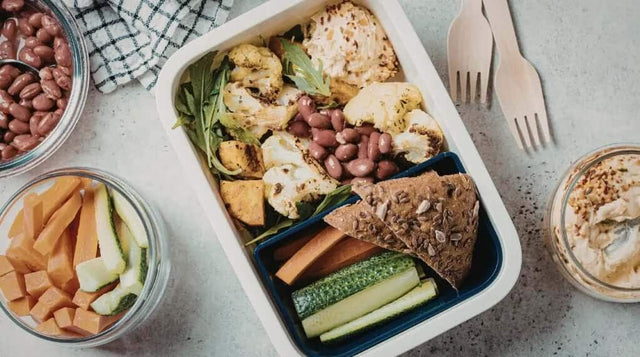
  • A cutting meal planMeals you can repeat without thinking. Batch cooking or portioned meals both work.

For exact macros, our guide to calculate your personal macros walks through the arithmetic. For a quick calorie estimate, the NIH Body Weight Planner gives you a maintenance number and a number to reach your goal by a date.

A cutting meal plan is a short list of meals that hit your protein and land near your calorie target, repeated. If you'd rather not cook it all, our cutting meal plan delivery is the portion-controlled Weight Loss Meal Plan, from $89.95 for 10 meals, free shipping, no subscription.

Who should not cut on their own: Teens, anyone pregnant or nursing, anyone with an eating disorder history, and anyone with kidney disease or on a GLP-1 medication should work with a doctor or registered dietitian instead of a generic deficit.

How to cut step by step

Five moves, in order

Here is how to cut in five steps. A cutting diet in this order protects muscle because every step gives your body a reason to keep it.

Step 1: Set a modest calorie deficit

Small deficit, steady loss

Aim to lose about 0.5 to 1% of your body weight a week. At 180 lb, that is roughly 0.9 to 1.8 lb a week. The International Society of Sports Nutrition (ISSN) cites a trial in athletes where losing 0.7% a week beat 1.4% a week: the slower group gained lean mass and lost at least as much fat.

That slow group cut intake by about 19%. If you maintain on 2,400 calories, that is roughly 450 calories a day, so you land near 1,950. Hold it for two weeks, then adjust by 100 to 150 calories based on your weekly average.

Step 2: Keep protein high at every meal

30 to 40 g, four times a day

Protein tells your body to keep muscle while calories are short. The ISSN recommends 1.4 to 2.0 g per kg a day for active adults, and says lifters in a deficit may need 2.3 to 3.1 g per kg. A practical cutting target is 1.6 to 2.2 g per kg: about 130 to 180 g a day at 180 lb (82 kg), or 110 to 150 g at 150 lb (68 kg).

The high end earns its keep. In a 4-week trial with a 40% deficit and hard training, men eating 2.4 g per kg gained 1.2 kg of lean mass and lost 4.8 kg of fat, while the 1.2 g per kg group gained almost none and lost 3.5 kg.

Spread it out: 20 to 40 g at each meal, every 3 to 4 hours. Chicken, fish, eggs and Greek yogurt do most of the work, and a scoop of our Shakez protein powder adds 20 g of whey with 1 g of sugar when a meal falls short.

Step 3: Keep lifting through the cutting diet

Lift to keep what you built

Muscle you don't use during a cut is muscle your body is happy to let go. Resistance training is the signal that says keep it. Every group that kept lean mass in the trials above was lifting.

Keep the program you already run and keep the weights heavy. Losing a rep or two near the end is normal. What you want to avoid is swapping lifting for cardio. We covered why lifting beats cardio for fat loss in detail. Cardio burns calories, but lifting decides whether the weight you lose is fat or muscle.

Step 4: Plan refeed days & diet breaks

Planned breaks, not cheat days

A refeed day is one or two planned days at maintenance, mostly from extra carbs. A diet break is a week or two at maintenance before you return to the deficit. Neither is a cheat day. Both are scheduled, and both keep protein where it was.

The evidence is mixed. In the MATADOR study, men who alternated 2 weeks of a 33% deficit with 2 weeks at maintenance lost more fat (12.3 kg vs 8.0 kg) and had a smaller drop in resting metabolism once body composition was accounted for. In lifters, a 7-week trial found a 2-day carb refeed each week preserved more fat-free mass. But the ICECAP trial, also in lifters, found 1-week breaks every 3 weeks gave the same fat loss and muscle retention as dieting straight through. The clearest win in ICECAP was lower hunger.

So plan a refeed day a week or a diet break every 6 to 8 weeks for adherence, not for extra fat loss.

Step 5: Track progress beyond the scale

Weekly averages, not daily spikes

The scale lies day to day. Salt, carbs and a hard leg day can swing it 2 to 3 lb overnight. Weigh most mornings, then compare weekly averages.

Track three other things once a week: a waist measurement at the navel, a photo in the same light, and your main lifts. If the waist is shrinking and the lifts are holding, the cut is working even when the scale stalls. If the lifts are falling fast and you're always hungry, your deficit is too big. Two out of three on track means stay the course.

How long a cut should last

Weeks, not months on end

So how long should a cut last? Long enough to lose the fat you set out to lose at 0.5 to 1% a week, and no longer. For most people that is 8 to 16 weeks.

Rough cut length for a 180 lb person at 0.5 to 1% of body weight a week
Fat to loseWeeks at 0.5% a weekWeeks at 1% a week
5 lbabout 6about 3
10 lbabout 11about 6
15 lbabout 17about 8
20 lbabout 22about 11

Rough cut length for a 180 lb person at 0.5 to 1% of body weight a week

If the math says more than 16 weeks, split it. Cut for 8 to 12 weeks, spend 2 to 4 weeks at maintenance, then cut again. The ISSN notes that holding a 10% weight loss can lower daily energy expenditure by 20 to 25%, so long deficits get harder.

Plan the end before you reach it. Most regain happens right after a diet, when calories jump back all at once. We wrote about the maintenance trap after dieting and how to add calories back slowly, about 100 a week.

Cutting diet mistakes that cost muscle

What quietly eats your muscle

Most of the advice on how to cut without losing muscle comes down to not doing these.

  • Cutting calories too hard. A 1,000-calorie deficit drops the scale fast and takes muscle with it.
  • Letting protein fall with calories. Protein should go up on a cut, not down.
  • Replacing lifting with cardio. Cardio does not tell your body to keep muscle. Lifting does.
  • Skipping protein at breakfast. One 10 g breakfast and two 50 g dinners is not the same as 35 g four times a day.

The no-cook shortcut, if you want one. Our High Protein Meal Plan adds 2 extra ounces of meat to each meal, about 10 g more protein than the regular recipe, from $63.00 for 6 meals. On our summer 2026 menu, 20 of 36 meals had at least 30 g of protein in one tray. Both plans ship free, no subscription, and heat in under 5 minutes.

Cutting phase FAQ

Quick answers on cutting

Should You Bulk or Cut First?

The cut vs bulk question comes down to where you're starting. If you carry extra body fat and want to see muscle, cut first. If you're already lean and feel small, eat a little above maintenance and build first. New lifters can often do both at once.

How Much Protein Do You Need When Cutting?

If you're asking how much protein when cutting is enough, aim for about 1.6 to 2.2 g per kg of body weight a day, or 130 to 180 g at 180 lb. The ISSN says lifters in a deficit may need 2.3 to 3.1 g per kg. Split it into 3 to 4 meals of 20 to 40 g.

Can You Lose Fat Without Losing Muscle?

Yes, and in some trials people gained muscle while losing fat. In one, that took protein near 2.4 g per kg and hard training 6 days a week. Losing about 0.7% a week kept lean mass better than 1.4% in one athlete study.

Do You Need Cardio to Cut?

No. The deficit comes from food, and lifting is what protects muscle. Cardio is optional and useful in small doses. Walking is the easiest add because it burns calories without costing you recovery.