How to Set Calorie Goals for Weight Loss (2026)

How to set calorie goals for weight loss (2026 guide)

Estimate what you burn, subtract a moderate deficit, then let your real results correct the math. Five steps, the formula with a worked example, and why a 500-calorie deficit loses less in month three than in month one.

  • Free Shipping on Every Meal PlanFree Shipping
  • Up to 20% Off 30-Meal PlansUp to 20% Off
  • Chef Cooked, Dietitian BuiltDietitian Built
  • Heat & Eat in MinutesHeat & Eat
Romaine Rusnak, RD, LDN
Romaine Rusnak, RD, LDNRegistered Dietitian · Mar 5, 2025
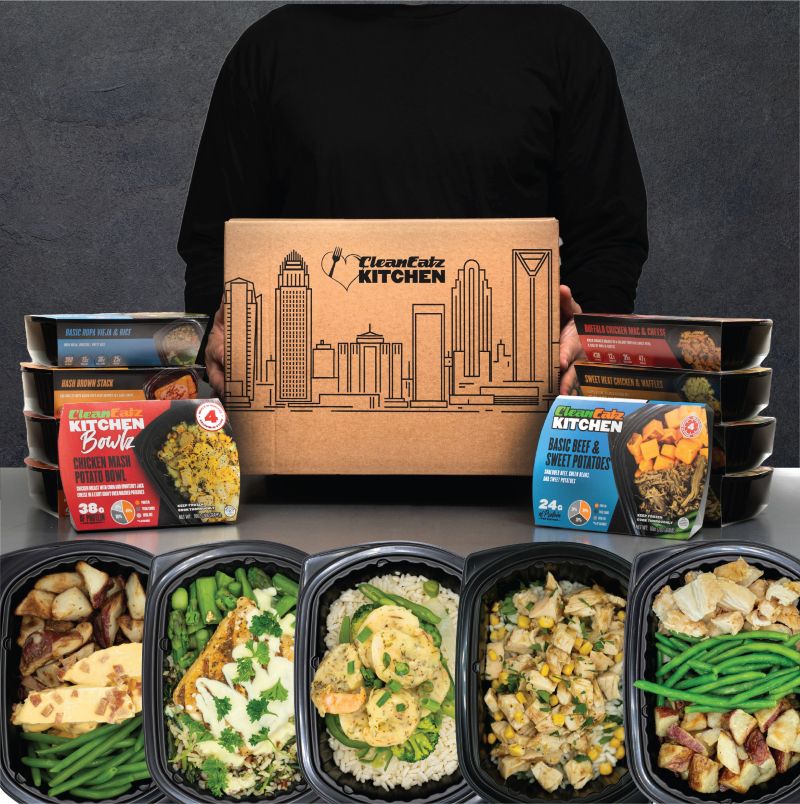
A Clean Eatz Kitchen delivery box held above a row of ready-to-heat meals
Quick answer

Estimate your maintenance calories (TDEE) with the Mifflin-St Jeor equation and an activity factor, then eat 500 to 750 calories a day below it. At first that loses about 1 to 1.5 pounds a week, slowing over time as your body adapts. Aim for about 1.2 to 1.6 g of protein per kg and 14 g of fiber per 1,000 calories, and adjust every 2 to 4 weeks.

Every calorie calculator gives you a confident number. None of them knows you. The number is a starting estimate, and the real skill is adjusting it once your body starts answering back.

This guide walks through the whole process: picking a safe rate of loss, estimating your maintenance calories, setting a deficit, choosing protein and fiber targets inside it, and adjusting as you go. Then we run the full math on a real example you can copy.

Why calorie deficits work & the myth that confuses people

The 3,500 rule is half right

Weight change comes down to energy balance over time. Eat less than you burn and you lose weight. That part is simple.

What trips people up is the old "3,500 calories equals one pound" rule. It makes the math look tidy: cut 500 calories a day, lose a pound a week, forever. Not quite.

Research from the National Institutes of Health shows why. Kevin Hall's model of how body weight responds to a change in calories, published in The Lancet, found the response is slow, with a half time of about a year, because your energy needs fall as you get smaller. A smaller body burns less, and some people also move less without noticing. The same 500-calorie deficit that worked in month one produces less loss in month three.

Some of the slowdown is adaptive thermogenesis, the body burning a little less than its new size predicts. A systematic review of 33 studies found it in most of them, though the better-designed studies reported smaller effects. The direction is consistent. The size varies a lot from person to person.

That is why dynamic tools like the NIH's Body Weight Planner are useful. They are built on that model, account for these adaptations, and give you realistic timelines instead of setting you up for frustration. For most people, a modest daily deficit plus regular activity gives steady progress that protects muscle and energy.

For the foods that make a deficit easier to live with, our Complete Guide to the Best Foods for Weight Loss covers satiety and the specific foods that keep you full on fewer calories.

How to set calorie goals for weight loss step by step

Five steps from goal to daily number

Work through these in order. Each one depends on the one before it.

Step 1: Choose a safe, realistic rate of loss

1 to 2 pounds a week at most

Before you calculate anything, decide how fast you want to lose, and be realistic about what you can keep up. The CDC notes that people who lose about 1 to 2 pounds a week are more likely to keep it off than people who lose faster. Faster loss usually takes aggressive deficits that are harder to hold and more likely to cost muscle along with fat. For a 200-pound person, 1 to 2 pounds a week is 0.5 to 1% of body weight.

Plan in 3- to 6-month blocks rather than chasing a final number. A 5 to 10% loss is a meaningful clinical goal. In people with obesity, a 2023 JAMA review reports that 5 to 10% loss lowers systolic blood pressure by about 3 mm Hg in people with hypertension and can lower hemoglobin A1c by 0.6 to 1% in type 2 diabetes. At 200 pounds, that is 10 to 20 pounds over several months, not your high school weight by summer.

Slower loss is always acceptable. If half a pound a week fits your life better, you still get there, and you are more likely to stay there.

Step 2: Estimate your maintenance calories

Find your TDEE first

Your Total Daily Energy Expenditure (TDEE) is the calories you burn on a typical day, the baseline before any deficit. The most common approach uses the Mifflin-St Jeor equation to estimate your resting metabolic rate, then multiplies by an activity factor.

Men: (10 x weight in kg) + (6.25 x height in cm) minus (5 x age) + 5. Women: the same, but minus 161 instead of plus 5.

Activity factors to multiply by
Activity levelMultiply byTypical week
Sedentary1.2Desk job, little exercise
Lightly active1.375Light exercise 1 to 3 days
Moderately active1.55Moderate exercise 3 to 5 days
Very active1.725Hard exercise 6 to 7 days
Extremely active1.9Physical job plus training

Activity factors to multiply by

If math isn't your thing, the NIH Body Weight Planner does it for you and, more important, accounts for how your needs change as you lose. That makes it more realistic than a calculator that gives one number and leaves you wondering why progress stalls at week six.

A reality check: equations are a starting point, and your true needs can differ a lot from the estimate, especially with overweight or obesity. In a 2022 review of 61 studies of adults with overweight or obesity, even the most precise equation was accurate for only about 6 in 10 people. Use 2 to 4 weeks of real-world data to fine-tune your number.

Step 3: Set your daily deficit

Eat 500 to 750 less

Once you know your maintenance calories, the deficit is subtraction. The AHA/ACC/TOS obesity guideline uses a deficit of 500 or 750 calories a day as one standard approach. By the static math, that is 3,500 to 5,250 calories a week, or about 1 to 1.5 pounds, and in practice a little less as the months go on.

The same guideline lists a second approach: about 1,200 to 1,500 calories a day for women and 1,500 to 1,800 for men, adjusted for body weight. These are ranges, not rules. Your target depends on your size, activity and how aggressive you want to be.

Where you start changes how it feels. Someone with a TDEE of 2,800 can eat 2,300 calories for a 500-calorie deficit and barely notice. Someone with a TDEE of 1,800 has to eat 1,300 for the same deficit, which is much harder to sustain. Same math, very different days.

For most people, the sustainable path is a moderate deficit plus smart food choices. Our guide to what to eat for weight loss shows how to build plates that keep you full without blowing your calorie budget.

Step 4: Dial in protein, fiber & movement

What fills the calorie budget

The calorie target is half the plan. What you eat inside it, and how you move, decides whether you lose mostly fat or a frustrating mix of fat and muscle.

Protein is a priority. Eating more protein during a deficit helps preserve lean mass and keeps you fuller. In a meta-analysis of 49 trials, protein's benefit for muscle with resistance training leveled off at about 1.6 g/kg a day, with an upper bound near 2.2. In a 2024 review of adults with overweight or obesity aiming to lose weight, intakes above about 1.3 g/kg were expected to increase muscle mass and below 1.0 g/kg carried a higher risk of losing it. A practical target for many people is about 1.2 to 1.6 g/kg a day. For a 150-pound (68 kg) person, that is about 80 to 110 grams a day, up to about 150 at 2.2 g/kg, spread across meals.

If you are not sure how to fit that much protein into a week, our Complete Meal Prep Guide shows how to batch-cook it without eating plain chicken breast at every meal.

Fiber keeps you satisfied. The simplest guideline is 14 grams per 1,000 calories, from the Dietary Guidelines for Americans 2020 to 2025 nutrient goals. At 1,500 calories, that is about 21 grams. The current Dietary Guidelines also tell you to prioritize fiber-rich whole grains, alongside vegetables, fruit and legumes. In a meta-analysis of 62 trials, viscous fiber lowered body weight by an average of 0.33 kg. That is modest, and it is real. Our Ultimate Guide to Dietary Fiber covers why it deserves more attention.

Movement protects muscle and widens the deficit. Resistance training at least twice a week tells your body to keep muscle while you lose weight. Daily movement matters too: walking, stairs, standing more. This non-exercise activity thermogenesis, or NEAT, adds up. In one study cited in a review of NEAT, people with obesity sat about two hours a day longer than lean people, and matching the lean group's movement would burn about 350 more calories a day. Our Complete Exercise Guide for Weight Loss lays out how much exercise you need.

Step 5: Monitor, adjust & stay flexible

Let the weekly average decide

No calorie calculation is right on the first try. The number you start with is an educated guess, and real-world data tells you whether it works.

Weigh yourself 3 to 4 mornings a week under the same conditions and track the weekly average, not the daily number. Water weight can swing several pounds from day to day with sodium, carbohydrates, stress and sleep. The weekly trend is what counts.

Every 2 to 4 weeks, check your progress. If the average isn't moving, you have two options: cut another 100 to 200 calories a day, or add activity. Both work. Pick the one you can keep doing.

One guardrail most people ignore: if hunger becomes unmanageable, your energy tanks or your workouts suffer, you have pushed too hard. Shrink the deficit, add protein and fiber, or change your meal timing. A diet you can't stick with doesn't work, however neat the math looks.

A worked calorie goal example you can copy

One person, every number shown

Say you are a 40-year-old woman, 5 feet 6 inches (168 cm), 170 pounds (77 kg), with a desk job and three gym sessions a week.

Resting metabolism: (10 x 77) + (6.25 x 168) minus (5 x 40) minus 161 = 770 + 1,050 minus 200 minus 161 = 1,459, so about 1,450 calories at rest.

TDEE: three sessions a week sits between lightly and moderately active, which is exactly where estimates get fuzzy. At 1.55 you get about 2,250 calories. At 1.375 you get about 2,000. Start with the higher number and let your scale settle the question.

The worked example, step by step
StepResultHow
Resting metabolism1,450Mifflin-St Jeor, women
Maintenance (TDEE)2,2501,450 x 1.55
Daily calorie goal1,7502,250 minus 500
Daily protein120g1.6 g/kg x 77 kg, rounded
Daily fiber25g14g x 1.75

The worked example, step by step

Carbohydrates and fats fill the remaining calories based on your preferences. At 120g of protein (480 calories), you have about 1,270 calories left for carbs and fat.

Add strength training three times a week and work up to 8,000 or more daily steps. After 2 to 4 weeks, check your weekly average. Losing 0.5 to 1 pound a week? Stay the course. Losing nothing? Your real TDEE may be closer to the 2,000 estimate, so cut another 150 calories or add a fourth gym day. Losing faster but feeling terrible? Add calories back until you lose steadily without suffering.

For realistic timelines, run your numbers through the NIH Body Weight Planner. It accounts for adaptation and shows what to expect over months, not weeks.

How Clean Eatz Kitchen makes this easier

The number is easy, hitting it isn't

Calculating your calorie goal is one thing. Hitting it every day, with enough protein and fiber and without hours in the kitchen, is another. That is an execution problem, not a knowledge problem.

If execution is the hard part, our calorie-controlled meal plans handle portions for you. Every meal's calories, protein, carbs, fat, fiber and sodium are on our Nutrition Info page, so you can log a meal without weighing anything. Our current menu (October 2026) runs from 250 to 630 calories and 20 to 55 grams of protein per meal. The Weight Loss Meal Plan is portion- and calorie-controlled, from $89.95 for 10 meals, about $9 a meal. The High Protein Meal Plan adds 2 extra ounces of meat per meal when protein is the number you keep missing.

For hunger between meals, our high-protein snacks fit inside a daily budget, like High Protein Overnight Oats with 20g of protein per pouch. If you want to pick every meal to hit a specific target, Build A Meal Plan lets you choose one by one with a protein filter.

The goal isn't just weight loss, it's weight loss you can keep. Having meals ready that fit your number removes a lot of the daily decisions that wear people down. There is no subscription, meals heat in a few minutes, and meal plan orders ship free to the contiguous 48 states.

The bottom line on calorie goals

Start with math, finish with data

Setting a calorie goal for weight loss isn't complicated, but it does take some math and a willingness to adjust. Estimate your TDEE with a validated formula, set a moderate deficit of about 500 to 750 calories, and make protein and fiber priorities inside that budget. Add resistance training and daily movement to protect muscle and raise your total burn.

Above all, treat your first number as a starting point, not a prescription. Weight loss isn't a straight line: your body adapts, your needs change, and what works in month one may need adjusting by month three. If you have a medical condition, take a weight loss medication or have a history of disordered eating, check in with a qualified clinician for a safer, personal target.

If hitting the number every day is the hard part, build your meal plan with meals whose calories and protein are already counted.

Calorie goal FAQ

Quick answers

Is 1,200 calories too low?

For many adults, yes. It can be too aggressive to sustain. The AHA/ACC/TOS guideline lists about 1,200 to 1,500 calories a day for women and 1,500 to 1,800 for men as one option, adjusted for body weight. The right number depends on your size, activity and how you feel. Talk with a dietitian if you have a medical condition.

Do I have to hit a specific macro split?

No. No single split is best as long as calories and protein are controlled. Some people do well on fewer carbs, and others need more carbs to fuel their workouts. Choose the balance you can stick with, because consistency over months matters more than the perfect ratio on paper. Keep protein near 1.2 to 1.6 g/kg.

Why did my weight loss slow down?

As you lose weight, your body needs fewer calories, and energy use can drop a bit more than predicted, partly through adaptive thermogenesis and partly because you may move less without noticing. That shrinks your deficit. Counter it with step goals, steady resistance training and small calorie adjustments every 10 to 15 pounds.

Can supplements speed things up?

Not in any way that replaces a well-set calorie plan with enough protein, fiber and training. Some products, like caffeine, can slightly raise energy use or blunt appetite for a while, but the effect is small. If you are considering any supplement, check its safety and talk with a clinician first, especially with a health condition.

How accurate are calorie calculators?

Less accurate than they look. In a 2022 review of 61 studies in adults with overweight or obesity, even the most precise equation was accurate for only about 6 in 10 people. Treat any number as a starting guess. If you lose faster than expected, eat a bit more. If you aren't losing, your real TDEE is lower.

Do I have to track calories to lose weight?

No. Tracking helps many people, but it isn't required. Plenty of people do well with consistent portions, protein-forward meals, and step and training targets, then adjust based on the weekly weight trend. Portioned meals with the calories already listed are another way to stay on target without logging every ingredient.

Who should not cut calories without medical guidance?

Get individual guidance before using a calorie deficit if you are pregnant or breastfeeding, under 18, have a history of eating disorders, or take medicines that affect blood sugar or appetite, such as insulin or a GLP-1 medication. Your care team can set a target that is safe for your situation.

Sources

  1. CDC: Losing weight
  2. Elmaleh-Sachs A et al. Obesity management in adults: a review. JAMA 2023 (PMC)
  3. Jensen MD et al. 2013 AHA/ACC/TOS guideline for the management of overweight and obesity in adults. Circulation 2014 (PMC)
  4. Hall KD et al. Quantification of the effect of energy imbalance on bodyweight. Lancet 2011 (PMC)
  5. NIDDK, NIH: About the Body Weight Planner
  6. Medscape: Mifflin-St Jeor equation calculator
  7. Macena ML et al. Estimates of resting energy expenditure and total energy expenditure using predictive equations in adults with overweight and obesity: a systematic review with meta-analysis. Nutr Rev 2022 (PubMed)
  8. Chung N et al. Non-exercise activity thermogenesis (NEAT): a component of total daily energy expenditure. J Exerc Nutrition Biochem 2018 (PMC)
  9. Nunes CL et al. Does adaptive thermogenesis occur after weight loss in adults? A systematic review. Br J Nutr 2022 (PubMed)
  10. von Loeffelholz C, Birkenfeld AL. Non-exercise activity thermogenesis in human energy homeostasis. Endotext, NCBI Bookshelf, updated 2022
  11. Morton RW et al. A systematic review, meta-analysis and meta-regression of the effect of protein supplementation on resistance training-induced gains in muscle mass and strength. Br J Sports Med 2018 (PubMed)
  12. Kokura Y et al. Enhanced protein intake on maintaining muscle mass, strength, and physical function in adults with overweight/obesity: a systematic review and meta-analysis. Clin Nutr ESPEN 2024 (PubMed)
  13. USDA, HHS. Dietary Guidelines for Americans, 2025 to 2030
  14. USDA, HHS. Dietary Guidelines for Americans, 2020 to 2025, Appendix 1 nutritional goals
  15. Jovanovski E et al. Can dietary viscous fiber affect body weight independently of an energy-restrictive diet? A systematic review and meta-analysis of randomized controlled trials. Am J Clin Nutr 2020 (PubMed)

Tap a meal count to add

30 meals work out to $7.56 a meal

View plan details

Tap a meal count to add

30 meals work out to $9.16 a meal

View plan details