
Salmon for weight loss
Is salmon good for weight loss?
Yes, for its protein and its fat together, though omega-3s won't melt fat by themselves. Calories by type, wild vs. farmed, cooking without doubling the count, canned salmon and meals with the math shown.
- Free Shipping on Every Meal PlanFree Shipping
- Up to 20% Off 30-Meal PlansUp to 20% Off
- Chef Cooked, Dietitian BuiltDietitian Built
- Heat & Eat in MinutesHeat & Eat

Salmon for weight loss
Is salmon actually good for weight loss?
Quick answer
Yes. A cooked 4-ounce serving has about 25 to 30g of protein for about 175 to 260 calories, depending on the type. Protein does the heavy lifting. The omega-3 effect on weight is small, so preparation matters more: bake, grill or air-fry with minimal oil.
Three things are worth separating here: the protein, the fat and the calorie math.
The protein is what earns salmon its place. Protein is the most satiating macronutrient, and your body burns about 20 to 30% of protein calories digesting it. A 2021 meta-analysis of 37 trials found higher-protein diets produced about 1.6 kg more weight loss than comparison diets. Salmon isn't the leanest way to get it, though. A cooked 4-ounce chicken breast has about 35g of protein for 187 calories, which is more protein per calorie than any salmon on the table below. Salmon's case is that it's a satisfying way to get your protein, one you may actually look forward to.
The fat makes it more satisfying, but it doesn't burn fat. Salmon has omega-3 fatty acids, specifically EPA and DHA, which you need from food. Claims that these fats actively drive weight loss go further than the evidence. A 2014 meta-analysis found people eating fish or taking fish oil lost about 0.59 kg more and about 0.81 cm more from the waist, with no difference in fat mass. In an 8-week trial, men lost about 1 kg more at 4 weeks with fish or fish oil, and women saw no difference. A real effect, in other words, but one too small to notice on a scale.
The calories are moderate, not low. At 175 to 260 calories per 4 ounces, salmon is easy to fit into a cut as long as the portion stays near 4 ounces. Compare that with a 200-calorie bag of chips, which has almost no protein and leaves you looking for more an hour later.
For the full list of the best proteins and other foods for weight loss, see our 100 Best Foods for Weight Loss guide.
Salmon nutrition at a glance
How many calories & how much protein?
Quick answer
A cooked 4-ounce serving runs from 176 calories and 30g of protein for wild sockeye to 261 calories and 29g for king. Farmed Atlantic sits at 233 calories and 25g. Canned pink, drained, is about 156 calories and 26g, with more sodium.
| Type | Calories | Protein | Fat |
|---|---|---|---|
| Wild sockeye | 176 | 30g | 6g |
| Wild king (Chinook) | 261 | 29g | 15g |
| Wild Atlantic | 206 | 29g | 9g |
| Farmed Atlantic | 233 | 25g | 14g |
| Canned pink, drained | 156 | 26g | 6g |
Salmon per 4 oz (113 g) cooked, calculated from USDA FoodData Central (SR Legacy)
Note how much the wild category varies: king has slightly more fat than farmed and more calories. "Wild" alone doesn't tell you the number. Figures shift a little by fish, season and label, and you can check any version in the USDA food search.
Wild vs. farmed salmon for weight loss
Does wild or farmed matter for weight loss?
Quick answer
Not much. Farmed Atlantic has about 57 more calories than wild sockeye per 4 ounces. Eat salmon twice a week and that's about 115 calories, roughly one banana. Pick whichever you'll actually buy and eat regularly.
This debate generates strong opinions, but for weight loss the answer is straightforward: both work fine.
Wild salmon such as sockeye is leaner, with fewer calories per ounce, deeper color and a more pronounced flavor. Some people prefer that, and others find it fishier than they'd like. Farmed salmon is fattier, milder and usually cheaper and easier to find.
Run the numbers and the practical gap is small. Farmed Atlantic is 233 calories per 4 ounces and sockeye is 176, a 57-calorie difference. Over two servings a week, that's about 115 calories. And not all of it is wasted: farmed has about 2.4g of EPA and DHA per 4 ounces, against about 1g for sockeye, by USDA's figures. If you prefer farmed and it's what you can afford, eat that. Consistency matters more than this particular optimization.
How to cook salmon for weight loss
How do you cook salmon without adding calories?
Quick answer
Bake, air-fry, grill or sear it with 1 to 2 teaspoons of oil, about 40 to 80 calories. Cook to 145°F, the FDA's target for most seafood. A butter-poached 8-ounce restaurant fillet can reach about 670 calories, about twice a home-baked 4-ounce portion.
Baking is the easiest approach. Preheat the oven to 400 to 425°F, place the salmon on a sheet pan (skin side down if it has skin), brush with 1 to 2 teaspoons of olive oil, season with salt, pepper and herbs, and bake 12 to 15 minutes.
Air-frying gives crispy skin with minimal oil. Set the air fryer to 375 to 390°F and cook 7 to 10 minutes depending on thickness, with no need to flip.
Pan-searing creates a good crust but needs attention. Heat a nonstick or cast-iron pan over medium-high with 1 to 2 teaspoons of oil. Put the salmon in skin side up, sear 3 to 4 minutes until golden, flip and finish 2 to 3 minutes. Don't move the fish around while the crust develops.
Grilling adds smoky flavor. Oil the grates, not the fish, and grill skin side down over medium-high heat for 6 to 8 minutes. You often don't need to flip, since the fish cooks through from the bottom. Thicker fillets may need a little longer, so check the temperature.
What to skip: deep frying, pan-frying in lots of butter or smothering it in cream sauce. Here's the arithmetic: a restaurant's 8-ounce farmed fillet is about 466 calories, and 2 tablespoons of butter adds about 204, so about 670 in total. The same fish at 4 ounces with 2 teaspoons of oil is about 310.
Low-calorie salmon flavor
What adds flavor without many calories?
Quick answer
Citrus, fresh herbs, spice rubs, mustard and capers. Most add under 30 calories. A tablespoon of Dijon-honey glaze is about 30. Hollandaise, cream sauces and sweet teriyaki glazes are the ones that move the count, so keep those occasional.
Salmon has enough natural flavor that it doesn't need a heavy sauce.
- Citrus: lemon, lime or orange juice and zest brighten the fish for very few calories. A squeeze of lemon before serving does a lot for a plain fillet.
- Fresh herbs: dill is the classic pairing, and parsley, cilantro, chives and tarragon all work. Chop them fresh and add them after cooking.
- Mustard glaze: 2 teaspoons of Dijon or whole-grain mustard with 1 teaspoon of honey makes a flavorful crust for about 30 calories a tablespoon, mostly from the honey.
- Spice rubs: Cajun seasoning, everything bagel seasoning or a simple mix of paprika, garlic powder and black pepper add flavor for almost no calories.
- Capers & olives: a tablespoon of capers adds briny punch for under 5 calories, though it's salty. Kalamata olives work too, at slightly more calories.
Hollandaise, bearnaise, cream sauces and sweet teriyaki glazes are the ones to save for occasional meals rather than your regular rotation.
How often to eat salmon
How often should you eat salmon?
Quick answer
About 2 servings a week fits US guidance of at least 8 ounces of seafood weekly. The FDA lists salmon among its Best Choices for mercury, and suggests 2 to 3 servings a week of those fish during pregnancy or breastfeeding, at 4 ounces each.
You don't need salmon every time. Rotating with shrimp, cod, tilapia or tuna keeps things interesting and adds variety in nutrients.
Salmon is a lower-mercury fish. The FDA includes it in its Best Choices category, which is the group it recommends for 2 to 3 servings a week if you're pregnant or breastfeeding, with a serving at 4 ounces for adults.
If you're eating salmon for omega-3s, two servings a week is a reasonable target. Eating far more isn't known to add much benefit, and it uses up the variety that makes a diet easier to keep up.
Canned salmon for weight loss
Is canned salmon as good as fresh?
Quick answer
For weight loss, close enough. A 5-ounce can of pink salmon has about 28 to 33g of protein, depending on whether you drain it. It's cheaper than fresh and keeps for years. Watch the sodium, about 430mg per 4 ounces drained.
Canned salmon deserves more respect than it gets. It's usually much cheaper than fresh, often around $3 for a 5-ounce can, though prices vary, and it lasts for years in the pantry.
Choose water-packed over oil-packed to save calories, unless you want the added fat. Check the sodium, since it varies by brand, and rinse if needed. The soft bones are edible and make a real difference: USDA lists drained pink salmon at about 283mg of calcium per 100g with bones and about 60mg without. Remove them if the texture bothers you.
It works well in salmon cakes (mix with egg, breadcrumbs and herbs, then pan-sear), salmon salad (like tuna salad, but richer) or simply flaked over a green salad.
Simple salmon meal ideas
What does a good salmon meal look like?
Quick answer
Salmon, a plate of vegetables and a measured starch comes to about 400 to 550 calories. A sheet pan dinner with rice is about 420 to 530. Calories swing mostly on farmed vs. sockeye and how much oil or avocado you add.
These totals are estimated from USDA FoodData Central. Each range runs from sockeye to farmed Atlantic with the amounts listed, so your label and portions will shift them.
| Meal | What's in it | Calories |
|---|---|---|
| Sheet pan salmon & vegetables | 4 to 5 oz fillet, broccoli, asparagus or zucchini, 2 tsp olive oil, bake at 400°F for about 15 minutes, 1/2 cup cooked rice or quinoa | About 420 to 530 |
| Salmon power bowl | 3/4 cup cooked quinoa, 4 oz baked salmon in chunks, cucumber, cherry tomatoes, 2 to 3 slices avocado, a drizzle of lemon-tahini dressing | About 470 to 550 |
| Air-fryer salmon tacos | 4 oz air-fried salmon, 2 small corn tortillas, cabbage slaw, pico de gallo, lime, Greek yogurt in place of sour cream | About 330 to 380 |
| Smoked salmon breakfast plate | 3 oz smoked salmon, 2 scrambled eggs, sliced tomatoes, capers, a small piece of whole-grain toast | About 350 to 400 |
Salmon meal ideas with estimated calories
Watch the portion on smoked salmon, which runs about 570mg of sodium per 3 ounces by USDA's figures, before the capers.
Salmon weight loss mistakes
What mistakes undo the benefit?
Quick answer
Four common ones: heavy sauces, eyeballed portions, a plate with only salmon on it and overcooking. An 8-ounce restaurant fillet is double a proper portion and about 466 calories before any sauce, which is why weighing at home helps.
Drowning it in sauce. A good piece of salmon can become a 600-calorie meal with butter sauce or teriyaki glaze. Keep sauces on the side and use them sparingly, or stick with the low-calorie seasonings above.
Eyeballing portions. Most salmon has more calories per ounce than chicken breast. What looks like a normal restaurant piece is often 8 to 10 ounces, double a proper portion. Weigh your fish at home until you can eyeball 4 to 5 ounces accurately.
Forgetting the rest of the plate. Salmon alone isn't a meal. Pair it with vegetables for half the plate and a measured portion of complex carbs, so the meal keeps you full and fueled.
Overcooking. Dry salmon is why many people think they don't like fish. Take it off the heat as soon as the thickest part reaches 145°F, when the flesh flakes easily but is still moist, rather than leaving it in until it looks done.
Next steps for eating salmon on a cut
How should you fit salmon into your week?
Quick answer
Twice a week, about 4 to 5 ounces at a time, baked, grilled or air-fried with minimal fat, alongside vegetables and a measured starch. Don't stress over wild vs. farmed. Canned salmon gives nearly the same protein for less money.
Salmon gives you plenty of protein, a useful dose of omega-3s and a meal you'll probably want to eat again, which is half the battle on a cut. Keep the preparation simple, skip the heavy sauces and pair it with vegetables and a measured portion of carbs.
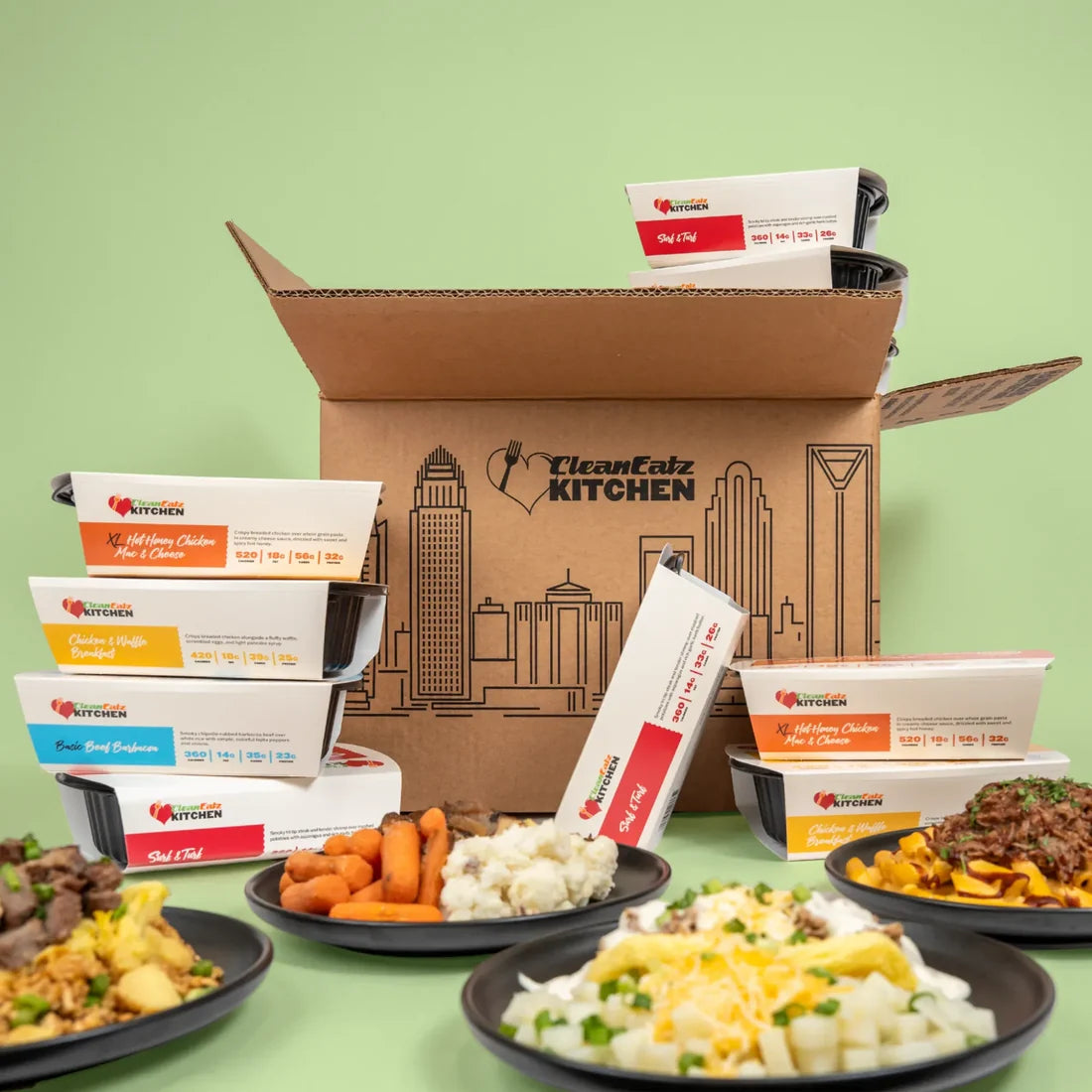
If cooking fish on a weeknight is what gets skipped, that's the part to outsource. Our Weight Loss Meal Plan is chef-cooked and calorie-controlled, from $89.95 for 10 meals with no subscription. If you want fish specifically, our Baja Salmon is 250 calories, 25g of protein and 420mg of sodium on our Nutrition Info page, and you can check what's on the menu and pick meals one by one in Build A Meal Plan.
 Make it easy withWeight Loss Meal PlanFrom $89.95View plan
Looking for more protein options that support weight loss? Our 100 Best Foods for Weight Loss guide covers everything from lean meats to plant-based proteins, and our healthiest fish guide covers the rest of the seafood counter.
Salmon & weight loss FAQ
Questions about salmon & weight loss, answered
Is salmon good for weight loss?
Yes. A cooked 4-ounce serving has about 25 to 30g of protein for about 175 to 260 calories, which makes it a satisfying food to eat while cutting calories. The protein does most of the work. The omega-3 effect on weight is small, so don't count on the fat itself to burn fat.
How many calories are in salmon?
A cooked 4-ounce serving has about 175 to 260 calories, depending on the type. By USDA figures, wild sockeye is about 176, wild Atlantic about 206, farmed Atlantic about 233 and wild king about 261. Canned pink, drained, is about 156. Added oil, butter and sauce come on top of that.
Is wild or farmed salmon better for weight loss?
Both work. Wild sockeye is leaner, while farmed Atlantic has more fat, including more omega-3s, and a milder taste. Farmed has about 57 more calories per 4 ounces, so about 115 a week at two servings. Choose whichever you prefer and can afford to eat consistently.
How often should I eat salmon to lose weight?
About twice a week fits US guidance of at least 8 ounces of seafood weekly. You don't need to eat salmon every time, and rotating with cod, tilapia, shrimp or tuna adds variety while keeping protein high. The FDA lists salmon among its Best Choices for mercury.
What is the best way to cook salmon for weight loss?
Baking, grilling, air-frying or pan-searing with 1 to 2 teaspoons of oil. Skip deep-frying and butter or cream sauces, which can double the calories or more. Season with herbs, lemon, garlic or mustard instead, and cook to 145°F, the FDA's target for most seafood.
More protein & weight loss guides
Keep reading
 Weight loss
Healthiest Fish to Eat: 10 Best Options, Ranked
 SaVanna Shoemaker, MS, RDN, LD · Jun 27, 2023
 Weight loss
Best Foods for Weight Loss: 100-Food Complete Guide
 Romaine Rusnak, RD, LDN · Oct 16, 2025
 Fitness
The Best Protein Sources For Building Muscle Vs. Losing Fat
 Staci Gulbin, MS, MEd, RD · Oct 7, 2026
Sources
On this page