
Late-night snack ideas
Late-night snack ideas: What to eat when you're hungry at 11 p.m.
A bedtime snack doesn't make you gain weight. The wrong one can keep you up or bring you back to the fridge. What the late-eating research shows, the protein target that works and ten snacks with the numbers checked.
- Free Shipping on Every Meal PlanFree Shipping
- Up to 20% Off 30-Meal PlansUp to 20% Off
- Chef Cooked, Dietitian BuiltDietitian Built
- Heat & Eat in MinutesHeat & Eat

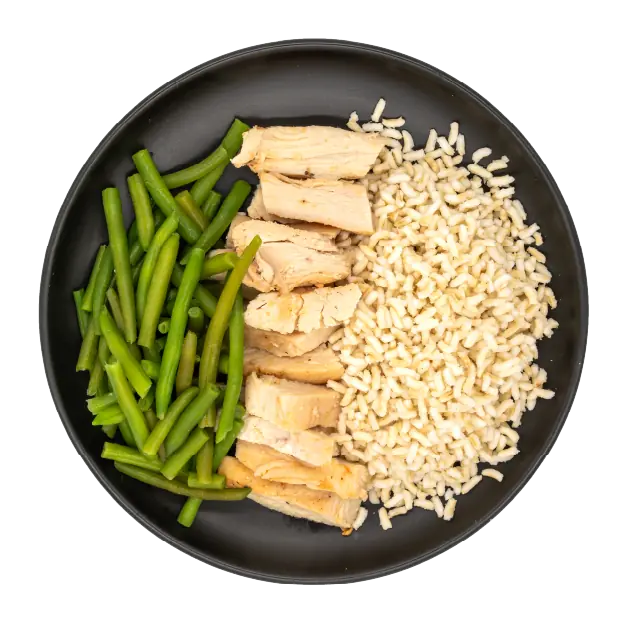
A good late-night snack has 15 to 25 grams of protein, lands between 150 and 300 calories and takes under five minutes. A cup of low-fat cottage cheese (about 28 grams of protein), Greek yogurt, two hard-boiled eggs or half a small meal tray all qualify. The clock doesn't cause weight gain. Your whole day's intake does.
Hungry in the middle of the night? When you can't sleep, it's tempting to reach for something rich, and a heavy late meal can bring heartburn and a restless night along with it. A light, protein-rich snack takes care of the hunger without the bloating or discomfort.
Here are our favorite late-night snack ideas, the numbers behind them, and some myth-busting about late-night eating and weight gain. Short version: what you eat matters a lot more than what time it is.
Does eating late cause weight gain
The study everyone cites says less than you think
Researchers at Brigham and Women's Hospital ran a tightly controlled crossover trial in which 16 adults with overweight or obesity ate identical food on two schedules, one shifted about four hours later. Eating late doubled the odds of feeling hungry, lowered leptin and cut energy burned while awake by about 59 calories a day. The findings were published in Cell Metabolism in 2022, and they get cited constantly as proof that a bedtime snack makes you fat.
That isn't what the study tested. Every meal of the day was moved four hours later, not one small snack added before bed. The calories were identical on both schedules.
What the research does support is subtler and more useful. A late-tilted eating pattern tends to make you hungrier, which tends to make you eat more. Fifty-nine calories a day is about three-quarters of a small apple's worth of energy. Real, but small, and it came from 16 people over a few days in a lab. Treat it as a signal, not a verdict.
A late-tilted eating pattern tends to make you hungrier, which tends to make you eat more.
SaVanna Shoemaker, MS, RDN, LD
Downsides of late-night eating
Where it can go wrong
That doesn't make late-night eating free of downsides. If late eating pushes your daily calories above what you burn, the extra will show up on the scale, whatever the hour.
Large meals right before bed, or in the middle of the night, can also cause heartburn and acid reflux. When you lie down flat with a full stomach, stomach acid can move back up into the esophagus. A small snack is far less likely to cause that than a plate of leftovers.
Then there's sleep itself. Going to bed truly hungry makes it harder to fall asleep and easier to wake up hungry and overeat the next morning. A planned snack is often the better trade.
Late-night snacking guidelines
Three rules for an 11 p.m. snack
These are our rules for keeping late-night snacks reasonable and balanced:
- Aim for 15 to 25 grams of protein. This is the whole ballgame. A handful of crackers barely registers and can have you back in the kitchen in twenty minutes. Protein keeps you full.
- Keep calories around 150 to 300. That's enough to satisfy, especially with the protein target above, and small enough that it's unlikely to cause reflux when you lie back down.
- Go for low effort. A snack that needs a cutting board at 10 p.m. probably won't get made. Prep or buy protein-rich snacks ahead so they're ready when you are.
Late-night snacks that hold you
Ten late-night snacks that actually hold
Protein figures are for typical portions, calculated from USDA FoodData Central and product labels. Brands vary, so check yours.
| Snack | Protein | Effort |
|---|---|---|
| Low-fat cottage cheese, 1 cup, with berries | About 28 g | Open a tub |
| Plain nonfat Greek yogurt, 5.3 oz | About 15 g | Open a tub |
| Half or a whole small meal tray | 13 to 30 g | A few minutes |
| Protein shake: 20 g scoop plus 1 cup milk | About 28 g | Shake it |
| Two hard-boiled eggs with salt | About 13 g | None, if prepped |
| Tuna, 3 oz, on whole-grain crackers | About 16 g | 2 minutes |
| Three turkey slices around a cheese stick | About 14 g | 1 minute |
| Edamame, shelled, 1 cup, from frozen | About 18 g | 3 minutes |
| Protein PB&J sandwich | 11 to 12 g | None |
| Cheese stick with an apple | About 7 g | None |
Late-night snacks by protein and effort
The math behind the top pick: a cup of 1% cottage cheese is 226 grams at about 12.4 grams of protein per 100, so roughly 28 grams for about 160 calories. Add half a cup of berries and you're near 200 calories. A 5.3-ounce cup of nonfat Greek yogurt gives about 15 grams for under 90 calories, and a cup of shelled edamame about 18 grams.
The bottom two snacks are deliberately lighter. Some nights you aren't really hungry, you just want something while the show finishes, and a 7-gram protein snack is the right size for that.
Bedtime protein for muscle
If you lift, the bedtime snack has a second job
Sleep is the longest fast of your day, and muscle protein synthesis slows overnight as amino acids run short.
A review in Nutrients concluded that protein eaten right before sleep is properly digested overnight and raises muscle protein synthesis rates, and put the amount needed for a robust overnight effect at about 40 grams. A later systematic review in the Journal of Science and Medicine in Sport put the working range at 20 to 40 grams of casein about 30 minutes before bed.
Casein is the slow-digesting part of dairy protein, which is why cottage cheese keeps winning this category. It's mostly casein and needs no preparation. Our Shakez Protein Powder is whey, which digests faster, and we don't make a casein snack, so for bedtime the dairy options above are your best bet.
Two caveats, though. The training studies were run mostly in young men lifting weights, and in the systematic review the benefits for muscle didn't carry over to older men. And total daily protein still explains most of the result. Our breakdown of how protein before bed aids recovery goes deeper on the mechanism.
Why you're hungry at night
Most 11 p.m. hunger starts at breakfast
The most common cause is a day of eating that was too light. Coffee for breakfast, a sandwich eaten over a keyboard, then a pasta dinner with a little chicken in it. That might hold you through the day and still leave you starving at night.
Protein at dinner is usually the specific gap. The 32 meals on our current menu (October 2026) run from 20 to 55 grams of protein, with a median of 31.5, and the evening often goes differently after a 31-gram dinner than after a 15-gram one. Our guide to sleep and health covers the other half of this loop: short sleep can raise next-day appetite, which feeds the cycle.
Appetite-suppressing medication changes the picture too. People on GLP-1 medications often can't eat much during the day, and their appetite may show up in the evening, which makes a planned evening protein snack a sensible move. We cover that pattern in our GLP-1 snack ideas.
Alcohol and poor sleep add to it as well. If late-night hunger is a nightly event, look at your breakfast and lunch before you look at the snack.
Frozen meals as a late-night snack
The three-minute version
Frozen meals turn out to be an unusually good late-night option, for a reason that has nothing to do with nutrition: there's no decision to make and no pan to wash. Heat, eat, sleep.
Half a tray is a snack. A whole small one is a light meal. Our Basic Chicken Strips & Rice comes in at 260 calories with 30 grams of protein and heats in a few minutes, per our heating instructions. You can also compare the calories, protein and allergens for every meal on the menu and pick a few deliberately small ones to keep on hand for late nights.
To stock a freezer for exactly this, check each meal's calories on our Nutrition Info page and use the Build A Meal Plan menu to fill a box with smaller trays and make them your late-night default. For nights when even the microwave is too much, our Protein PB&J runs 250 calories with 11 to 12 grams of protein and needs nothing at all. More ideas live in our roundup of healthy snacks with calorie counts.
Late-night snacking bottom line
The bottom line
Late-night snacks don't have to be the villain. The clock doesn't turn a snack into fat. Your whole day's intake decides that, and going to bed truly hungry often backfires by morning.
Pick snacks with 15 to 25 grams of protein that are easy to grab, so you aren't tempted by heavy foods that disturb your sleep or upset your stomach. Hard-boiled eggs, low-fat cottage cheese with fruit, Greek yogurt or half of one of our meal trays all fit.

The dietitian's take
Decide on your late-night snack before 11 p.m. arrives. Keep two or three options ready, aim for about 20 grams of protein and stop at one serving. If you're hungry every night, add protein to breakfast and lunch first.
SaVanna Shoemaker, MS, RDN, LD · Registered Dietitian
 Make it easy withHigh Protein Meal PlanFrom $63.00View plan
Late-night snack FAQ
Quick answers
Is it bad to eat before bed?
Not necessarily. A 200 to 300 calorie snack doesn't turn into fat because of the clock, and what you eat across the whole day matters far more than when the last bite happens. Very large or very fatty meals within an hour of lying down can cause reflux or disrupt sleep, though.
What should I eat at 11 p.m. when I'm hungry?
Something with 15 to 25 grams of protein and about 150 to 300 calories. Cottage cheese, Greek yogurt, two hard-boiled eggs or half a small meal tray all work. Protein blunts hunger better than carbs alone, which keeps a snack from turning into a second dinner.
Does eating late at night cause weight gain?
Not by itself. Late eating is associated with higher body weight, but the cause is unclear. One small, tightly controlled trial of 16 adults found that shifting every meal four hours later made people hungrier and burned about 59 fewer calories a day while awake, on identical food.
What is the best bedtime snack for building muscle?
A slow-digesting protein like cottage cheese or casein, about 30 minutes before sleep. Pre-sleep protein research has generally used 20 to 40 grams and found higher overnight muscle protein synthesis, though most studies are in young men doing resistance training, and total daily protein matters more.
Why am I so hungry at night?
Usually because the day was too light in calories, protein or food volume. Alcohol, short sleep and appetite-suppressing medicines that push your appetite later can add to it. Adding protein to breakfast and lunch is often the simplest fix for evening hunger.
More snack & sleep guides
Keep reading



Sources
- Vujovic N et al. Late isocaloric eating increases hunger, decreases energy expenditure, and modifies metabolic pathways. Cell Metab 2022
- The same Vujovic 2022 trial, full text (PMC)
- The same Vujovic 2022 trial on PubMed
- Trommelen J, van Loon LJ. Pre-sleep protein ingestion to improve the skeletal muscle adaptive response to exercise training. Nutrients 2016 (PubMed)
- Reis CEG et al. Effects of pre-sleep protein consumption on muscle-related outcomes: a systematic review. J Sci Med Sport 2021 (PubMed)
- The same Reis 2021 review, journal page
- The same Trommelen 2016 review, journal page (Nutrients)
- USDA FoodData Central: Cottage cheese, lowfat, 1% milkfat
- USDA FoodData Central: Yogurt, Greek, plain, nonfat
- USDA FoodData Central: Edamame, frozen, prepared
- USDA FoodData Central: food search
On this page