
Cardio before or after weights
Should you do cardio before or after weights? The goal-based answer
Put whatever matters most to you first. Your goal decides the order. What the research says about lifting first, running first and fat loss, plus how to fit both into one session.
- Free Shipping on Every Meal PlanFree Shipping
- Up to 20% Off 30-Meal PlansUp to 20% Off
- Chef Cooked, Dietitian BuiltDietitian Built
- Heat & Eat in MinutesHeat & Eat

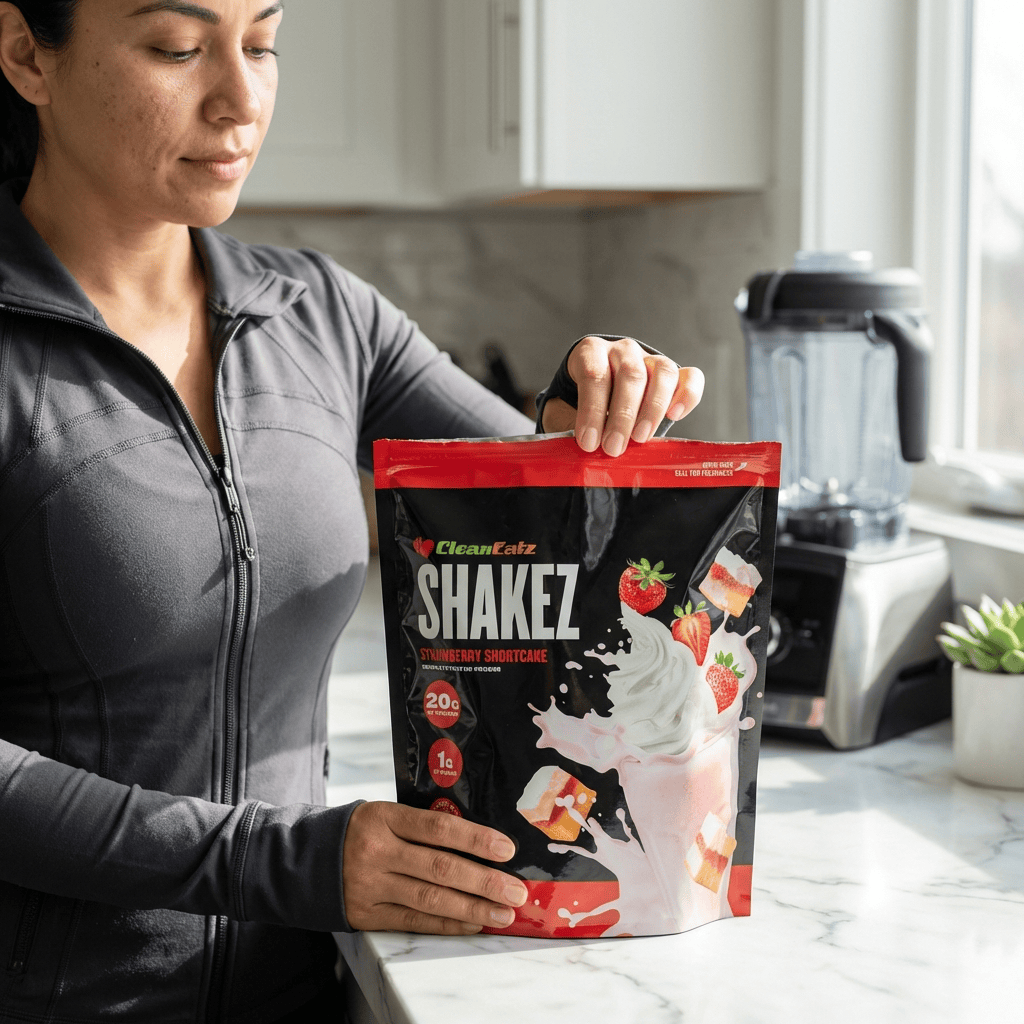
Put your priority first. To build muscle or strength, lift first and do cardio after, or on another day. For endurance performance, do your key cardio first. For fat loss, the order barely matters: across 10 studies, lifting first improved lower-body strength by about 7% but made no difference to body fat.
Should you hit the treadmill or the squat rack first? It's one of the most common workout questions, and it doesn't have a single right answer for everyone.
The right order depends on what you want out of the session. Whatever comes first gets your freshest muscles and your best effort, and everything after it works with what's left. So the real question isn't which order is correct. It's which part of your training you can least afford to do tired.
Below is the goal-based answer, the research behind it, and how to structure a workout when cardio and weights have to share one hour.
Let your goal decide the order
Put your priority first
The debate about cardio timing has a simple answer: put your priority first. The start of a workout is usually when you have the most energy, so spend it on whatever lines up with your goal.
Whatever you do first gets your best effort, your freshest muscles and your sharpest focus. Everything after that works with the energy you have left.
Everything after that works with the energy you have left.
Tina Sassine, RD, MPH
- If your goal is to build muscle or get stronger: lift first. You'll handle heavier loads, keep better technique and push closer to failure, all of which drive muscle growth. Cardio afterward, or on separate days, shouldn't cost you much as long as you're recovering and eating enough.
- If your goal is endurance: flip it. If you're training for a race, your interval sessions and tempo runs deserve fresh legs, especially on key days when hitting specific paces matters. Lift afterward or on different days.
- If your goal is fat loss or general fitness: either order works. A 2025 meta-analysis of 36 trials with 1,564 people found that cardio, alone or combined with lifting, reduced more fat mass than lifting alone, and that doing both on the same day or on different days made no clear difference to fat loss. Consistency matters most, so put the part you're most likely to skip at the front of the workout, while motivation is highest.
For more on structuring your training for fat loss, our complete exercise guide for weight loss covers how to balance cardio and strength training.
Why the order of cardio & weights matters
The interference effect, sized honestly
The science comes down to something called the interference effect. Hard cardio and heavy lifting send your body different signals, and doing a lot of one can blunt your results from the other.
A meta-analysis of 21 studies sized it. People who combined lifting with endurance training still gained muscle and strength, but less than people who only lifted. Running interfered more than cycling, and the more often and the longer people did endurance work, the bigger the cost to muscle, strength and power.
When you do hard cardio right before lifting, two things work against your strength session:
- Neuromuscular fatigue. Intense cardio taxes your nervous system and reduces how much force you can produce. Your bar speed slows, your coordination feels off, or you simply can't lift what you usually lift.
- Glycogen depletion. Cardio, especially longer or higher-intensity work, burns through the glycogen stored in your muscles. Glycogen is a main fuel for lifting, so starting your strength work low means you'll tire faster and likely cut sets short.
The order itself has been tested too. A meta-analysis of 10 studies that compared the two sequences over at least five weeks found that lifting before cardio improved lower-body strength by about 7% more than the reverse. It made no difference to muscle size, aerobic fitness or body fat percentage.
Put simply, if you're training for strength, you'll get better results lifting while you're fresh. That's why most evidence-based plans put weights first, then cardio, or separate them when performance matters. If you're working out for general fitness, the order matters less. Choose the one that keeps you showing up.
Matching cardio type to your lifting
Not all cardio costs the same
Different kinds of cardio create different amounts of interference.
Low-intensity steady state (LISS) means walking, easy cycling or a jog at a pace where you can still talk. It pairs well with lifting because it doesn't draw on the same energy systems or leave much fatigue behind. Depending on your goal, 15 to 40 minutes of easy cardio after lifting is fine, or save it for rest days as active recovery.
High-intensity interval training (HIIT) packs hard efforts into short sessions, usually 10 to 30 minutes. Formats include sprint intervals on a bike, rower or track, and bodyweight circuits with lunges, jumping jacks, squat jumps and burpees. It's a time-efficient way to train your heart and lungs and a good way to break up routines if you're tired of long cardio sessions or lifting-only workouts.
HIIT is also the cardio most likely to leave your legs tired. Put it after lifting, keep it short on lifting days, or give it a day of its own, especially before heavy lower-body work. Choosing a bike over sprints helps, since cycling interfered less than running in the research.
Tempo and threshold work falls in the middle. If these sessions are a priority, for example for a runner building race fitness, do them fresh and schedule lifting around them. If they're extra conditioning, they can come after lifting on the same day.
Combining cardio & weights in one session
Hard work fresh, easy work after
Sometimes life doesn't allow separate training days. When cardio and weights have to share one workout, this structure works for most people:
- Warm up for 5 to 10 minutes. Easy cardio plus some dynamic stretching or mobility work raises your heart rate, increases blood flow to your muscles and prepares your joints for loading, without creating fatigue that would hurt your lifting.
- Do your strength work. Spend 30 to 45 minutes on your main lifts plus any accessory exercises. This is where your fresh energy goes.
- Finish with cardio. Steady-state work of 10 to 20 minutes at an easy pace makes a good cooldown that adds training volume without adding much recovery cost. For HIIT, keep it short, around 6 to 10 minutes, such as 10 rounds of 30 seconds hard and 60 seconds easy.
The rule of thumb: do the hard work while you're fresh, and let the easier work fill in afterward.
Fueling cardio & strength workouts
Two energy systems, one plate
When you train both energy systems, especially in the same session, food matters more. You're asking your body to do a lot, and it needs enough fuel to perform and recover.
If a combined workout will run longer than 60 minutes, a light, carb-focused snack 30 to 90 minutes beforehand helps you keep your energy up. A banana, a slice of toast or an applesauce pouch works, because each digests quickly and doesn't sit heavy.
After training, aim for 20 to 35 grams of protein with some carbohydrate within a couple of hours. That supports muscle repair from lifting and refills the glycogen you burned during cardio. The International Society of Sports Nutrition suggests doses of 20 to 40 grams of protein every 3 to 4 hours across the day. A balanced meal covers both needs, or a protein shake with fruit works if you're not ready for solid food.
If you're doing double sessions or training hard most days, the hard part is usually execution, not knowing what to eat. Our High Protein Meal Plan adds 2 extra ounces of meat to each meal compared with our regular recipes, about 10 more grams of protein, for meals that run about 500 calories or more. If fat loss is the goal, the Weight Loss Meal Plan is portion-controlled and calorie-controlled for a deficit.
Cardio before or after weights bottom line
Do your priority first, then keep showing up
The cardio-before-or-after question has a straightforward answer: do your priority first. For most people who want to build muscle, lose fat and feel better, that means lifting first and adding cardio afterward. For endurance athletes, cardio comes first on key training days.
What matters more than perfect sequencing is doing both, consistently. A program you'll stick with beats a theoretically better one you'll abandon. Find a schedule that fits your life, fuel your training and keep at it. The order is a detail. Showing up is what produces results.
This article is for general education and isn't medical advice. Talk with your doctor or a qualified health professional before starting or changing an exercise program, especially if you have a medical condition or an injury, or are pregnant.

The dietitian's take
If you lift and do cardio, eat a real meal with 20 to 35 grams of protein within a couple of hours of training, and don't skip carbohydrates on your hardest days. If you feel flat in the weight room after cardio, check what you ate before you blame your program.
Tina Sassine, RD, MPH · Registered Dietitian
 Make it easy withHigh Protein Meal PlanFrom $63.00View plan
Cardio & weights FAQ
Quick answers
Should I do cardio before or after weights?
It depends on your goal, so put your priority first. Lifting first protects strength and muscle-building work, and in one meta-analysis it improved lower-body strength by about 7% more than the reverse order. Cardio first is better when endurance performance matters most. For general fitness or fat loss, either order works, so start with the part you're most likely to skip.
Will cardio negatively impact my muscle gains?
It can, but the effect is manageable. In a meta-analysis of 21 studies, people who combined cardio and lifting still built muscle, just somewhat less than those who only lifted. Running interfered more than cycling, and long or frequent sessions cost the most. Keep hard cardio brief, avoid it right before heavy leg work, and eat enough protein.
How long should I wait between cardio & weights?
If both sessions are hard, a common guideline is at least 6 hours apart, or on different days. If you're doing both in one session, do your priority first and keep the second part easier. Easy cardio such as walking needs little or no gap at all.
Can I do HIIT before squats?
You can, but it isn't ideal. HIIT before heavy lower-body work will likely reduce how much you can lift and may compromise your technique. Squat first, then do HIIT, or put them on separate days. If you must do intervals first, a bike is gentler on your legs than sprinting.
Which is better for fat loss: cardio or weights?
Cardio cut more fat in the research, and weights built muscle. In an 8-month trial of 119 adults, cardio alone and cardio plus weights cut more body fat than weights alone. Adding weights didn't add fat loss, but it was the only way people gained lean mass. For the best body composition, do both.
More strength & cardio training guides
Keep reading


Sources
- Lafontant K et al. Comparison of concurrent, resistance, or aerobic training on body fat loss: a systematic review and meta-analysis. J Int Soc Sports Nutr 2025
- Wilson JM et al. Concurrent training: a meta-analysis examining interference of aerobic and resistance exercises. J Strength Cond Res 2012 (PubMed)
- Eddens L et al. The role of intra-session exercise sequence in the interference effect: a systematic review with meta-analysis. Sports Med 2018 (PubMed)
- Willis LH et al. Effects of aerobic and/or resistance training on body mass and fat mass in overweight or obese adults. J Appl Physiol 2012 (PubMed)
- Jager R et al. International Society of Sports Nutrition position stand: protein and exercise. J Int Soc Sports Nutr 2017 (PubMed)
On this page