
Tabata workout routine for women
Tabata workout routine for women at home: 3 fat-burning circuits
Twenty seconds on, 10 off, 8 times. Three circuits take 14 minutes, with no equipment needed. The full workout, form notes, a build-up plan for beginners and what the research does and doesn't say.
- Free Shipping on Every Meal PlanFree Shipping
- Up to 20% Off 30-Meal PlansUp to 20% Off
- Chef Cooked, Dietitian BuiltDietitian Built
- Heat & Eat in MinutesHeat & Eat

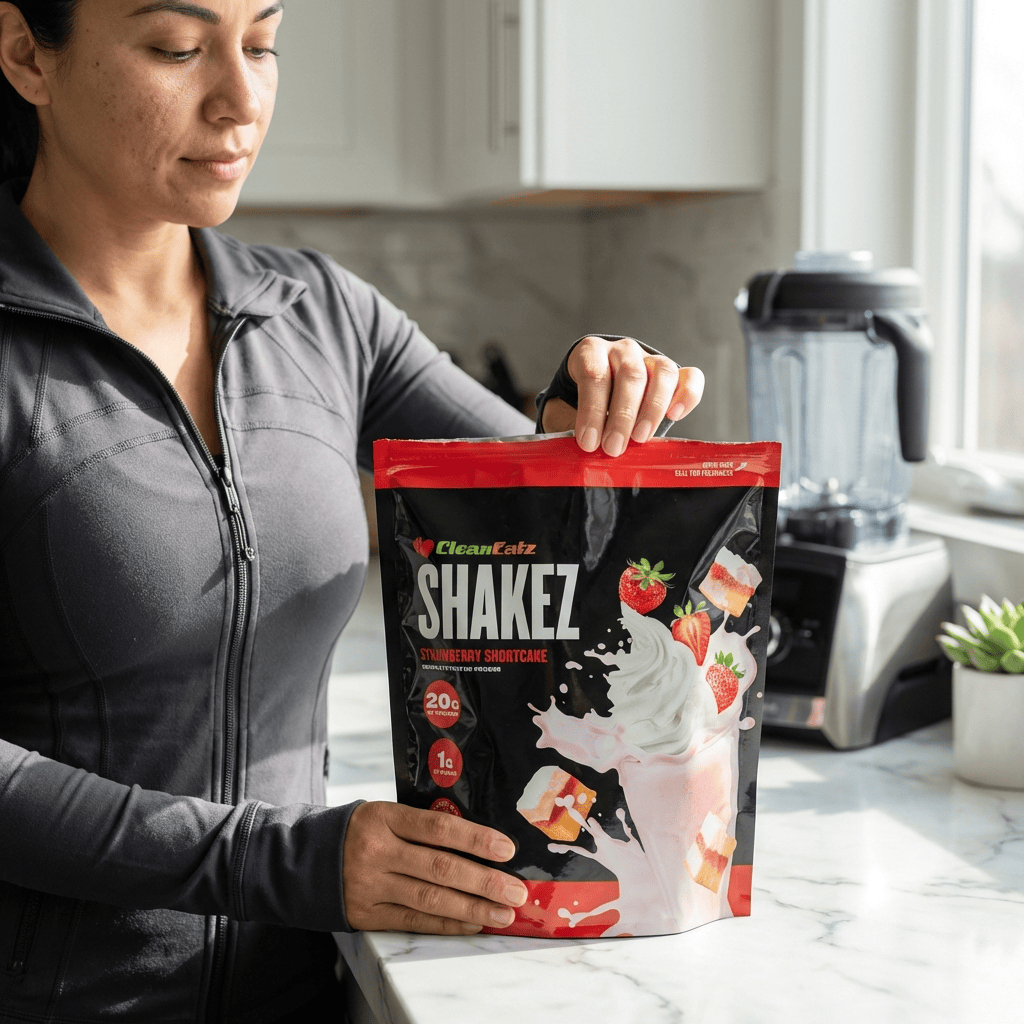
Tabata benefits for busy women
Is Tabata a good workout for busy women?
Quick answer
Yes, if you can tolerate the intensity. HIIT improves fitness and body composition, and it took about 40% less time than steady cardio in one review, with similar fat loss. It isn't a shortcut past your diet, and it isn't for every joint.
A 2020 meta-review of 33 systematic reviews found that high-intensity interval training, or HIIT, improved cardiorespiratory fitness and body measurements in healthy adults and people with health conditions, compared with doing nothing. Mean adherence topped 80% in most of the reviews. It covered a wide mix of people and interval styles, so it supports HIIT in general, not the Tabata format in particular.
The more useful comparison is HIIT against ordinary cardio. A review of 13 trials in adults with overweight or obesity found both reduced whole-body fat and waist size, with no significant difference between them. The trials averaged 10 weeks at 3 sessions a week. HIIT's advantage was the clock: it took about 40% less time.
So Tabata doesn't burn fat in some special way. It gets you a similar result in less time, which matters if time is the thing you don't have. The cost is that those minutes are hard.
What is a Tabata workout
What exactly is a Tabata workout?
Quick answer
A specific form of HIIT: 20 seconds of all-out effort, then 10 seconds of rest, repeated 8 times for 4 minutes per circuit. Most home routines do 3 or 4 circuits with 60 seconds of rest between them.
It all started with Japan's Olympic speed skating team. Dr. Izumi Tabata's own review credits head coach Kouichi Irisawa with developing the workout for his skaters. Dr. Tabata, the team's fitness coach, then tested it on a cycling machine in a landmark 1996 study. The format is deceptively simple: 20 seconds of maximum-intensity exercise, followed by 10 seconds of rest, 8 times.
Maximum intensity means giving everything you have. If you can carry on a conversation during an interval, you're not working hard enough. This isn't jogging pace. It's sprinting-for-the-bus intensity.
| Component | Duration or detail |
|---|---|
| Work interval | 20 seconds at full effort |
| Rest interval | 10 seconds |
| Rounds per circuit | 8 rounds |
| Total circuit time | 4 minutes |
| Rest between circuits | 60 seconds |
| Recommended circuits | 3 to 4 circuits |
The Tabata protocol at a glance
The 2:1 work-to-rest ratio is intentional. That short rest doesn't allow a full recovery, so your heart rate stays up and fatigue builds from round to round.
One caveat: the original workout was a single 4-minute set on a machine, far harder than a home circuit can get. What you'll do below is a bodyweight version, the same format the American Council on Exercise tested. It's still hard work, but it's a cousin of the original, not a copy.
Tabata for fat loss
Does Tabata actually work for fat loss?
Quick answer
It helps by burning a lot of calories in a few minutes and by raising your fitness. The afterburn is real but small, about 6 to 15% of what the exercise itself costs. Fat loss still depends on your overall calorie balance.
Not all exercise produces the same response in your body. Here's what holds up, and what doesn't, when people talk about Tabata.
The afterburn effect, or EPOC
After a hard session, your body keeps using extra oxygen to restore itself. That's excess post-exercise oxygen consumption, or EPOC, and it's the source of the promise that you'll burn calories for 24 to 48 hours after a workout.
The evidence is smaller than the promise. A review in the Journal of Obesity notes that EPOC after this kind of interval exercise doesn't appear to have been directly measured, and that even when other workouts produce prolonged EPOC, it makes up only 6 to 15% of the exercise's oxygen cost. The review it relies on concluded that exercise mostly affects body mass through what you burn during the session.
Do the math with a 200-calorie workout. Fifteen percent is 30 calories, about a third of a banana. Nice to have. Not a reason to skip dinner planning.
Improved cardiovascular fitness
Dr. Tabata's original study is where the famous numbers come from. After 6 weeks, VO2max rose by 7 ml per kg per minute, about 14%, and anaerobic capacity by 28%. That's a real improvement in how well your heart and lungs deliver oxygen to your muscles.
Size it honestly, though. The study had 7 fit young men, working 5 days a week on a cycle machine at about 170% of their VO2max, a level you won't reach with squats in your living room. Your numbers will likely be different, and they'd come from fewer sessions.
Muscle during weight loss
One real concern with weight loss is losing muscle along with fat. A review of the research on preserving muscle found that both endurance and resistance exercise help keep muscle during weight loss, resistance training also improves strength, and adequate protein helps as well.
That means Tabata can help, since bodyweight circuits count as exercise and the meta-review above found HIIT improved muscle mass compared with doing nothing. But it isn't a replacement for lifting. If keeping muscle is your priority, add the dumbbell circuit below and keep your protein up.
Time efficiency
Here's where the math gets interesting. A study funded by the American Council on Exercise had 16 trained volunteers do a 20-minute bodyweight Tabata workout. They averaged 86% of their maximum heart rate and 74% of their VO2max, at the upper range the American College of Sports Medicine suggests for improving cardio fitness. That was published in the Journal of Sports Science & Medicine, and it took a fraction of the time traditional cardio requires.
Tabata calories burned
How many calories does Tabata really burn?
Quick answer
About 13 to 15 calories a minute in studies of fit volunteers, or 240 to 360 calories for a 20-minute session. The 14-minute workout here works out to about 190 to 200 if you go that hard. Low-impact versions burn less.
The Journal of Sports Science & Medicine study measured an average of 14.5 calories per minute, while a similar study, with 13 women and 3 men, reported 13.4. Total burn in the 20-minute workout ranged from 240 to 360 calories. Those researchers estimated calories from heart rate, in trained volunteers, and the men averaged about 207 pounds, so the top of that range isn't where most women will land.
For the 14-minute workout below, multiply: 14 minutes at 13.4 to 14.5 calories comes to about 190 to 200 calories. That's a useful amount, in a useful amount of time.
For comparison, here's how it stacks up against common workouts. Those numbers are from Harvard Health for a 155-pound person:
| Workout | Calories per minute | 30-minute total |
|---|---|---|
| Tabata | About 13 to 15 | 240 to 360 in 20 minutes |
| Running, 10-minute mile | About 12 | 360 |
| Cycling, 12 to 14 mph | About 10 | 288 |
| Walking, 4 mph | About 6 | 175 |
| Hatha yoga | About 5 | 144 |
Calories by workout, for a 155-pound person, except Tabata, measured in the volunteers above
Your actual burn varies with your body weight, fitness level and true intensity, and those two sources used different methods, so treat the table as rough. Running at the same weight burns a similar amount per minute, if you can hold that pace. Tabata's edge is that it asks for less total time and no route. For more on this, see our guide on how many calories you should burn each day exercising.
14-minute Tabata workout at home
What does the 14-minute workout look like?
Quick answer
Three 4-minute circuits with 60 seconds of rest between them, which is 14 minutes. Add a 3-minute warm-up and a 3-minute cool-down and the whole thing takes about 20 minutes. You need no equipment and very little space.
This routine takes no equipment and very little space. Do the math on the clock: three 4-minute circuits plus two 60-second rests is 14 minutes, and the warm-up and cool-down bring it to about 20.
Warm-up, 3 minutes: before you start, do 3 minutes of light movement. March in place, then add arm circles, leg swings and gentle squats. Never jump into Tabata cold.
Circuit 1: Cardio burn
Burpees & jumping jacks
Alternate these two exercises for 8 total intervals, 4 minutes in all:
- Interval 1: burpees, 20 seconds. Rest 10 seconds.
- Interval 2: jumping jacks, 20 seconds. Rest 10 seconds.
- Repeat the pattern 4 times, for 4 rounds of each exercise.
Rest 60 seconds before Circuit 2.
Circuit 2: Lower body power
Jump squats & push-ups
Alternate these two exercises for 4 minutes:
- Interval 1: jump squats, 20 seconds. Rest 10 seconds.
- Interval 2: push-ups, 20 seconds. Rest 10 seconds.
- Repeat the pattern 4 times.
If your legs start burning before the 20 seconds are up, don't stop. Switch to regular squats without the jump and keep moving.
Rest 60 seconds before Circuit 3.
Circuit 3: Core & total body
Bicycle crunches & plank jacks
Alternate these two exercises for 4 minutes:
- Interval 1: bicycle crunches, 20 seconds. Rest 10 seconds.
- Interval 2: plank jacks, 20 seconds. Rest 10 seconds.
- Repeat the pattern 4 times.
Cool-down, 3 minutes: finish with gentle stretching. Focus on your hip flexors, hamstrings, chest and shoulders.
That's it. In about 20 minutes, warm-up and cool-down included, you've worked your upper body, lower body and core at an intensity that meets established guidelines for improving cardiovascular fitness.
Tabata exercises with proper form
What is the right form for each exercise?
Quick answer
Land softly, keep your core tight and let your form set the speed. If you can't hold good form at full pace, slow down or pick the easier version. Sloppy reps raise your injury risk and don't make the workout any better.
- Burpees: start standing. Drop into a squat with your hands on the floor. Jump or step your feet back into a plank, and add a push-up if you want it harder. Jump or step your feet back to the squat. Jump up with your arms overhead, land softly and go right into the next rep.
- Jumping jacks: start with your feet together and arms at your sides. Jump your feet out as you raise your arms overhead, then jump back. Keep your core engaged and land softly on the balls of your feet.
- Jump squats: stand with your feet shoulder-width apart. Lower into a squat with your thighs parallel to the floor and your chest up. Jump as high as you can, land softly and lower right into the next squat. Keep your knees tracking over your toes.
- Push-ups: start in a high plank with your hands slightly wider than your shoulders. Lower until your chest nearly touches the floor, then push back up with your core tight and your body in a straight line. Dropping to your knees is fine, and there's no shame in it.
- Bicycle crunches: lie on your back with your hands behind your head and your legs raised. Bring your right elbow toward your left knee as you extend your right leg, then alternate in a pedaling motion. Don't pull on your neck. Let your abs do the work.
- Plank jacks: start in a high plank with your hands under your shoulders. Jump your feet out to the sides, like a horizontal jumping jack, then back together. Keep your hips level, without letting them pike up or sag down.
Tabata for beginners & progressions
How do beginners build up to Tabata?
Quick answer
Over about 4 weeks. Start with 2 circuits, 15 to 20 seconds of rest and low-impact moves. Then cut rest to 12 to 15 seconds and add a third circuit. By week 5, you can work toward the full 20 and 10.
If you're new to Tabata or coming back after a break, going straight to full intensity isn't just unrealistic. It's a recipe for injury and burnout. Here's how to build up safely:
| Phase | Rest | Circuits | Focus |
|---|---|---|---|
| Weeks 1 to 2: Foundation | 15 to 20 seconds | 2 | Low-impact moves, form over speed |
| Weeks 3 to 4: Build | 12 to 15 seconds | 3 | Add some jumps, more speed with good form |
| Week 5 on: Full Tabata | 10 seconds | 3 to 4 | Full plyometric moves, varied exercises |
A 5-week build-up to full Tabata
Low-impact Tabata modifications
| Standard exercise | Low-impact alternative |
|---|---|
| Burpees | Walk-out burpees, stepping your feet back |
| Jumping jacks | Step jacks, stepping side to side |
| Jump squats | Fast regular squats or pulse squats |
| Plank jacks | Plank step-outs, one foot at a time |
| Mountain climbers | Slow climbers or standing knee drives |
Swap any jumping move for its low-impact version
Minimal equipment dumbbell circuit
Ready to add some resistance? This workout takes one pair of dumbbells, 10 to 20 pounds depending on your strength level. It's a good next step once bodyweight Tabata feels too easy. It runs on reps rather than a 20-second timer, so it isn't true Tabata. That's fine, since it's doing a different job.
Go through the circuit 4 times, with 10 to 12 reps per exercise. Rest as needed between sets but keep it under 60 seconds.
- Squat to overhead press: hold the dumbbells at your shoulders, squat down, then stand and press them overhead.
- Lateral squat with curl: step to the side into a squat while curling the dumbbells, return to center and alternate sides.
- Forward lunge with woodchop: using one dumbbell, lunge forward while rotating your torso and sweeping the weight diagonally across your body.
- Deadlift to forward raise: hinge at your hips to lower the weights to mid-shin, then stand and raise them in front of you to shoulder height.
- Glute bridge to chest press: lie on your back with your knees bent, then bridge your hips up while pressing the dumbbells toward the ceiling.
- Plank row: in a plank with your hands on the dumbbells, row one weight to your hip while stabilizing with the other arm, then alternate.
This full-body workout takes about 25 to 30 minutes and pairs the pace of Tabata-style training with resistance work, which is what you want for long-term changes in body composition.
Common Tabata mistakes
What are the most common Tabata mistakes?
Quick answer
Going too easy, going too hard too soon, trading form for speed, training daily, skipping the warm-up, ignoring food and picking the wrong exercises. These seven are the difference between getting results and just getting tired.
- Not going hard enough. This is the biggest one. True Tabata takes full effort during the work intervals. If you can speak in full sentences, you're not working hard enough. The 10-second rest exists because you need it.
- Going too hard too soon. On the flip side, beginners who try to match advanced intensity often burn out by round 4, get hurt or hate the workout so much they never do it again. Build up gradually.
- Sacrificing form for speed. Sloppy burpees and half-squats don't count. Poor form reduces the benefit and raises your injury risk. If you can't hold proper form at full speed, slow down or choose an easier variation.
- Doing Tabata every day. More isn't better. It's very demanding on your muscles. A common recommendation is 2 to 3 sessions a week at most, with at least 48 hours between them. Overdoing it leads to burnout, injury and stalled progress. For more on recovery, see our guide on sleep and overall health.
- Skipping the warm-up. Going straight into high-intensity work with cold muscles is asking for a pulled hamstring or worse. Always spend 3 to 5 minutes warming up with light cardio and dynamic stretches.
- Ignoring nutrition. You can't out-exercise a bad diet. A 14-minute session burns about 200 calories, which is easy to eat back without noticing. If your food doesn't support your goals, the results will frustrate you.
- Choosing the wrong exercises. Tabata works best with compound, full-body moves that raise your heart rate quickly. Bicep curls and calf raises aren't Tabata material. Stick with multi-joint exercises like burpees, jump squats, mountain climbers and plank variations.
Tabata recovery & nutrition
How should you eat & recover around Tabata?
Quick answer
Have a small carb and protein snack 1 to 2 hours before, then a meal with 20 to 30 grams of protein within a few hours after. Drink water, aim for 7 to 9 hours of sleep and leave 48 hours between sessions.
You get fitter between workouts, not only during them. Here's how to make the most of that time.
Pre-workout nutrition
Eat a small meal 1 to 2 hours before training with easily digestible carbs and some protein. Good options include a banana with almond butter, Greek yogurt with berries or a small portion of oatmeal with protein powder. Avoid heavy, high-fat meals, which may upset your stomach during intense exercise.
Post-workout nutrition
Aim for 20 to 30 grams of protein with some carbohydrates after your workout. You may have read that you need it within 30 to 60 minutes because that's when your muscles are most receptive. A review of nutrient timing found the window is much wider than that: as a rule of thumb, your pre- and post-workout meals should sit within about 3 to 4 hours of each other, and if you trained after a long stretch without eating, sooner makes sense. What you eat across the day matters more than a stopwatch.
If you'd rather not plan that meal, our High Protein Meal Plan adds 2 extra ounces of meat per meal, about 10 grams more protein, and heats in a few minutes.
Hydration
Tabata makes you sweat. Drink water throughout the day and keep some nearby during your workout. For a 20-minute session at home, water is plenty. Electrolytes make more sense for much longer sessions or very hot conditions.
Sleep
This may be the most underrated recovery tool. Growth hormone, which plays a part in muscle repair and fat metabolism, is released largely during deep sleep. Aim for 7 to 9 hours of quality sleep, especially on training days.
Active recovery
On rest days, don't feel you have to sit on the couch. Light walking, gentle yoga or foam rolling can promote blood flow to tired muscles without adding training stress. To go with it, our 100 Best Foods for Weight Loss Guide covers what to put on your plate.
Sample weekly Tabata schedule
Here's one way to structure a week without overtraining. Times include the warm-up and cool-down.
| Day | Workout | Duration |
|---|---|---|
| Monday | Tabata, 3 circuits | About 20 minutes |
| Tuesday | Active recovery: walk, stretch or yoga | 20 to 30 minutes |
| Wednesday | Dumbbell circuit | 25 to 30 minutes |
| Thursday | Rest or light activity | None set |
| Friday | Tabata, 4 circuits | About 25 minutes |
| Saturday | Active recovery or longer cardio | 30 to 45 minutes |
| Sunday | Full rest | None set |
A sample week with three hard sessions and recovery between them
This gives you three hard sessions a week with recovery between each. As your fitness improves, you can add more challenging exercises or an extra circuit.
Starting your Tabata routine
What should you do next?
Quick answer
Set a timer and do the beginner version this week. Focus on form before intensity, leave 48 hours between sessions and eat in a way that supports the work. If the food is what keeps slipping, that's a workload problem.
A well-built Tabata routine gives busy women an efficient way to get fitter and support fat loss, in workouts of about 20 minutes. The research supports that, with limits: short bursts can match the fat loss of longer moderate workouts in less time, but they don't do anything special on top of it.
The workout is only half the equation. What you eat, how you recover and whether you stay consistent matter just as much as how hard you push during those 20-second intervals.
Start with the beginner changes if you need them. Focus on form before intensity. Give yourself time to recover. And fuel your body in a way that supports your goals. If the hard part is execution, our Build Your Meal Plan lets you pick portion-controlled meals one by one, with no subscription. If you'd rather cook, try our 15 high-protein meals under 500 calories.
 Make it easy withHigh Protein Meal PlanFrom $63.00View plan
You don't need an hour at the gym. You need about 20 minutes of real effort, a timer app and the consistency to show up a few times a week. That's a commitment most schedules can make.
Tabata workout FAQ
Questions about Tabata, answered
How many calories does a 20-minute Tabata workout burn?
About 240 to 360 calories in a study of trained volunteers, averaging about 13 to 15 calories a minute. Most of that happens during the workout itself. The afterburn is real but small, so don't count on it. Your number will depend on your weight, fitness and how hard you go.
Is a Tabata workout routine for women good for weight loss?
It can help, as part of a calorie deficit. In trials, HIIT and steady cardio reduced body fat by similar amounts, and HIIT took about 40% less time. Those trials averaged 10 weeks and improvements were modest. The time efficiency is the real selling point for a busy schedule.
Can beginners do Tabata workouts?
Yes, with modifications. Start with low-impact versions of the exercises, extend your rest to 15 to 20 seconds instead of 10 and do 2 circuits instead of 3 or 4. Focus on proper form over speed and build up intensity gradually over about 4 weeks.
How often should women do Tabata workouts?
A common recommendation is 2 to 3 sessions a week with at least 48 hours of recovery between them. Tabata is very demanding on your body, so more isn't always better. Recovery is part of getting results and avoiding injury.
What should I eat before a Tabata workout?
Have a small, balanced meal or snack 1 to 2 hours before your workout with both carbohydrates and protein. Good options include a banana with almond butter, Greek yogurt with berries or a small portion of oatmeal. Skip anything heavy or high in fat, since it may upset your stomach.
What's the difference between Tabata & regular HIIT?
Tabata is a specific form of HIIT with a strict format: 20 seconds of maximum-effort work and 10 seconds of rest, repeated 8 times for exactly 4 minutes. Regular HIIT is more flexible, with its work-to-rest ratios, intensity levels and total length all open to change.
Can I do Tabata if I have joint issues?
Often, yes, with low-impact modifications. Replace jumping moves with stepping versions and focus on proper form. Talk with your doctor or a physical therapist first if you have specific concerns, and stop any move that causes sharp pain rather than working through it.
What should I eat after a Tabata workout for best results?
Have a meal with 20 to 30 grams of protein and some carbohydrates, ideally within a few hours. Your whole day's eating matters more than the exact minute. Our Weight Loss Meal Plan has portion-controlled, macro-balanced meals if you'd like that decided for you.
More home workout & fitness guides
Keep reading
 Jason Nista · Feb 7, 2023
 Ellie Lopez, LDN, MS · Oct 9, 2026
 Dorothy M. Shirnyl, RND · Jun 18, 2023
Sources
On this page