
Strength training for women
Strength training for women: Workouts to build muscle
Lifting heavy builds strength and shape, not bulk. Here is how to train for it. What the research says about load, frequency and your cycle, plus three weekly splits you can start this week.
- Free Shipping on Every Meal PlanFree Shipping
- Up to 20% Off 30-Meal PlansUp to 20% Off
- Chef Cooked, Dietitian BuiltDietitian Built
- Heat & Eat in MinutesHeat & Eat

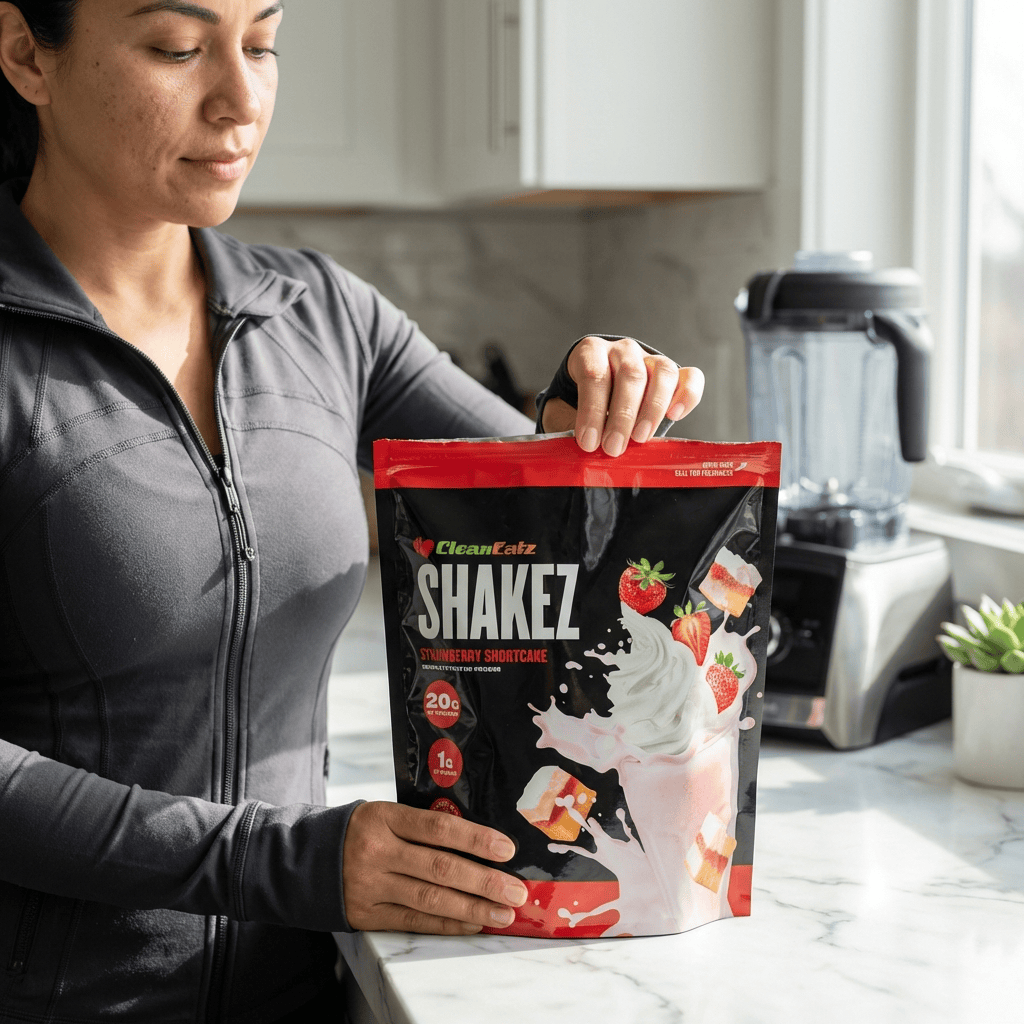
Lift weights 2 to 4 days a week and train each major muscle group at least twice. Heavy sets of 6 to 8 reps build the most strength, and lighter sets of 10 to 15 build similar muscle when you take them close to failure. Women gain muscle at about the same relative rate as men, without the bulk most worry about.
Strength is one of the best goals you can set, and building some muscle is a close second. Both make every day easier, from carrying groceries to climbing stairs, and both are well within reach whether you train at a gym or in your living room.
The catch is the advice. Women get a long list of myths about lifting, from "you'll get bulky" to "stick to light weights." Here is what the research actually says about how women should train, three weekly plans you can follow as written, and the nutrition that makes the work pay off.
Why women should lift weights
Muscle shapes you, it doesn't bulk you
The way many women think about their bodies has shifted. A 2018 study in the journal Sex Roles found that the ideal female body has moved from simply thin toward thin and toned, with gaining muscle now part of the picture. Wanting strength is not a fringe goal anymore. Here is why it's a good one.
You will not get too bulky. In a study of 181 previously inactive adults aged 50 to 85, about 10 weeks of strength training raised thigh muscle volume in both sexes. Men gained more in absolute terms, but the percentage gains were similar, and the authors called the difference small. That is muscle gain for men and women at roughly the same relative rate.
What women don't have is men's testosterone, which limits how big muscles get. Lifting gives you firmer legs, a stronger back and a more defined shape, not a bodybuilder's frame. Getting very muscular takes years of targeted training and eating, and often outside help.
Lifting gives you firmer legs, a stronger back and a more defined shape, not a bodybuilder's frame.
Dorothy M. Shirnyl, RND
Your injury risk is low, not zero. A 2017 review of weight-training sports found they have relatively low injury rates compared with common team sports. Bodybuilding, the closest of them to ordinary gym training, had the lowest rate: 0.24 to 1 injury per 1,000 hours. Good form, sensible progression and rest days keep it there.
You will get stronger, more independent and more confident. Daily tasks get easier when you are strong, and you do them without asking for help. That confidence tends to follow you out of the gym. For a deeper look at how exercise supports your overall health goals, see our Complete Exercise Guide for Weight Loss.
Strength training considerations for women
Four things that change how women train
Most training principles apply to everyone. A few are worth knowing before you choose or start crafting a training plan.
Women & recovery between workouts
Women are usually less fatigable than men at the same relative intensity, according to a review of sex differences in fatigability. The effect depends on the task, but in practice many women bounce back from a hard set faster, which means you can train a muscle group more often.
How often to train legs & each muscle group
Train your legs at least twice a week. The legs are the body part most women want to develop, and big lower body lifts like squats and deadlifts let you move the heaviest loads you'll handle in the gym.
The same rule holds for every major muscle group. A meta-analysis of training frequency found that training a muscle twice a week grew it more than once a week when total work was the same. Two to four sessions a week, split well, covers that.
Heavy vs light weights for women
Lift heavy enough that the last couple of reps are hard. A meta-analysis of 21 studies found that heavy loads build more maximal strength, while muscle growth was similar for heavy and light loads when every set was taken to failure.
That makes 6 to 8 reps a practical home base for strength and muscle, with sets of 10 to 15 for accessory moves. Light weights work too, as long as you push them close to failure. For how much work each muscle needs, see our guide to the right rep range with heavy loads and weekly volume.
Menstrual cycle & strength training
Hormones shift across your cycle, and some women feel it in the gym. In a small 1995 German study, women who trained every second day in the follicular phase (the first half of the cycle) and about once a week in the luteal phase gained more strength than women on a fixed schedule. That points to more muscle growth during the follicular phase, but it was one small study.
The authors of that 2020 meta-analysis concluded that no general rule fits everyone. Track how you feel. If your energy drops in the second half of your cycle, ease off the intensity then and push harder in the first half. If you feel the same all month, train the same all month.
Best strength training workouts for women
Three weekly splits that work
With those considerations in mind, here are three ways to organize your week. Each lists sets and reps. Pick a weight you can lift for the low end of the range with good form, and add weight once you reach the top end on every set.
Upper & lower body split
Four days, legs twice
Probably the best option for most women, because it trains your lower body twice a week and gives your upper body enough volume as well. You train 4 days a week with a rest day in the middle.
- Monday, lower: 3 sets of 6 to 8 reps of barbell back squats and deadlifts, then 3 sets of 10 to 12 reps of Bulgarian split squats and leg curls.
- Tuesday, upper: 3 sets of 6 to 8 reps of barbell bench press, then 3 sets of 10 to 12 reps of dumbbell shoulder presses, incline dumbbell chest presses and bent-over dumbbell rows.
- Wednesday: rest.
- Thursday, lower: 3 sets of 6 to 8 reps of hip thrusts and front squats, then 3 sets of 10 to 12 reps of walking dumbbell lunges and Romanian deadlifts.
- Friday, upper: 3 sets of 10 to 12 reps of overhead triceps extensions, barbell biceps curls, lateral dumbbell raises and triceps pushdowns.
- Saturday and Sunday: rest.
Full body split
Three days, everything each time
Another strong option, and the easiest to fit around a busy week. You train the whole body every session, 3 times a week, and still get solid strength and muscle gains.
- Monday, full body: 3 sets of 6 to 8 reps of barbell squats, barbell bench press and Romanian deadlifts, then 3 sets of 10 to 12 reps of seated cable rows.
- Tuesday: rest.
- Wednesday, full body: 3 sets of 10 to 12 reps of dumbbell bench presses, walking dumbbell lunges, wide lat pulldowns and lying leg curls.
- Thursday: rest.
- Friday, full body: 3 sets of 6 to 8 reps of barbell deadlifts and front squats, then 3 sets of 8 to 12 reps of bent-over dumbbell rows and cable triceps pushdowns.
- Saturday and Sunday: rest.
Body part split
Five days, more volume
This one works well too, but it isn't the best fit for beginners or for women with packed schedules. Keep each session to 45 to 60 minutes, and the extra volume can pay off.
- Monday, legs and glutes: 3 sets of 6 to 8 reps of barbell back squats, barbell deadlifts, lying leg curls and hip thrusts.
- Tuesday, chest and back: 3 sets of 6 to 8 reps of barbell flat bench press, incline dumbbell bench press, bent-over dumbbell rows and seated cable rows.
- Wednesday, legs and calves: 3 sets of 6 to 8 reps of Romanian deadlifts, walking lunges, leg curls and calf raises.
- Thursday, arms, shoulders and abs: 3 sets of 6 to 8 reps of dumbbell shoulder press, dumbbell side lateral raises, overhead triceps extensions and alternating biceps curls.
- Friday, legs and glutes: 3 sets of 6 to 8 reps of Bulgarian split squats, glute-ham raises, machine abduction and machine adduction.
- Saturday and Sunday: rest.
Notice that the legs show up three times here. If that is more than you can recover from, swap Wednesday for a lighter session. For more routines and ideas, browse our training section.
More strength training tips for women
What happens outside the workout counts
Pair your training with smart nutrition for fat loss. The "bulky" look some women worry about usually comes from body fat sitting over muscle, not the muscle itself. Strength training builds the lean tissue that shapes your body, but managing your calorie intake is what drives fat loss. A modest daily deficit of 300 to 500 calories works out to about 0.6 to 1 pound a week. Cardio or HIIT adds some burn, but food is the foundation.
Include some pelvic floor training. A Cochrane review of pelvic floor muscle training found it improves urinary incontinence in women, and it's the first treatment usually offered for leaks when you cough, laugh or jump. Kegels take a few minutes a day and need no equipment. Claims that it eases pregnancy or improves your sex life have thinner evidence, so if you have pelvic pain or symptoms, see a pelvic floor physical therapist. For the rest of your weekly movement, our exercise guide covers what to pair it with.
You don't need a gym yet. Gyms can feel intimidating, with crowds and unfamiliar equipment. You can start right where you are with dumbbells, bands and bodyweight moves, build strength and confidence at home, then join a gym when you're ready. Plenty of women get great results in your own home gym without ever leaving the house.
Feed the work. Muscle is built from what you eat. A meta-analysis of 49 trials found that gains in lean mass leveled off at about 1.6 g of protein per kilogram of body weight a day, and the authors suggested up to 2.2 g for anyone who wants to cover every base. For a 140-pound woman (about 64 kg), that is roughly 100 to 140 g a day. Add plenty of vegetables, enough carbs to fuel your sessions and healthy fats.
Muscle is built from what you eat.
Dorothy M. Shirnyl, RND
For a detailed plan, see our Complete Guide to Gaining Healthy Weight with High-Protein Meals. If cooking that much protein every day is the hard part, our High Protein Meal Plan adds 2 extra ounces of meat to each meal, about 10 g more protein than our regular recipes, from $63 for 6 meals.
Strength training for women bottom line
Lift heavy, eat enough, keep showing up
Strength training changes more than how you look. You'll feel stronger and more capable, and the mental toughness you build under a barbell carries into the rest of your life. Lift 2 to 4 days a week, train each muscle group twice, and let your cycle guide intensity only if you actually feel the difference.
Results come from the training plus the food. Pick one of the three splits above, eat enough protein to back it up, and give it 8 to 12 weeks before you judge it. When the cooking is what slips, Clean Eatz Kitchen meals list their calories and protein on our Nutrition Info page, so you can see exactly what each plate gives you.

The dietitian's take
Start lighter than your ego wants and add weight every week or two. Write down every set so you can see progress on paper. Split your protein across three or four meals, and sleep at least seven hours. Consistency for three months will beat any perfect program you quit after three weeks.
Dorothy M. Shirnyl, RND · Registered Nutritionist-Dietitian
 Make it easy withHigh Protein Meal PlanFrom $63.00View plan
Strength training for women FAQ
Quick answers
Will lifting weights make women bulky?
No. Women have much lower testosterone than men, which limits how large muscles get. In one study, women gained muscle at about the same percentage rate as men, but the absolute gains were smaller. Strength training gives most women a firmer, more defined shape. Getting very muscular takes years of targeted training and eating.
How often should women train for muscle building?
Two to four strength sessions a week works well for most women, as long as each major muscle group, especially the legs, gets trained at least twice. A meta-analysis found twice a week builds more muscle than once a week with the same total work. An upper and lower split or a full body routine both hit that target.
Should women lift heavy weights or light weights?
Both work for muscle, but heavy wins for strength. A meta-analysis of 21 studies found heavy loads built more maximal strength, while muscle growth was similar for heavy and light loads taken to failure. A practical approach is most sets at 6 to 8 reps, plus 10 to 15 rep sets for accessory exercises.
How does the menstrual cycle affect training?
For most women, only a little. A 2020 meta-analysis found performance dips trivially in the early follicular phase, around your period, and recommended a personal approach. One small study found extra strength gains from training more often in the first half of the cycle. If you feel weaker in the second half, ease off then.
What's the best workout split for women?
An upper and lower body split is often the best fit. It trains your legs twice a week with enough upper body volume, in 4 days. A 3-day full body split is excellent for beginners or busy weeks. A 5-day body part split adds volume but takes more time and recovery.
Do women need extra protein to build muscle?
Yes, more than the basic requirement. A meta-analysis of 49 trials found muscle gains leveled off at about 1.6 g of protein per kilogram of body weight a day, with up to 2.2 g suggested to be safe. For a 140-pound woman, that is roughly 100 to 140 g a day, spread across meals.
More strength training & fitness guides
Keep reading
 Fitness
Beginner Barbell Workouts for Women: 8-Week Plan & Form Tips
 Jason Nista · Oct 17, 2022
 Fitness
The Benefits of Strength Training & How To Get Started
 Romaine Rusnak, RD, LDN · May 14, 2023
 Fitness
The Best Protein Sources For Building Muscle Vs. Losing Fat
 Staci Gulbin, MS, MEd, RD · Oct 7, 2026
Sources
- Bozsik F et al. Thin is in? Think again: the rising importance of muscularity in the thin ideal female body. Sex Roles 2018
- Walts CT et al. Do sex or race differences influence strength training effects on muscle or fat? Med Sci Sports Exerc 2008 (PubMed)
- Keogh JWL, Winwood PW. The epidemiology of injuries across the weight-training sports. Sports Med 2017 (PubMed)
- Hunter SK. Sex differences in human fatigability: mechanisms and insight to physiological responses. Acta Physiol 2014 (PubMed)
- Schoenfeld BJ et al. Effects of resistance training frequency on measures of muscle hypertrophy. Sports Med 2016 (PubMed)
- Schoenfeld BJ et al. Strength and hypertrophy adaptations between low- vs. high-load resistance training. J Strength Cond Res 2017 (PubMed)
- Reis E et al. Frequency variations of strength training sessions triggered by the phases of the menstrual cycle. Int J Sports Med 1995
- McNulty KL et al. The effects of menstrual cycle phase on exercise performance in eumenorrheic women. Sports Med 2020 (PubMed)
- Morton RW et al. Protein supplementation and resistance training-induced gains in muscle mass and strength. Br J Sports Med 2018 (PubMed)
- Dumoulin C et al. Pelvic floor muscle training for urinary incontinence in women. Cochrane Database Syst Rev 2018 (PubMed)
On this page