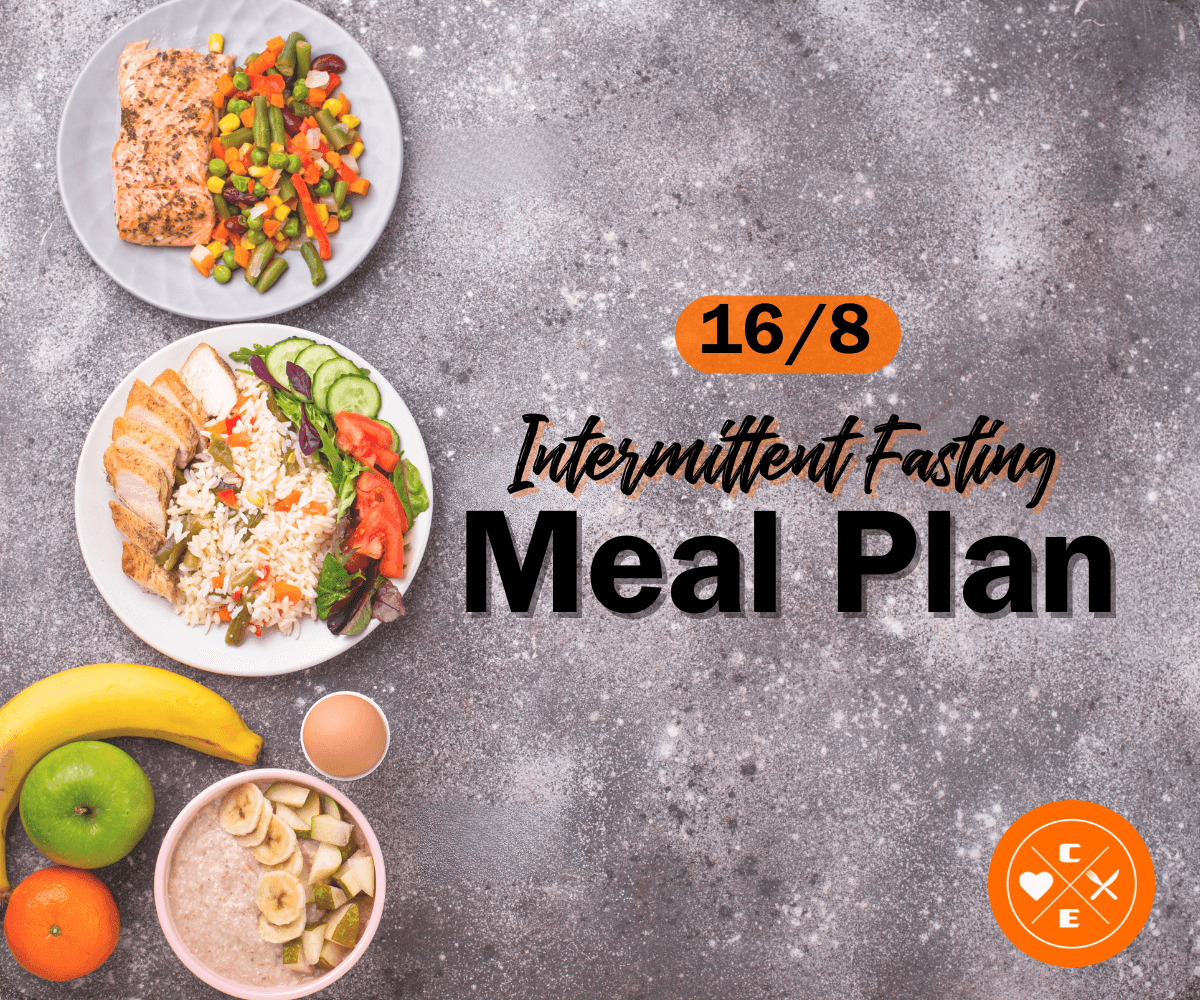

Quick Summary: A 16/8 intermittent fasting meal plan means eating all daily calories within an 8-hour window (commonly 12 pm–8 pm) and fasting for 16 hours. The focus is not simply eating less, but structuring meals strategically: protein-forward first meal, balanced lunch, and satisfying dinner that support energy, satiety, and weight management. For many people pursuing weight loss, results are most consistent when fasting is paired with moderate calorie intake, adequate protein, and 2–3 well-composed meals during the eating window.
What Is 16/8 Intermittent Fasting?
16/8 intermittent fasting is a form of time-restricted eating (TRE): you eat within a consistent daily window (like 12–8) and fast outside of it.
During the fasting window, most people stick to water, plain tea, and black coffee. During the eating window, the goal is meals that are nutrient-dense, protein-forward, and satisfying—so you’re not white-knuckling hunger all evening.
Is 16/8 Effective for Weight Loss?
For many people, 16/8 can support weight loss because it often reduces mindless snacking, creates clearer meal boundaries, and can make it easier to maintain a moderate calorie intake consistently.
That said, fasting isn’t automatically better than traditional calorie-controlled eating. In most research, outcomes are similar when total calories and protein are matched. The main advantage tends to be adherence: some people find it easier to eat well when they follow a structured schedule.
Meal prep doesn't have to be complicated.
Get our free guide — shortcuts, meal ideas, and a system that makes eating well the easy option.
Who This 16/8 Intermittent Fasting Meal Plan Is Best For (and Who Should Be Cautious)
This plan is a good fit if you:
Prefer 2–3 meals instead of grazing all day
Struggle with late-night snacking
Want a simple framework that doesn’t require constant tracking
Do well with routine and clear “start/stop” boundaries
Be cautious (or avoid fasting) if you:
Are pregnant or breastfeeding
Have a history of disordered eating
Are an adolescent, or have very high energy demands
Experience persistent dizziness, fatigue, sleep disruption, mood changes, or menstrual irregularities
Take medications that affect blood sugar (talk with your clinician first)
Fasting should never compromise nutrition, recovery, or overall well-being.
How to Structure Your 12–8 Eating Window
Most people find 12 pm–8 pm eating window fits real life: you can skip breakfast, eat lunch socially, and still enjoy dinner with family—without early-morning food stress.
Within that window, many people do best with 2–3 eating occasions:
Option A: Two larger meals (lunch + dinner)
Option B: Moderate lunch + protein-rich snack + dinner
There’s no universal “best schedule.” The best one is the one you can repeat consistently without feeling deprived.
What to Eat on a 16/8 Schedule
The fasting part is usually the easy part. The challenge is what happens when your eating window opens—because without a plan, people often:
Overeat later in the day
Under-eat protein
Default to quick, low-satiety foods
Feel irritable or drained during the fast
Use this simple meal framework:
Protein: supports satiety and lean mass
Fiber-rich carbs: vegetables, fruit, legumes, whole grains
Healthy fats: olive oil, avocado, nuts, seeds
Color + volume: to feel full without overshooting calories
A practical protein target (without being rigid)
Many adults do well aiming for ~25–35 g of protein per meal, adjusted for body size, activity, and goals. If your overall protein intake runs low, fasting days can backfire—hunger builds, cravings rise, and dinner becomes harder to control.
If you want to explore the science behind intermittent fasting and how it affects metabolism, insulin sensitivity, and appetite regulation, see our complete guide to intermittent fasting and meal planning. This article focuses on practical execution.
Breaking the Fast: Your First Meal Sets the Tone
Your first meal doesn’t need to be perfect—it just needs to be protein-forward and balanced.
A strong first meal can help you:
Feel satisfied sooner
Avoid the “I’m starving” dinner rebound
Maintain steadier energy across the afternoon
Best first-meal patterns:
Eggs + vegetables + fruit or a whole grain
Chicken or fish bowl with rice/quinoa + veggies
Greek yogurt/cottage cheese + berries + nuts (if it sits well)
Oats with added protein (protein powder or Greek yogurt)
Dinner can be more flexible—but keep it protein-anchored and vegetable-forward so you end the day satisfied, not stuffed.
7-Day 16/8 Intermittent Fasting Meal Plan
This sample plan follows a 12 pm–8 pm eating window with moderate daily calories that can work well for many people pursuing weight loss. Adjust portions based on body size, activity level, and goals.
Note: Calories and macros are estimates. Actual needs vary, and portions may need to be adjusted up or down.
Day 1
12:00 PM – First Meal: Grilled chicken breast (6oz) over mixed greens with avocado, cherry tomatoes, and olive oil dressing. Side of quinoa. (~550 calories, 45g protein)
3:30 PM – Snack: Greek yogurt with a handful of almonds. (~200 calories, 18g protein)
7:00 PM – Dinner: Baked salmon with roasted broccoli and brown rice. (~600 calories, 40g protein)
Day 2
12:00 PM – First Meal: Turkey and vegetable stir-fry with cauliflower rice. (~500 calories, 38g protein)
3:30 PM – Snack: Apple slices with 2 tablespoons almond butter. (~250 calories, 6g protein)
7:00 PM – Dinner: Lean beef bowl with sweet potatoes, black beans, and roasted peppers. (~650 calories, 42g protein)
Day 3
12:00 PM – First Meal: Three-egg omelet with spinach, mushrooms, and feta cheese. Whole grain toast. (~480 calories, 32g protein)
3:30 PM – Snack: Cottage cheese with berries. (~180 calories, 20g protein)
7:00 PM – Dinner: Grilled chicken with honey mustard glaze, asparagus, and wild rice. (~580 calories, 44g protein)
Day 4
12:00 PM – First Meal: Shrimp and vegetable bowl with brown rice and teriyaki sauce. (~520 calories, 35g protein)
3:30 PM – Snack: Hard-boiled eggs (2) with celery and hummus. (~220 calories, 14g protein)
7:00 PM – Dinner: BBQ chicken with roasted vegetables and mashed sweet potatoes. (~620 calories, 45g protein)
Day 5
12:00 PM – First Meal: Large salad with grilled salmon, avocado, cucumber, and lemon vinaigrette. (~560 calories, 38g protein)
3:30 PM – Snack: Protein bar or shake. (~200 calories, 20g protein)
7:00 PM – Dinner: Ground turkey taco bowl with lettuce, tomatoes, cheese, and salsa over rice. (~600 calories, 40g protein)
Day 6
12:00 PM – First Meal: Chicken adobo with brown rice and steamed broccoli. (~540 calories, 42g protein)
3:30 PM – Snack: Mixed nuts and string cheese. (~230 calories, 12g protein)
7:00 PM – Dinner: Lemon herb chicken with roasted vegetables and quinoa. (~590 calories, 44g protein)
Day 7
12:00 PM – First Meal: Overnight oats with protein powder, banana, and peanut butter. (~480 calories, 30g protein)
3:30 PM – Snack: Turkey roll-ups with cheese and avocado. (~250 calories, 22g protein)
7:00 PM – Dinner: Steak with roasted Brussels sprouts and baked potato. (~680 calories, 48g protein)
Simple Swaps (So You Don’t Quit on Day 3)
Use these swaps to match preferences, budget, and digestion—without breaking the structure of the plan.
Protein swaps
Chicken ↔ turkey ↔ lean beef ↔ fish ↔ shrimp ↔ tofu/tempeh
Greek yogurt ↔ skyr ↔ cottage cheese ↔ lactose-free versions
Carb swaps
Rice ↔ quinoa ↔ potatoes ↔ sweet potatoes ↔ whole grain pasta
Tip: Cauliflower rice works best as a “volume add-on,” not always a full replacement
Fat swaps
Avocado ↔ olive oil ↔ nuts/seeds ↔ tahini
If you don’t want snacks
Skip the snack and slightly increase protein/veg at lunch or dinner.
Grocery List (Shopping List)
Proteins
Chicken breast/thighs, turkey, lean beef, salmon, shrimp, eggs
Greek yogurt/cottage cheese, protein powder (optional)
Vegetables
Mixed greens, broccoli, asparagus, Brussels sprouts
Spinach, mushrooms, peppers, tomatoes, cucumbers, celery
Roasting veggies (zucchini, carrots, onions—choose what you’ll actually eat)
Carbs
Brown rice, wild rice, quinoa, oats
Potatoes/sweet potatoes, black beans (canned or dry)
Fats & extras
Olive oil, avocado, almonds/mixed nuts, almond butter, hummus
Lemon, salsa, spices, teriyaki/BBQ sauce (check sugar if that matters to you)
Meal Prep Tips That Make IF Work
Consistency—not willpower—is what makes intermittent fasting sustainable.
When your eating window opens and you’re hungry, you’ll reach for what’s easiest. That’s why preparation matters more than motivation.
Effective strategies:
Batch cook proteins (chicken, salmon, turkey)
Cook grains and roasted vegetables once or twice weekly
Portion meals ahead of time so your first choice is a good one
If convenience is your priority, Clean Eatz Kitchen's meal plans offer portion-controlled, protein-balanced meals that fit seamlessly into a 16/8 schedule—no calorie counting or cooking required. Most meals provide at least 20 g of protein and are ready in minutes.
For more strategies on making meal prep sustainable, our Complete Meal Prep Guide covers everything from batch cooking techniques to storage tips.
Frequently Asked Questions
What should I eat on a 16/8 intermittent fasting schedule?
During your eating window, prioritize nutrient-dense, minimally processed foods that support satiety and steady energy. Anchor meals in lean protein (eggs, poultry, fish, lean meat), add healthy fats (olive oil, avocado, nuts), and include fiber-rich carbohydrates (vegetables, whole grains, legumes). Starting with a protein-forward first meal can help reduce excessive hunger later in the day.
How many calories should I eat during my 8-hour eating window?
Intermittent fasting doesn’t change your calorie needs—it simply concentrates intake into a shorter time frame. Weight loss typically occurs when average intake stays below expenditure over time. Many adults aiming for fat loss do well in a moderate calorie range, but needs vary by sex, body composition, activity level, and metabolic health. Fasting works best when paired with adequate protein and overall energy intake—not extreme restriction.
Is 16/8 intermittent fasting effective for weight loss?
For many people, 16/8 can support weight loss by reducing overall calorie intake, simplifying meal timing, and improving appetite awareness. Research suggests that when calories and protein are matched, intermittent fasting often produces similar weight-loss outcomes to continuous calorie restriction. The biggest advantage tends to be adherence: some people find it easier to maintain fewer eating occasions and clearer boundaries.
Who should be cautious with intermittent fasting?
Intermittent fasting isn’t appropriate for everyone. People who are pregnant or breastfeeding, have a history of eating disorders, or experience persistent fatigue, dizziness, sleep disruption, or hormonal irregularities should approach fasting cautiously. If you take medications that affect blood sugar, consult your clinician before fasting.
Can I drink coffee during the fasting window?
Yes. Black coffee, plain tea, and water are generally acceptable and don’t meaningfully affect fasting for most people. Keep caffeine reasonable—too much can increase stress and disrupt sleep, which can work against your goals.
Do I need to count macros while doing intermittent fasting?
Not necessarily. Tracking protein can help at first, but many people do best with a simple structure: protein first, vegetables next, and carbs adjusted to activity level. This tends to be more sustainable than strict macro counting.
The Bottom Line
A 16/8 intermittent fasting meal plan works best when it’s used as a flexible framework—not a rigid rule.
Fasting itself doesn’t guarantee results. Long-term success depends far more on food quality, protein intake, total calories, and consistency than on the exact fasting window. When meals are well structured and nutritionally adequate, 16/8 can be a practical way to simplify eating patterns and improve appetite awareness for some individuals.
However, intermittent fasting isn’t inherently superior to other meal timing strategies. Research consistently shows that weight-loss and metabolic outcomes are largely comparable to traditional calorie-controlled diets when energy intake is matched. The best approach is the one that fits your lifestyle, supports your health, and can be sustained without stress or nutritional compromise.
Intermittent fasting is a tool—not a requirement. Used thoughtfully and paired with balanced meal planning, it can be effective. Used rigidly or without attention to nutrition quality, it can backfire.
Ready to simplify your meal prep? Clean Eatz Kitchen's Weight Loss Meal Plan delivers portion-controlled, protein-rich meals that make a 16/8 intermittent fasting meal plan easier to follow—no cooking required. Or explore our Build Your Meal Plan option to customize exactly what you want.
This content is for educational purposes only and does not replace personalized professional advice.
References
Wong, P. et al. (2025). Effects of 8-Hour Time-Restricted Eating (16/8 TRE) on Glucose and Lipid Metabolism. Nutrition Reviews.
Sampieri, A. et al. (2024). Impact of daily fasting duration on body composition. Journal of Translational Medicine.
Sukkriang, N. et al. (2024). Effect of intermittent fasting 16:8 and 14:10 compared with control. Journal of Diabetes Investigation.
Semnani-Azad, Z. et al. (2025). Intermittent fasting and body weight outcomes compared to continuous energy restriction. BMJ.
Sun, M. L. et al. (2024). Umbrella review of intermittent fasting and health outcomes. EClinicalMedicine.