
Table of Contents
Quick Summary: Distracted eating can make it harder to recognize hunger and fullness cues. Research suggests that when attention is divided, people may eat more and feel less satisfied after meals.1 A simple place to start is choosing one meal a day to eat with fewer distractions, such as sitting at a table and setting devices aside. Small, manageable changes can support more mindful eating over time.
Last updated: February 19, 2026
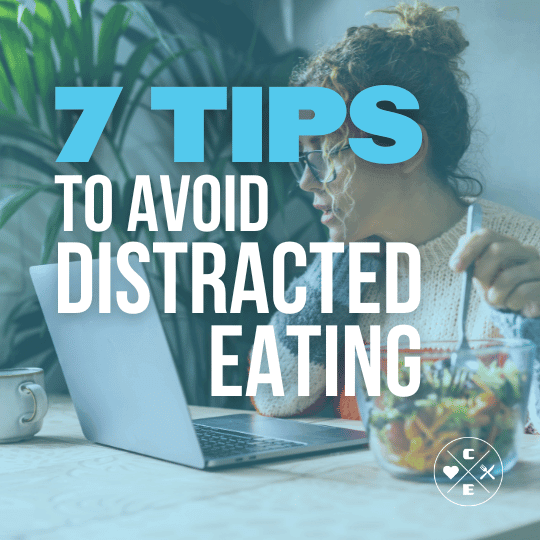
We’ve all experienced moments where eating happens alongside something else—watching a show, scrolling on a phone, or working through a task. Before you realize it, the bowl is empty, and the eating itself barely registered. It’s not necessarily about hunger; often, it’s simply part of the routine or a way to stay occupied.
This pattern is commonly referred to as distracted eating. When focus is divided, it can be harder to notice fullness cues or feel satisfied after a meal, which may lead to overeating. The encouraging part is that small shifts in awareness can make eating feel more intentional and satisfying over time.
Why Distracted Eating Makes You Eat More
Your brain takes about 20-30 minutes to register fullness signals from your stomach.2 When you're focused on eating, you notice the progression—the first few bites taste amazing, then satisfaction builds, and eventually you recognize you've had enough. When you're watching a screen, that feedback loop breaks down.
A review of 24 studies published in the American Journal of Clinical Nutrition found something striking: distracted eaters didn't just eat more during the distracted meal—they ate more at their next meal too. The researchers concluded that attention and memory play crucial roles in regulating food intake. When you don't properly encode the eating experience, your brain doesn't fully "count" it.1
There's also a timing problem. If your show runs an hour, you may keep snacking throughout that hour. The activity extends your eating window well past the point of satisfaction.
Breaking the Screen-Eating Connection
The most effective change is the simplest: eat at least one meal per day without any screens. This may feel uncomfortable at first, but with time you might grow to enjoy it. The discomfort tells you something about how automatic the connection has become.
- Create a physical barrier. Put your phone in another room during dinner. Turn off the TV before you sit down to eat. If you work from home and eat at your desk, close your laptop completely. The goal is removing the option, not relying on willpower to resist it.
- Start with one meal. Breakfast often works well for many. Commit to eating breakfast at a table, without your phone, for one week. Once that feels normal, add lunch. Gradual change proves better than dramatic overhauls.
- If you can't go cold turkey, create a buffer. Give yourself five minutes to scroll before eating—get the urge out of your system—then put the device away and eat. You're not depriving yourself; you're separating two activities that don't need to happen simultaneously.
Setting Up Your Space for Focused Eating
Environment can help shape behavior. A cluttered table with a TV visible and your phone within arm's reach creates friction against focused eating. A clean table in a quiet corner makes it the path of least resistance.
Your eating space doesn't need to be fancy. It needs to be designated—a spot that signals "this is where I eat meals" rather than "this is where I do everything." If your kitchen table is currently buried under mail and work papers, clearing it sends a message to your brain about what's supposed to happen there.
Small environmental tweaks help: use real plates rather than eating from containers (you observe what you're consuming), sit in a chair rather than standing at the counter (you're committing to the meal), and keep serving dishes in the kitchen rather than on the table (you have to make a conscious effort to get up & choose more food).
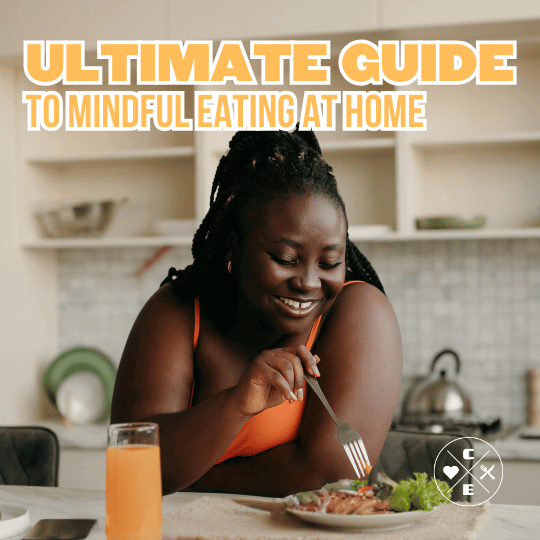
For a deeper dive into creating a mindful eating environment, see our Complete Guide to Mindful Eating at Home.
Practical Strategies That Actually Work
- Use smaller plates. This isn't about tricking yourself—it's about appropriate portions looking appropriate. A reasonable serving on a large plate looks sad; the same serving on a smaller plate looks like a meal. You eat with your eyes first.
- Put your fork down between bites. This simple technique naturally slows your pace and creates space to notice how you're feeling. Most people are surprised at how fast they normally eat once they start paying attention.
- Take three breaths before your first bite. This brief pause shifts you from "doing mode" to "eating mode." It sounds small, but it signals to your nervous system that mealtime has begun.
When Pre-Made Meals Help
One underrated cause of distracted eating: cooking feels like such a production that you want entertainment while you finally get to eat. You spent 45 minutes preparing dinner—of course you want to watch something while you enjoy it.
For some people, ready-to-heat meals can actually support better eating habits. When dinner takes 3 minutes to prepare instead of 45, the meal itself doesn't feel like the reward for a long process. You're more willing to simply sit down & enjoy it.
Pre-portioned meals also remove the "eating from the pot" problem. Your portion is your portion—no going back for seconds without making a conscious decision. Services like Clean Eatz Kitchen deliver meals already portioned for weight loss or high-protein goals, which means less mental energy spent on "how much should I eat?" and more attention available for the actual eating.
Building the Habit Gradually
Don't try to overhaul every meal at once. Pick one change—maybe eating breakfast without your phone—and do it consistently for two weeks. Once that feels automatic, add another. Research on habit formation suggests that small, consistent changes are far more likely to stick than dramatic interventions.3
Some days you'll eat standing at the counter scrolling through emails, and that's fine. The goal isn't perfection; it's shifting your default. When focused eating becomes your norm rather than your exception, the occasional distracted meal doesn't matter much.
For more on building sustainable eating habits that support your health goals, explore our Complete Guide to the Best Foods for Weight Loss.
Frequently Asked Questions
Why can distracted eating be bad for you?
Distracted eating leads to overeating because your brain may not properly register fullness signals when your attention is elsewhere. Research shows people who eat while distracted consume more during the meal and eat more later in the day. Your brain takes about 20-30 minutes to register satiety—if you're focused on a screen, you miss or delay that signal.
Does eating while watching TV cause weight gain?
It can. Studies consistently link distracted eating with increased calorie intake and weight gain over time. The TV extends your eating window—if your show runs an hour, you're more likely to keep eating throughout, well past the point of satisfaction.
How do I stop eating while scrolling my phone?
Start with one meal per day where your phone stays in another room. Create a physical barrier—don't just silence it, move it out of reach. If going completely phone-free feels impossible, give yourself 5 minutes to scroll before your meal, then put the device away.
What's the difference between mindless eating and distracted eating?
Mindless eating is eating without awareness—snacking from boredom, finishing a plate just because it's there. Distracted eating specifically means eating while multitasking. Distracted eating is one cause of mindless eating, but mindless eating can happen even without external distractions.
Can I eat while watching TV occasionally?
Occasional distracted eating won't derail your health. The problem is when it becomes the default. If you enjoy TV dinners, portion your food onto a plate before sitting down (rather than eating from a bag), and pause between servings to check if you're still hungry.
References:
- Robinson et al., 2013. Eating attentively and food intake. American Journal of Clinical Nutrition.
https://pmc.ncbi.nlm.nih.gov/articles/PMC3607652/ - Cleveland Clinic, 2024. How to tell when you are full. Cleveland Clinic Health Essentials. https://health.clevelandclinic.org/how-to-tell-when-you-are-full
- Robinson et al., 2012. Recall of recent eating and food intake. Appetite. https://pmc.ncbi.nlm.nih.gov/articles/PMC3505409/
Disclaimer: This content is provided for informational use only and is not intended as medical advice or as a substitute for the medical advice of a healthcare professional.