
Access Denied
IMPORTANT! If you’re a store owner, please make sure you have Customer accounts enabled in your Store Admin, as you have customer based locks set up with EasyLockdown app. Enable Customer Accounts
- cardio
- clean eatz
- covid
- desserts
- diet
- exercise
- fat burn
- healthy dinner ideas
- hydration
- keto
- lifestyle
- meal plans
- meal prep
- muscle
- recipes
- snacks
- sustainability
- vegetables
- water
- weight loss
- workouts
- Nutrition
- Exercises & Fitness
- Healthy Recipes
- Weight Loss
- Healthy Lifestyle
- Mental Health
- Sleep
- Recipes
Best Fruits for Weight Loss: Portions, Fiber & Easy Ways to Use Them
Ellie Lopez, LDN, MS
Nutrition
|
Weight Loss
03/10/2026 5:40am
7 minute read
Listen to article
Audio generated by DropInBlog's Blog Voice AI™ may have slight pronunciation nuances. Learn more
Reviewed and updated: March 10, 2026
Quick Answer: Whole fruit can support weight loss because it is generally low in energy density and provides water and fiber, which can help with fullness. Research reviews suggest whole fresh fruit does not promote weight gain and may modestly support weight management, especially when it replaces more energy-dense snacks or desserts. In general, whole fruit is a better everyday choice than juice because it retains fiber and is usually more filling. For a complete breakdown of weight-loss-friendly foods, see our 100 Best Foods for Weight Loss guide.
Why Fruit Can Help With Weight Loss
Fruit does not “burn fat,” but it can make a calorie-controlled eating pattern easier to stick with. Whole fruit gives you a lot of food volume for relatively few calories, and the fiber in fruit can help support satiety and slow digestion. Current U.S. guidance continues to emphasize whole fruits as part of a healthy eating pattern.
Another reason fruit works well in a weight-loss plan is practicality. A medium apple, orange, or banana is an easy portion to understand without weighing every bite. That makes fruit a simple, repeatable option for people who want sustainable habits rather than perfect tracking. USDA FoodData Central remains the standard source for typical calorie and fiber values, although exact numbers vary by variety and ripeness.
Our Ultimate Guide to Dietary Fiber explains why most Americans don't get enough of this crucial nutrient—and how increasing your intake can transform your weight loss results.
The Best Fruits for Weight Loss (With Portions)
Not all fruits are created equal when it comes to weight loss, though any fruit beats processed snacks. Here are the standouts you should keep stocked:
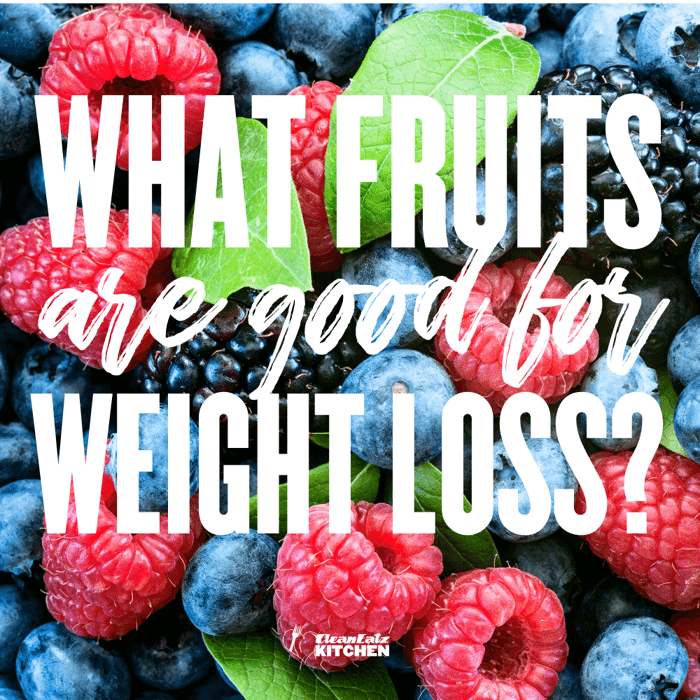
Berries (strawberries, blueberries, raspberries, blackberries) are the undisputed champions. One cup of fresh or frozen berries delivers 4-8 grams of fiber for just 50-80 calories. They're also loaded with antioxidants that support overall health. Frozen berries work perfectly and often cost less—toss them on Overnight Oats or blend into smoothies with a scoop of Protein Powder.
Apples and pears are the ultimate portable snacks. One medium fruit gives you about 4-5 grams of fiber and around 95-105 calories. The key is eating them with the skin, where most of the fiber lives. Pair with a measured tablespoon of nut butter or some Greek yogurt for staying power.
Citrus fruits—oranges, clementines, and grapefruit—are hydrating and refreshing, especially when you're craving something sweet. One medium orange runs about 60-70 calories with 3 grams of fiber. Note that grapefruit can interact with certain medications, so check with your doctor if you're on prescription drugs.
Melons (watermelon, cantaloupe, honeydew) are incredibly high in water content, making them perfect for volume eating. One to two cups provides just 45-60 calories while filling up a good portion of your plate. They're lower in fiber than berries, but the hydration factor more than compensates.
Kiwi packs a surprising punch—two small kiwis deliver about 4-5 grams of fiber for 80-100 calories, plus more vitamin C than an orange. The sweet-tart flavor makes them great in yogurt bowls or eaten on their own.
Bananas get an undeserved bad reputation. Yes, they're slightly higher in carbs than other fruits, but one medium banana still only contains about 105 calories. They're perfect before a workout when you need accessible energy, and the potassium helps with muscle function. Just pair with protein and stick to one when calories are tight.
Quick Nutrition Reference
Use this table when planning your meals. Values are typical ranges and vary by variety and ripeness.
| Fruit (serving) | Calories | Fiber | Best Use |
|---|---|---|---|
| Berries, 1 cup | 50–80 | 4–8g | Yogurt bowls, smoothies, snacking |
| Apple, 1 medium | 90–100 | 4g | Portable snack, paired with nut butter |
| Pear, 1 medium | 100–105 | 5–6g | Very filling, great afternoon snack |
| Orange, 1 medium | 60–70 | 3g | Hydrating, post-workout |
| Grapefruit, 1/2 | 45–60 | 2g | Breakfast, check medication interactions |
| Kiwi, 2 medium | 80–100 | 4–5g | Yogurt bowls, vitamin C boost |
| Melon, 1 cup | 45–60 | 1g | High volume, very hydrating |
| Banana, 1 medium | 95–110 | 3g | Pre-workout fuel |
| Grapes, 1 cup | 90–110 | 1g | Pre-portion to avoid over-snacking |
| Mango, 1 cup | 95–110 | 2–3g | Yogurt bowls, smoothies |
How to Use Fruit Strategically for Weight Loss
Whole fruit is usually more helpful for appetite control than juice. In a classic preload study, eating whole apple before a meal increased fullness and reduced meal energy intake more than applesauce or apple juice. That does not mean you need to eat fruit before every meal, but it does support choosing whole fruit more often when satiety is the goal.
A practical approach is to include fruit in balanced meals or snacks. Berries with Greek yogurt, apple slices with peanut butter, or kiwi with cottage cheese are simple combinations many people find more satisfying than fruit alone. Frozen fruit is also a strong option because it counts toward fruit intake just like fresh fruit and makes it easier to keep healthy choices available at home.
Check out our Juicing vs. Blending guide for more on this.
Common Mistakes That Can Stall Progress
The biggest issue is usually not fruit itself, but the form it comes in. Juice is easier to drink quickly and contains little to no fiber compared with whole fruit, so it is generally less filling. Recent evidence in adults suggests the relationship between 100% fruit juice and body weight is mixed and influenced by total calorie intake, while whole fruit remains the better default choice for fullness and dietary quality.
Another common mistake is assuming every fruit-based product works the same way as whole fruit. Dried fruit, fruit-flavored yogurts, and large smoothie-shop drinks can fit occasionally, but they are often easier to overconsume than plain whole fruit. For day-to-day weight loss, start with recognizable portions of whole fruit and build from there.
Use our Calorie Calculator to set your targets, then fit fruit into that framework.
Make It Easy: Done-For-You Options
If tracking portions and meal planning feels overwhelming, our Weight Loss Meal Plan takes the guesswork out of balanced eating. Each meal is calorie-controlled and macro-balanced, so you can simply add fruit as a snack without overthinking the rest. Or customize your week with Build-a-Meal Plan and choose exactly what works for your taste.
Frequently Asked Questions
What fruit is best for weight loss?
The best fruit is the one you will eat consistently in portions that fit your calorie needs. Berries, apples, pears, citrus, kiwi, and melons are especially practical because they offer good volume, fiber, or both for the calories.
Is fruit sugar bad for weight loss?
In whole fruit, sugar comes packaged with water, fiber, and other nutrients. That is very different from candy or fruit juice. Whole fruit is generally compatible with weight loss; juice is less filling and is better kept more limited.
How much fruit should I eat per day?
A practical starting point for many adults is around 1 to 2 cups per day, adjusted to total calorie needs and appetite. Current federal serving guides vary fruit targets by calorie level, so your ideal amount may be a little lower or higher.
Are bananas okay for weight loss?
Yes. A medium banana is still a moderate-calorie food, and it can be a convenient option before activity or as part of a balanced snack. The key is portion awareness, not avoidance.
Is frozen fruit as good as fresh for weight loss?
Yes for most practical purposes. Frozen fruit counts toward fruit intake and is an easy, budget-friendly way to keep fruit available for smoothies, oatmeal, and yogurt bowls.
References
- Guyenet SJ. Impact of Whole, Fresh Fruit Consumption on Energy Intake and Adiposity: A Systematic Review. Front Nutr. 2019
- Waddell IS, Orfila C. Dietary fiber in the prevention of obesity and obesity-related chronic diseases: From epidemiological evidence to potential molecular mechanisms. Crit Rev Food Sci Nutr. 2023
- Nguyen M, et al. Consumption of 100% Fruit Juice and Body Weight in Children and Adults: A Systematic Review and Meta-Analysis. JAMA Pediatr. 2024
- Flood-Obbagy JE, Rolls BJ. The effect of fruit in different forms on energy intake and satiety at a meal. Appetite. 2009
- USDA. U.S. Department of Agriculture. My plate. Fruits. Accessed March 10, 2026
- USDA. Dietary Guidelines for Americans. 2025-2030
- USDA. U.S. Department of Agriculture. FoodData Central
Disclaimer: This article is for general information only and isn't medical advice. If you have health conditions or need individualized guidance, work with your clinician.
Related Articles
Invalid password
Enter