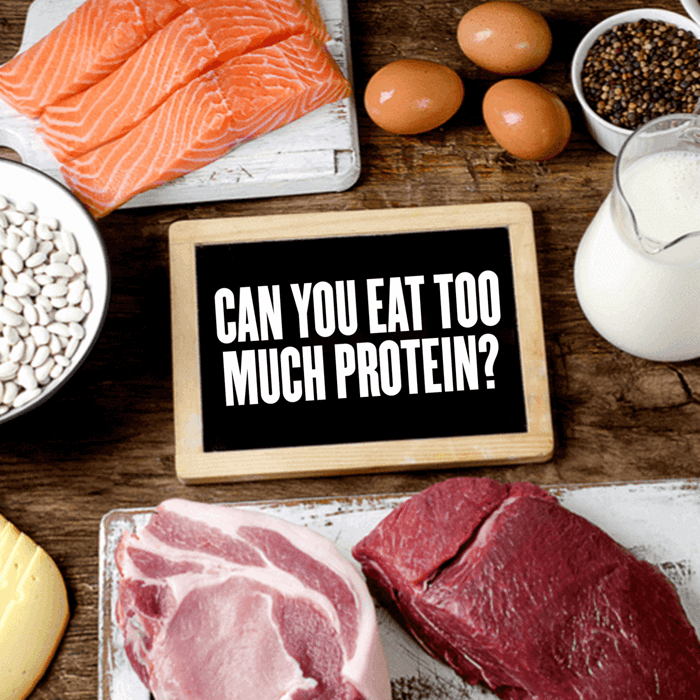
Quick Answer: Most healthy adults can safely eat a higher-protein diet—especially when it comes from lean and plant sources—as long as fiber, produce, and healthy fats stay in balance. There's no official upper limit (UL) for protein. Practical targets for most adults fall around 0.8–1.6 g/kg/day (from the RDA up to active/weight-loss ranges). Very high intakes beyond this may crowd out other nutrients or be inappropriate for people with certain conditions. When in doubt, check with your doctor.
Table of Contents
How Much Protein Do You Actually Need?
The official Recommended Dietary Allowance (RDA) for protein is about 0.8 grams per kilogram of body weight per day. For a 150-pound person, that works out to roughly 55 grams daily.
But here's the thing: the RDA represents the minimum to meet basic needs, not the optimal amount for people trying to build or preserve muscle, stay active, or lose weight.
The Acceptable Macronutrient Distribution Range (AMDR) gives more flexibility—anywhere from 10–35% of your daily calories can come from protein. 1
For most adults trying to lose fat or maintain muscle, a practical target falls between 1.0–1.6 g/kg/day, which translates to about 20–35 grams per meal spread across the day. Athletes and people focused on strength training often go higher over short-to-medium timeframes —up to 2.0–2.2 g/kg/day.2
If you're not sure where you fall, our Protein Intake Calculator can help you find your personal target based on your weight and goals.
So... Can You Actually Eat Too Much Protein?
Short answer: yes, but most people don’t.
Unless you’re really overdoing it or have an underlying health condition, eating more protein than the minimum recommendation of 0.8 g/kg is generally not an issue. Unlike some vitamins and minerals, protein doesn’t have a defined “upper limit” that signals toxicity.
Your body is efficient at processing protein. It breaks down amino acids, uses what it needs for muscle repair, enzymes, and hormones, and converts or excretes the rest.
Many of the common concerns you’ve probably heard — kidney damage, bone loss, or heart problems — don’t hold up well when we look at the evidence in healthy adults.
A meta-analysis published in the Journal of Nutrition found no adverse effects on kidney function in healthy adults consuming higher protein diets.3
Also, the old theory that protein leaches calcium from bones? Research now shows the opposite may be true—when calcium intake is adequate, higher protein is neutral to slightly beneficial for bone density.4
That said, context matters. If you have existing kidney disease, your doctor will likely recommend specific protein limits. And "more protein" isn't a free pass to eat unlimited bacon. The source of your protein and what it displaces in your diet matter as much as the total grams.
For a deeper dive into protein's role in body composition, see our Complete Guide to Gaining Healthy Weight with High-Protein Meals.
Signs You Might Be Overdoing Protein
It’s hard to put a strict number on how much protein is too much, but problems can arise when protein crowds out other important parts of your diet.
You're constantly constipated or low on fiber. When people load up on chicken breast and protein shakes, they often crowd out fruits, vegetables, and whole grains. Fiber needs don't disappear just because you're hitting your protein macro. If your digestion has slowed down, that's usually a sign to rebalance by adding more produce and fiber rather than cutting protein entirely.
You're thirsty or dehydrated. Some people cut carbs and fats drastically to "make room" for protein calories. This can leave you dehydrated (protein metabolism requires more water) and sluggish from inadequate fuel. Protein works best alongside, not instead of, adequate carbs and healthy fats.
Your protein sources are mostly processed meats. Bacon, sausage, and deli meats count toward your protein total, but they also bring saturated fat, sodium, and preservatives along for the ride. If these make up the bulk of your intake, you're getting protein's benefits alongside drawbacks that lean chicken, fish, eggs, and plant proteins don't carry.
You're gaining weight unintentionally. Adding protein on top of your existing diet, rather than swapping it in, still means extra calories. Protein isn't magic—it follows the same energy balance rules as everything else.
Better Sources and How to Balance Your Plate
The quality of your protein matters as much as the quantity.
Lean and plant-forward sources give you the amino acids you need without the baggage of excess saturated fat or sodium. Think poultry, fish, eggs, low-fat dairy, tofu, tempeh, beans, lentils, edamame, and nuts or seeds.
These foods deliver protein alongside other nutrients—fiber from legumes, omega-3s from fatty fish, probiotics from Greek yogurt.
Distribution matters too. Your body can only use so much protein for muscle synthesis at once—somewhere around 25–40 grams per meal for most adults. Eating 100 grams at dinner and skipping protein at breakfast isn't as effective as spreading 15–30 grams across each meal. This approach keeps you fuller throughout the day and gives your muscles a steady supply of amino acids to work with.
Don't forget the supporting cast. Aim for 25–38 grams of fiber daily from vegetables, fruits, legumes, and whole grains.
Stay hydrated—especially if your protein intake is on the higher end, since your kidneys need adequate fluids to filter the byproducts of protein metabolism. And make sure healthy fats (such as olive oil, avocado, nuts) have a place on your plate too.
What to Eat from Clean Eatz Kitchen
Hitting your protein targets without obsessing over every gram is easier when your meals are already portioned and balanced. The Build-A-Meal Plan lets you customize your weekly meals with consistent protein portions—most options land right in that 25–35 gram sweet spot per meal. If you prefer curated selections, the Meal Plans rotate through high-protein, calorie-controlled options that keep your macros in check without the mental math.
For filling gaps between meals, Clean Eatz Protein Powder makes it easy to round out your per-meal targets in a smoothie or shake. And the Protein PB&J delivers 11 grams of protein as a convenient snack without blowing your calorie budget.
The Bottom Line
For most healthy adults, "too much protein" isn't something to worry about.
The real risks of high protein intake are usually indirect—crowding out fiber and produce, relying too heavily on processed meats, or adding calories you don't need. If you're eating a variety of lean and plant-based proteins, keeping fiber and hydration up, and staying within a reasonable calorie range, higher protein intakes are not only safe but often beneficial for satiety, muscle retention, and metabolic health.
The exception: people with kidney disease or other medical conditions should follow their clinician's guidance, which may involve specific protein limits. Everyone else? Focus on quality, distribution, and balance—and stop stressing about whether your second chicken breast is going to break something.
Frequently Asked Questions
How much protein is "too much" per day?
There's no official upper limit. Most healthy adults do well within the AMDR (10–35% of calories). Practical upper ranges often land near 1.6–2.2 g/kg/day for active or weight-loss contexts. Beyond that, overall diet quality and balance matter more than chasing bigger numbers.
Is high protein bad for your kidneys?
In healthy adults, randomized controlled studies show no adverse effect on kidney function from higher protein intakes. However, if you have existing kidney disease or risk factors, follow your clinician's protein recommendations, which may involve lower targets.
Does high protein hurt your bones?
Current research reviews don't show harm to bones from higher protein intake. When calcium intake is adequate, higher protein is generally neutral or slightly beneficial for bone health outcomes.
Can too much protein cause gout?
It’s not overall protein intake that matters most for gout risk, but the type of protein consumed. Purine-rich foods like red and organ meats and some seafoods can increase uric acid, whereas dairy and plant proteins tend to be more gout-friendly.
References
1. U.S. Department of Agriculture and U.S. Department of Health and Human Services. Dietary Guidelines for Americans, 2020-2025. health.gov/dietaryguidelines
2. Jäger R, et al. International Society of Sports Nutrition Position Stand: protein and exercise. J Int Soc Sports Nutr. 2017;14:20. jissn.biomedcentral.com
3. Devries MC, et al. Changes in Kidney Function Do Not Differ between Healthy Adults Consuming Higher- Compared with Lower- or Normal-Protein Diets. J Nutr. 2018;148(11):1760-1767. pubmed.ncbi.nlm.nih.gov
4. Shams-White MM, et al. Dietary protein and bone health: a systematic review and meta-analysis. Am J Clin Nutr. 2017;105(6):1528-1543. pubmed.ncbi.nlm.nih.gov
Disclaimer: This article is for educational purposes only and should not replace professional medical advice. Consult with a healthcare provider or registered dietitian before making significant dietary changes, especially if you have underlying health conditions.