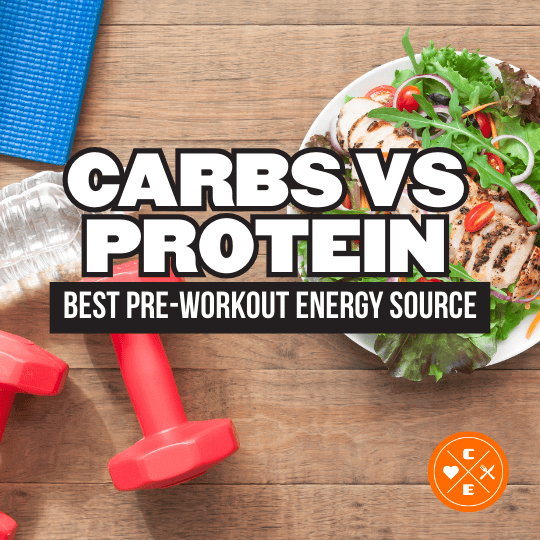
Quick Answer: For most people, combining carbs and protein before a workout delivers the best results. Carbs are your body's preferred energy source for moderate-to-high intensity exercise, while protein helps protect your muscles during training. A meal or snack with a 3:1 carb-to-protein ratio, eaten 1-3 hours before exercise, works well for most workout types.
The Short Answer: You Probably Need Both
The carbs vs. protein debate misses the point. Your body uses both nutrients differently during exercise, and the "best" choice depends entirely on what workout you're doing and when you're eating.
Carbohydrates break down into glucose, which your muscles store as glycogen—their primary fuel source during exercise. When you're working at moderate to high intensity, your body burns through this glycogen quickly. Without enough stored carbs, you'll feel sluggish, weak, and unable to push through your workout.
Protein plays a different role. It doesn't fuel your workout directly, but it protects your muscles from breaking down during exercise and provides the amino acids needed for repair afterward. Think of carbs as the gas in your tank and protein as the mechanic keeping your engine running smoothly.
When Carbs Matter Most
Carbohydrates become increasingly important as workout intensity and duration increase. For endurance activities like running, cycling, or swimming—or any session lasting longer than 60 minutes—carbs are essential. Your muscles can store between 350-700 grams of glycogen, and intense exercise depletes these stores quickly.
Research shows that cyclists on a high-carb diet restored 93% of their glycogen within 24 hours, compared to just 13% for those on a high-fat diet. That's a massive difference if you're training regularly.
Carbs are your priority if you're doing:
Long cardio sessions (60+ minutes)
High-intensity interval training (HIIT)
Endurance sports
Back-to-back training days
For a deeper look at how nutrition supports different exercise types, see our Complete Exercise Guide for Weight Loss.
When Protein Matters Most
Protein becomes more important when your goal is building or preserving muscle. Consuming 20-40 grams of protein before strength training can reduce muscle protein breakdown during your session and kickstart recovery before you've even finished your last set.
The timing matters less than people think. The old "anabolic window" theory—that you must eat protein immediately after training—has been largely debunked. What matters more is getting adequate protein throughout the day. That said, having some protein in your system before and after training is best for supporting muscle health.
Protein is your priority if you're focused on:
Strength training and muscle building
Preventing muscle loss during weight loss
Recovery from intense training
Longer periods between meals
The Best Approach: Combine Them
For most, the answer isn't carbs or protein—it's carbs and protein. Research consistently shows that combining 20-40 grams of protein with carbohydrates before training replenishes glycogen storage for fuel, initiates muscle repair & reduces soreness. It improves protein synthesis compared to either nutrient alone and optimizes performance and recovery.
A 3:1 carb-to-protein ratio works well for most pre-workout meals. That might look like:
2-3 hours before: Grilled chicken with brown rice and vegetables, or an egg omelet with whole grain toast and avocado.
1-2 hours before: Greek yogurt with berries, oatmeal with banana and a scoop of protein powder, or a turkey sandwich on whole grain bread.
30-60 minutes before: A banana with peanut butter, a protein smoothie, or a small protein bar.
The closer you eat to your workout, the smaller and simpler the meal should be. Large meals need 2-3 hours to digest properly—eating a steak 30 minutes before sprints is a recipe for disaster.
For more practical meal ideas, check out our 10 Best Pre-Workout Meals for Athletic Performance.
What About Low-Carb or Keto?
If you follow a low-carb diet, your body adapts to burn fat more efficiently—but this takes time. During the first 2-4 weeks of carb restriction, workout performance often suffers. After adaptation, many find that they can train effectively using fat and ketones as fuel, especially for lower-intensity or steady-state exercise.
For high-intensity work on low-carb, prioritize protein before training and consider a targeted approach—adding a small amount of carbs (10-20g) around demanding workouts without disrupting ketosis.
Our Complete Guide to Low-Carb Eating for Exercise covers this in depth.
Frequently Asked Questions
Should I eat carbs or protein before a workout?
For most workouts, eating both delivers the best results. Carbs provide energy; protein protects muscles. A 3:1 ratio of carbs to protein, consumed 1-3 hours before exercise, works for most people.
What should I eat 30 minutes before a workout?
Stick to easily digestible options: a banana with peanut butter, Greek yogurt, or a light protein smoothie. Avoid large meals or high-fat foods this close to training.
Is protein before a workout necessary?
Not necessarilyy if you've eaten protein recently. But 20-40 grams before training can reduce muscle breakdown and support recovery, especially for strength work.
How many carbs should I eat before a workout?
Aim for 1-2 grams per kilogram of body weight, eaten 1-4 hours before. For a 150-pound person, that's about 68-136 grams. Reduce the amount if eating closer to your workout.
The Bottom Line
Don't overthink this. For general fitness, a balanced meal with carbs and protein 2-3 hours before training—or a lighter snack 1 hour before—covers your bases. Match your approach to your goals: prioritize carbs for endurance, ensure adequate protein for strength, and combine both wherever possible.
The best pre-workout nutrition is the one you can stick with consistently. If meal timing and prep feel overwhelming, Clean Eatz Kitchen's High-Protein Meal Plan takes the guesswork out—chef-prepared meals with balanced macros, ready when you need them.
For the complete picture on fueling your workouts and optimizing results, explore our Complete Exercise Guide for Weight Loss and Complete Meal Prep Guide.