
Quick Answer: Protein affects nearly every system in your body—from building and repairing muscle to regulating appetite and metabolism. It triggers fullness hormones that reduce hunger, requires more energy to digest than carbs or fats (burning extra calories in the process), and protects lean muscle mass during weight loss. For most people, consuming 0.54–0.73 grams per pound of body weight daily supports optimal health and sustainable weight management.
If you've ever tried to lose weight or feel more energized, you've likely wondered: how does protein affect the body? Nutrition trends come and go, but increasing protein intake consistently stands out as one of the most evidence-based strategies to support appetite control, metabolism, muscle maintenance, and healthy weight management. Unlike quick fixes or restrictive diets, protein influences multiple biological processes that help the body function efficiently—and research continues to confirm its benefits.
Whether your goal is fat loss, better recovery, reduced cravings, or simply healthier eating habits, understanding what protein does inside the body can help guide the choices you make every day. Below, we break down the science in a clear, practical way so you can use protein intentionally and with confidence.
Protein and Weight Loss: Why It Matters
When people ask how does protein affect the body during weight-loss efforts, the answer often begins with one word: satiety—feeling full and satisfied after eating. And this is where protein truly stands out.
Instead of giving you quick energy and leaving you hungry again shortly after, protein triggers the release of natural "fullness signals." Research shows that certain amino acids and peptides found in high-protein foods stimulate hormones like PYY and GLP-1, which tell your brain you've eaten enough. These same hormones are targeted by popular GLP-1 medications—but your body produces them naturally in response to protein-rich meals. To learn more about how these hormones work and what foods support them, see our Ultimate Guide to the GLP-1 Diet.
Studies have shown that people who release more PYY after meals tend to have better appetite control and healthier body-fat regulation. But protein doesn't help only by reducing hunger—it also protects lean muscle mass during weight loss. Muscle burns more calories than fat, even at rest, so maintaining it is essential for keeping metabolism strong. A 2024 systematic review confirms that higher protein intake helps preserve muscle during calorie restriction.
In short, protein makes weight loss feel less like a fight against your own body. If constant hunger, cravings, or rebound weight gain have been challenges for you, increasing your protein intake may help you create a more sustainable and comfortable path forward.
Protein and Overall Health
When exploring how does protein affect the body, it's important to look beyond weight loss. Protein plays a foundational role in nearly every system of the body.
Your muscles depend on protein for movement, posture, and everyday activity—everything from climbing stairs to carrying groceries. But protein's reach extends far beyond muscle. Your skin, hair, and connective tissues rely on structural proteins like collagen. Your immune system needs protein to build antibodies and immune cells that fight off illness. Many of the hormones regulating stress, metabolism, and digestion are themselves protein-based. And as we age, adequate protein becomes even more critical for preserving balance, energy, and independence.
Low protein intake can lead to fatigue, weaker immunity, slower recovery, increased hunger, and gradual loss of muscle. Ensuring enough daily protein creates a foundation for vitality at every stage of life.
Metabolic Regulation and Energy Balance
Beyond appetite, protein also influences how your body uses and burns energy—something many people overlook when thinking about weight management.
When you eat protein, your body works harder to digest and process it compared to fats or carbohydrates. This naturally increases calorie burn, but the benefits extend further. Clinical trials have found that meals higher in protein help stabilize post-meal blood sugar and reduce the energy "crashes" that often lead to snacking. Research also notes that protein-rich diets improve metabolic flexibility—the ability to efficiently switch between burning carbs and fats—which is linked to easier, more sustainable fat loss.
Protein also slows gastric emptying, leading to a more steady release of nutrients. Many people notice more consistent energy and fewer cravings within days of increasing protein. Together, these metabolic benefits help your body feel balanced, energized, and satisfied—making a high-protein eating pattern easier to follow long term.
The Thermic Effect: Protein Burns More Calories During Digestion
Most people focus on how many calories they eat, but far fewer think about how many calories their body uses simply to process that food. This is known as the thermic effect of food (TEF)—the energy required to digest, absorb, and metabolize nutrients.
And here's where protein is uniquely powerful. Protein requires more work for the body to break down than fats or carbs. Think of your metabolism as a small engine: when you eat protein, that engine revs higher. That extra effort means more calories burned, even at rest. A 2024 systematic review and meta-analysis found that meals higher in protein generally produce greater diet-induced thermogenesis than lower-protein meals, confirming that protein is the most thermogenic macronutrient.
This doesn't mean protein magically melts fat, but it does give you a small metabolic advantage—one that adds up over time when you include protein regularly throughout the day.
How Much Protein Do You Really Need?
Most Americans know the general guideline of 46–56 grams per day—but that number only prevents deficiency. It does not support muscle maintenance, weight management, or metabolic health.
A more effective approach is to base your intake on your body weight. A practical, research-supported target is 0.54–0.73 grams of protein per pound of body weight per day (equivalent to 1.2–1.6 g/kg/day). Systematic reviews support this range for preserving lean mass and supporting muscle function in adults.
To put that in practical terms: someone weighing 150 pounds would aim for 80–110 grams of protein per day, while someone at 200 pounds would target 108–146 grams daily. You don't need huge portions of meat—just include a solid protein source at each meal, add high-protein snacks, and use convenient options like protein shakes when needed.
For healthy adults, this intake is safe and beneficial. People with kidney or liver disease should consult a healthcare provider before making significant changes.
Best Dietary Sources of Protein
Now that we've explored how does protein affect the body, the next question becomes: where should your protein come from?
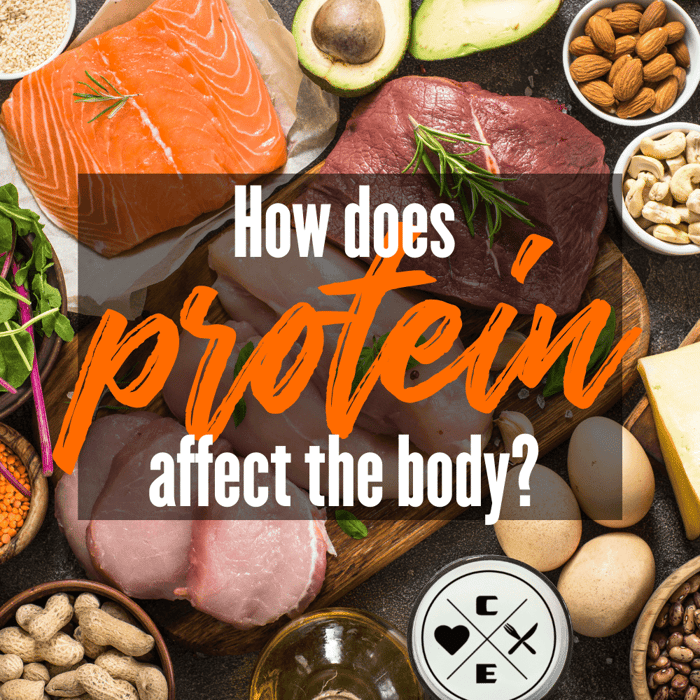
Animal-based proteins—chicken, turkey, lean beef, pork, fish, seafood, eggs, Greek yogurt, and cottage cheese—are highly bioavailable and contain all essential amino acids in the proportions your body needs. These are excellent choices for anyone looking to maximize protein absorption and muscle support.
Plant-based proteins offer their own advantages. Lentils, chickpeas, black beans, edamame, tofu, tempeh, quinoa, nuts, and seeds provide protein along with fiber, antioxidants, and nutrients that support digestion and steady energy. While individual plant foods may lack one or two amino acids, eating a variety throughout the day ensures you get everything your body needs.
For busy days when cooking isn't realistic, convenient options like high-protein meal prep bowls and ready-to-eat high-protein snacks help you stay consistent—and consistency is what drives results. For a comprehensive breakdown of which foods support weight management best, explore our Best Foods for Weight Loss Complete Guide.
Making Protein Work for You
Understanding how does protein affect the body is only useful if you can apply it to your daily routine. The good news is that boosting your protein intake doesn't require a complete diet overhaul.
Start by anchoring each meal with a protein source—whether that's eggs at breakfast, chicken or fish at lunch, and a protein-rich dinner. Add Greek yogurt, cottage cheese, or a handful of nuts as snacks between meals. If you're short on time, batch cooking proteins on weekends and portioning them into containers makes weekday meals nearly effortless. Our Complete Meal Prep Guide walks through exactly how to do this efficiently.
The goal isn't perfection—it's consistency. Even small increases in protein intake can improve satiety, energy levels, and body composition over time.
Final Thoughts
Understanding how protein affects the body helps you make smarter nutrition choices that support long-term health. Protein influences nearly everything—your appetite, metabolism, energy levels, muscle mass, and overall well-being.
It's not a quick fix, but it is one of the most reliable and sustainable tools for improving how you feel, how you perform, and how your body functions. By including high-quality protein daily—and pairing it with balanced meals, hydration, and regular movement—you set yourself up for steady progress and lasting results.
Protein helps you work with your body instead of against it. And when nutrition feels supportive and satisfying, healthy habits become much easier to maintain.
FAQ
Are all proteins created equal?
No. Animal proteins contain all essential amino acids in optimal ratios, while plant proteins vary more in their amino acid profiles. However, both support health effectively. A mix of sources—including chicken, fish, eggs, beans, lentils, and tofu—is ideal for meeting your body's needs.
Can you eat too much protein?
For healthy adults, higher protein intake within recommended ranges is generally safe. Problems mainly arise when protein replaces fruits, vegetables, or whole grains entirely. People with kidney or liver disease should consult a healthcare provider before increasing protein intake.
What happens if I don't get enough protein?
Low protein intake can cause fatigue, muscle loss, weaker immunity, slower recovery from illness or exercise, and increased hunger. Getting enough protein daily is essential for maintaining energy, strength, and overall health.
Is plant-based protein enough for my needs?
Yes. With variety—tofu, tempeh, beans, lentils, whole grains, nuts, and seeds—plant-based diets can fully meet protein needs. The key is eating a range of plant proteins throughout the day to ensure you get all essential amino acids.
How does protein affect weight loss specifically?
Protein supports weight loss through three mechanisms: it increases feelings of fullness by triggering satiety hormones like PYY and GLP-1, it preserves muscle mass during calorie restriction (which keeps metabolism higher), and it burns more calories during digestion than fats or carbohydrates through the thermic effect of food.
This content is for educational purposes only and does not replace personalized professional advice.