
Quick Answer: To minimize loose skin during weight loss, lose weight gradually (1-2 pounds per week), prioritize protein intake (1.2-1.6 grams per kg of body weight), build muscle through strength training, stay well-hydrated, and protect your skin from sun damage. These strategies give your skin's collagen and elastin fibers time to adapt, though genetics, age, and the amount of weight lost also play significant roles.
Losing weight is one of the best things you can do for your health. You'll have more energy, your joints will thank you, and your risk of chronic disease drops significantly. But if you have a substantial amount of weight to lose, there's one concern that often isn't discussed until it becomes noticeable: loose skin.
This isn't just a cosmetic issue. Excess skin after major weight loss can cause physical discomfort, chafing, rashes, and even interfere with exercise—the very activity that helped you lose weight in the first place. Research shows that over 70% of people who undergo bariatric surgery develop excess skin, and many report it affects their quality of life and body image.1
The good news? While you can't control every factor, there are evidence-based strategies that can minimize loose skin and support your skin's natural elasticity during your weight loss journey. For a comprehensive approach to sustainable weight loss, our Complete Exercise Guide for Weight Loss covers the full picture.
Why Loose Skin Happens After Weight Loss
Your skin is remarkably adaptable. When you gain weight, it stretches to accommodate the additional fat, supported by proteins called collagen and elastin that give skin its structure and bounce-back ability. The problem is that this stretching, especially over many years, can damage these protein fibers.
Think of it like a rubber band. Stretch it once or twice, and it snaps right back. But stretch it repeatedly over years, and it loses its elasticity—it simply can't return to its original shape. A 2020 study examining skin from patients after massive weight loss found significant changes in collagen structure: a reduction in thick, organized collagen fibers and an increase in thin, loosely arranged fibers that don't provide the same structural support.2
Several factors determine how much loose skin you'll experience. Age matters because collagen production naturally declines by approximately 1-1.5% per year after early adulthood.3 Genetics play a role too—some people simply have more resilient skin than others. The amount of weight you lose is significant; those losing 100+ pounds typically have more excess skin than someone losing 30 pounds. Perhaps most importantly, how quickly you lose weight and how long your skin was stretched both influence the outcome.
How to Prevent Loose Skin During Weight Loss
Lose Weight Gradually
The CDC recommends a weight loss rate of 1-2 pounds per week, and this isn't just about sustainability—it's about giving your skin time to adapt.4 When fat cells shrink gradually, your skin can slowly retract and remodel its collagen structure. Crash diets and extreme calorie restriction might show faster results on the scale, but they don't allow your skin the time it needs to keep pace with the changes happening beneath it.
Rapid weight loss also tends to cause more muscle loss alongside fat loss, which compounds the problem. Muscle provides structure and support for your skin, so losing it leaves even more "empty space" for skin to sag into. A steady approach helps preserve muscle while promoting fat loss—exactly what you want for both metabolic health and skin support.
Prioritize Protein for Skin and Muscle
Protein is critical for two reasons: it preserves muscle mass during weight loss, and it provides the amino acids your body needs to produce collagen. Research suggests aiming for 1.2-1.6 grams of protein per kilogram of body weight daily, especially when you're in a calorie deficit.5
The amino acids proline, hydroxyproline, and glycine are particularly important for collagen synthesis. You'll find these in high-quality protein sources like chicken, fish, eggs, and dairy. Bone broth is often recommended because it contains collagen, although your body ultimately breaks it down into amino acids before using it for tissue synthesis. For more on protein's role in weight loss, see Is Protein Good for Weight Loss?
Vitamin C deserves special mention because it's essential for collagen synthesis—your body literally cannot produce collagen without it. Load up on citrus fruits, bell peppers, strawberries, and leafy greens. The combination of adequate protein and vitamin C creates the optimal conditions for your skin to maintain and repair its structure during weight loss.
Clean Eatz Kitchen's High Protein Meal Plan delivers 25-30 grams of lean protein per meal, making it easy to hit your daily targets without the guesswork.
Build Muscle Through Strength Training
This is where the science becomes particularly interesting. A 2023 study published in Scientific Reports compared the effects of aerobic training versus resistance training on skin aging in middle-aged women. Both types of exercise improved skin elasticity and structure, but resistance training had an additional benefit: it actually increased dermal thickness.6
The researchers found that lifting weights triggers changes in circulating factors that enhance collagen production and increase a protein called biglycan, which is essential for maintaining thick, healthy skin. In practical terms, building muscle does double duty—it fills the space left by lost fat, reducing the appearance of sagging, while simultaneously improving the actual structure of your skin from the inside out.
Aim for 2-3 resistance training sessions per week. Focus on compound movements like squats, deadlifts, push-ups, and rows that engage multiple muscle groups. You don't need to lift extremely heavy—consistent, progressive training with moderate weights delivers results.
Stay Hydrated
Skin is about 64% water, and hydration directly affects its elasticity and plumpness. A study found that increased water consumption positively impacted skin physiology, particularly in people who weren't drinking much water before.7 While drinking water won't tighten loose skin on its own, chronic dehydration certainly makes things worse by reducing skin's elasticity and resilience.
Aim for at least 64 ounces of water daily, more if you're exercising intensely or live in a hot climate. You can also boost hydration through water-rich foods like cucumbers, watermelon, and leafy greens.
Protect Your Skin from Damage
UV exposure and smoking are two of the biggest external threats to collagen. Both break down collagen fibers and accelerate skin aging, making it harder for your skin to adapt during weight loss. Wear sunscreen daily, avoid tanning beds, and if you smoke, consider this another compelling reason to quit. Research shows that tobacco smoke has a toxic effect on skin and significantly increases the chances of premature aging.8
Natural Ways to Improve Skin Tightness After Weight Loss
If you've already lost weight and are dealing with loose skin, all is not lost. The same strategies that prevent loose skin can also improve existing skin laxity, though results vary based on how much excess skin you have and individual factors.
Collagen supplementation has shown promise. A 2019 controlled study found that participants consuming a liquid collagen supplement saw significant improvements in skin elasticity, texture, and hydration after 12 weeks.9 While this won't eliminate major excess skin, it may help with moderate looseness. Look for hydrolyzed collagen peptides, which are more easily absorbed, and take them with vitamin C for optimal benefit. Clean Eatz Kitchen's Protein Powder can complement your collagen intake as part of your daily nutrition routine.
Continue resistance training even after you've reached your goal weight. The muscle-building and skin-structure benefits compound over time. Some people notice gradual improvement in their skin's appearance for 1-2 years after weight loss stabilizes.
For significant excess skin—typically after losing 100+ pounds—surgery may be the most effective option. Procedures like abdominoplasty (tummy tuck), arm lifts, or body lifts can remove hanging skin that won't retract naturally. Interestingly, research suggests that patients who undergo skin removal surgery after major weight loss are more likely to maintain their weight loss long-term, possibly because removing the physical barrier makes exercise more comfortable and improves body image.
The Bottom Line
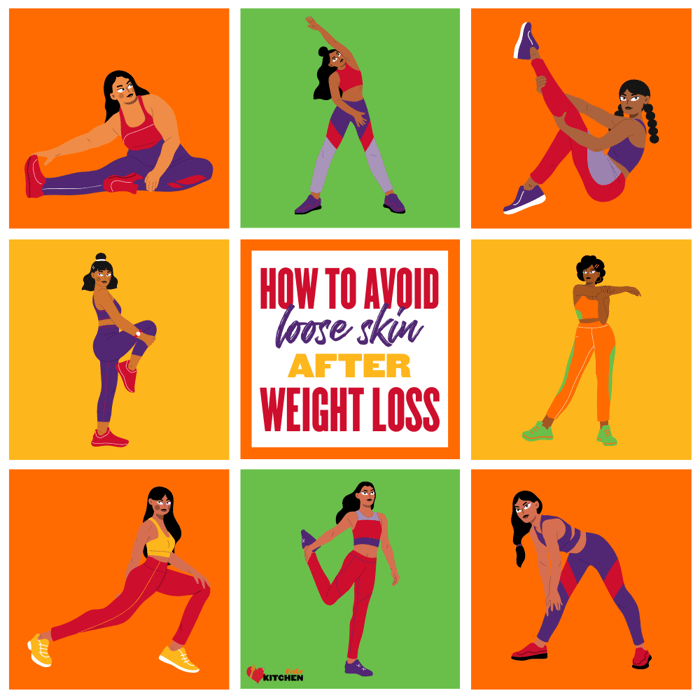
Loose skin after weight loss is common, but it's not entirely outside your control. By losing weight gradually, prioritizing protein, building muscle through resistance training, staying hydrated, and protecting your skin from environmental damage, you give your body the best possible chance to adapt.
Remember that some degree of loose skin may be inevitable after major weight loss—and that's okay. The health benefits of losing excess weight far outweigh the cosmetic concerns of loose skin. Your transformation is about becoming healthier and feeling better, and the strategies that minimize loose skin are the same ones that support sustainable, healthy weight loss.
For more on building an exercise routine that supports both fat loss and muscle preservation, explore our Complete Exercise Guide for Weight Loss. And for nutrition guidance on the foods that support your goals, check out our Best Foods for Weight Loss guide.
FAQ
How long does it take for loose skin to tighten after weight loss?
Skin tightening varies significantly by individual. Factors like age, genetics, how much weight was lost, and how long the skin was stretched all play a role. Younger individuals may see improvement within 6-12 months, while others may need 1-2 years. Some degree of loose skin may be permanent after major weight loss of 100+ pounds.
Does building muscle help tighten loose skin after weight loss?
Yes. A 2023 study published in Scientific Reports found that resistance training improves skin elasticity, dermal structure, and even increases dermal thickness. Building muscle beneath the skin helps fill the space left by lost fat, reducing the appearance of sagging and creating a firmer overall look.
Can collagen supplements help with loose skin during weight loss?
Research suggests collagen supplementation may support skin elasticity. A 2019 controlled study found that participants taking collagen supplements saw improvements in skin texture, elasticity, and hydration after 12 weeks. For best results, combine collagen with adequate protein intake, vitamin C, and strength training.
What is the best rate of weight loss to prevent loose skin?
The CDC recommends losing 1-2 pounds per week. This gradual pace gives your skin's collagen and elastin fibers time to adapt and retract as you lose fat. Rapid weight loss—especially through crash diets—doesn't allow the skin enough time to adjust, significantly increasing the likelihood of loose skin.
Is surgery the only way to remove loose skin after major weight loss?
For significant loose skin after major weight loss (100+ pounds), surgery such as abdominoplasty or body lift procedures is often the most effective option. However, for moderate loose skin, non-surgical approaches like strength training, proper nutrition, hydration, and collagen supplementation can meaningfully improve skin appearance over time.
References
1. Baillot A, Asselin M, Comeau E, et al. Impact of excess skin from massive weight loss on the practice of physical activity in women. Obes Surg. 2013;23(11):1826-1834.
2. Orpheu SC, Coltro PS, Scopel GP, et al. Skin Changes Due to Massive Weight Loss: Histological Changes and the Causes of the Limited Results of Contouring Surgeries. Aesthetic Plast Surg. 2020;44(6):2232-2238.
3. Knownwell. How to Minimize Loose Skin after Weight Loss. 2024. https://www.knownwell.co/blog-posts/6-ways-to-decrease-loose-skin-naturally-after-losing-weight
4. Centers for Disease Control and Prevention. Losing Weight. 2024. https://www.cdc.gov/healthyweight/losing_weight/
5. Moon J, Koh G. Clinical Evidence and Mechanisms of High-Protein Diet-Induced Weight Loss. J Obes Metab Syndr. 2020;29(3):166-173.
6. Nishikori S, Yasuda J, Murata K, et al. Resistance training rejuvenates aging skin by reducing circulating inflammatory factors and enhancing dermal extracellular matrices. Sci Rep. 2023;13:10214.
7. Palma L, Marques LT, Bujan J, Rodrigues LM. Dietary water affects human skin hydration and biomechanics. Clin Cosmet Investig Dermatol. 2015;8:413-421.
8. WebMD. Loose Skin After Weight Loss. 2024. https://www.webmd.com/obesity/loose-skin-after-weight-loss
9. Kim DU, Chung HC, Choi J, Sakai Y, Lee BY. Oral intake of low-molecular-weight collagen peptide improves hydration, elasticity, and wrinkling in human skin. Nutrients. 2018;10(7):826.