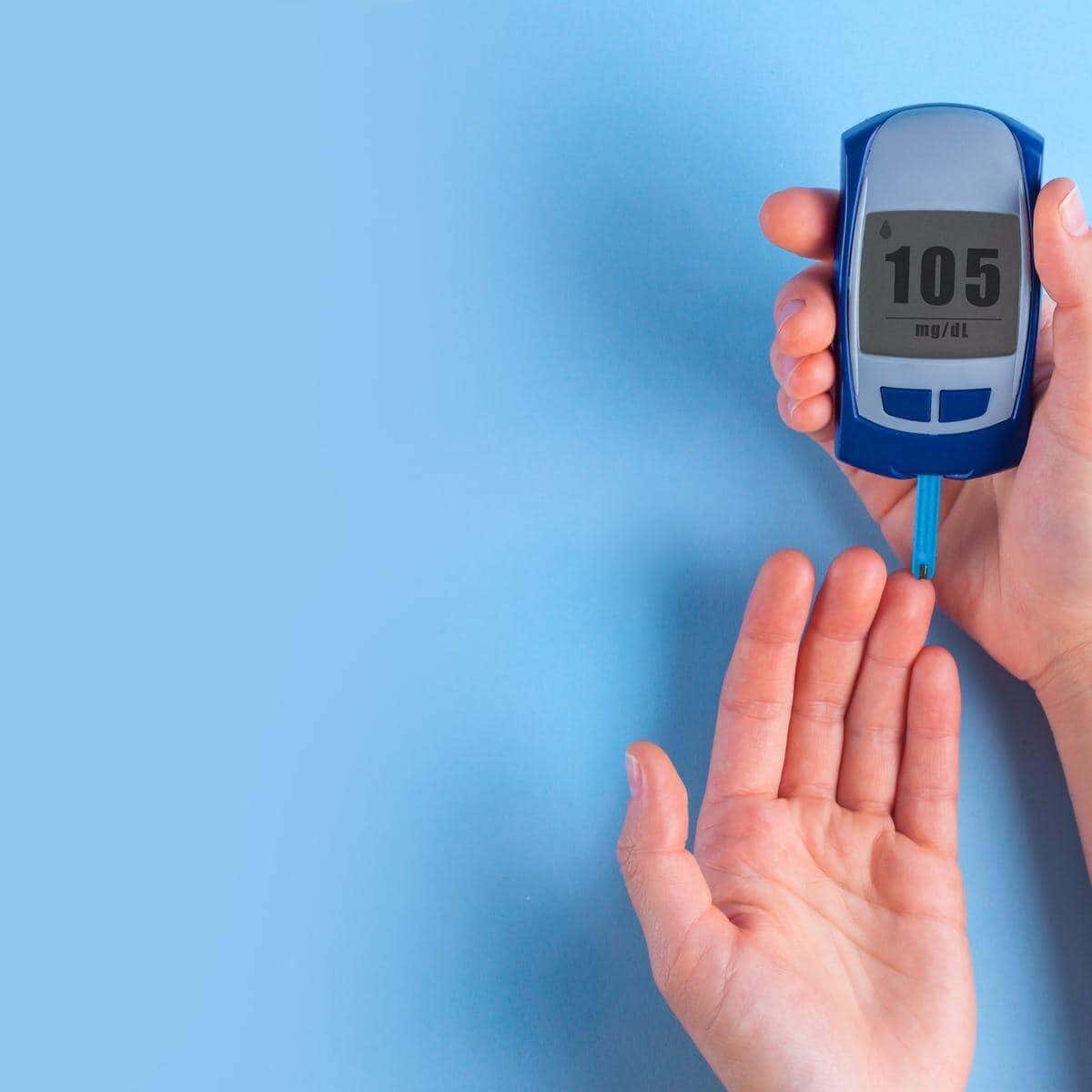

Quick Answer: There is no single diabetes diet. The American Diabetes Association's own position is that no one carbohydrate target fits everyone, and that your split should be set from your situation rather than a chart. What holds across every eating pattern they reviewed is simple: build meals around non-starchy vegetables, keep added sugars and refined grains low, anchor each plate with protein, and know the carb count of what you are eating. Your specific numbers come from your doctor or dietitian. This page covers what goes on the plate, what to be careful with, and what to do if cooking three new meals a day is the part that feels impossible.
Table of Contents
- There Is No "Diabetes Diet"
- What Actually Goes on the Plate
- What to Be Careful With
- Carbs: The Number That Matters
- What This Looks Like on a Real Menu
- When Cooking Is the Problem
- Frequently Asked Questions
- The Bottom Line
There Is No "Diabetes Diet"
This is the most useful thing anyone can tell you in the first week, and it is rarely the first thing anyone says.
The American Diabetes Association's consensus report on nutrition therapy, published in Diabetes Care, reviewed the evidence across every major eating pattern — low carb, Mediterranean, vegetarian, low fat — and concluded that there is no ideal percentage of calories from carbohydrate, protein and fat for everyone with diabetes. Macronutrient distribution, it says, should come from an individualized assessment of what you currently eat, what you prefer, and what your metabolic goals are.
Read that again if you have spent two weeks looking for the right list. The governing body did the review and the answer is that the list depends on you.
What the same report does identify is a set of things common to every pattern that worked. Emphasize non-starchy vegetables. Minimize added sugars and refined grains. Choose whole foods over highly processed ones where you can. That is the whole shared spine, and it is not exotic.
So the goal of this page is not to hand you a diet. It is to make the next few weeks less overwhelming.
What Actually Goes on the Plate
Think in components rather than recipes. Almost any meal that works is the same three things in different clothes.
Protein first. Chicken, fish, beef, eggs, Greek yogurt, cottage cheese, tofu, lentils. Protein is the component that makes a meal hold, and building around it is the single easiest structural habit to adopt. It also crowds out refined carbohydrate without requiring you to think about refined carbohydrate.
The practical version: decide the protein before anything else. If the protein is settled, the rest of the plate tends to assemble itself.
Non-starchy vegetables for the bulk. Broccoli, peppers, greens, green beans, cauliflower, zucchini, tomatoes, mushrooms, asparagus. These are where volume comes from when you are eating less of something else, and they are the one category the consensus report names explicitly across every pattern. Frozen counts. Frozen is often better, because it is in the freezer at 6pm on a Tuesday and the fresh bag is not.
Carbohydrate as a measured component, not the base. Rice, potatoes, bread, pasta, beans, fruit, oats. These are not banned. They move to being a portion of the plate rather than the foundation of it. Whole and intact versions — beans, lentils, whole grains, whole fruit — come with fiber attached, which is why they behave differently from the refined equivalent even at the same carb count. The consensus report encourages getting fiber from food rather than supplements, and pulses are the specific example it gives. Our complete guide to dietary fiber goes deeper on why that difference exists.
Fat is the fourth component and mostly takes care of itself if the first three are right. Olive oil, nuts, avocado, the fat that comes with the protein.
Weight Loss Meal Plan Delivery

$89.95
Weight Loss Meal Plan Delivery – Delicious, Calorie-Controlled Meals Take the guesswork out of eating healthy and achieving your weight loss goals with our Weight Loss Meal Plan Delivery. Our expertly crafted, portion-controlled meals are balanced with the right… read more
What to Be Careful With
Very little is genuinely forbidden, which is not the same as saying everything is equivalent.
The clearest single change most people can make is sugar-sweetened drinks. Soda, sweet tea, energy drinks, the large coffee order. Liquid sugar arrives fast, brings nothing with it to slow the process, and does almost nothing for fullness. If you change one thing this week, change this one. Fruit juice sits in the same category — the sugar without the fiber and without the chewing.
After that it gets less dramatic. Refined grains eaten alone — white bread, plain pasta, crackers as a snack — tend to produce the sharpest response, and the usual fix is not elimination but company: a smaller portion with protein and vegetables next to it. Highly processed snack food is easy to eat past the point you meant to stop, which is a portion problem more than a carbohydrate one.
Here is the honest part. Elimination diets feel decisive in week one and collapse in week five, and the collapse usually overshoots. A smaller plate of the thing you actually like, repeated for a year, beats a perfect plan you abandon in March. The evidence base agrees with this more than most diet advice admits — the consensus report's emphasis on individualization exists precisely because adherence is what determines whether an eating pattern does anything.
Carbs: The Number That Matters
Carbohydrate counting is the practical skill, and it is worth separating two questions that get tangled together.
How many carbs should you eat? That number belongs to you and your care team. It depends on your medications, your activity, your size, and what your glucose readings actually do. Any article that hands you a figure without knowing those things — including the ones that confidently print 45 to 60 grams per meal — is generalizing. The ADA's position is explicit that no single distribution works for everyone. If you have not had this conversation with a doctor or a registered dietitian yet, that conversation is worth more than any article, this one included. Our health notice covers where our content stops and clinical advice begins.
How many carbs are in what you are about to eat? This one is universally useful regardless of your target, and it is where most of the day-to-day difficulty actually lives. You cannot stay inside a number you cannot see.
Which is why the hardest meals to manage are usually the ones you made yourself from an estimate, or ordered somewhere that publishes nothing. A packaged meal with the carbs printed on it is easier to plan around than a home-cooked plate you guessed at — not because it is healthier, but because it is known.
What This Looks Like on a Real Menu
Abstract advice is easy to write. Here is our actual current menu, with real numbers, because seeing the spread is more useful than another set of principles.
There are 36 meals on the menu as of this writing. Carbohydrate runs from 24g to 58g per meal, with a median of 38g. Protein runs 23g to 55g. Every meal is single-serve, 7 to 12 ounces, and every one of those numbers is published on our meal nutrition page before you order anything.
Fifteen of the 36 sit at or below 35g of carbohydrate. The ones that pair a lower carb count with substantial protein look like this:
- Basic Chicken Breast & Sweet Potatoes — 300 calories, 40g protein, 24g carbs
- Tri Tip Steak with Loaded Mash — 380 calories, 31g protein, 25g carbs
- Chicken Taco Bowl — 380 calories, 33g protein, 30g carbs
- BBQ Bacon Cheddar Chicken — 420 calories, 37g protein, 31g carbs
- XL Chicken Taco Bowl — 460 calories, 41g protein, 33g carbs
- Buffalo Chicken Mac & Cheese — 430 calories, 47g protein, 35g carbs
And the ones at the other end, because a menu that only shows you its best angles is not much use: Chicken & Sweet Potato Nacho Fries at 58g, Korean BBQ Chicken Bites at 56g, Hot Honey Chicken Mac & Cheese at 52g. Those are not bad meals. They are meals that need to fit a bigger share of your day's carbohydrate, and knowing that in advance is the entire point.
One thing we do not publish, and I would rather say it than let you find out later: fiber is not broken out in our nutrition chart. It is calories, protein, carbohydrate, fat and allergens. That means we cannot give you a net carb figure, and any meal service telling you it publishes net carbs should be showing you a fiber column to back it up. If fiber is your priority, the High Fiber Meal Plan is selected around bean, whole-grain and vegetable-forward meals, but I am not going to quote you grams we do not measure.
When Cooking Is the Problem
Most diabetes food advice assumes the reader's obstacle is knowledge. Often it is not. You know broccoli is fine. The obstacle is that you now have to plan, shop for, cook and portion three meals a day, correctly, forever, starting immediately, on top of a diagnosis you are still absorbing.
That is a workload problem, and workload problems have different solutions than knowledge problems.
If you want to cook, batching is the lever that works — one session, several days of components, no decisions on weeknights. Our complete meal prep guide covers the mechanics, and the 100 best foods for weight loss guide is a useful shopping backbone, since the overlap between the two eating patterns is nearly total.
If you do not want to cook, or cannot right now, that is a legitimate answer and not a failure. Prepared meals with published nutrition remove the cooking and the estimating at the same time. With our Build-a-Meal Plan you pick every meal individually and filter by Kcal, Protein, or Low Carb (under 20g) — so you can assemble a box against the carb target your dietitian gave you rather than against a marketing label. Meals start at $8.99, there is no subscription, shipping is free on every meal plan order, and everything arrives flash-frozen with up to 12 months of freezer life. That last detail matters more than it sounds: on a day your appetite is off, the meal you skip is still there next month.
If you would rather not choose at all in the first few weeks, the Everyday Maintenance Meal Plan is pre-selected and balanced, and it is the least demanding starting point on the menu. If you are managing type 2 diabetes alongside a GLP-1 medication — an increasingly common combination — the GLP-1 Meal Plan is built for reduced appetite, and our ultimate guide to the GLP-1 diet covers how eating changes on those medications.
And if you want to see how we compare against the services built specifically for diabetic customers, including where they beat us, we put that side by side in our guide to the best meal delivery for diabetics.
Frequently Asked Questions
What foods should I avoid with diabetes?
Very few foods are genuinely off-limits. The ADA's consensus report points at patterns rather than bans: minimize added sugars and refined grains, choose whole foods over highly processed ones, and build meals around non-starchy vegetables. In practice the things worth limiting hardest are the ones that deliver a lot of fast carbohydrate with nothing alongside it — sugar-sweetened drinks, fruit juice, and refined-flour snacks eaten on their own. Sugary drinks are the clearest single change, because liquid sugar arrives fast and brings no protein, fat or fiber to slow it down.
How many carbs should I eat per meal with diabetes?
There is no universal number, and anyone who gives you one without knowing your situation is guessing. The ADA states plainly that no single percentage of calories from carbohydrate works for everyone with diabetes, and that the split should be set from an individual assessment. Your target depends on your medications, your activity, your body size and your glucose readings, and it is a conversation for your doctor or a registered dietitian. What is universally useful is knowing the carb count of what you are about to eat, whoever set your target.
Can I eat fruit if I have diabetes?
Yes. Whole fruit comes packaged with fiber and water, which is why it behaves differently from the same sugar in liquid form. Portion is the variable that matters, and pairing fruit with protein or fat slows things further — an apple with peanut butter is a different event from an apple alone. Fruit juice is the one to treat separately: it delivers the sugar without the fiber and without the chewing.
Are frozen meals okay for diabetes?
They can be, and the deciding factor is whether the nutrition is published before you buy rather than whether the meal was frozen. A frozen meal with the carbs, protein, calories and fat listed per serving is easier to plan around than something you cooked yourself and estimated. Flash-freezing also means a meal you skip on a low-appetite day is still there next month instead of going in the bin.
Do I have to give up bread and pasta?
No, though the portion and what surrounds it will probably change. Refined grains eaten alone tend to produce the sharpest response, so the usual adjustment is a smaller serving with protein and vegetables beside it rather than removing the food entirely. Elimination sounds decisive and tends to collapse within a few weeks, which is worse than a smaller plate you can actually repeat.
What is the easiest way to eat well with diabetes if I do not cook?
Take the decisions out rather than adding more of them. Prepared meals with published nutrition remove both the cooking and the estimating, which are the two things people newly diagnosed find hardest. If that is your situation, sort a menu by carbohydrate, pick the meals that fit the target your care team gave you, and eat those on repeat until the routine settles. Repetition is an advantage here, not a failure of imagination.
The Bottom Line
You are not looking for the correct list of foods, because it does not exist. The governing body of American diabetes care checked, and said so.
What you are looking for is a plate you can build without thinking about it: protein decided first, non-starchy vegetables for the bulk, carbohydrate as a measured component, and a number you can actually see rather than estimate. Get your target from your care team. Get the counts from the label.
And if the real obstacle this month is that you are being asked to become a cook overnight, that is worth naming rather than pushing through. Removing decisions is a legitimate strategy. Every meal we make has its calories, protein, carbohydrate and fat published on the nutrition page before you order, and you can filter the Build-a-Meal Plan menu by carbohydrate to build a box that fits your number. No subscription, free shipping, and a freezer full of meals you do not have to think about on the days you have nothing left to think with.
This article is general information, not medical advice. Carbohydrate targets, medication timing and glucose monitoring are decisions for your healthcare team.