
Dietary fiber guide
The ultimate guide to dietary fiber (2026)
Only about 5% of Americans get enough fiber. Most adults should aim for 25 to 38 grams a day. What fiber does for your gut, weight, blood sugar and heart, the best foods and a 30-day plan to get there.
- Free Shipping on Every Meal PlanFree Shipping
- Up to 20% Off 30-Meal PlansUp to 20% Off
- Chef Cooked, Dietitian BuiltDietitian Built
- Heat & Eat in MinutesHeat & Eat


Why dietary fiber matters
Why does dietary fiber matter so much?
Quick answer
Because most people fall short and the payoff is broad. About 95% of Americans miss the target, and in large observational studies the highest fiber eaters had 15% to 30% lower rates of heart disease, type 2 diabetes, colorectal cancer and early death.
Imagine one dietary change linked to lower risk of heart disease and type 2 diabetes, better blood sugar and an easier time managing your weight. That's not a supplement or the latest trend. It's dietary fiber, and surveys suggest only about 5% of Americans get the recommended amount.
The numbers behind that claim are large. A Lancet series of systematic reviews covered 185 prospective studies and 58 clinical trials. Comparing the highest fiber eaters with the lowest, it found a 15% to 30% decrease in all-cause and cardiovascular death, and in the incidence of coronary heart disease, stroke, type 2 diabetes and colorectal cancer. Those comparisons are observational, so they can't prove cause on their own, but the trials pointed the same way, with lower body weight, blood pressure and total cholesterol.
How did we get here? Some estimates suggest ancestral diets carried far more fiber than modern ones, thanks to wild plants, roots and seeds. Today, the average American gets roughly 15 to 16 grams a day, well short of the 25 to 38 grams recommended. Food processing strips fiber from grains, and refined products have replaced many of the beans, vegetables and whole grains people used to eat.
Researchers keep finding that fiber's influence goes beyond keeping you regular. A 2024 analysis in mSystems pooled 21 fiber interventions from 12 human studies, with 538 people, and found that short-term increases in fiber produced consistent responses in gut bacteria across studies. The size of that effect is worth noting. Fiber explained about 1.5% of the variation in gut bacteria, against 82% explained by the individual person. So the direction is consistent, and each person's starting gut still matters far more.
Fiber's odd nature is what makes it interesting. It's a carbohydrate your body can't digest, yet it's important for your health. This indigestible plant material passes through to your colon, where bacteria ferment some of it into compounds that may influence inflammation, insulin sensitivity and appetite. Your health depends on what you absorb, and also on what you feed the microbes living in your gut.
The cost of the conditions fiber touches is high. The CDC puts obesity at nearly $173 billion a year in medical spending, in 2019 dollars, and the American Diabetes Association estimated the total cost of diagnosed diabetes at about $413 billion in 2022. Fiber won't erase those numbers, but it's a cheap, low-risk place to start.
We'll walk through the research, clear up common myths and give you practical ways to eat more. Whether you're managing a health condition, trying to lose weight or simply want to feel better, you'll find a next step here.
Dietary fiber science & research
What does the research say fiber actually does?
Quick answer
It feeds gut bacteria, slows digestion, modestly improves blood sugar and cholesterol, and helps with weight control. The evidence is strongest for heart disease, blood pressure and type 2 diabetes. Claims about brain health and drug-like effects rest on much thinner evidence.
Our understanding of fiber has moved a long way from simple roughage. Work that began with the Human Microbiome Project, along with better tools for tracking what happens in the gut, lets researchers follow fiber from your plate into your colon and beyond. Here's where that research stands.
Fiber & your gut microbiome
Few discoveries have changed the picture as much as fiber's role in shaping the gut microbiome. You may have read that you carry 100 trillion microbes, ten times more than your own cells. That number has been revised. A 2016 analysis estimated about 38 trillion bacteria and 30 trillion human cells in a reference adult, so the ratio is closer to one to one. It's still a very large population, and fiber is a major food source for it.
Your gut can respond quickly. In a small study of diets made entirely of animal or plant foods, the microbial community shifted in the short term and its activity changed along with it. A 2025 review in Frontiers in Nutrition looked at human trials and found that adding fiber- and polyphenol-rich foods consistently enriched bacteria that produce short-chain fatty acids (SCFAs), including Faecalibacterium, Eubacterium, Roseburia and Blautia.
When you eat fiber, you're feeding an ecosystem. Bacteria such as Bifidobacterium and certain Clostridia ferment it into SCFAs, mainly acetate, propionate and butyrate. These compounds serve as fuel for the cells lining your colon, and they're studied for their effects on gene expression, immune function and even the brain.
Different fibers feed different bacteria, which is where the idea of personalized fiber advice comes from. A 2024 lab study in Microbiome grew gut communities from lean people and people with obesity in small bioreactors. The obesity communities started with more Ruminococcus bromii and less Faecalibacterium prausnitzii. Apple pectin then reduced Acidaminococcus intestini and boosted Megasphaera and Akkermansia in those communities. It's a lab finding, not a dietary trial, so it's a lead for future research and not a reason to eat apples for a specific bacterium.
Fiber's effect on metabolism & blood sugar
Fiber's effect on metabolism goes beyond its low calorie count. When soluble fiber dissolves in water, it forms a gel-like substance that slows stomach emptying and the absorption of nutrients.
The most immediate effect is on blood sugar. In a randomized trial in Nutrition Journal, 40 people with type 2 diabetes either took 10.5 grams of soluble fiber from psyllium a day or stayed on their regular diet. After eight weeks, the psyllium group's fasting glucose fell from 163 to 119 mg/dL, and their HbA1c from 8.5% to 7.5%. That's a striking result from a small trial. Larger pooled data, which we cover under chronic disease below, show a smaller average effect.
Fermentable fiber also influences hormones tied to appetite and blood sugar, including GLP-1 (glucagon-like peptide-1) and PYY (peptide YY). A 2025 review in Discover Food describes how fermentable carbohydrates can stimulate the secretion of these gut hormones. You'll sometimes see this described as a natural version of drugs like Ozempic. That goes too far. Medications deliver GLP-1 activity at levels food doesn't reach, and they're tested for their effects in large trials. Fiber's effect is real but far smaller, and it isn't a substitute for a prescribed medication.
For people taking GLP-1 medications, our complete guide to the GLP-1 diet covers how fiber-rich eating fits alongside them. Talk with your doctor before changing anything about your treatment.
Fiber & inflammation
Chronic, low-grade inflammation is linked to many long-term conditions, including heart disease. Fiber may help, but the picture is more mixed than most articles suggest. A 2025 review in the International Journal of Molecular Sciences found that high-fiber diets show a beneficial effect on inflammation in observational and intervention studies, but noted that other nutrients in those diets may explain part of it. Looking at specific fibers, inulin and resistant starch had clear short-term anti-inflammatory effects, while results for pectins, beta-glucans and psyllium were less convincing.
Researchers propose several ways fiber could help. SCFAs from fermentation may dampen inflammatory signaling. Fiber may help maintain the intestinal barrier, which keeps bacterial compounds from entering circulation. And fiber may help indirectly by supporting weight loss, since excess body fat produces inflammatory compounds of its own.
Brain inflammation is the most preliminary piece. Research from the University of Illinois found that butyrate reduced damaging chemicals from inflamed immune cells in the brains of old mice, and that a high-fiber diet reduced intestinal inflammation in those mice and shifted brain immune cell activity. Those were mice, so we can't say that it protects cognition in people.
How fiber supports weight loss
Fiber's role in weight management goes beyond fullness alone. An analysis of the POUNDS Lost trial looked at 345 adults on calorie-restricted diets for six months. Fiber intake was the most influential predictor of weight loss in the model, independent of macronutrients and calories. The model's estimate works out to about 3.25 pounds for every additional 4 grams of daily fiber. That's an association inside a trial where everyone was also cutting about 750 calories a day, so it doesn't mean that adding 4 grams alone sheds 3 pounds.
The proposed mechanisms include lower energy density, more stretch in the stomach, slower stomach emptying, slightly less absorption of calories and shifts in gut hormones. A larger program points in the same direction. The Full Plate Living study analyzed 4,477 people in a 16-week workplace eating program, and higher intakes of fiber-rich foods went along with greater weight loss. For the foods that combine fiber with other helpful qualities, see our guide to the best foods for weight loss.
Fiber & heart protection
The link between fiber and heart health is one of the most consistent in nutrition research. An umbrella review of 31 meta-analyses found that the highest fiber eaters had a 9% to 28% lower incidence of cardiovascular disease and a 17% to 23% lower risk of cardiovascular death. Those comparisons are observational, but the consistency across studies is hard to dismiss.
Part of the explanation is cholesterol. The same review reported LDL reductions of about 10.8 to 13.5 mg/dL from fiber. Fiber also appears to lower blood pressure, may reduce inflammation and can improve insulin sensitivity. And it may add benefits on top of treatment. A 2022 systematic review in BMC Medicine found improvements in people with cardiovascular disease or hypertension regardless of whether they took cardioprotective drugs. That's a reason to eat more fiber along with your medication, not instead of it.
Types of dietary fiber
What are the main types of dietary fiber?
Quick answer
Soluble fiber dissolves into a gel that slows digestion, while insoluble fiber adds bulk and moves things along. Most whole plant foods contain both, so you don't need to memorize types. Eat a wide mix of beans, whole grains, vegetables, fruit, nuts and seeds.
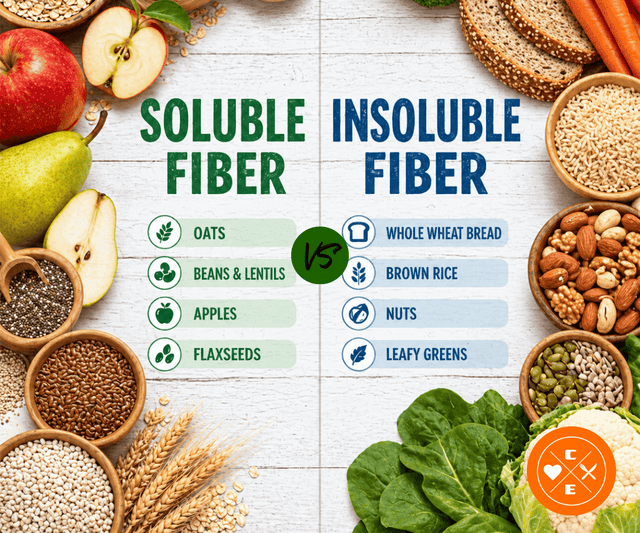
Fibers differ, and they behave differently in your gut. The traditional split between soluble and insoluble is useful, though it simplifies a diverse group of compounds with different structures, fermentation patterns and effects. In real life, you don't need to memorize any of this. Consistently eating a wide variety of beans, whole grains, vegetables, fruit, nuts and seeds covers it.
Soluble fiber
Soluble fiber dissolves in water to form a viscous gel, which changes how food moves through your digestive tract. The category includes several well-known types:
- Beta-glucans, found mainly in oats and barley, are among the best-studied soluble fibers. A meta-analysis of oat beta-glucan trials found that 3 grams or more a day lowered LDL cholesterol by 0.25 mmol/L, about 10 mg/dL. The CDC notes that fiber in general helps people manage diabetes.
- Pectin, concentrated in apples, citrus fruits and berries, is fermented by gut bacteria and forms a gel. Its properties vary with its structure, and lab work suggests it can shift the bacteria in a gut community.
- Psyllium husk, from Plantago ovata seeds, is the most common clinical fiber supplement. It holds a lot of water, which is why it's used for both constipation and loose stools. Psyllium can lower blood sugar after meals, though Diabetes Action cautions that too few studies have compared fibers to name a best one, and that some people can't tolerate psyllium.
- Inulin and fructooligosaccharides (FOS), found in Jerusalem artichokes, chicory root and garlic, act as prebiotics. They tend to feed Bifidobacterium. They ferment quickly, so they can cause gas and bloating in sensitive people and are best introduced slowly.
Insoluble fiber
Insoluble fiber doesn't dissolve in water. It adds bulk to stool and speeds things along. It's also more metabolically interesting than people once assumed. A review we cite in the chronic disease section notes that insoluble cereal fiber shows some of the strongest long-term associations with lower diabetes risk.
- Cellulose, the most abundant fiber in nature, gives plant cell walls their structure. Humans can't digest it on their own, but a 2024 study covered by ScienceDaily identified Ruminococcus bacteria in the human gut that break it down, feeding other microbes in the process. Those bacteria are being lost, especially in industrial societies.
- Lignin, found in flax seeds, whole grains and mature vegetables, is a polyphenol-rich plant compound counted as fiber. It can bind bile acids. Claims that it removes environmental toxins or hormones have little human evidence behind them.
- Resistant starch sits between digestible starch and true fiber. Found in cooked and cooled potatoes, green bananas and legumes, it escapes digestion in the small intestine and reaches gut bacteria. In a trial of three fermentable fibers, resistant potato starch raised butyrate in people whose gut bacteria could respond to it, especially those with Ruminococcus bromii. Others barely changed.
Novel & functional fibers
The list of fibers keeps growing as new compounds and ingredients come along:
- Chitosan, derived from shellfish shells, can bind some dietary fat, but not a significant amount. It has a positive charge that lets it interact with bile acids and fatty acids. Shellfish allergies limit its use.
- Polydextrose and resistant dextrins are newer functional fibers added to processed foods. They aren't naturally occurring. They show some prebiotic and metabolic effects, though whole food sources bring far more along with them.
- Algal fibers from seaweed bring minerals and compounds like fucoidan, which is being studied for anti-inflammatory and anti-cancer effects, mostly in the lab. It's too early to credit seaweed with lower cancer rates in any population.
Why fiber combinations matter
Whole foods package several fibers together. Whole grains, for example, contain multiple fiber types within an intact cell structure, along with phenolic compounds, minerals and vitamins. Researchers are testing whether that matters. Purdue University scientists started a project in 2024 to compare inulin with a whole-food fiber blend, predicting that cell-wall fibers from whole foods will better support beneficial Clostridia bacteria. Results were still to come when the release went out, but the reasoning fits what's known about fiber's variety.
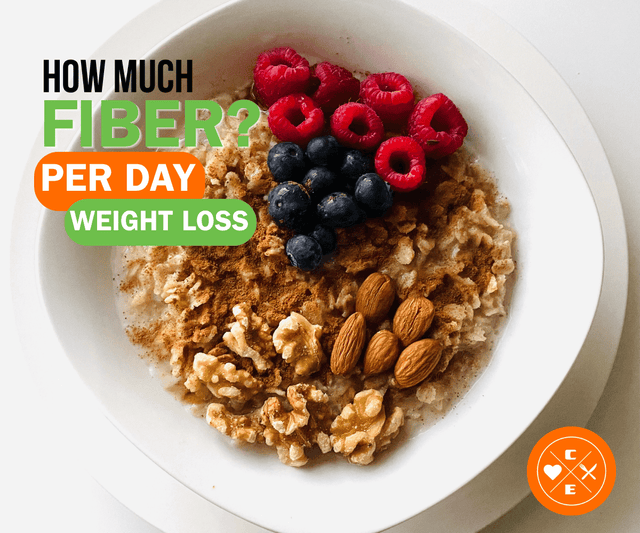
The same idea applies to your plate. Oatmeal with berries and nuts brings beta-glucan to slow glucose absorption, pectin for gut bacteria and insoluble fiber for bulk and satisfaction. Rather than counting only grams, mix your sources.
Daily fiber intake recommendations
How much fiber do you really need?
Quick answer
Aim for 14 grams per 1,000 calories, or about 25 grams a day for women and 38 for men. Research finds the largest risk reductions at 25 to 29 grams or more. Build up gradually, by about 5 grams a week, and drink more water as you go.
The standard recommendation of 25 to 38 grams a day is a sensible target, and it's more than most people eat. Some researchers think it may understate ideal intake. Estimates for ancestral diets run from 100 to 150 grams a day, and some modern hunter-gatherer populations are thought to eat 50 to 100 grams. Those estimates are rough. Returning to those levels isn't practical or necessary for most people, but they show how far modern eating has moved.
If you'd rather skip this discussion and calculate your personal target by age, sex and calorie intake, our companion guide on how much fiber per day walks through the math.
Official fiber guidelines & their limits
U.S. Dietary Guidelines advise 14 grams of fiber per 1,000 calories, which works out to about 25 grams for women and 38 grams for men on typical calorie levels. The CDC cites a range of 22 to 34 grams a day depending on age and sex, from the 2020 to 2025 guidelines. These targets come largely from studies of coronary heart disease risk, and they don't account for differences in your gut bacteria, your health or any therapeutic goal.
What about going higher? The Lancet analysis found the greatest risk reduction at 25 to 29 grams a day, with dose-response curves suggesting higher intakes might protect even more. For diabetes, a 2020 meta-analysis suggested adding 15 grams a day, or reaching 35 grams, as a reasonable target. A 2024 systematic review in World Journal of Diabetes covered 26 studies and found that more fiber generally improved blood sugar and weight in type 2 diabetes. Many of those trials used about 10 grams a day from supplements, so you don't need to reach extreme intakes to see a change.
Personalizing your fiber target
A few factors can shift your target beyond the standard guideline:
- Current health. People with metabolic syndrome, diabetes or cardiovascular disease often benefit from intakes at the higher end. Some dietitians suggest 30 to 40 grams a day for active weight loss and maintenance.
- Your gut bacteria. Your existing bacteria influence how you handle fiber. After antibiotics or years of low-fiber eating, you may need a slower increase over months before higher amounts feel comfortable.
- Activity level. Athletes and very active people often tolerate more fiber, up to 30 to 40 grams or more a day. They eat more food overall, and exercise helps keep things moving.
- Age. Children need less total fiber. A common rule of thumb is age plus 5 grams a day, so a 10-year-old needs about 15 grams. Older adults may need more attention to fiber for constipation and metabolic changes, and some need softer textures or a supplement if chewing becomes difficult.
Special populations & conditions
Certain conditions change the advice. Work with your care team on these:
- Irritable bowel syndrome (IBS). Fiber helps many people with IBS, but some feel worse with certain fibers, especially rapidly fermented FODMAPs. A low-FODMAP approach, followed by systematic reintroduction, often works best. Soluble, slowly fermented fibers such as psyllium are usually better tolerated.
- Inflammatory bowel disease (IBD). During active flares, your doctor may advise limiting fiber. During remission, some fibers may support intestinal health, while others may not sit well. Guar gums are one example with mixed effects, so this needs a personal approach.
- Diabetes. More fiber helps, though the average effect is modest. In the 2020 meta-analysis, increasing fiber lowered HbA1c by 2.00 mmol/mol, about 0.2 percentage points, across 33 trials. Viscous soluble fibers eaten with meals may help most after eating, and this adds to your treatment rather than replacing it.
- Cardiovascular disease. For cholesterol management, older advice calls for 10 to 25 grams of soluble fiber a day. Even 3 grams of oat beta-glucan can move LDL. Combining oats, beans and psyllium is a practical way to get more soluble fiber from several sources.
How to increase fiber gradually
Jumping to a high fiber intake overnight is a good way to end up gassy and uncomfortable. Your gut needs time to adapt. A simple framework is the 5-gram rule: increase by about 5 grams each week until you reach your target. Drink more fluids as you go, because fiber works best with enough water.
If gas, bloating or discomfort has derailed past attempts, our guide on how to increase fiber without bloating covers the gradual ramp, hydration and food-sequencing tactics in more detail.
| Weeks | What to do |
|---|---|
| Weeks 1 & 2 | Check your baseline with a food diary. Many people land around 10 to 15 grams. Add one high-fiber food daily, like berries at breakfast or an apple as a snack. |
| Weeks 3 & 4 | Add a second high-fiber change, like whole grain bread or beans at lunch. Watch for gas and bloating. |
| Weeks 5 & 6 | Add fiber at dinner through vegetables or whole grains. Tolerance usually improves by now. |
| Weeks 7 & 8 | Fine-tune based on how you feel. Some do well on 40 to 50 grams a day, others on 30 to 35. That variation is normal. |
An eight-week fiber ramp
Fiber timing & distribution
Spreading fiber through the day is easier on your gut than getting it all at once, and it gives you more chances to benefit at each meal. The total matters most, so treat these as practical ideas rather than rules:
- Morning. Oatmeal with berries and nuts or whole grain toast with avocado gives you about 8 to 12 grams to start the day.
- Before meals. Eating 5 to 10 grams of fiber shortly before a meal can help you eat less at that meal and may soften the blood sugar rise. An apple with the skin, carrot sticks with hummus or a salad with beans will get you close.
- Evening. A moderate amount at dinner is fine for most people. If a large evening serving keeps you uncomfortable overnight, move some of it earlier.
- Around exercise. Athletes may prefer to keep higher-fiber meals away from hard training, because fiber can slow nutrient absorption when you need fast refueling.
Dietary fiber for weight loss
How does fiber help with weight loss?
Quick answer
It makes meals more filling, slows digestion and slightly reduces the calories you absorb. Trials of soluble fiber supplements found about 2.5 kg of extra loss, and a 30-gram fiber goal alone produced 2.1 kg at a year. It helps most alongside a calorie deficit.
The link between fiber and weight loss goes beyond the usual "fills you up" explanation, though fullness is still a big part of it. Research also points to how fiber affects what you absorb and how your gut bacteria work. It isn't a shortcut, but it's a useful tool for sustainable weight management.
For a tighter breakdown of how these mechanisms play out in practice, see our companion piece on fiber and weight loss.
Fiber & fullness signals
Fullness starts in your mouth. High-fiber foods take more chewing, which extends eating time. In a study of 45 adults not specifically about fiber, chewing each bite 1.5 times and 2 times as much as usual cut food intake by 9.5% and 14.8%, respectively.
In your stomach, soluble fiber's gel adds bulk and stretch, which sends signals to the brain's appetite centers. Hormones come next. The POUNDS Lost study is sometimes cited as showing that fiber stimulates CCK, GLP-1 and PYY, but it didn't test hormones. It looked at fiber intake as a predictor of weight loss, and found that fiber also went along with better adherence to the diet. The hormone evidence comes from separate studies, and it's less tidy than popular timelines suggest. In a controlled feeding study of a high-fiber diet, gut hormones changed significantly, but hunger, fullness and food intake didn't.
So consider gut hormones one possible part of the story. Prescription weight loss drugs act on some of the same pathways at much higher intensity, and food shouldn't be expected to match them.
How fiber affects calorie absorption
You absorb slightly fewer calories from food when more fiber is present. Researchers have shown this in a few ways:
- Less digestion of fat and protein. A USDA feeding study of 17 adults found that increasing fiber decreased how much fat and protein people digested, which lowered the usable energy in their diets. In the 2023 feeding study, a diet high in fiber and resistant starch led to an extra 116 calories a day lost in stool, with wide variation from person to person.
- Fewer calories per gram. Fermented fiber provides about 2 calories per gram by standard estimates, compared with 4 for digestible carbohydrates. So 30 grams of fiber might provide about 60 calories, against 120 from starch, while keeping food volume the same.
- More energy spent digesting. Whole foods may take more energy to process. In a small crossover study of 17 adults, a whole-food cheese sandwich on multigrain bread burned about 137 calories in digestion, against 73 for a processed version on white bread with the same calories. That's one meal in a small group, and processing, not fiber alone, was the variable.
These effects are real but modest. Don't count on them to offset extra food, and don't assume they add up neatly over a year.
Fiber, gut bacteria & body weight
Gut bacteria may also play a part in weight, though this is one of the less settled areas. The 2024 Microbiome lab study found distinct starting communities in samples from lean people and people with obesity, including a higher Firmicutes to Bacteroides ratio in the obesity group. It didn't test which dietary factor causes those differences, and the ratio itself hasn't held up consistently as a marker across studies.
The SCFAs that bacteria make may be involved. Researchers study butyrate for its effect on mitochondrial function, propionate for its effect on liver fat and satiety signaling and acetate for its effect on appetite, largely in animals and small human studies. Different gut communities may also pull different amounts of energy from the same food. The 2023 feeding study found wide differences in usable calories from person to person, partly explained by fecal SCFAs and bacterial biomass.
Fiber timing strategies for weight loss
- Eat a fiber-rich starter. In a Penn State study, eating a whole apple before lunch reduced total lunch calories, apple included, by 15%, or 187 calories. It beat applesauce and apple juice, so the solid form matters as much as the fiber. Adding fiber to juice didn't help.
- Start with a high-fiber breakfast. A filling breakfast can make your morning easier, and it gets you a head start on your target. The Full Plate Living paper looked at servings of fiber-rich food across the whole day, not at breakfast, and we haven't found strong trials showing that morning timing beats total intake.
- Pair fiber with protein. Together they make a meal more filling and may reduce the hunger that derails a plan. Beans do this on their own, and so does a chicken and vegetable bowl.
 Make it easy withWeight Loss Meal PlanFrom $89.95View plan
Fiber weight loss results from trials
Here's what the studies show when you look at the actual numbers:
- Full Plate Living. The 16-week program analyzed 4,477 people. Of those, 2,792, or 62.5%, lost weight, with an average loss of 3.28 kg, about 7 pounds, among that group. People who lost weight were eating more fruit, vegetables and beans. There was no control group, so it shows association.
- Soluble fiber supplements. A meta-analysis of 12 trials and 609 adults with overweight or obesity found 2.52 kg more weight loss with isolated soluble fiber than placebo, along with lower fasting glucose and insulin. The studies ran only 2 to 17 weeks and varied a lot, so the authors urged caution.
- A single fiber goal. A year-long trial of 240 adults with metabolic syndrome compared a simple goal of 30 grams of fiber a day with the more complex American Heart Association diet. People lost 2.1 kg on the fiber goal and 2.7 kg on the AHA diet. The fuller diet may do slightly better, but one simple target came surprisingly close, and that's a useful option if complicated plans don't last for you.
Common fiber & weight loss obstacles
Some people see the scale stall or tick up when they first add fiber. That often reflects more stool bulk and water in the gut, and it usually settles in a few weeks as your digestive system adjusts.
Gas and bloating can also discourage people, but gradual increases help. Start with oats and other gentler options, then add more fermentable sources like beans over time. If you'd rather not plan it yourself, the High Fiber Meal Plan gives you at least 5 grams of fiber per meal from vegetables, legumes and whole grains, so you have a set amount to build around.
Watch for the health halo too. High-fiber foods still contain calories, and fiber-added processed products often bring added sugars and fats along with them. Focus mainly on naturally fiber-rich whole foods.
Fiber & gut health
How does fiber change your gut microbiome?
Quick answer
It feeds bacteria that ferment it into short-chain fatty acids, which fuel the cells lining your colon. Your gut responds within days, but individual differences stay large. Eating a wide variety of plants, about 30 kinds a week, goes along with a more diverse microbiome.
Your gut microbiome, the trillions of microorganisms in your digestive tract, is one of the most complex communities in biology. Dietary fiber helps determine which species thrive, what they produce and how that may influence you. Here's what's known, and where the science is still early.
Understanding your gut ecosystem
Your gut hosts a huge community. A landmark 2010 study in Nature identified 1,000 to 1,150 prevalent bacterial species across its participants, and a set of microbial genes about 150 times larger than the human gene set. You may read that this community weighs about 4 pounds, as much as your brain, but the updated 2016 estimate puts the bacteria at about 0.2 kg, less than half a pound.
Fiber is one of many influences on this ecosystem. A 2024 review lists diet, drugs, age, smoking, exercise and genetics among the factors that shape it. Within a short time of a big dietary change, bacterial populations begin to shift, and fiber-fermenting species such as Bifidobacterium often increase. Your diet matters, but the long-term effects of those shifts on conditions like obesity or depression are still being worked out.
The bacteria aren't spread evenly. Your small intestine hosts different species than your colon, and each region does different work. Different fibers ferment at different rates, so they reach different sections and bacteria. That's one more reason to eat a mix of fiber sources.
Short-chain fatty acids
When bacteria ferment fiber, they produce SCFAs, mainly acetate, propionate and butyrate. These are signaling molecules as well as fuel, and they're being studied for roles in inflammation and metabolism. Production varies a lot, and it doesn't always follow fiber intake. A small mSystems study put 20 students on 40 to 50 grams of fiber a day for two weeks. Their gut microbes changed, including more Bifidobacterium and Lactobacillus, but there was no consistent shift in fecal SCFAs. A separate trial found that not all fermentable fibers raise SCFAs equally, and that your existing bacteria affect whether you respond.
Butyrate makes up a smaller share of SCFAs, and it's the preferred energy source for the cells lining your colon. It supports the intestinal barrier and shows anti-inflammatory effects, including support for regulatory T cells in lab studies. Low butyrate production has been linked with inflammatory bowel disease, though researchers haven't established that it's the cause.
Propionate travels to the liver, where it may influence glucose production and cholesterol synthesis. Small studies suggest possible benefits for insulin sensitivity and liver fat. Acetate, the most abundant SCFA, reaches the bloodstream and may influence appetite, mainly based on animal work. Together, they form one way your gut communicates with the rest of your body.
Why microbiome diversity matters
Microbiome diversity, the variety of species present, is widely treated as a marker of gut health. Higher diversity tends to go along with better metabolic health, though it's a correlation, and it isn't always straightforward. The 2024 mSystems analysis found that short-term fiber increases actually reduced one measure of diversity, likely because fiber-eating bacteria bloomed and crowded the sample.
Direct evidence linking microbiome diversity to heart disease is still developing, but the case for eating more plants doesn't depend on it. A 2025 Global Burden of Disease analysis attributed roughly 682,400 cardiovascular deaths in 2021 to diets low in vegetables.
Fiber variety is the practical lesson. Each bacterial group has favorite foods, so eating a mix helps keep a mix. The "30 plants per week" idea comes from the American Gut Project, where people who ate more than 30 plant types a week had more diverse gut microbes than people who ate 10 or fewer. Plants here include vegetables and fruits, whole grains, legumes, nuts, seeds, herbs and spices. It's an observational finding from a self-selected group, but it's an easy goal to try.
Industrial societies show signs of microbial loss. Research on cellulose-degrading Ruminococcus found these bacteria are less common in industrial populations. Researchers suspect low-fiber diets play a part, and some are concerned about what that means for inflammatory conditions, but a direct link hasn't been shown.
Prebiotic foods
All fibers influence the microbiome, but prebiotics are the group that bacteria use selectively. The International Scientific Association for Probiotics and Prebiotics defines a prebiotic as "a substrate that is selectively utilized by host microorganisms conferring a health benefit."
Inulin and FOS are among the most studied. They tend to raise Bifidobacterium, and food sources include onions, garlic, leeks, asparagus, Jerusalem artichokes and slightly underripe bananas. Eating those vegetables regularly is the simplest route. The High Fiber Meal Plan is built with vegetables, legumes and whole grains, which adds to your fiber variety without a supplement.
Galactooligosaccharides (GOS), found in legumes, are also studied for feeding Bifidobacterium. Resistant starch, abundant in cooked and cooled potatoes, feeds Ruminococcus bromii and Eubacterium rectale, which are tied to butyrate production. That kind of specificity may one day allow targeted advice, but for now, variety is the safer bet.
The gut-brain connection
Gut bacteria appear to communicate with the brain through several routes, including vagal nerve signaling, immune messengers, bacterial metabolites and neurotransmitters made by bacteria. A 2020 review in Nutrition Reviews concluded that observational studies support an association between higher fiber intake and lower depression and inflammation, but that the mechanisms are poorly understood. It proposed possibilities including microbiota-driven changes in gene expression and neurotransmitter production.
Certain gut bacteria can produce GABA, serotonin and dopamine. These bacterial neurotransmitters don't directly cross into the brain in meaningful amounts, but they may act on the gut's own nervous system and on vagal signals.
The mouse research from Illinois suggests butyrate may reduce inflammation in the aging brain. In people, some observational studies link high-fiber diets with better mood and cognition, but this research is young. It's an interesting area, and not a treatment for any mental health condition. If you're dealing with depression or anxiety, talk with your doctor or a mental health professional.
Rebuilding your gut after low-fiber eating
If you've eaten a low-fiber diet for years, your gut may have less capacity to ferment fiber. Your microbiome can respond to change, though it takes patience, and some lost species may not return on their own. Here's a sensible four-phase approach:
| Phase | Focus | Daily target |
|---|---|---|
| Phase 1, weeks 1 to 4 | Easy, well-tolerated fibers like oats and cooked vegetables | 20 to 25g |
| Phase 2, weeks 5 to 8 | More variety: legumes, whole grains, raw vegetables | 30 to 35g |
| Phase 3, weeks 9 to 12 | The 30 plants a week approach, plus fermented foods like kimchi and sauerkraut | 35 to 40g or more |
| Phase 4, maintenance | Keep variety high and watch how you feel. Some do well at 50g or more, others at 35 to 40g | Your own best level |
Four phases to build up your fiber
Fiber & chronic disease prevention
Can fiber help prevent chronic disease?
Quick answer
It's linked with lower risk. High fiber eaters show 15% to 30% lower rates of heart disease, stroke, type 2 diabetes and colorectal cancer in observational studies, and trials show lower blood pressure and cholesterol. Fiber supports treatment but doesn't replace it.
Fiber is one of the best-supported dietary tools for lowering long-term disease risk, and it's cheap and widely available. It isn't medicine, though, and it doesn't come without side effects for everyone. Gas, bloating and medication timing are all real issues. Here's what the evidence supports by condition.
Fiber & cardiovascular disease
Heart disease is where fiber has its strongest evidence. The umbrella review of 31 meta-analyses found a 17% to 23% lower risk of cardiovascular death, a 9% to 28% lower incidence of cardiovascular disease, a 7% to 24% lower incidence of coronary heart disease and a 7% to 17% lower incidence of stroke, comparing the highest fiber intakes with the lowest.
Fiber protects your heart in several connected ways. The most direct is cholesterol. Soluble fiber binds bile acids in the intestine, which pushes your liver to pull cholesterol from the blood to make more. In people with hypertension or cardiovascular disease, the 2022 BMC Medicine review found LDL reductions of 0.29 mmol/L and 0.47 mmol/L, respectively, with the second rated as low certainty.
Blood pressure is the second piece. The same review found, with high certainty, that increasing fiber lowers blood pressure in people with hypertension by 4.3 mmHg systolic and 3.1 mmHg diastolic. Better endothelial function, less inflammation and improved insulin sensitivity may also contribute.
Fiber may also help people already living with heart disease. The review's cohort data, from 7,469 adults with cardiovascular disease, found a 25% lower risk of death from any cause with higher versus lower fiber intake, at moderate certainty. Benefits in the trials appeared regardless of medication use. Keep taking your medications, and treat fiber as an addition.
Fiber & type 2 diabetes
Fiber's effects on blood sugar are well known, but its link with diabetes prevention is more specific than most people realize. A 2018 review in the Journal of Nutrition reports that large cohort studies consistently connect high fiber intake, above 25 grams a day in women and 38 grams in men, with a 20% to 30% lower risk of type 2 diabetes. Surprisingly, those effects appear to be driven mainly by whole grains and insoluble cereal fibers. Soluble fiber from fruit and certain vegetables gives mixed results, and generally doesn't appear to lower risk.
The mechanisms are still being worked out. SCFAs may activate AMPK, a cellular energy sensor that affects glucose uptake, and butyrate may support mitochondrial function, based mostly on lab and animal work. The review also proposes that high cereal fiber diets may work partly by reducing the absorption of dietary protein and changing amino acid signaling.
Fiber also influences incretin hormones like GLP-1 and GIP, which help regulate insulin. The 2025 Discover Food review discusses this, along with diet patterns that improve insulin sensitivity. Some articles claim this delivers the same benefits as drugs like semaglutide without side effects. The evidence doesn't support that comparison. If you take one of these drugs, fiber can complement it, and any treatment change is a conversation for you and your doctor.
For people with diabetes, the realistic expectation comes from pooled trials. Across 33 trials, more fiber lowered HbA1c by about 0.2 percentage points, along with fasting glucose, cholesterol, triglycerides and body weight. Cohort data showed 14 fewer deaths per 1,000 people when comparing 35 grams a day with the 19-gram average. The small psyllium trial mentioned earlier saw a full point drop in HbA1c with 10.5 grams a day, but a result that size from 40 people needs confirming.
Fiber & cancer risk
Colorectal cancer shows the clearest link with fiber. The Lancet analysis places it within the same 15% to 30% range of lower risk, comparing the highest fiber eaters with the lowest. Fiber adds bulk and speeds transit, which reduces the time potential carcinogens spend in contact with the colon. In lab studies, butyrate triggers cell death in cancer cells while sparing normal cells, and it affects enzymes that regulate genes.
How far that protection extends is less clear. A 2024 review in Frontiers in Nutrition focuses on colon cancer and notes that whole grain intake is linked with lower risk of colorectal, gastric and esophageal cancers. It also cautions that varied fiber types, self-reported diets and short studies limit firm conclusions. Fiber's possible effect on hormone levels, which could matter for breast cancer, remains an open question. Don't treat fiber as protection against any one cancer, and keep up with your recommended screenings.
Fiber, inflammation & autoimmune conditions
Chronic inflammation is tied to conditions from arthritis to Alzheimer's. The 2025 review on fiber and inflammation supports a benefit from high-fiber diets, with inulin and resistant starch showing the clearest short-term effects. It also notes that fiber-rich diets bring other helpful nutrients, which makes it hard to credit fiber alone.
The proposed mechanisms overlap with those above: SCFAs dampening inflammatory signals, a stronger intestinal barrier and shifts toward anti-inflammatory bacteria. For autoimmune conditions, butyrate's support for regulatory T cells is drawing interest. Preliminary work suggests possible benefits in rheumatoid arthritis, multiple sclerosis and inflammatory bowel disease during remission, but this isn't established, so work with your specialist.
Fiber & kidney disease
Fiber also looks promising in chronic kidney disease (CKD). A 2024 meta-analysis of 10 cohort studies and 19,843 patients found that higher fiber intake was associated with lower all-cause death, cardiovascular death and cardiovascular disease in people with CKD. The hazard ratios were 0.80, 0.78 and 0.87. Those are associations in people who already have CKD, and less is known about whether fiber prevents it.
One theory involves bacteria that make uremic toxins like p-cresyl sulfate and indoxyl sulfate, which build up in kidney disease. Shifting the gut toward fiber fermentation and away from protein fermentation may reduce them. The evidence is limited, and people with advanced CKD may have to watch potassium and other nutrients in high-fiber foods, so check with your care team.
Plant-rich diets have also been studied in diabetes. Knowridge reports on a follow-up to a 2024 trial in which people with type 1 diabetes on a low-fat vegan diet lowered their insulin dose by 28%, and on the original trial's kidney function improvements. That's a whole dietary pattern, not fiber alone, and it was type 1 diabetes rather than diabetic kidney disease. Never change your insulin without your care team.
Fiber, mental health & cognition
The gut-brain connection suggests that fiber may influence mental health and cognition. Observational studies support an association between higher fiber intake and lower depression, though the size of that link is uncertain and the review stops short of proving cause.
Researchers propose several routes: SCFAs affecting brain chemistry and inflammation, changes to neurotransmitter production and steadier blood sugar. On cognition, some observational studies report better performance and lower dementia risk among high fiber eaters. Anti-inflammatory and metabolic effects may contribute, but this research is still early.
Best high-fiber foods
Which foods have the most fiber?
Quick answer
Beans, peas and lentils lead, with about 13 to 16 grams per cooked cup. A whole avocado has about 13.5. Raspberries, blackberries, chia seeds, green peas and Brussels sprouts offer about 6 to 10 grams per serving. Whole grains, apples, broccoli and almonds add 3 to 6 grams each.
Knowing which foods bring the most fiber makes grocery shopping far simpler. The tables below rank foods by fiber per serving, using the Dietary Guidelines food sources list and USDA FoodData Central. The type column shows whether a food leans soluble, insoluble or both, and it's a rough guide, because most foods contain a mix.
If you want a faster reference, without the deeper analysis, our standalone high-fiber foods list covers the 30 best sources at a glance.
Highest fiber foods, 10 grams or more
| Food | Serving | Fiber | Type | Also offers |
|---|---|---|---|---|
| Split peas | 1 cup cooked | 16.3g | Both | Plant protein, iron, budget-friendly |
| Lentils | 1 cup cooked | 15.6g | Both | Folate, quick-cooking, versatile |
| Black beans | 1 cup cooked | 15.0g | Both | Anthocyanins, resistant starch, filling |
| Lima beans | 1 cup cooked | 13.2g | Both | Potassium, plant protein |
| Avocado | 1 whole | 13.5g | Both | Healthy fats, potassium |
Foods with 10 or more grams of fiber per serving
Beans and legumes dominate this tier for a reason. The pairing of protein and fiber is especially filling. Our deeper look at whether beans are good for weight loss covers the differences between varieties, portion sizes and how to prepare them with fewer digestive complaints.
High fiber foods, 5 to 10 grams
| Food | Serving | Fiber | Type | Also offers |
|---|---|---|---|---|
| Artichoke | 1 cup hearts, cooked | 9.6g | Both | Prebiotic inulin, antioxidants |
| Green peas | 1 cup cooked | 8.8g | Mostly insoluble | Plant protein, vitamin K, versatile |
| Chia seeds | 1 ounce | 9.8g | Mostly soluble | Omega-3s, calcium, gel-forming |
| Raspberries | 1 cup | 8.0g | Both | Ellagic acid, antioxidants |
| Blackberries | 1 cup | 7.6g | Both | Vitamin K, manganese |
| Brussels sprouts, frozen | 1 cup cooked | 6.4g | Both | Glucosinolates, vitamin K |
| Quinoa | 1 cup cooked | 5.2g | Mostly insoluble | Complete protein, minerals |
| Broccoli | 1 cup cooked | 5.1g | Both | Sulforaphane, vitamin C, versatile |
Foods with 5 to 10 grams of fiber per serving
Good fiber foods, 3 to 5 grams
| Food | Serving | Fiber | Type | Also offers |
|---|---|---|---|---|
| Apple, with skin | 1 medium | 4.4g | Both | Pectin, portable, prebiotic |
| Oatmeal | 1 cup cooked | 4.0g | Mostly soluble | Beta-glucan, cholesterol lowering |
| Sweet potato | 1 medium | 3.8g | Both | Beta-carotene |
| Carrots | 1 cup raw | 3.6g | Both | Beta-carotene, crunchy, convenient |
| Almonds | 1 ounce | 3.5g | Mostly insoluble | Vitamin E, magnesium, satisfying |
| Brown rice, long-grain | 1 cup cooked | 3.2g | Mostly insoluble | B vitamins, selenium, affordable |
Foods with 3 to 5 grams of fiber per serving
Smart high-fiber food combinations
Combining sources gets you to your target faster and adds variety. A few combinations that work:
- For cholesterol: oatmeal, ground flax and raspberries, for about 15 grams of fiber with beta-glucan and lignans.
- For steady blood sugar: lentils, quinoa and vegetables, for about 20 grams of fiber with slow-release carbohydrates and resistant starch.
- For gut health: yogurt, chia seeds, banana and berries, which pair prebiotic fiber with live cultures.
- For weight loss: a large salad with beans and avocado, for high volume and lasting fullness.
High-fiber shopping tips
- Start with the perimeter. Produce, whole grains and legumes generally bring more fiber than center-aisle processed foods, though canned beans and frozen vegetables in the aisles count too.
- Shop by color. Different colored plants bring different fibers and phytochemicals, so aim for a colorful cart.
- Choose whole versions. Whole wheat pasta has about 5 grams of fiber per cup, against about 2 grams in regular pasta. Long-grain brown rice has 3.2 grams per cup, against 0.6 grams in white rice.
- Cook beans in batches. Dried beans cost less than canned, have no added sodium and let you control the texture. Freeze portions for later.
If shopping and prep aren't realistic for your schedule, this is a workload problem more than a knowledge problem, and it's what the High Fiber Meal Plan is for. Meals are chef-cooked around vegetables, legumes and whole grains, with at least 5 grams of fiber per meal and no subscription required.
Solving common high-fiber barriers
| Barrier | What to try |
|---|---|
| "I don't have time to cook" | Focus on no-cook options like overnight oats, raw vegetables with hummus, canned beans and whole fruit. Thirty minutes of Sunday prep can save a lot of weeknight time. |
| "High-fiber foods are expensive" | Dried beans, lentils and whole grains are among the cheapest foods per serving. Frozen vegetables often cost less than fresh and keep their fiber. Compare cost per gram of fiber, and beans usually win. |
| "My family won't eat them" | Make gradual changes. Mix half white and half brown rice at first, add vegetables to favorite dishes and let family members choose new produce to try. |
| "I get too much gas and bloating" | Increase by 2 to 3 grams a week instead of 5. Start with soluble fiber, drink enough water and consider digestive enzymes for a short time if they help. Symptoms often ease within 2 to 3 weeks. |
Common obstacles & what to do
High-fiber recipes
What are some easy high-fiber recipes?
Quick answer
Try superseed overnight oats at about 15 grams, a Mediterranean bowl at about 14 grams, three-bean chili at about 10 grams and energy bites at about 3.5 grams a ball. Each one is quick, freezes or stores well and uses inexpensive staples.
These recipes show that high-fiber eating doesn't have to be dull. Fiber numbers are estimated from USDA FoodData Central for the listed ingredients and servings. USDA lists chia by the ounce rather than the tablespoon, and roasted vegetables and mixed greens vary, so treat those amounts as rougher estimates.
Superseed overnight oats
Fiber: about 15g per serving. Prep: 5 minutes. Servings: 1.
- 1/2 cup rolled oats (about 4g fiber)
- 1 tablespoon chia seeds (about 4g fiber)
- 1 tablespoon ground flax (about 2g fiber)
- 1 cup unsweetened almond milk
- 1/2 cup mixed berries (about 2g to 4g fiber)
- 1 tablespoon almond butter
- 1/2 teaspoon cinnamon
- 1 teaspoon maple syrup (optional)
Combine the oats, seeds, milk, cinnamon and maple syrup in a jar. Refrigerate overnight. Top with berries and almond butter before serving. Make 5 jars on Sunday for the workweek.
Mediterranean power bowl
Fiber: about 14g per serving. Cook time: 25 minutes. Servings: 2.
- 1 cup cooked quinoa (about 5g fiber)
- 1 cup chickpeas (about 12.5g fiber)
- 1 cup roasted vegetables (about 4g fiber)
- 2 cups mixed greens (about 2g fiber)
- 1/4 avocado (about 3.4g fiber)
- 2 tablespoons tahini dressing
- Fresh herbs and lemon
Roast the vegetables at 425°F for 20 minutes. Assemble bowls with a quinoa base and top with chickpeas, vegetables and greens. Drizzle with tahini dressing, add avocado and garnish with herbs.
Three-bean chili supreme
Fiber: about 10g per serving. Cook time: 45 minutes. Servings: 6.
- 1 cup each cooked black beans, kidney beans and pinto beans (about 42g fiber in total)
- 2 cups diced fresh tomatoes (about 4g fiber)
- 1 cup corn (about 4g fiber)
- 2 bell peppers, diced (about 4g fiber)
- 1 onion, diced (about 2g fiber)
- 3 cloves garlic
- 2 tablespoons chili powder
- 1 tablespoon cumin
- To garnish: avocado, cilantro, Greek yogurt
Saute the onion and garlic, then add the spices. Add the tomatoes, beans, corn and peppers, and simmer for 30 minutes. Serve with whole grain bread or brown rice for extra fiber. It freezes well for meal prep.
Energy bites
Fiber: about 3.5g per ball. Prep: 10 minutes. Makes: 12 balls.
- 1 cup dates, pitted (about 12g fiber)
- 1/2 cup almonds (about 9g fiber)
- 1/4 cup ground flax (about 7.6g fiber)
- 2 tablespoons chia seeds (about 8g fiber)
- 1/4 cup dark chocolate chips
- 2 tablespoons almond butter
- 1 teaspoon vanilla
Process the dates and almonds until chunky. Mix in the remaining ingredients. Roll into 12 balls and refrigerate until firm. They make an easy grab-and-go snack.
30-day fiber plan
How do you build up to 30 grams of fiber in a month?
Quick answer
Add about 5 grams in week one, reach 20 to 25 grams by week two, 30 to 35 by week three and 35 or more by week four if you tolerate it. Drink more water, spread fiber through the day and slow down if symptoms flare.
Knowledge only helps once you act on it. This 30-day plan turns the research into daily habits, raising your intake gradually and building patterns that last past the first month. It's a fast ramp, so if the jumps feel too steep, stay on a week longer.
Week 1: Build the foundation (days 1 to 7)
Goal: know your baseline and add about 5 grams a day. Start by tracking your current intake for two days without changing anything. Many people land at just 10 to 15 grams, and that awareness creates motivation.
Daily additions:
- Breakfast: add 1/2 cup of berries to your usual meal (2 to 4g fiber)
- Lunch: include a side salad or vegetable soup (2 to 3g fiber)
- Snack: replace processed snacks with an apple or pear (4 to 6g fiber)
- Dinner: double your vegetable portion (2 to 3g fiber)
Shopping list: 2 pounds of mixed berries, fresh or frozen, 5 apples and 5 pears, a bag of prewashed salad greens, your favorite vegetables for roasting and canned beans for backup.
Week 2: Build momentum (days 8 to 14)
Goal: reach 20 to 25 grams a day. Now that your digestive system is adjusting, bring in more substantial fiber sources and set up meal prep routines.
- Switch to whole grain bread (2 to 3g per slice)
- Add 1/2 cup of beans to lunch (6 to 8g fiber)
- Try overnight oats for breakfast (about 8g fiber)
- Experiment with one new high-fiber recipe
Sunday meal prep: cook 3 cups of dried beans for the week, prep 5 overnight oats jars, cut vegetables for easy snacking and make a large batch of vegetable soup.
| Meal | What to eat | Fiber |
|---|---|---|
| Breakfast | Overnight oats with chia seeds and berries | 10g |
| Snack | Carrot sticks with 2 tablespoons hummus | 4g |
| Lunch | Large salad with 1/2 cup chickpeas | 8g |
| Snack | Apple with 1 ounce almonds | 8g |
| Dinner | Stir-fry with brown rice and extra vegetables | 6g |
| Total | 36g |
A sample day in week 2, which runs ahead of the goal if you're ready for it
Week 3: Add variety (days 15 to 21)
Goal: reach 30 to 35 grams a day with diverse sources. Focus on variety, and aim for 30 plants a week across vegetables, fruits, whole grains, legumes, nuts, seeds, herbs and spices.
- Try a fiber first rule: start every meal with fiber-rich foods
- Experiment with whole grains like quinoa, farro and bulgur
- Add ground flax or chia to smoothies (about 2 to 4g per tablespoon)
- Explore international cuisines that are naturally high in fiber
Plant diversity tracker: create a weekly checklist of 30 different plants. Herbs and spices count toward the goal, even in small amounts.
Meals to try this week:
- Mediterranean bowl: quinoa, chickpeas, roasted vegetables and tahini (about 14g per serving, more if you scale it up)
- Mexican-style bowl: black beans, brown rice, avocado, salsa and vegetables (about 20g)
- Asian-style bowl: edamame, brown rice noodles, bok choy and shiitake mushrooms (an estimated 15g)
Week 4: Maintain your new routine (days 22 to 30)
Goal: reach and sustain 35 to 40 grams or more a day, if your body is happy there. Fine-tune based on how you feel. Some people do well on 50 grams or more, and others feel best at 35 to 40 grams. Your comfort and health markers should guide your own target.
To make it stick:
- Batch cook fiber-rich base ingredients every Sunday. Our complete meal prep guide has practical strategies.
- Keep high-fiber snacks at work and in your car.
- Master 5 to 7 high-fiber recipes you love.
- For busy weeks when meal prep isn't realistic, consider the High Fiber Meal Plan.
Long-term habits:
- In the morning: start every day with a high-fiber breakfast.
- At snack time: pair produce with protein or healthy fats.
- At restaurants: order extra vegetables and choose whole grains.
- When traveling: pack fiber-rich snacks for the trip.
Why fiber is foundational
Fiber has some of the best evidence in nutrition. Lower cholesterol and blood pressure, better blood sugar control and lower risk of colorectal cancer and type 2 diabetes all show up in the research, and benefits for weight and gut health look promising too. The fact that about 95% of Americans don't meet the recommendation isn't a small dietary issue. Researchers have called it a public health concern.
It's also one of the more fixable problems in nutrition. You don't need expensive supplements, restrictive diets or medication to eat more of it. You need beans, vegetables, whole grains, fruit, nuts and seeds, which are among the cheapest and most accessible foods around. The fiber gap comes from food culture and convenience, not from high-fiber foods being hard to find or afford.
Start where you are. If you're at 15 grams a day, get to 20. Then 25. Then 30. Add water as you add fiber, and diversify your plant sources for your gut bacteria. Don't try to fix everything in one week, because your gut needs time to adapt. Within 6 to 8 weeks of consistent change, many people notice better digestion and steadier energy, though results vary and weight loss usually still takes a calorie deficit.
Making high-fiber eating easier
Many people understand why fiber matters, and they still struggle with the time, planning and consistency it takes to reach 30 grams or more a day. Prepared meals remove some of that friction. The High Fiber Meal Plan delivers chef-cooked meals built around vegetables, legumes and whole grains plus protein, with at least 5 grams of fiber per meal, from $94.95 for 10 meals. They're frozen, keep for up to 12 months in the freezer and heat in a few minutes. Shipping is free on meal plan orders to the contiguous 48 states. There's no subscription, so you can order when you need meals and stop when you don't.
A meal covers part of your day's target, not all of it, so you'd still want fruit, beans or whole grains elsewhere. To compare exact numbers, the Nutrition Info page lists fiber for every meal, and Build A Meal Plan has a High Fiber filter. On our current menu (October 2026), fiber runs from 0 to 9 grams per meal, with a median of 5 grams.
Want to compare your options across meal delivery first? Our 2026 guide to the best high-fiber meal delivery services looks at fiber approach, pricing and convenience.
Related fiber & nutrition guides
Fiber works best as part of a broader nutrition plan. These guides go deeper on topics that complement it:
- 100 best foods for weight loss: how to combine fiber-rich foods with other helpful nutrients.
- The ultimate guide to the GLP-1 diet: how fiber-rich eating fits alongside GLP-1 medications.
- The complete meal prep guide: strategies for batch cooking fiber-rich staples.
- Complete guide to gaining healthy weight: how to balance adequate fiber with protein-forward meals when gaining is the goal.
- Best exercises for weight loss: an evidence-based guide to pairing movement with your diet.
Dietary fiber FAQ
Questions about dietary fiber, answered
How much fiber should I eat per day?
Adults should aim for about 25 to 38 grams a day, generally 25 for women and 38 for men, or 14 grams per 1,000 calories. Most Americans average about 15 to 16 grams. For weight loss or chronic disease prevention, many people aim for 30 to 40 grams, building up gradually.
What is the difference between soluble & insoluble fiber?
Soluble fiber dissolves in water to form a gel that slows digestion and can lower cholesterol and steady blood sugar. Insoluble fiber doesn't dissolve, adds bulk to stool and speeds transit through the gut. Both matter, and most fiber-rich whole foods contain a natural mix of the two.
How does fiber help with weight loss?
Fiber fills your stomach, triggers fullness signals, slows digestion and slightly reduces the calories you absorb. In the POUNDS Lost trial, each extra 4 grams of daily fiber was associated with about 3.25 more pounds lost, among people who were also cutting calories. It works best as part of a calorie deficit.
What foods are highest in fiber?
The highest-fiber foods per serving are split peas at 16.3 grams per cooked cup, lentils at 15.6, black beans at 15 and lima beans at 13.2. Other top sources include avocados at about 13.5 grams each, artichokes at 9.6 per cooked cup, chia seeds at 9.8 per ounce and raspberries at 8 per cup.
How do I add more fiber to my diet without bloating?
Increase gradually, by about 5 grams a week, and drink more water, aiming for about 8 to 10 glasses a day. Start with gentler options such as oats, then add more fermentable sources like beans. Symptoms often ease within 2 to 3 weeks. If they don't, slow down and talk with your doctor.
What is the connection between fiber & gut health?
Fiber is a main food source for the bacteria in your gut. When they ferment it, they produce short-chain fatty acids, including acetate, propionate and butyrate, which fuel the cells lining your colon and may help regulate inflammation. Eating a variety of plant sources goes along with a more diverse microbiome.
Can fiber help prevent chronic disease?
It's strongly linked with lower risk. Observational studies show 15% to 30% lower rates of cardiovascular disease, type 2 diabetes and colorectal cancer among the highest fiber eaters, and trials show lower blood pressure and cholesterol. Fiber supports prevention and treatment, but it doesn't replace medical care or your prescribed medications.
Are fiber supplements as good as fiber from whole foods?
Whole foods are generally the better choice. They bring a mix of fiber types along with vitamins, minerals and plant compounds. Supplements like psyllium do have uses, and trials show modest benefits for weight, blood sugar and cholesterol. Take them with plenty of water, and ask your doctor about timing around medications.
Does fiber help lower cholesterol?
Yes. Soluble fiber binds bile acids in the digestive tract, so your liver uses more circulating cholesterol to make new bile. One review reports LDL drops of about 11 to 14 mg/dL. Three grams a day of oat beta-glucan lowers LDL by about 10 mg/dL, and combining oats, beans and psyllium gives you more soluble fiber.
Why are most Americans deficient in fiber?
Only about 5% of Americans meet the recommendation. Food processing strips fiber from grains and replaces whole foods with refined products, and many people eat fewer beans, vegetables and whole grains. Common beliefs that fiber foods are expensive, unpalatable or complicated to prepare also get in the way, according to one summit of researchers.
More fiber guides
Keep reading
 Romaine Rusnak, RD, LDN · Apr 27, 2026
Sources
On this page