GLP-1 Diet Guide: What to Eat & How Much Protein
The complete GLP-1 diet guide (2026): What to eat, how much protein, & how to avoid side effects
The medication handles appetite. What you eat decides what the weight you lose is made of. Protein numbers and where they come from, five rules, side effects by food, and the mistakes that cost muscle.
- Free Shipping on Every Meal PlanFree Shipping
- Up to 20% Off 30-Meal PlansUp to 20% Off
- Chef Cooked, Dietitian BuiltDietitian Built
- Heat & Eat in MinutesHeat & Eat

Eat protein first, in four or five small meals. A 2025 joint advisory from four obesity and nutrition societies proposes 1.2 to 1.6g of protein per kg of body weight a day, or a flat 80 to 120g. Add fiber slowly toward 21 to 38g, keep fat moderate to limit nausea, and lift weights at least three times a week. Protein alone does not protect muscle.
The medication handles appetite. What it does not handle is what happens to your body while the weight comes off.
That distinction matters more than most people starting a GLP-1 realize. Appetite drops sharply, weight follows, and the scale rewards you every week. But your body doesn't care whether you're eating less because you planned to or because food has stopped appealing to you. In the second case, what you eat tends to drift, and the makeup of what you lose drifts with it.
This guide covers what to eat, how much protein and where that number actually comes from, how to manage the side effects with food, and where the real risks sit. If you haven't started yet or you're in your first few days, our guide to your first week on a GLP-1 is the more immediately useful place to begin.
Why nutrition matters on a GLP-1
The scale can't tell fat from muscle
The size of the problem is documented. In the STEP 1 trial, people on semaglutide lost an average of 13.6 kg (about 30 lb). Of that, 8.3 kg was fat mass and 5.3 kg was lean body mass, about 38%. That breakdown comes from the 2025 joint advisory covered below, which adds that muscle is about half of lean mass, so roughly 20% of the weight lost was muscle.
Tirzepatide looks somewhat better on this measure. In a body composition substudy of the SURMOUNT-1 trial, 160 adults had DXA scans over 72 weeks. About 75% of the weight they lost was fat and 25% was lean mass, a split that was the same in the placebo group.
Lean mass is not all muscle. It includes water, organs and other non-fat tissue, and losing some of it alongside fat happens in any large weight loss, from very low-calorie diets to bariatric surgery. What is different here is the size of the total. A bigger loss makes the absolute amount of lean tissue lost bigger than most people have experienced before.
Protein appears to matter. Research presented to the Endocrine Society in 2025 followed 40 adults with obesity for three months, 23 of them on semaglutide. In that group, eating less protein was linked to greater muscle loss, as were being older and being female. Forty people over three months is a small, short study, and it shows an association rather than proof of cause. But it points the same way as every guideline in this area.
The medication does the appetite work. What you eat decides whether the weight you lose is mostly fat.
How GLP-1 medications change eating
Three changes, three fixes
GLP-1 medications, semaglutide (Ozempic, Wegovy) and tirzepatide (Mounjaro, Zepbound) among them, mimic a hormone your gut releases after eating. Tirzepatide also acts on a second gut hormone, GIP. Both slow gastric emptying, prompt insulin release and reduce appetite substantially.
Three practical consequences follow, and each one has a nutrition answer.
Food sits longer. That's the mechanism, not a side effect. It's why fat and volume become the two variables that decide whether a meal feels fine or awful, and it's why nausea and reflux are the most common complaints.
Total intake drops, so nutrient density per bite matters more. A retrospective analysis of insurance claims from 461,382 adults newly prescribed a GLP-1, most of them with type 2 diabetes, found more than one in five diagnosed with a nutritional deficiency within the first year: 12.7% within six months and 22.4% within twelve. Vitamin D deficiency was the most common, at 13.6% within twelve months. It's observational data, so it can't prove the drug caused the deficiencies. It still gets very little attention for how common it is.
Lean mass comes off alongside fat. That's addressable, and it's what the protein section below is largely about.
On the side effects, Cleveland Clinic explains that because food stays in the stomach longer on a GLP-1, spicy and high-fat foods can make the GI side effects worse, and that fiber can help with the constipation the medication can cause. The right food choices don't just support the weight loss. They make the medication easier to stay on, which matters given how many people stop.
How to eat on a GLP-1 step by step
Five rules that carry the plan
These are the five core principles, in the order they matter. Protein comes first because it is the one that protects muscle. Fluids come last only because they are the easiest to fix.
Step 1:
Step 2: Eat protein first at every meal
The first bites are the protein
Protein matters most, and the numbers are covered in detail in the protein section below. The everyday rule is simpler than the arithmetic: eat the protein on your plate before anything else. Fullness arrives early and without much warning on these medications, and you want it arriving after the protein rather than instead of it.
The joint advisory suggests the same thing: protein-rich foods eaten first in a meal make it more likely you get enough.
Step 3: Add fiber gradually
Slowly, with water
Fiber supports the fullness the medication already provides and counters the constipation that comes with slower gut motility.
Work toward 21 to 38g a day, the range MedlinePlus gives for adults (it depends on age and sex). Add it gradually over a few weeks, because a big jump causes gas, bloating and cramps, the opposite of what you want. Good sources: leafy greens, broccoli, berries, apples and Brussels sprouts, beans, lentils and chickpeas (which bring protein along), and oats, quinoa and brown rice.
Drink water alongside it, because fiber without fluid makes constipation worse rather than better. Our complete guide to dietary fiber covers the mechanism properly.
Step 4: Choose carbs that bring fiber
Refined carbs are the problem
Carbs aren't the problem on a GLP-1. Refined ones are. Whole grains, starchy vegetables, legumes and whole fruit all provide steady energy plus the fiber you need.
Juice is worth avoiding specifically. It concentrates the sugar and removes the fiber that made the fruit useful. Cleveland Clinic lists juice, soda, candy and refined carbs like white bread, crackers and white rice among the foods to limit.
Step 5: Keep fat moderate, not zero
One or two tablespoons a meal
You need fat for hormone production and to absorb the fat-soluble vitamins A, D, E and K, which matters more when total intake is low. But fat slows gastric emptying, and on a medication that already does that, a high-fat meal is the most reliable way to feel unwell for three hours.
Pick unsaturated sources: olive oil, avocado, nuts and oily fish. Keep added fat to one or two tablespoons per meal, and spread it across the day rather than concentrating it in one meal.
Step 6: Drink fluids on purpose
Sip between meals, not during
Reduced appetite tends to dull thirst cues too, and less food means less water from food. Mayo Clinic notes that a healthy eating plan and drinking enough water can help you avoid or minimize the common early side effects, such as nausea, headaches and fatigue.
Sip through the day rather than drinking large volumes at once. Keep drinking away from meals rather than during them, because liquid fills the stomach you needed for protein. Pale yellow urine is the practical check.
GLP-1 protein targets & muscle
The numbers that matter
This is the section worth reading twice, because the protein numbers circulating online are inconsistent and several are wrong.
The joint advisory protein target
In 2025, four professional bodies, the American College of Lifestyle Medicine, the American Society for Nutrition, the Obesity Medicine Association and The Obesity Society, jointly published Nutritional Priorities to Support GLP-1 Therapy for Obesity. It is the closest thing to consensus guidance that exists, and it gives two usable targets.
1.2 to 1.6g of protein per kg of body weight per day during active weight reduction. For an 82 kg (180 lb) adult, that's about 98 to 131g.
Or a flat 80 to 120g per day. The advisory offers this explicitly as an alternative that "may enhance adherence": a simpler number people actually hit, rather than a more precise one they abandon.
Two boundaries are also worth knowing. Intake should not fall below 0.4 to 0.5g per kg a day, which can lead to muscle wasting, and prolonged intake at or above 2g per kg a day should be avoided.
- 60 kg (132 lb): Protein a day 72 to 96g · At 1.2 to 1.6g per kg Inside the flat 80 to 120g range
- 82 kg (180 lb): Protein a day 98 to 131g · At 1.2 to 1.6g per kg Mostly inside the flat range
- 100 kg (220 lb): Protein a day 120 to 160g · At 1.2 to 1.6g per kg Above the flat range
- 130 kg (287 lb): Protein a day 156 to 208g · At 1.2 to 1.6g per kg Far above it, and hard to eat
Actual vs adjusted body weight for protein
This is the part that usually gets stripped out. The advisory says plainly that for people with obesity, it's unclear whether the per-kilogram target should use actual body weight, adjusted or ideal weight, or fat-free mass, and that using actual weight "can significantly overestimate protein requirements."
That's exactly why the flat 80 to 120g alternative exists. If you weigh 130 kg, multiplying by 1.6 gives 208g, a number that is both unreachable on a suppressed appetite and probably higher than you need. The advisory notes that 1.5g per kg of lean body mass is considered more accurate, but you need a body composition scan to calculate it.
The practical answer: start with 80 to 120g a day, aim toward the top of the range if you're larger, and if you want precision, take that to a registered dietitian with your body composition in front of them.
Protein per meal on a GLP-1
Hitting the daily total is only half of it. Aim for 20 to 40g at each eating occasion, four or five times a day. That's the per-serving dose the International Society of Sports Nutrition gives for stimulating muscle protein synthesis, spread every 3 to 4 hours. Stacking most of the day's protein into one dinner is a less reliable way to use it.
This is also the easier way to reach the target when appetite is low. Five servings of 25g is 125g, and considerably more achievable than three servings of 40g.
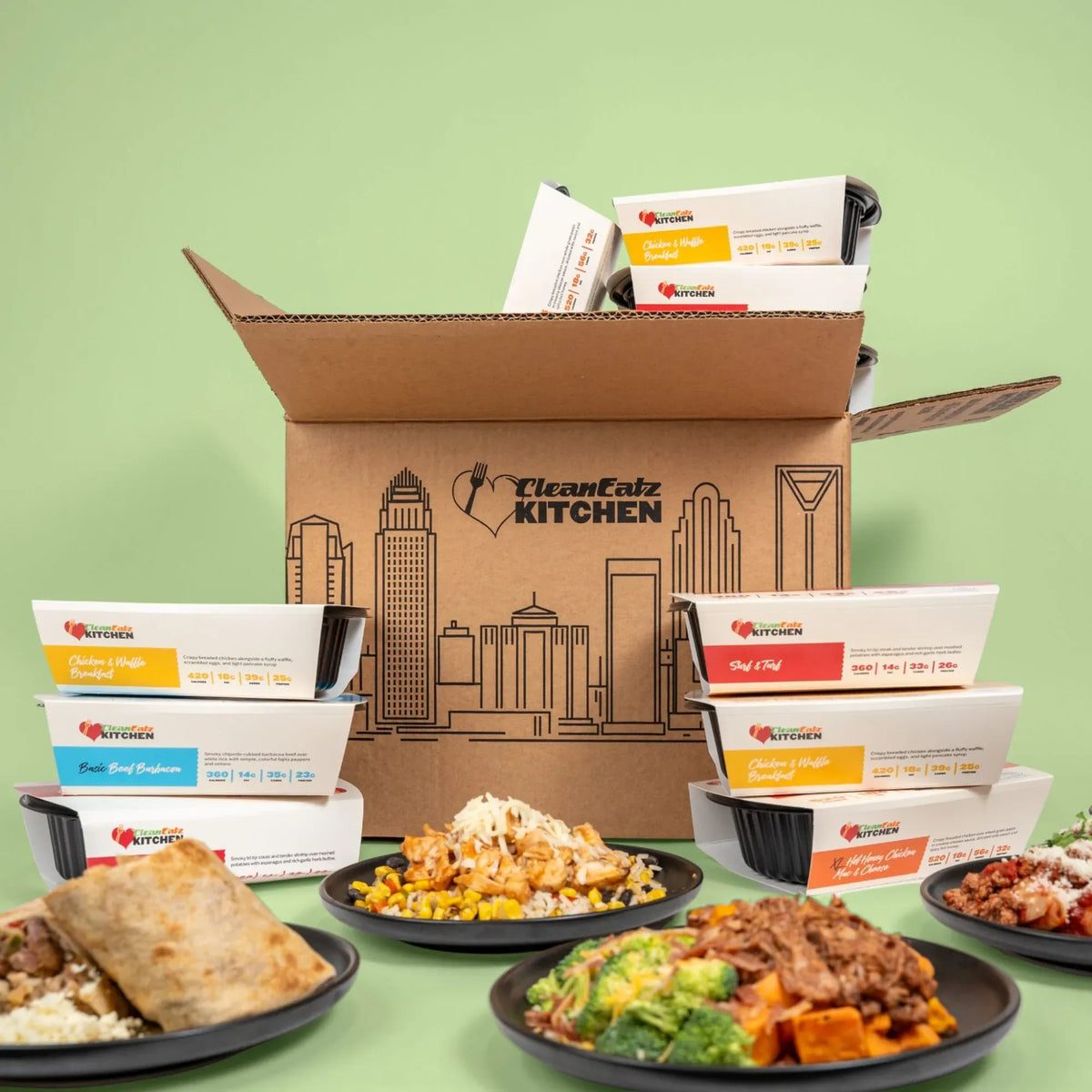
Where this falls apart in practice is the meals you didn't plan. Our High Protein Meal Plan adds 2 extra ounces of meat to each meal, about 10g more protein than our regular recipes. Across our current menu (October 2026), meals run 20 to 55g of protein with a median of 31.5g, so one meal covers one of those four or five slots without much thought. Every meal's protein is listed on our Nutrition Info page.
Strength training on a GLP-1
Protein supplies the material. Resistance training supplies the signal to keep the muscle. The joint advisory says GLP-1s should be prescribed together with a structured exercise program: strength training at least three times a week plus at least 150 minutes of moderate aerobic exercise, matched to your fitness level. It also recommends a baseline assessment of muscle strength and body composition before starting, which very few people actually receive.
Cover the major muscle groups with progressive load. Bodyweight work counts. Our guide to the best exercises for weight loss covers programming, and how to prevent muscle loss on GLP-1 medications goes deeper on this specific problem than we can here.
Alongside that: lose weight at a moderate rate rather than the fastest possible one, sleep properly, and track body composition rather than scale weight alone. The scale can't tell you which tissue you lost.
What to eat on a GLP-1
Protein-dense, low-fat, easy on a slow stomach
| Category | Protein | Best choices | Why it works here |
|---|---|---|---|
| Lean proteins | 25 to 35g | Chicken, turkey, cod, tilapia, salmon, tuna, shrimp (per 4 oz cooked) | High protein, low fat, easy on a slowed stomach |
| Eggs & dairy | 6 to 20g | Eggs, Greek yogurt, cottage cheese (per serving) | Little volume for the protein, often tolerated when little else is |
| Plant proteins | 8 to 18g | Tofu, tempeh, edamame, lentils, beans, chickpeas (per serving) | Fiber and protein in the same food |
| Whole grains | 4 to 8g | Oats, quinoa, brown rice, whole wheat bread (per serving) | Steady energy plus fiber for motility |
| Vegetables | 1 to 5g | Spinach, broccoli, peppers, tomatoes, carrots (per cup) | Vitamins and minerals when total intake is low |
| Fruit | Under 2g | Berries, apples, oranges, banana (per serving) | Fiber and vitamins, as whole fruit, not juice |
GLP-1 food list by category (protein per serving is approximate, from USDA FoodData Central)
What to limit: fried and heavily greasy food, cream-based dishes, very spicy dishes, added sugars, carbonated drinks, and large portions of anything at all, including the foods above.
For a structured week built around these, our 7-day GLP-1 meal plan lays out every meal with macros and a shopping list. For the gap between meals, we have high-protein snack ideas built for low appetite, and for eating out, a restaurant ordering guide.
If you'd rather compare plans than assemble one, our curated meal plan range is the place to start. Our GLP-1 Meal Plan starts from $94.95 for 10 meals, with 20 and 30 meal sizes that bring the per-meal price down.
Managing GLP-1 side effects with food
Nausea, constipation, reflux & low appetite
Stomach side effects are the most common reason the first months feel hard. The joint advisory lists nausea in 25% to 44% of trial participants, diarrhea in 19% to 30%, vomiting in 8% to 24% and constipation in 17% to 24%. They tend to ease once a dose is stable, and food can do a lot of the work.
Foods for GLP-1 nausea
Nausea is the most common complaint, worst during the start and after each dose increase. Eat smaller portions slowly, over twenty to thirty minutes, with the fork down between bites. Stop at comfortably satisfied rather than full. The gap between the two is now about three bites wide.
Bland and protein-rich works: eggs, plain chicken, turkey, tofu. Cold or room-temperature food is often better tolerated than hot. Ginger tea, plain crackers and protein smoothies help when solid food isn't happening. Avoid greasy, fried, very spicy or strong-smelling food, and stay upright for a couple of hours after eating.
The advisory adds two useful details: nausea often hits in the morning or after long gaps without food, and a small breakfast followed by small meals every 3 to 4 hours can break the cycle of not eating because you feel sick, then feeling sicker because you haven't eaten.
Foods for GLP-1 constipation
Slower gut motility is the cause, so this affects a lot of people. Raise fiber gradually over a few weeks toward 21 to 38g a day, from beans, oats, berries, leafy greens, chia, flax and prunes. Drink enough for the fiber to work with: MedlinePlus suggests about 8 glasses of water or other no-calorie fluid a day.
Warm drinks in the morning help some people, and so does movement. Even a ten-minute walk after meals is an easy way to get things moving.
Foods for GLP-1 reflux
Food sitting longer in the stomach makes reflux more likely. Keep meals small, finish dinner two to three hours before bed, go easy on coffee and alcohol, and raise the head of the bed if it's worse at night. Then work out which foods are your personal triggers rather than assuming the standard list applies to you.
Loss of appetite on a GLP-1
Low appetite isn't a good problem, and treating it as one is how people end up undernourished. When you can't eat much, liquid nutrition counts: protein shakes and smoothies with fruit and greens are legitimate meals. Put what you can manage toward protein and vegetables. Eat on a schedule rather than waiting for hunger cues that may not come. And don't skip meals entirely. A small shake beats nothing.
GLP-1 meal timing & frequency
Five small meals beat three big ones
Four to five smaller eating occasions beat three larger ones for most people on these medications, for three reasons that add up. Smaller portions sit better in a slowed stomach. Protein spreads better across more meals. And reaching a daily target is easier in five 25g servings than three 40g ones when your appetite is suppressed.
| Meal | Protein | Time |
|---|---|---|
| Breakfast | 25 to 30g | 7:30 a.m. |
| Mid-morning snack | 15 to 20g | 10:30 a.m. |
| Lunch | 25 to 30g | 1:30 p.m. |
| Afternoon snack | 15 to 20g | 4:00 p.m. |
| Dinner | 25 to 30g | 7:00 p.m. |
| Day total | 105 to 130g | Every 3 to 4 hours |
A sample GLP-1 eating schedule (adjust the clock, keep the spacing)
Adjust the clock to your life, and keep the spacing at roughly three to four hours. Added up, the schedule lands at 105 to 130g, inside or just above the flat 80 to 120g target.
Around training, have a small protein and carbohydrate snack an hour or two before, and 20 to 30g of protein within a couple of hours after. Total daily protein matters more than precise timing, but the post-workout meal is an easy one to hit.
In the evening, finish dinner two to three hours before bed and keep it moderate rather than making it your largest meal. If you need something later, keep it light and protein-rich.
GLP-1 shopping list & meal prep
Prep parts, not whole meals
The goal is having tolerable, protein-dense food ready on the days when cooking isn't going to happen. On a GLP-1, that's most of the value of meal prep.
Always worth having in: chicken breast, lean ground turkey, salmon or cod, canned tuna, plenty of eggs, plain Greek yogurt, cottage cheese, tofu, protein powder, and a rotisserie chicken when you can get one. Spinach and mixed greens, broccoli, cauliflower, peppers and frozen steam-in-bag vegetables. Oats, quinoa, brown rice, sweet potatoes and beans. Berries, fresh or frozen. Olive oil, avocado, pre-portioned nuts and nut butter.
Prep components, not meals. This is the key adjustment. Bake two or three pounds of plain chicken, hard-boil a dozen eggs, cook a batch of grain, roast a couple of sheet pans of vegetables, and portion everything separately. Complete pre-made meals assume you'll want that specific thing on Thursday, and on a GLP-1 you often won't. Components let you assemble whatever sounds tolerable.
On a budget: eggs remain one of the cheapest complete proteins, canned fish is shelf-stable and cheap, large tubs of Greek yogurt beat individual cups, dried beans beat canned, and chicken thighs cost less than breasts while still being lean enough.
Breakfast is the meal people skip most on a GLP-1, usually because mornings are when nausea peaks. Keeping something in the freezer that needs no decision helps. Our high-protein grab-and-go range includes breakfast sandwiches, and our High Protein Overnight Oats carry 20g of protein per pouch (just add milk and chill). Our breakfast burritos run 19 to 22g.
For everything else, our complete meal prep guide covers the systems in more detail.
GLP-1 diet mistakes to avoid
The ones that cost you muscle
Not eating enough protein. When appetite drops, protein is usually the first thing to go: a banana for breakfast, a skipped lunch, a small salad for dinner, maybe 30g for the whole day. That's the mistake that costs you muscle. Treat the target as fixed, use powder if solid food is hard, and track intake until you know what hitting it actually looks like.
Going too low on calories. Some people read appetite suppression as permission and land at 800 to 1,000 calories a day. That speeds muscle loss, causes fatigue and makes regain more likely when the medication stops. The advisory warns that intakes under 1,200 calories a day for women and 1,800 for men make it hard to get enough vitamins and minerals. A moderate deficit is still the goal.
Skipping meals because hunger never arrived. Your hunger cues are unreliable now. Eat on the clock.
- Forgetting fiber while focusing on protein, then wondering about the constipation.
- Eating pre-medication portion sizes and feeling wretched for hours.
- Forgetting to drink, because reduced appetite dulls thirst too.
- Living on shakes and a multivitamin instead of food, which misses the fiber and plant compounds whole food provides.
- Having no plan at all, so that when you can eat, whatever is nearest wins.
GLP-1 safety & medical considerations
What your prescriber should know
Label warnings: a thyroid C-cell tumor warning (avoid these drugs with a personal or family history of medullary thyroid carcinoma or MEN 2), pancreatitis risk (get immediate care for severe abdominal pain), gallbladder disease, and dehydration and acute kidney injury risk with persistent vomiting or diarrhea.
Drug interactions. Oral contraceptives may be less effective around tirzepatide initiation and each dose increase. Switch to a non-oral method or add a barrier method for four weeks after each change. GLP-1s can raise the risk of low blood sugar alongside insulin or sulfonylureas, so know the signs and coordinate dosing with your prescriber.
Procedures and pregnancy. Before any procedure, current multi-society guidance is that most patients can continue, but the plan should be individualized with your surgeon and anesthesiologist, particularly if you have significant GI symptoms. These medications are not recommended in pregnancy. If you're planning one, discuss timing with your doctor, since semaglutide stays in the body for weeks.
Beyond the prescriber, two other professionals are worth involving if you can: a registered dietitian, who can personalize protein targets against your actual body composition and screen for the deficiencies noted earlier, and someone who can program resistance training safely. The joint advisory's recommendation for a baseline body composition assessment exists for a reason. If your prescriber hasn't raised it, it's reasonable to ask.
The bottom line on the GLP-1 diet
Knowing isn't the hard part
The medication does the appetite work. Everything else is on you, and it decides whether what you lose is mostly fat or partly the muscle you'll want back later.
Five things carry nearly all the weight. Protein at 1.2 to 1.6g per kg, or a flat 80 to 120g if that number is easier to hit, spread across four or five meals at 20 to 40g each. Fiber worked up gradually toward 21 to 38g. Fat kept moderate, because it's the main driver of nausea. Meals smaller and more frequent than you're used to. And strength training at least three times a week, the half of muscle preservation that protein can't do alone.
The rest is logistics, and logistics is where most plans fail. Not because people don't know what to eat, but because on the days the nausea is bad, knowing isn't the constraint.
That's the gap our GLP-1 Meal Plan is built for: chef-cooked, portion-controlled meals with the protein already counted, ready in a few minutes in the microwave. There's no subscription, because appetite on these medications changes week to week, and meals keep in the freezer for up to 12 months, so a week you can't face food doesn't cost you a fridge full of it. If you'd rather choose every meal yourself, Build A Meal Plan lets you filter the menu by protein, and our Nutrition Info page lists the macros for every meal.
This article is for educational purposes only and is not medical advice. Always talk with a licensed healthcare provider about your medication, and a registered dietitian about individual nutrition targets.
GLP-1 diet FAQ
Quick answers
How much protein should I eat on GLP-1 medications?
The 2025 joint advisory from the American College of Lifestyle Medicine, the American Society for Nutrition, the Obesity Medicine Association and The Obesity Society proposes 1.2 to 1.6g per kilogram of body weight a day during active weight loss. It also offers a simpler target for adherence: 80 to 120g a day. Spread it across four or five eating occasions at 20 to 40g each.
Should protein be based on my actual weight or adjusted weight?
This is unsettled, and it matters. The joint advisory notes that for people with obesity, calculating from actual body weight can significantly overestimate protein needs, and there's no consensus on using actual, adjusted, ideal weight or fat-free mass. That's why the flat 80 to 120g target exists. For precision rather than a rule of thumb, see a registered dietitian.
How much muscle do you lose on GLP-1 medications?
In the STEP 1 trial, of an average 13.6 kg lost on semaglutide, 8.3 kg was fat and 5.3 kg was lean mass, about 38%. In a SURMOUNT-1 substudy of tirzepatide, lean mass was about 25% of the loss. Lean mass includes more than muscle, and some loss is normal in any large weight loss. The total here is just bigger.
How do I prevent muscle loss on GLP-1 medications?
The joint advisory recommends two things together: enough protein and structured strength training at least three times a week, plus 150 minutes of moderate aerobic exercise. It also recommends a baseline check of muscle strength and body composition before starting. A small 2025 study presented to the Endocrine Society linked lower protein intake on semaglutide with greater muscle loss.
What foods should I avoid on Ozempic or Wegovy?
Limit very high-fat meals, very spicy dishes, high-sugar foods and drinks, and large portions of anything. Fat is the main offender because it slows stomach emptying on top of what the medication is already doing. Also avoid drinking large volumes with meals, which fills you up before the food does.
Should I eat 3 meals or 5-6 small meals on GLP-1s?
Four to five smaller eating occasions work better for most people. Smaller portions sit more comfortably in a slowed stomach, and it's much easier to reach a protein target with five servings of 25g than three of 40g when appetite is suppressed. Keep the gaps to roughly three to four hours.
Can I eat carbs on GLP-1 medications?
Yes, and you should. Fiber-rich complex carbohydrates such as oats, quinoa, sweet potato, brown rice and beans provide steady energy and the fiber that helps counter GLP-1 constipation. Refined carbohydrates, juice and added sugars are the ones to limit, because they bring calories without the fiber or protein you need.
How do I deal with loss of appetite on semaglutide?
Eat on a schedule rather than waiting for hunger cues that may not come. Liquid nutrition counts, so a protein shake or smoothie is a reasonable substitute when solid food is unappealing. Half portions more often beat skipping meals entirely, and putting protein first is the right call when you can only manage a little.
Am I at risk of nutrient deficiencies on a GLP-1?
It's a real concern that rarely gets mentioned. In a claims analysis of more than 461,000 adults starting a GLP-1, 22.4% were diagnosed with a nutritional deficiency within the first year, and vitamin D was the most common. When total intake drops sharply, nutrient density per bite matters more than it used to. Ask about screening.
What should I do about severe nausea on GLP-1s?
Eat smaller portions slowly, don't lie down afterward, cut back on fat and spice, and try ginger tea and bland protein foods such as eggs, plain chicken or a shake. Cold food is often better tolerated than hot. If nausea persists, stops you keeping fluids down or keeps you from eating enough, call your prescriber.
Can I drink alcohol on GLP-1 medications?
It isn't forbidden, but it calls for caution. Alcohol and these medications can both upset the stomach, and together they often worsen nausea and reflux. You also have less food to buffer what you drink, and tolerance falls as body weight does. The joint advisory recommends minimal alcohol. If you drink, keep it to one, with food.
Can I use meal delivery services on GLP-1 medications?
Yes. Portion-controlled prepared meals solve a specific problem here. On days when nausea or low appetite make cooking unappealing, having something already portioned, with the protein already listed on the label, is often the difference between eating properly and skipping the meal. Check the protein and calories of each meal against your targets.
More GLP-1 nutrition & muscle guides
Keep reading
Weight lossHow to Prevent Muscle Loss on GLP-1 Medications
Romaine Rusnak, RD, LDN · Oct 16, 2026
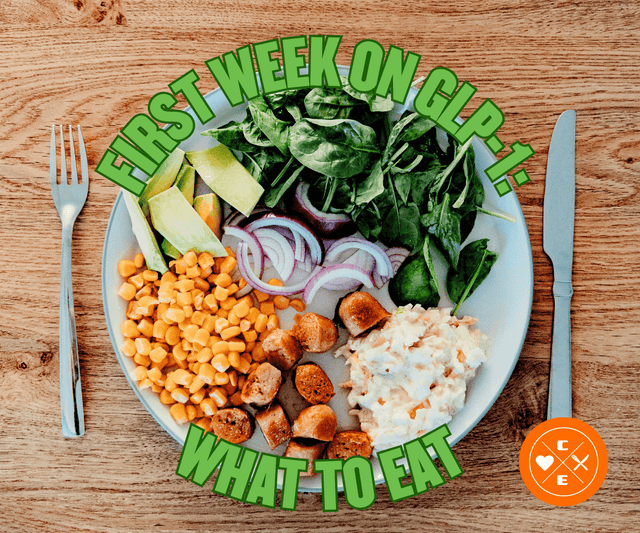
Weight lossFirst Week on GLP-1: What to Eat (Complete Beginner's Guide)
Romaine Rusnak, RD, LDN · Nov 3, 2025
Weight lossGLP-1 Snack Ideas: 29 High-Protein Picks for Low Appetite
Romaine Rusnak, RD, LDN · Oct 7, 2026Sources
- Mozaffarian D et al. Nutritional priorities to support GLP-1 therapy for obesity: a joint advisory from the American College of Lifestyle Medicine, the American Society for Nutrition, the Obesity Medicine Association and The Obesity Society. Am J Clin Nutr 2025
- The same joint advisory, open-access full text in Obesity, volume 33, 2025 (PMC)
- Look M et al. Body composition changes during weight reduction with tirzepatide in the SURMOUNT-1 study. Diabetes Obes Metab 2025 (PMC)
- Endocrine Society, ENDO 2025: Consuming more protein may protect patients taking anti-obesity drug from muscle loss
- Nutritional deficiencies and muscle loss in adults with type 2 diabetes using GLP-1 receptor agonists: a retrospective observational study. Obesity Pillars 2025
- The same study on PubMed
- Jäger R et al. International Society of Sports Nutrition position stand: protein and exercise. J Int Soc Sports Nutr 2017 (PMC)
- Cleveland Clinic: GLP-1 diet, what to eat and avoid
- Mayo Clinic Diet: Considering GLP-1 medications? Why lifestyle change is key to sustained weight loss
- MedlinePlus: Fiber
On this page