Best Tea for Weight Loss: What the Research Says

Green tea has the most human evidence, with oolong close behind. The effect is small. The bigger win is simpler: an unsweetened cup that replaces a sweet drink. Here's what the research says about six teas.

Sherrill Johnson, RD, LDN
Sherrill Johnson, RD, LDNRegistered Dietitian · Jul 9, 2023
A Clean Eatz Kitchen delivery box held above a row of ready-to-heat meals
Quick answer

Green tea has the strongest human evidence for weight loss, with oolong close behind, but the gap between true teas is small, so let taste decide. In the Cochrane review, green tea trials outside Japan found almost no effect (0.04 kg). The bigger, more reliable benefit is the swap: a 2-calorie cup of plain tea in place of a 155-calorie can of cola. Skip detox and slimming teas.

Search "best tea for weight loss" and you'll find pages promising that one cup melts belly fat. The research tells a quieter story. Tea is a useful habit when you're trying to lose weight, just not for the reasons the marketing suggests.

Here's what the evidence supports for each type, which ones are worth your time, and the one category to walk past entirely.

What makes a tea good for weight loss

Two things are going on, and they aren't equally important.

The first is the calorie swap, and it's by far the bigger lever. Plain brewed green tea has about 2 calories per cup, according to USDA FoodData Central. A 12-ounce can of regular cola has about 155 and a cup of orange juice about 120, per USDA data. Swap a sweetened coffee drink, soda or juice for tea and you remove somewhere between 100 and 250 calories from your day without touching a meal. Do it daily and the math adds up fast: 150 calories a day is about 4,500 a month.

The second is the catechin and caffeine effect, and it's real but small. All true teas come from Camellia sinensis and carry caffeine and polyphenols. Together they modestly nudge fat burning and energy use. The problem is scale. The Cochrane review on green tea for weight loss found that eight trials in Japan reported losses of 0.2 to 3.5 kg (about 0.4 to 7.7 lb) over 12 to 13 weeks, while six trials outside Japan found an average of just 0.04 kg, which wasn't significant. The authors judged the effect too small to matter clinically.

A 2024 meta-analysis of green tea catechins alongside exercise training, covering 10 randomized trials, reached a similar conclusion. It described the added benefit over exercise alone as "quite minimal."

That's the baseline. Tea helps at the margins. Nothing in a teacup replaces the calorie deficit that drives fat loss, which our 100 best foods for weight loss guide breaks down in full.

Best teas for weight loss, ranked by evidence

Caffeine figures are USDA averages for an 8-ounce cup of brewed tea. Real cups vary a lot with the leaf, the water temperature and how long you steep.

  • Green: Caffeine per cup About 28mg · Evidence strength Strongest: many human trials & reviews, small effect · Best for The default choice
  • Oolong: Caffeine per cup About 38mg · Evidence strength Good: a small controlled trial · Best for Fat burning, including overnight
  • Black: Caffeine per cup About 47mg · Evidence strength Moderate: mostly animal & early human work · Best for Coffee drinkers stepping down
  • Matcha: Caffeine per cup More than brewed green · Evidence strength Indirect: inferred from green tea · Best for A higher catechin dose per serving
  • White: Caffeine per cup Varies, no USDA figure · Evidence strength Weak: mostly lab studies · Best for Lighter flavor
  • Herbal: Caffeine per cup 0mg · Evidence strength Minimal for weight · Best for Evenings, when caffeine is off the table
1

Green tea

Best evidence
About 28mg caffeine · 2 calories per cup

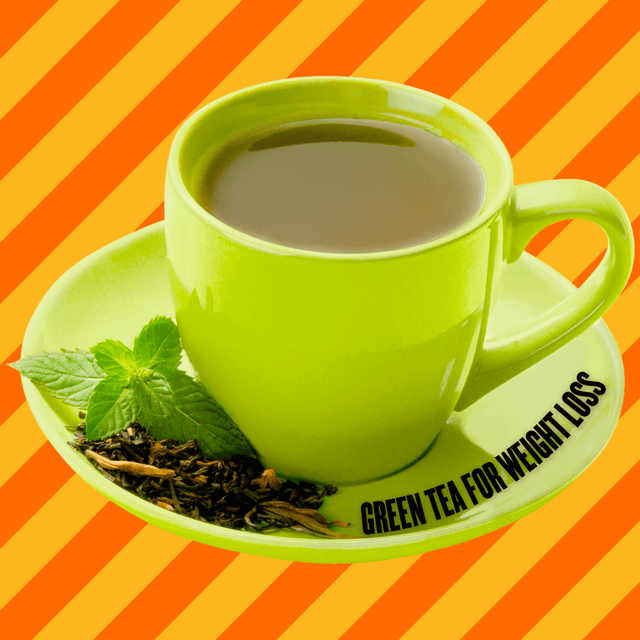
Green tea is the most studied option and the sensible default. Its leaves are steamed right after harvest instead of oxidized, which keeps a high level of catechins, especially EGCG.

The research is consistent in direction and modest in size. In the Cochrane review, the larger losses came from trials in Japan, and the trials tested green tea preparations, which include concentrated drinks and extracts, not just brewed cups. Concentrated extracts carry their own risks. Our full breakdown of green tea and weight loss covers dosing, brewing and the extract question in detail.

2

Oolong tea

Runner-up
About 38mg caffeine per cup

Oolong sits between green and black in oxidation, and it has one of the cleaner studies in this category. A randomized, placebo-controlled crossover trial in Nutrients gave 12 healthy young men oolong tea, caffeine alone or a placebo for 14 days. Both oolong and caffeine raised fat burning by about 20 percent, and the effect held during sleep.

Two caveats matter. Total energy expenditure didn't change, and burning a higher share of fat is not the same as burning more calories. Only the second moves the scale. And because caffeine alone did about as much as oolong, the effect may come mostly from the caffeine.

3

Black tea

Coffee step-down
About 47mg caffeine per cup

Black tea is fully oxidized, which turns most catechins into larger polyphenols that are too big to absorb in the small intestine. They travel to the colon instead, where UCLA researchers found they shifted gut bacteria in mice toward a pattern linked with leaner bodies. That was a 4-week mouse study that hasn't been repeated in people, so treat it as a promising mechanism, not a result.

On the human side, a 2025 narrative review of black tea clinical trials from 1990 to 2024 found that trials of 3 to 5 cups a day showed no significant change in weight or BMI, and it called the weight effect "likely negligible." One trial of a black tea polyphenol extract found small drops in weight and waist size at 3 months that didn't last to 6 months. A separate study found black tea raised feelings of fullness before meals in adults aged 20 to 40, more so in women.

If the gut angle interests you, our 100 best foods for weight loss list includes fiber-rich foods that feed the same gut bacteria.

4

Matcha

Whole leaf
More catechins & caffeine than brewed green

Matcha is green tea leaf ground into powder and whisked into water, so you drink the whole leaf instead of an infusion. That means a higher catechin and caffeine load per serving, which varies with how much powder you use.

What doesn't exist is a trial showing that the extra dose brings extra weight loss. The reasonable position is that matcha is at least as good as green tea and maybe a bit better, with more caffeine per cup as the trade-off.

5

White tea

Lab data only
Caffeine varies · no human weight trials

White tea is the least processed of the true teas and tests high in total polyphenols. In a 2023 laboratory comparison, white tea had more total phenolic content than green or oolong.

The catch is that nearly all white tea research is in test tubes or cell models. Human weight loss trials are essentially absent. It's a fine choice if you like its lighter taste, but the evidence is thin, so don't pick it expecting more than green tea delivers.

6

Herbal teas

Evening pick
0mg caffeine · about 2 calories per cup

Chamomile, peppermint, rooibos, hibiscus and ginger aren't true teas at all. They come from other plants, contain no caffeine and have little direct evidence for weight loss.

They still earn a place in your day. A warm, calorie-free drink in the evening handles the after-dinner habit that often turns into snacking, without caffeine that would cut into sleep. Since sleep quality shapes hunger and fullness hormones more than most people expect, that's not a small contribution.

Skip the detox & slimming teas

This is the one clear warning in an otherwise low-stakes topic. Products sold as detox teas, skinny teas or teatoxes are a different category from anything above, and the evidence doesn't support them.

A 2026 mini-review in Frontiers in Nutrition gathered the published literature on diet and detox teas sold for weight loss and found just ten studies, a mix of experiments, case reports and product analyses. The authors found minimal proven benefit and real risks. The case reports included dangerously low potassium and sodium, cardiac arrest and liver injury, and product tests turned up undeclared drugs, including the banned weight loss drug sibutramine and the laxative phenolphthalein, in teas labeled as natural.

Many of these blends are built on a stimulant laxative. Any quick drop on the scale is fluid and stool, and it comes back as soon as you stop. Your liver and kidneys already handle detox around the clock, and no drink improves on that. For the supplement question more broadly, our evidence-based guide to weight loss supplements sorts the few with support from the many without.

Check with your doctor

If you take medication, are pregnant or have a heart, kidney or liver condition, talk with your doctor before trying any slimming tea or concentrated tea extract.

How to actually use tea for weight loss

  • Drink it unsweetened. This is the whole game. A cup of plain tea has about 2 calories. A sweetened bottled tea can carry as much sugar as a soda, which erases the point, so read the label. If plain tastes too plain, lemon, cinnamon, mint or fresh ginger add flavor without calories.
  • Aim for about 3 cups a day. The black tea trials used 3 to 5 cups a day, and the green tea trials in the Cochrane review tested preparations rather than a set number of cups, so there's no proven cup count. More isn't better, and going past 5 or 6 cups mostly buys you caffeine side effects.
  • Keep it to mornings and early afternoons. Caffeine lingers. In a sleep study, 400mg of caffeine taken 6 hours before bed still cut sleep by more than an hour. A cup of tea has far less, but stopping at least 6 hours before bed is a safe rule. Trading sleep for a metabolic effect this small is a bad deal.
  • Drink it between meals, not with them. In a study of polyphenol-rich drinks, black tea cut iron absorption from a bread meal by 79 to 94 percent, and herbal teas like peppermint and chamomile cut it too. That matters if you're already low on iron.
  • Let it steep properly. Two to three minutes for green and white, three to five for black and oolong. Longer steeping pulls out more polyphenols along with more bitterness.
  • Treat it as an addition, not a strategy. Tea works at the edges of a calorie deficit. It doesn't create one.

Best tea for weight loss: The bottom line

Pick green tea if you want the best-studied option, oolong if you like a maltier cup, black if you're stepping down from coffee, and herbal for the evening. The differences between them are smaller than any article promising a single winner will admit. What matters is that unsweetened tea replaces something with calories in it, and that the rest of your eating supports the deficit doing the real work.

That last part is where most people stall, and it's the part tea can't solve. Our Weight Loss Meal Plan handles it with chef-cooked, portion-controlled and calorie-controlled meals, delivered frozen and ready to heat, from $89.95 for 10 meals. Our current menu (October 2026) runs from 250 to 630 calories and 20 to 55 grams of protein a meal, and every meal's numbers are on our Nutrition Info page.

If you'd rather choose every meal yourself, Build A Meal Plan lets you filter by protein, from 20 to 30 grams up to 41 grams or more, with meals from $8.99 to $13.99 each. No subscription either way.

See the Weight Loss Meal Plan

Sources

  1. Jurgens et al., Green tea for weight loss and weight maintenance in overweight or obese adults, Cochrane Database Syst Rev 2012
  2. Gholami et al., Green tea catechins and exercise training: a systematic review and meta-analysis, J Int Soc Sports Nutr 2024
  3. Zhang et al., Effect of oolong tea and caffeine on fat oxidation during sleep, Nutrients 2020
  4. UCLA Newsroom: Black tea may help with weight loss, too
  5. Yilmaz et al., Health-promoting effects of black tea: a narrative review of clinical trials, Int J Food Sci 2025
  6. Black tea and pre-meal satiety, Food Science and Human Wellness 2025
  7. Esposito et al., total phenolic content of white, green and oolong teas, 2023
  8. Diet and detox teas for weight loss: a mini-review, Frontiers in Nutrition 2026
  9. Hurrell et al., Inhibition of non-haem iron absorption in man by polyphenolic-containing beverages, Br J Nutr 1999
  10. Drake et al., Caffeine effects on sleep taken 0, 3, or 6 hours before going to bed, J Clin Sleep Med 2013
  11. USDA FoodData Central: Tea, green, brewed
  12. USDA FoodData Central: Tea, black, brewed
  13. USDA FoodData Central: Tea, oolong, brewed
  14. USDA FoodData Central: Carbonated cola, regular
  15. USDA FoodData Central: Orange juice, chilled, from concentrate

Frequently asked questions

What is the best tea for weight loss?

Green tea has the most human research behind it, and oolong is the closest runner-up. But the differences between true teas are small, and the measured effects are small too. The bigger win is swapping a sweetened drink for any unsweetened tea, which can remove 100 to 250 calories from your day without changing anything else.

Which tea burns the most belly fat?

No tea targets belly fat. Spot reduction isn't possible with any food or drink. Some green tea catechin studies reported small drops in waist size, and one black tea extract trial found a 1.88 cm smaller waist at 3 months that faded by 6 months. Those changes came with overall fat loss from a calorie deficit, not from the tea.

How much tea should I drink to lose weight?

About 3 cups a day is a reasonable target. The black tea trials used 3 to 5 cups, and more than 5 or 6 mostly adds caffeine side effects. Drink it unsweetened, spread it through the morning and early afternoon, and stop at least 6 hours before bed so the caffeine doesn't cut into your sleep.

Do detox or slimming teas work for weight loss?

No. A 2026 review in Frontiers in Nutrition found these products show minimal proven benefit and real risks, including case reports of liver injury and dangerous electrolyte changes, and undeclared drugs in teas sold as natural. Most contain a stimulant laxative, so any drop on the scale is fluid and stool that returns once you stop.

Is matcha better than green tea for weight loss?

Matcha delivers more catechins per serving because you drink the whole ground leaf instead of an infusion. No trial has shown that this leads to more weight loss, though, and matcha is also higher in caffeine. Treat it as at least as good as green tea, and choose it if you prefer the taste.

Tap a meal count to add

30 meals work out to $7.56 a meal

View plan details

Tap a meal count to add

30 meals work out to $9.16 a meal

View plan details