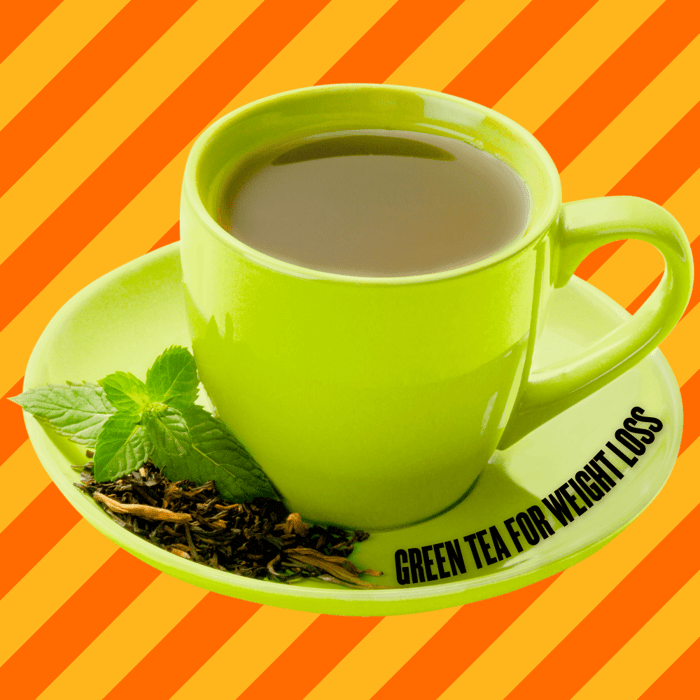

Quick Answer: Green tea can support weight loss, but the effect is small. Controlled trials point to roughly 1 to 2.5 pounds over 12 weeks when it is paired with a calorie deficit and regular activity, driven by catechins and caffeine working together to nudge fat oxidation and energy expenditure. The stronger published results come from concentrated extracts rather than brewed tea, and those extracts carry a real liver injury risk. Treat green tea as a useful habit at the margins, not a weight loss strategy.
Table of Contents
1. What the Research Actually Shows
2. How Green Tea Affects Weight
3. Brewed Tea vs. Green Tea Extract
4. Realistic Expectations
5. How to Use Green Tea for Weight Loss
6. Safety and Who Should Be Cautious
7. Frequently Asked Questions
8. The Bottom Line
Green tea has been sold as a fat burner for decades, and the marketing has gotten well ahead of the science. The underlying plant is ordinary enough: green tea comes from Camellia sinensis, the same species that gives us black, white, and oolong tea. What separates it is processing. The leaves are steamed right after harvest instead of being left to oxidize, which preserves a high concentration of catechins, especially epigallocatechin gallate, or EGCG.
Those catechins are the reason anyone studies green tea for weight management at all. Whether they do enough to matter is the actual question, and the research has a clearer answer than most articles on this topic let on.
What the Research Actually Shows
The most useful evidence comes from pooled analyses rather than single studies, because individual green tea trials are small and their results scatter.
The Cochrane review of green tea for weight loss and weight maintenance examined trials in adults with overweight or obesity and found small reductions in weight that the reviewers judged to be not clinically important. That phrasing matters. The effect was detectable, and it was also too small to change anyone's outcome on its own.
A later GRADE-assessed dose-response meta-analysis in the British Journal of Nutrition reached a similar place, finding measurable but modest changes in body composition across randomized trials. And when researchers asked whether green tea adds anything on top of exercise, a 2024 meta-analysis of green tea catechins combined with exercise training concluded that the additive benefit over exercise alone is quite minimal.
Three independent syntheses, three versions of the same verdict: real, small, not a substitute for the fundamentals.
Weight Loss Meal Plan Delivery

$89.95
Weight Loss Meal Plan Delivery – Delicious, Calorie-Controlled Meals Take the guesswork out of eating healthy and achieving your weight loss goals with our Weight Loss Meal Plan Delivery. Our expertly crafted, portion-controlled meals are balanced with the right… read more
A note on the 2025 mouse study
You may have seen headlines about green tea extract producing dramatic weight loss and improved metabolic function in a study published in late 2025. Those results came from obese mice, not people, and no human trial has replicated them. Rodent metabolic studies are genuinely useful for identifying mechanisms worth investigating, and they routinely fail to translate at anything like the same magnitude in humans. It is a lead, not a finding you should plan around.
How Green Tea Affects Weight
Green tea does not work through one pathway, which is part of why the effects are hard to pin down precisely.
Fat oxidation. Fat is stored as triglycerides, and burning it requires breaking those down into fatty acids and glycerol. Norepinephrine drives that process, and an enzyme called COMT breaks norepinephrine down. Catechins and caffeine together appear to slow that enzyme, leaving norepinephrine active longer. The classic demonstration is a metabolic chamber study in the American Journal of Clinical Nutrition that found green tea extract raised 24-hour energy expenditure by about 4 percent, and, importantly, that caffeine alone did not account for the full effect.
Energy expenditure. A meta-analysis in Obesity Reviews pooling respiration chamber studies found catechin-caffeine mixtures increased 24-hour energy expenditure by roughly 4.7 percent, with a dose-response relationship. Fat oxidation over 24 hours rose meaningfully only with the catechin-caffeine combination, not with caffeine on its own. In practical terms, a 4 to 5 percent bump is something in the neighborhood of 80 to 100 calories a day for most people, which is real but easily erased by a handful of nuts.
Appetite. This is where the evidence thins out considerably. Some trials report reduced hunger and greater fullness, particularly when tea is consumed before meals, while pooled analyses of appetite-regulating hormones have generally not found consistent effects on leptin and ghrelin. If green tea curbs your appetite, that is a real benefit for you personally, but it is not something the literature reliably predicts.
Exercise pairing. The most encouraging individual result in this whole area involves exercise. A trial published in The Journal of Nutrition found that green tea catechin consumption enhanced exercise-induced abdominal fat loss in adults with overweight and obesity, with greater reductions in total, subcutaneous, and visceral abdominal fat than exercise produced alone. Hold that alongside the 2024 meta-analysis above, which found the average additive effect across trials to be minimal, and the honest summary is that pairing the two may help some people somewhat. For the training side of that equation, see our complete exercise guide for weight loss.
Brewed Tea vs. Green Tea Extract
This distinction gets glossed over constantly, and it is the single most important thing to understand about green tea research.
A cup of brewed green tea delivers roughly 50 to 100 mg of catechins and 25 to 50 mg of caffeine. Studies reporting the more impressive outcomes typically used 500 to 1,000 mg of EGCG daily, which is well beyond what you can realistically brew. The randomized, double-blind, placebo-controlled trial of high-dose green tea extract that reported about 2.4 pounds of weight loss over 12 weeks, along with reduced BMI and improved cholesterol, sits firmly in that high-dose category.
So when you read that green tea produces measurable weight loss, check which form the study used. Most of the time it was capsules.
Brewed tea is cheap, hydrating, essentially calorie-free, and safe for nearly everyone. Its downside is simply that it delivers a fraction of the research dose. Extracts close that gap and introduce a genuine safety problem in exchange, which the next section covers. For how green tea stacks up against black, oolong, white, and matcha, our guide to the best teas for weight loss compares the evidence side by side. And if you are weighing supplements more broadly, our evidence-based guide to weight loss supplements sorts the few with support from the many without.
Realistic Expectations
Here is what green tea can reasonably do. It can contribute a pound or two over about three months alongside a calorie deficit. It can slightly reduce waist circumference, particularly when you are also exercising. It can improve some metabolic markers. And it can replace a sweetened drink at close to zero calories, which is quietly the largest benefit on this list, since a single daily soda or sweetened coffee drink swap removes far more calories than any thermogenic effect ever will.
What it cannot do is produce meaningful weight loss on its own, substitute for a calorie deficit, offset a diet that is not working, or target fat in a specific area. Your total intake, protein, activity, and sleep all matter enormously more than what you are drinking. Our 100 Best Foods for Weight Loss guide covers the part that actually moves the needle.
How to Use Green Tea for Weight Loss
Three to four cups a day is the range most studies used, providing roughly 600 to 900 mg of catechins. If you are new to green tea or caffeine-sensitive, start with one or two and build from there. Past about five cups you are mostly accumulating caffeine side effects.
Drink it unsweetened. Adding sugar or a sweetened creamer undoes the point entirely, and a squeeze of lemon or a little fresh mint gets you flavor without calories.
Brew it properly. Heat water to roughly 160 to 180°F rather than boiling, let it sit a few minutes off the boil, and steep for two to three minutes. Longer steeping extracts more catechins along with more bitterness, so there is a tradeoff.
Time it toward the front of the day. The thermogenic effect peaks a few hours after drinking and fades within six to eight, so morning and early afternoon make sense. Stop at least six hours before bed, since sleep loss undercuts weight loss efforts far more than green tea supports them.
Drink it between meals rather than alongside them. Tea polyphenols reduce absorption of non-heme iron from food, which is worth taking seriously if your iron is already low.
Safety and Who Should Be Cautious
Brewed green tea and concentrated green tea extract have meaningfully different safety profiles, and conflating them is how people get hurt.
As a beverage, green tea is well tolerated. The National Center for Complementary and Integrative Health notes that no safety concerns have been reported for adults drinking green tea as a beverage. Side effects at normal intakes are almost entirely caffeine-related: jitteriness, disrupted sleep if you drink it late, an elevated heart rate, or stomach upset on an empty stomach.
As an extract, the picture changes. The NIH's LiverTox database rates green tea extract a well established cause of clinically apparent liver injury, and two details there deserve emphasis. First, the injury appears to be idiosyncratic rather than straightforwardly dose-dependent, with reported cases spanning a wide range of intakes rather than clustering above some safe threshold. Second, it has been linked to a specific genetic marker, the HLA-B*35:01 allele, meaning susceptibility varies between individuals in ways no label can tell you. Drinking green tea has not been associated with liver injury; concentrated extracts have. If you are considering a supplement, that conversation belongs with your doctor.
Some groups should be more careful regardless of form. People who are pregnant or breastfeeding are generally advised to limit caffeine, which typically means holding to one or two cups. Anyone with iron deficiency should keep tea away from meals. Caffeine can worsen symptoms for people with anxiety disorders. And green tea can interact with several medications, including blood thinners, so check with a pharmacist if you take anything regularly.
Frequently Asked Questions
Does green tea help with weight loss?
Modestly, yes. Pooled results from controlled trials show small reductions in weight and waist circumference, generally in the range of 1 to 2.5 pounds over about 12 weeks when green tea is combined with a calorie deficit and regular activity. Reviewers have repeatedly described the effect as statistically detectable but small. Green tea supports a weight loss plan; it does not create one.
How much green tea should I drink for weight loss?
Three to four cups a day is the range used in most studies that reported an effect, providing roughly 600 to 900 mg of catechins. Start with one or two cups if you are sensitive to caffeine. Drinking more than about five cups mostly adds caffeine side effects rather than benefit.
Does green tea reduce belly fat?
Some trials have reported small reductions in abdominal fat and waist circumference, with the clearest results coming from studies that paired green tea catechins with exercise. No food or drink can target fat in one area, though. Any reduction you see around the middle comes from overall fat loss driven by a calorie deficit.
Is green tea extract better than drinking green tea?
Extracts deliver far higher catechin doses than brewing does, which is why most of the stronger published results come from capsules rather than cups. They also carry a liver injury risk that brewed tea does not. The NIH LiverTox database rates green tea extract a well established cause of clinically apparent liver injury, so extracts should only be used under medical supervision.
What is EGCG and why does it matter?
EGCG, or epigallocatechin gallate, is the most abundant catechin in green tea and makes up the majority of its catechin content. It appears to work alongside caffeine to slow the breakdown of norepinephrine, which supports fat oxidation. It is also the compound implicated in liver injury cases involving concentrated extracts.
When is the best time to drink green tea for weight loss?
Morning through early afternoon works best. The thermogenic effect peaks a few hours after drinking, and stopping at least six hours before bed keeps the caffeine from interfering with sleep. Drink it between meals rather than with them, since tea polyphenols reduce iron absorption from food.
The Bottom Line
Green tea helps a little. That is not the answer the supplement aisle wants to give you, and it is the one the research supports. Expect something in the range of a pound or two over three months, understand that the headline studies used extracts rather than cups, and know that those extracts carry a liver risk brewed tea does not.
None of which is a reason to skip it. A few cups a day is a pleasant, nearly calorie-free habit that gives you antioxidants, replaces drinks that would otherwise cost you hundreds of calories, and pairs well with training. Just put it in the right slot: a small assist on top of a plan that is already working, not the plan itself.
That plan is where most people actually get stuck. Our Weight Loss Meal Plan takes the hardest part off your hands with chef-prepared meals portioned to 300 to 500 calories and 20 to 35 grams of protein, delivered ready to heat. Prefer to pick every meal yourself? Build-a-Meal Plan lets you filter by goal for weight-loss-friendly options or by protein for the 35g+ meals. No subscription either way.